Worst Ever Use of “Sorkin Walk and Talk”

Danny Boyle and Aaron Sorkin‘s Steve Jobs (’15) bothered me from the get-go. It was close to three years ago when I saw it for the first time (at Telluride), and after re-thinking and re-thinking it again, I realized that it didn’t work for two principal reasons.

One, the relentless use of “Sorkin walk-and-talks.” (I don’t remember at what point I flinched in my seat and almost stood up and said aloud, “Are they gonna walk and talk through this whole damn movie?”) And two, Michael Fassbender. I was just starting to realize how much I disliked the guy because of those cold fuck-you eyes of his. From a 8.28.16 riff called “Shorter Steve Jobs Review”: ‘I know this is a class-A enterprise with a sharp Sorkin script, but how much longer do I have hang with this prick?'”

In short, Andrew Saladino‘s “12 Angry Men: A Lesson In Staging,” a seven minute and 41-second video essay, reminded me how much I disliked Steve Jobs. Because of those infuriating walk-and-talks (and how more inventive and confident 12 Angry Men director Sidney Lumet was at shooting straight-dialogue scenes), and, yes, because of that super-prick Fassbender.
Read more

I’ve Read “Backseat”

And if I had to sum it up in eight words (which I’d prefer not to do) I’d call it a “a kind of dry, extremely droll horror comedy.” What will Dick Cheney think of it? Remember that in ’07 the former vice-president said that being referred to as Darth Vader wasn’t such a bad thing (or words to that effect). Maybe he’ll roll with it. Maybe he’ll attend the 2019 Oscar telecast.

Dents de la Mer

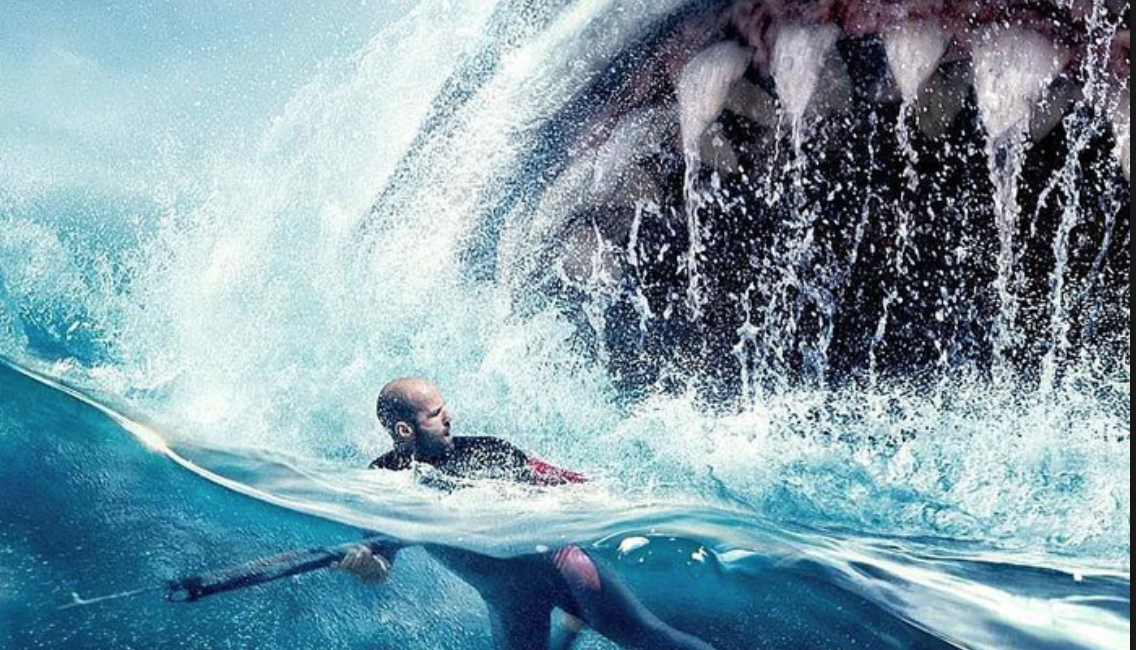
If you get eaten by a 95 foot-long Megalodon shark, at least you’ll die quickly…right? Thank God we have Jason Statham on the case. I’m sensing a comedic attitude lurking beneath the generic chops. The director of The Meg (Warner Bros., 8.10) is Jon Turtletaub, whose last theatrical feature was Last Vegas (’13). Should moviegoers be concerned about principal photography having begun in October 2016 and concluded 18 months ago? Post-production was presumably slowed down by the CG. The film will work if the shark looks real, but if the effects look even a little bit shitty…aiiiy, pobrecito mío! Costarring Li Bingbing, Rainn Wilson, Ruby Rose, Winston Chao and Cliff Curtis. Pocket those paychecks.

“Beale Street” Peek-Out

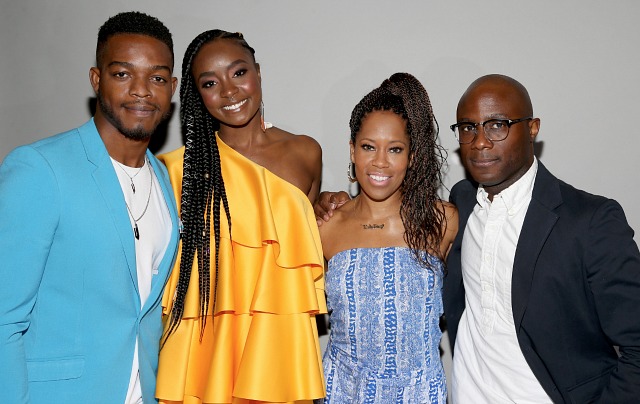
Two days ago clips from Barry Jenkins If Beale Street Could Talk (Annapurna) were shown at Essence Festival, the New Orleans-based cultural gathering which wraps today. Jenkins, director-writer of the 2016 Best Picture Oscar winner Moonlight, took bows along with leads Kiki Layne and Stephan James, who play engaged lovers Clementine “Tish” Rivers and Alonzo “Fonny” Hunt. Regina King, who plays Kiki’s mom Sharon, was also on hand.

Here’s a fairly thorough report from Blackfilm.com’s Wilson Morales.

The Annapurna release has no release date, but will probably pop through at the Venice, Telluride or Toronto film festivals — i.e., some combination thereof.


If Beale Street Could Talk castmembers Stephan james, Kiki Layne, Regina King + director-writer Barry Jenkins.

Based on the 1974 James Baldwin novel and set in early ’70s Harlem, Beale Street is about difficulties faced by Tish, a 19 year-old, and Fonny, a 22 year-old sculptor, and their extended family. Fonny is unjustly accused of raping a Puerto Rican woman, Victoria Rogers (Emily Rios), and is sent to prison. Soon after Tish discovers she’s pregnant. She, her family and her lawyer struggle to find evidence that will free Fonny before the baby is born.

Regina King and Colman Domingo portray Kiki’s mom and dad. Michael Beach plays Fonny’s profane dad and Aunjanue Ellis his strictly religious mom. Nobody seems to know who plays the lawyer but it’s either Dave Franco or Finn Wittrock.

Morales: “The first clip showed all the principal cast in the house of Kiki’s parents. It happens right after Stephan has been taken to jail and everyone is talking about his young lawyer. Stephan’s parents come in (Beach and Ellis) and it’s clear that his mom and dad are different from one another. Mom is very church-like and strict while dad curses in front of others and says his foul language is considered hip. There’s a lot of tension in the room when Kiki talks back to Steph’s mom.

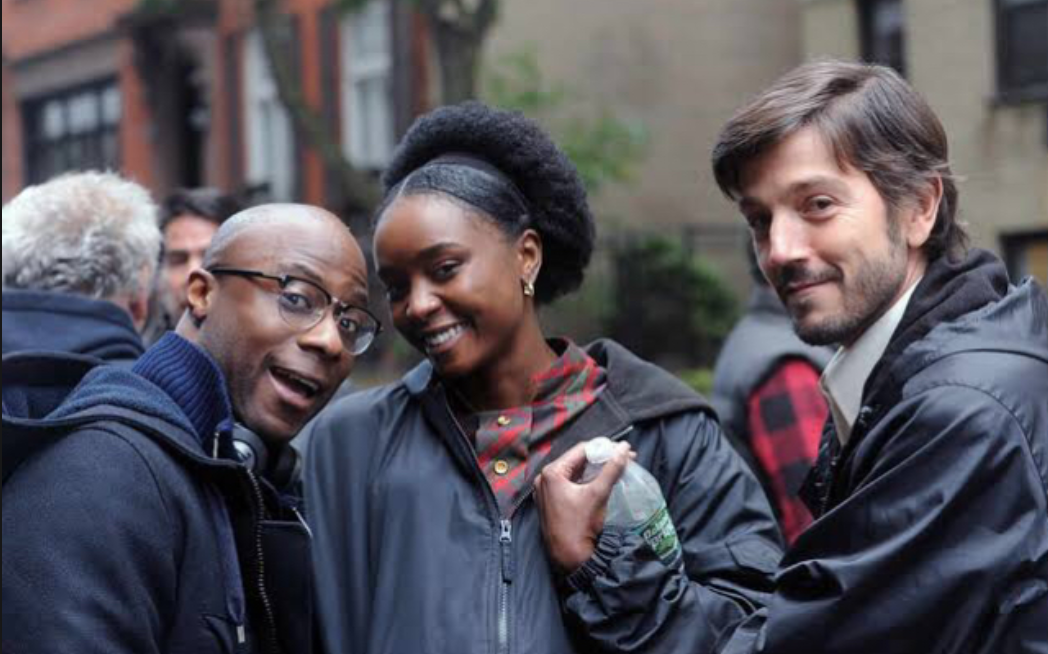
“The second scene, apparently a flashback, shows Stephan and Kiki hanging at a Spanish restaurant where he says hi to Pedrosito (Diego Luna). It’s raining as he walks Kiki outside, and then asks her to come home with him.”

Read more

Tenderness In The Park

Old news but worth repeating: The only times I’ve changed or modified my opinion is when I’ve been overly kind or fawning to a big audience-friendly film, and realized when I went back for seconds that there was less there than initially met the eye. My reaction to Peter Jackson‘s King Kong (’05) was one such example. I didn’t change my opinion about the first 70 minutes, which I flat-out hated. But today, 13 years later, I’m troubld by my enthusiasm for the second and third acts. That Central Park ice-pond sequence in particular. Snowballs, time out, Naomi Watts in a sheer white gown in 28-degree weather…what was I thinking?

DELETED EXCERPT from King Kong‘s third act — page 137 — written by Fran Walsh, Philippa Boyens and Peter Jackson:

Late evening. A crowd has formed at the southern edge of Central Park (59th Street near Seventh Avenue). A uniformed platoon of New York’s finest have blocked off access to the park with wooden barriers. A distraught middle-aged woman calls out to SERGEANT PADDY MULDOON.

WOMAN: Sergeant Muldoon! I saw him! I saw the ape!

MULDOON: (addressing beat cops) Keep them back, fellas. Nobody gets in.

WOMAN: He went into the park!

MULDOON: All right now, settle down.

WOMAN: Carrying that blonde woman in the white dress. Aren’t you going to do something? You have to save her. She might be dying!

MULDOON: I happen to know he’s not hurting her at all.

WOMAN: But Sergeant…!!

Read more

But When It Happens…

Yesterday I posted a list of 130-plus scripts (“What Does This List Tell You?“) that have some kind of heat or momentum in the theatrical realm. Some have attracted positive attention but haven’t been produced yet, others have gone before cameras but have yet to open, some are buzzy but still waiting for a green light. The list contains a small sliver of titles that represent original stories; the rest are sequels, prequels, remakes and reboots.

The comment thread was appropriately despairing. At one point (and you knew this was coming) HE commenter Patrick Murtha reminded that “there’s this episodic art form that I think is superior…you may have heard of it…it’s called television.” While movies bang out sequels, remakes and rehashings, television “is superior for telling multi-part stories.” Except, of course, when these multi-part stories devolve into narcotizing, soul-draining puzzleboxing a la Westworld.

To which I replied: “Agreed — high-grade entertainment or profound absorption within a smart, above-average cable/streaming longform is in many ways superior and preferable to what movies are doing now for the most part. Hell, with the presumed-sequel mentality so fully embedded in the theatrical realm, movies themselves have almost become longform in a sense.

“But for those films that still play by the classic rules (a one-off delivering a strong, efficiently constructed story with a satisfying third-act payoff and a haunting thematic undertow within 100 to 160 minutes and sometimes only 85 or 90), a higher bar applies. It’s much harder to deliver the whole bull’s-eye package in a single sitting, but when that happens there’s really nothing better, and in this sense movies will sometimes leave longform cable/streaming in the dust. Every year between 5% and 10% of theatrical movies accomplish this.”

In the same sense it’s a harder and finer thing to write a truly effective 5,000-word short story than a long, elephantine novel running 1200 pages. Which is the more satisfying East of Eden narrative — the long, sprawling, Biblically-infused tale of the Trask and Hamilton families in John Steinbeck’s 1952 novel, or Elia Kazan‘s pared-down screen version that concentrated on the Trasks (the focus of the novel’s second half) and primarily on Cal or Caleb (James Dean‘s character)?