Inspirational Slogans Are Depressing

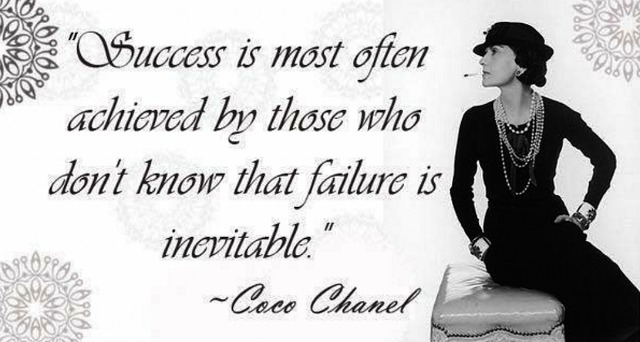
Every so often I find myself feeling oppressed if not depressed by the constant stream of inspirational slogans on Facebook and Twitter. Believe in yourself, love yourself before anyone or anything else, amazing things are just around the corner, you have a special gift that the world needs to discover, etc.

I’ve been through down cycles and appreciate the value of positive thinking. Hell, I even went to church in 2005 to pray for HE advertising revenues. But there’s something about self-helpy “you can do it!” slogans that rub me the wrong way. I’m more of a wry humor type of guy. “Everything is funny as long as it’s happening to someone else”, “Start every day with a smile and get it over with”…that line of country.

Beater

Hollywood Elsewhere has recently been operating out of the Fairfield County-New York City region, and this has involved taking trains into the city. Which has been fine and even pleasant in certain ways. For roaming around and occasionally getting myself to the Westport train station I’ve been using the rumbling Kawasaki beastie. But given the extremely cold temperatures that descend upon this area at the end of the year (not to mention the truly horrific temps of January through March), I decided a few days ago to purchase a beater for local cruising.

[Click through to full story on HE-plus]

Huge Surprise

I missed Lukas Dhont‘s Girl in Cannes last May, but I caught it last night at a special Peggy Siegal screening at the Quad.

Stop the presses — this Belgian submission for Best Foreign Language Film felt like the most assured, immersive and delicately effective drama about a transgender person that I’ve ever seen in my life, or am likely to see in the future. It’s the kind of film that could have conceivably been awful if it had been written or directed by the wrong kind of button-pushing American director (Dan Fogelman, say), but it feels deft, assured and totally right with Dhont at the helm.

[Click through to full story on HE-plus]

Subtle Currents of Anxiety, Trepidation, Consternation

This is a month-and-a-half old, but if you want to immerse yourself in a peppy, smiley-faced, award-season discussion rife with shaky vibes, social uncertainty and a suppressed white-knuckled terror that dares not speak its name…a subtle sense of anxiety about possibly saying the slightly wrong thing in an indelicate way that might get you crucified on Twitter if you aren’t very careful…listen to this Collider discussion about diversity, representation and the New Academy Kidz.

Not that Scott Mantz, Jeff Sneider and Perri Nemiroff (easily the most terrified member of this trio) actually use this HE-coined term, but but they’re basically saying “look, guys, it’s all well and good for Academy and guild members (not to mention the people behind the Gotham, Spirit and BFCA awards) to argue about what constitutes true excellence and/or serious cinematic merit, but there’s a new attitude in town and the basic foundation of this attitude is that diversity and representation are just as important, consideration-wise, as the notion of quality, which may be just a code term for the kind of movie that old boomer fuddy-duds are always voting for, and you know what we mean….movies like The Post and The King’s Speech and maybe even Green Book…that line of country.

The New Academy Kidz are mainly about pushing the graying fuddy-duds off to the side and establishing new criteria in the selection of Oscar winners, and their most important standard is diversity and representation, diversity and representation and diversity and representation. They probably have no argument with a diversity-and-representation movie that also contains what the fuddy-duds would call ‘quality’ (whatever the hell that actually means) but the most important thing for them…well, I’ve said it. For they are the New Academy Kidz, and if Mantz, Sneider and Nemiroff don’t describe them and discuss their concerns in exactly the right way, they’re going to come for them in the dark of night and THEN THEY WILL KNOW WHAT PAIN AND TERROR TRULY ARE.

Feel The Ugly

Because all media people are wimpy, mealy-mouthed liars who push fake news about Trump and the right, it’s an excellent thing to cheer and laugh about a belligerent Montana Congressman having assaulted a Guardian reporter a few months ago.

Imagine actually believing this, especially in the wake of Trump’s half-assed equivocation about the Saudi Arabian complicity in the murder of Washington Post journalist Jamal Khashoggi.

Sloppy Drunk

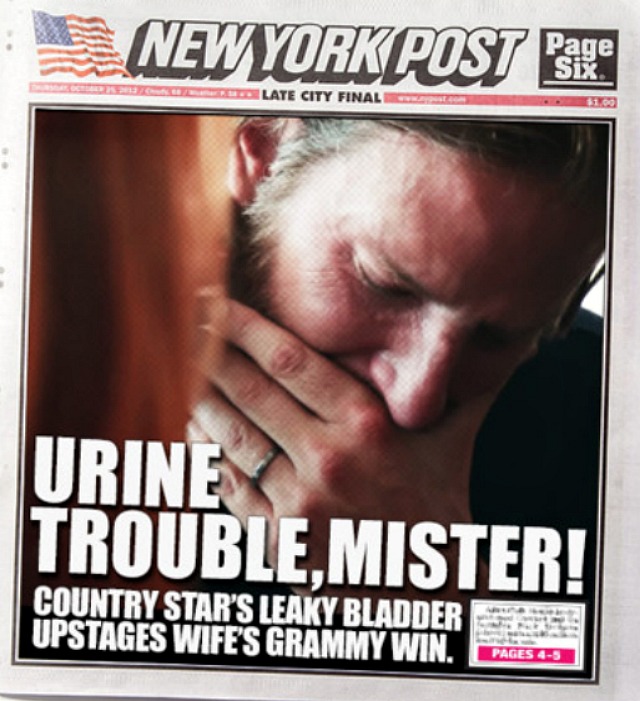
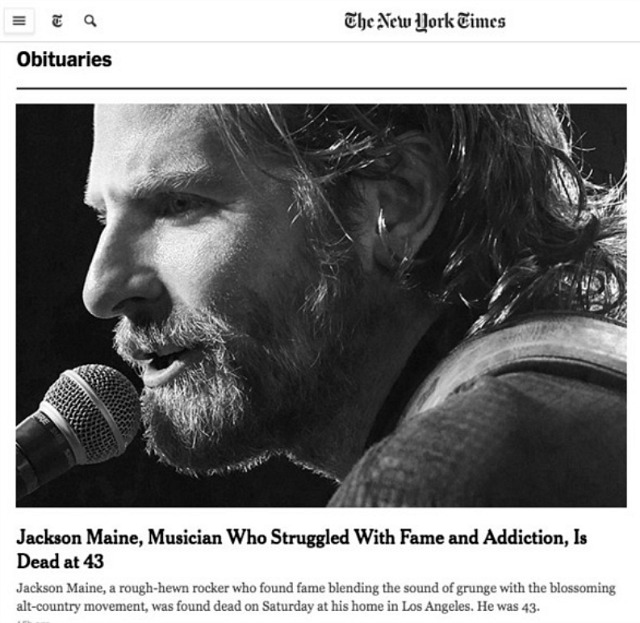
Nate Jones‘ “How the Media Would Have Covered the Events of A Star Is Born,” posted this morning on Vulture, is very funny and spot-on. It spoils the whole film but how can the fifth version of an oft-told showbiz tale possibly be spoiled? (I’m including 1932’s What Price Hollywood? in the rundown — without it there have been four Star Is Born films.) My favorite is the N.Y. Post headline.

A friend: “One of the movie’s biggest flaws is that it doesn’t exist in the world in which stories like this are written and passed around on Twitter, Facebook, Instagram, etc.” No one has any privacy anymore, but Bradley Cooper‘s film kind of ignores this fact. And now Jones has added an element of reality.

Barry Tank

How many ways are woke critics sprinkling raindrops of love upon Barry JenkinsIf Beale Street Could Talk (Annapurna, 11.30)? Answer: They’re workin’ it hard.

In Toronto I wrote that Beale Street is “a decent film in a sluggish, warm-hearted, ‘I love you baby’ sort of way. The two leads, Stephan James and Kiki Layne, are highly appealing in all respects, not the least being that they’re physically beautiful. And I agree that Regina King (who plays Layne’s mom) might land a Best Supporting Actress nomination, but no win.

Beale Street is all about mood and faith and dreamy lovers giving each eye baths. It has no narrative tension or snap, no second act pivot or third-act payoff or anything in the least bit peppy or spunky, much less reach-for-the-skies. It’s languid and sluggish and awash in feeling that isn’t pointed at anything but itself, which is to say Jenkins’ scrupulous loyalty to James Baldwin‘s 1974 novel.

“Not a disaster but definitely minor. James Laxton‘s cinematography and Nicholas Britell‘s musical score are probably the two best elements.”

A tweet this morning from Variety‘s Guy Lodge: “Every petal of memory here is perfectly placed, nested just so, each unfurling the other like the network of a rose. Swoonsome romanticism also teems with hot sociopolitical anger; both literal and sensually inventive in its allegiance to Baldwin.”

Less-than-sincere HE response: “I agree, and it’s so deeply satisfying, I might add, when things don’t break Fonny’s way in terms of his Puerto Rican accuser and he accepts a deal to do several more years in the slam for a crime he didn’t commit. But that’s okay because Tish and the family love him so much. Life is unfair, life is cruel but love endures. Or something like that. And when all else fails, there’s that gentle, amber-lit Wong Kar Wai vibe to soothe everyone’s spirits.”

Read more