I’ve been attending the Santa Barbara Film Festival since ‘03 or thereabouts, and I really wish I could’ve been there last night. All hail Cate Blanchett!!
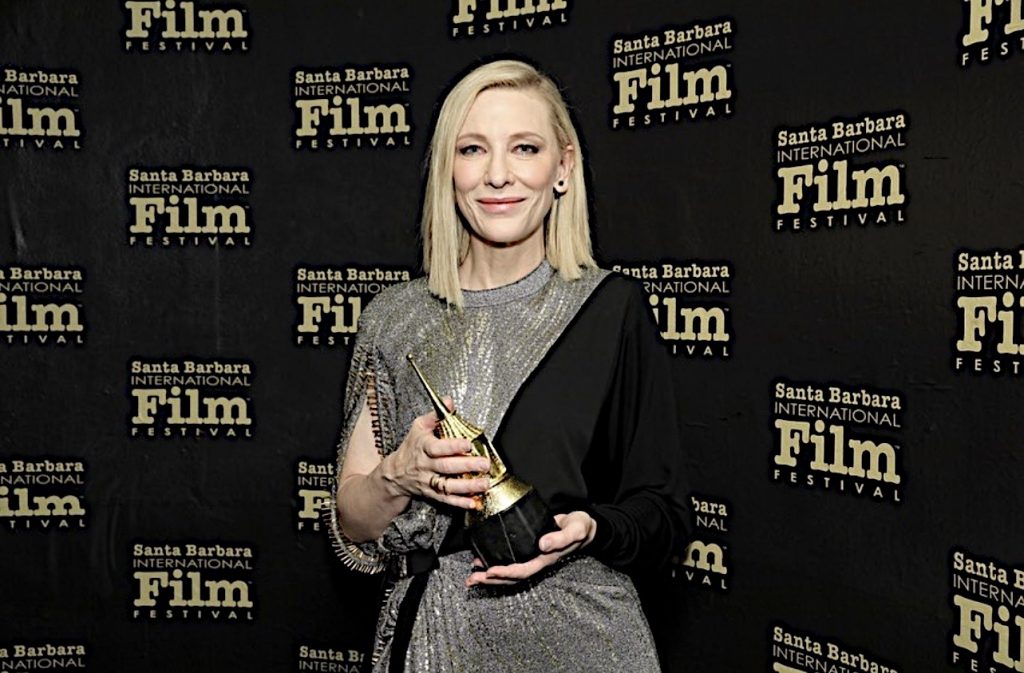


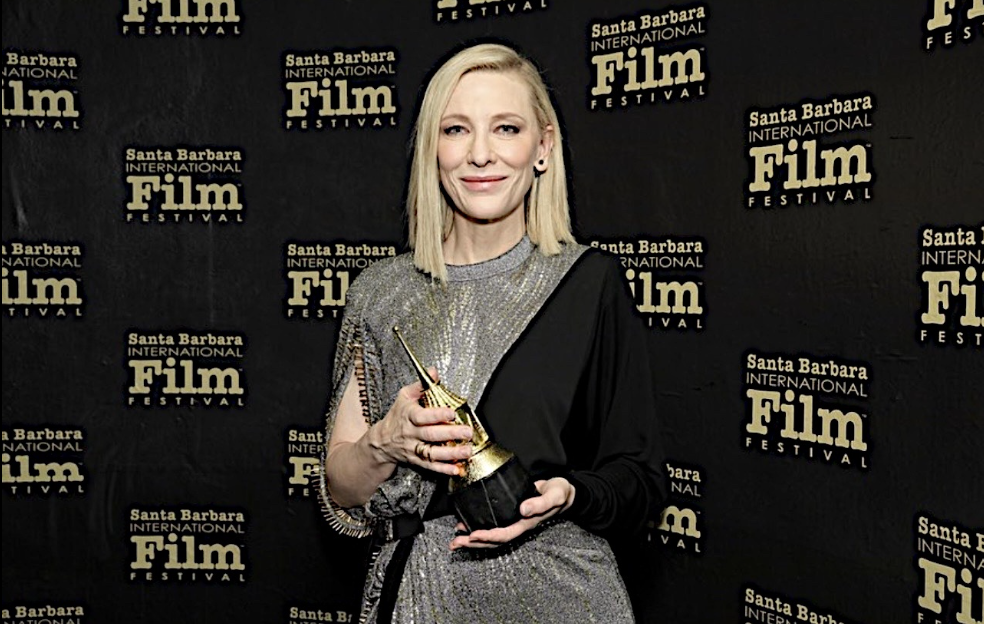
I’ve been attending the Santa Barbara Film Festival since ‘03 or thereabouts, and I really wish I could’ve been there last night. All hail Cate Blanchett!!
A while back I tried to sell my Paramount homies on a special Top Gun: Maverick HE advertorial. The idea had already been written and posted on 1.13.23 — I just wanted to repeat it with a little Paramount dough behind me. The piece was titled “A Film That Saved Hollywood Could Also Save The Oscars.”
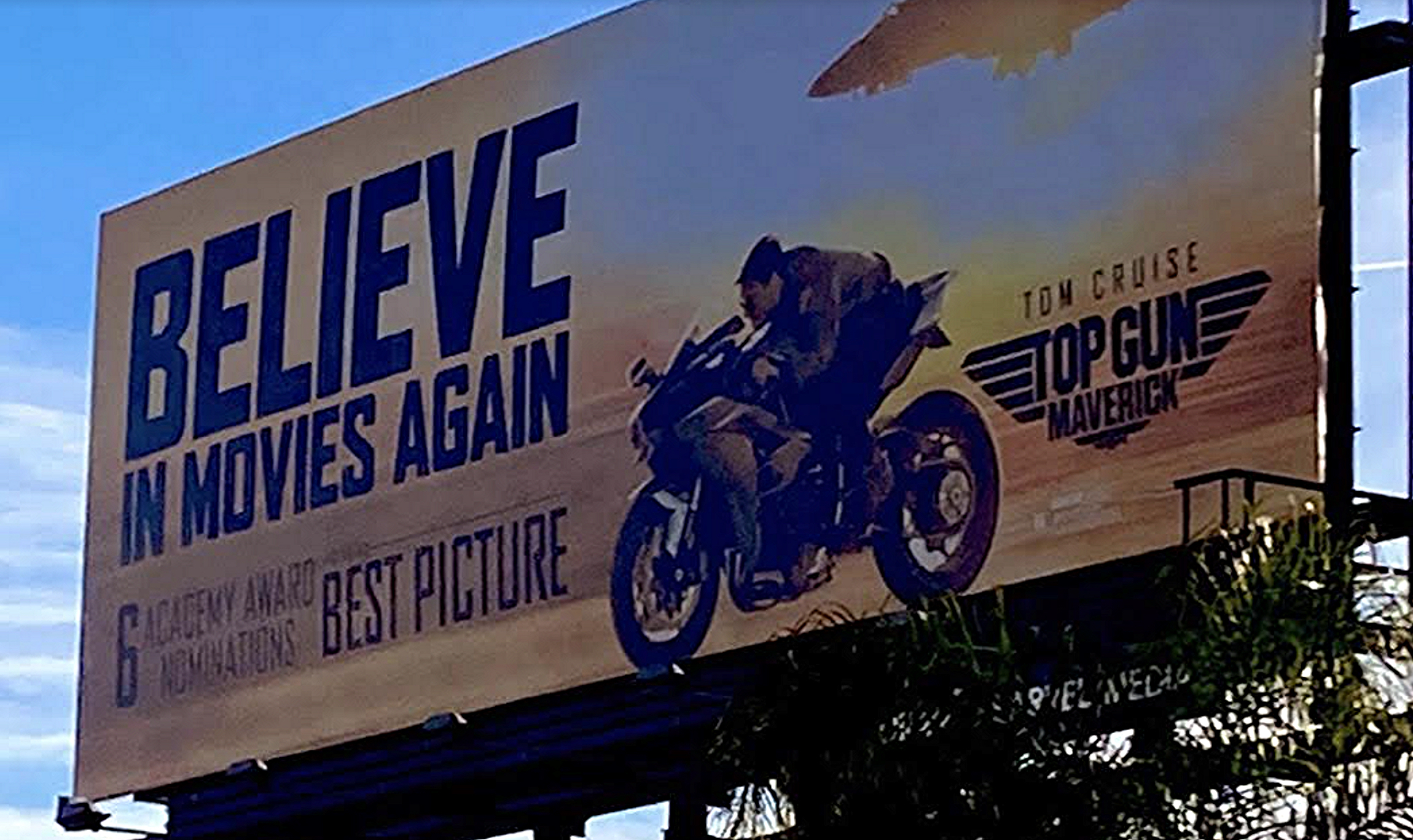
It seemed like the right pitch, and if you ask me this was underlined by the fact that Paramount recently launched a billboard ad campaign that echoed what my piece said.
At a time when the old energy current between Hollywood and mainstream audiences seemed to be dropping left and right, Top Gun: Maverick had pumped new life into the spirit of things, and should be roundly celebrated for reaching out and connecting…for making something actually happen in theatres at a time when too many films seemed to be limping along.
A Best Picture Oscar for a movie that had not only restored faith in exhibition but in Hollywood itself.
The current Paramount slogan says it all: BELIEVE IN MOVIES AGAIN. Which translates to BELIEVE IN HOW MOVES WERE DURING THE OBAMA ADMINISTRATION AND BEFORE. Which also translates into BELIEVE IN THE FUTURE and the distinct possibility that more films like Top Gun: Maverick could pop the champagne as long as Hollywood takes heed and acts upon the obvious.
Which is this: Joe and Jane Popcorn are sick of instructional woke content (identity politics, progressive guilt-tripping, historical presentism, torture-rack flicks like Last Night in Soho, a general aversion to anything rooted in straight-white-male perspectives, movies that constantly hammer the Millennial-Zoomer BIPOC gay trans #MeToo boogaloo…films that insist that entitled white assholes need to be scolded blah blah).
Joe and Jane Popcorn to Elite Hollywood Wankers: Whatever happened to movies like The Wedding Crashers, Tropic Thunder, Manchester By The Sea, Her, A Separation, Sicario, Leviathan, Hell or High Water, Call Me By Your Name, The Social Network, Superbad, Whiplash, The Witch, etc.? How about unwoke-ing your sorry asses and keeping it that way for the foreeeable future? And making more upcoming films like Ben Affleck and Matt Damon‘s Air? And while you’re at it, fire the Woke Award-Season Mafia goons and all the kiss-asses who keep pushing movies that make people miserable.
Alternate headline: “Make Joe & Jane Popcorn Happy, And They’ll Return The Favor In Spades.”
2nd Alternate headline: “Listen to Barry Diller!”
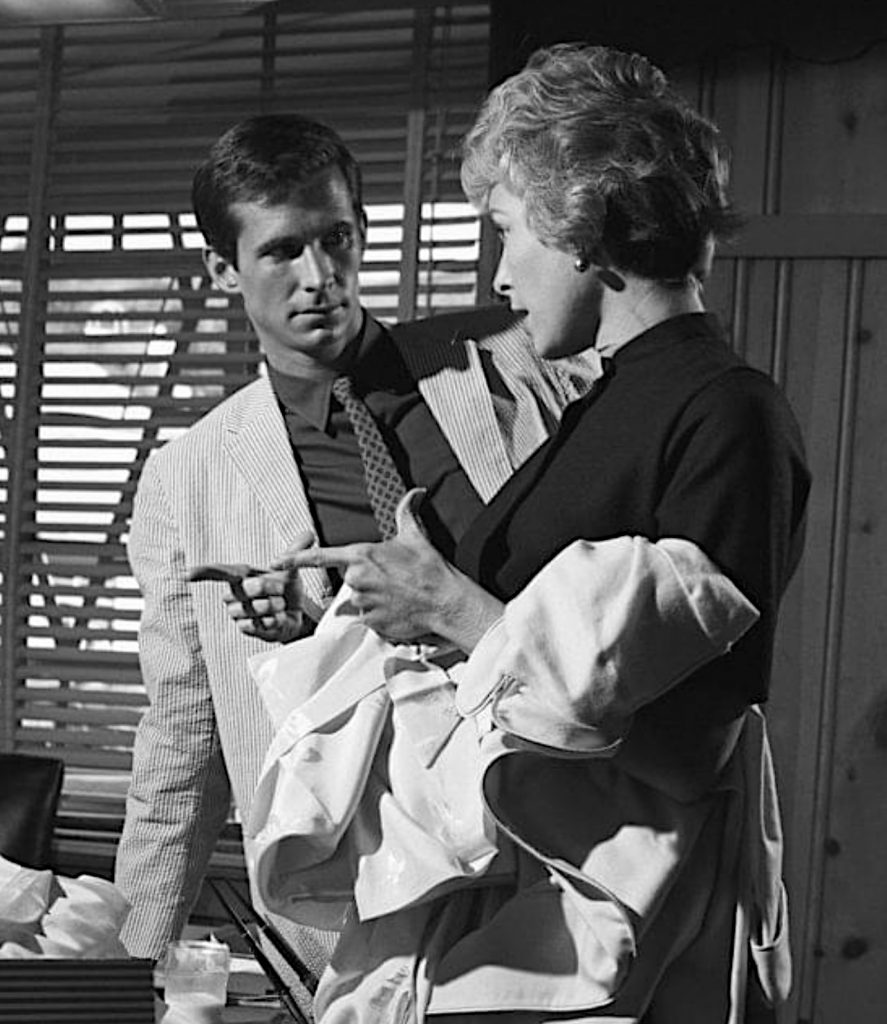
I really love that dark shirt, checked tie and striped summer sport jacket combo. I also wish the photo was in color. Almost certainly snapped around the 6.16.60 release of Psycho.
Malcolm Nance, 61, is an American author, media pundit and a “special executive for counterintelligence, terrorism, revenge, and extortion.” (Yes, the same words that formed the acronym SPECTRE, the bad-guy outfit featured in the ’60s James Bond films.) Nance is a former United States Navy Senior Chief Petty Officer specializing in naval cryptology, and last November he returned from a ten-month tour service in Ukraine. He joined the International Legion of Territorial Defense of Ukraine in March 2022. I really respect the guy.
The fact that Vincente Minnelli‘s The Four Horsemsn of the Apocalypse (’62) hasn’t been remastered for HD streaming or issued on Bluray — that should tell you something.
Bosley Crowther’s N.Y. Times review, published on 3.10.62, is also instructive. Crowther’s verdict ends with the following sentence: “The less attention paid to this picture, the better for the simple dignity of the human race.”
The rest of the review is pretty good also: “As different from Rudolph Valentino as Glenn Ford depressingly is — and, believe us, it’s more than just the difference between a guy who did the tango and one who does not — there is that much (and more) between the impressiveness of the filmed The 4 Horsemen of the Apocalypse, in which Valentino leaped to fame, and the one with Mr. Ford as its hero, which dragged its great sluggish bulk into Loew’s State yesterday.
“In the first place, this latest film endeavor to bear the name of Vicente Blasco Ibáñez‘ popular novel of World War I has no more resemblance to the novel — or, indeed, to the 1921 Rudolf Valentino film — than may be found in the similarity of names of characters and in a couple of cut-ins of ghostly horsemen riding in clouds of surging smoke across the screen.
“This one tells a slow and vapid story of a colorless Argentine sport (Glenn Ford), caught with his father, mother and sister in Occupied Paris during World War II, who takes up with the wife of a French journalist and, finally, when down to his last dress suit, joins the Resistance movement and carries messages in folded magazines. It is a pompous and idiotic fiction, and it is staged by Vincente Minnelli in an incredibly fustian ‘Hollywood’ style.
“Although some of it smacks of actual Paris and the country regions of France, most of it reeks of the sound stages and the painted sets of a Metro-Goldwyn-Mayer studio These, on wide screen in color and lighted like a musical show, convey no more illusion of actuality than did Snow White and the Seven Dwarfs.
“The second thing is the way it is played — or isn’t played — by a cast of the most non-Argentine and non-French seeming people you’ve ever seen. Mr. Ford as the gay hidalgo from the pampas who hits the boulevards wearing a gray fedora, black gloves and swinging an ebony cane is about as convincingly Argentine and possessed of urbanity as a high-school football coach from Kansas who has never been out of the state. And in his romantic scenes with Ingrid Thulin, who plays the wayward wife, he is aggressively flat and solemn. In short, he is just plain dull.
“Miss Thulin is beautiful and graceful, in her svelte Scandinavian way, but she is made to act a very shallow woman — and her voice and lip movements do not match. Charles Boyer is drab as the father who had been living in Argentina since his youth and still talks with such a thick French accent that all the other Frenchmen sound like hicks alongside him. Yvette Mimieux plays Mr. Ford’s young sister who gets in with a Paris student crowd that swings into the Resistance movement with all the fervor and frenzy of high-school rooters at a football game. Paul Henreid as the journalist whose wife deceives him and Paul Lukas as the Germanic uncle of Mr. Ford who becomes a top Nazi general in the Occupation dutifully go along. The less said of Karl Boehm as a Germanic cousin and Lee J. Cobb as the Argentine grandfather whose anti-Hitler sentiments in 1938 are as fiery as those of a Jewish character in Exodus, the better for all concerned.”
You might presume that dismissive reactions like Canby’s helped to diminish Ford’s career, as he soon after stopped appearing in grade-A productions. And yet on 4.13.62, only a month after Apocalypse opened, one of Ford’s best films ever, Blake Edwards‘ Experiment in Terror, premiered to excellent reviews and better-than-decent business. Ford’s performance as an emotionally somber San Francisco detective was one of his best ever.
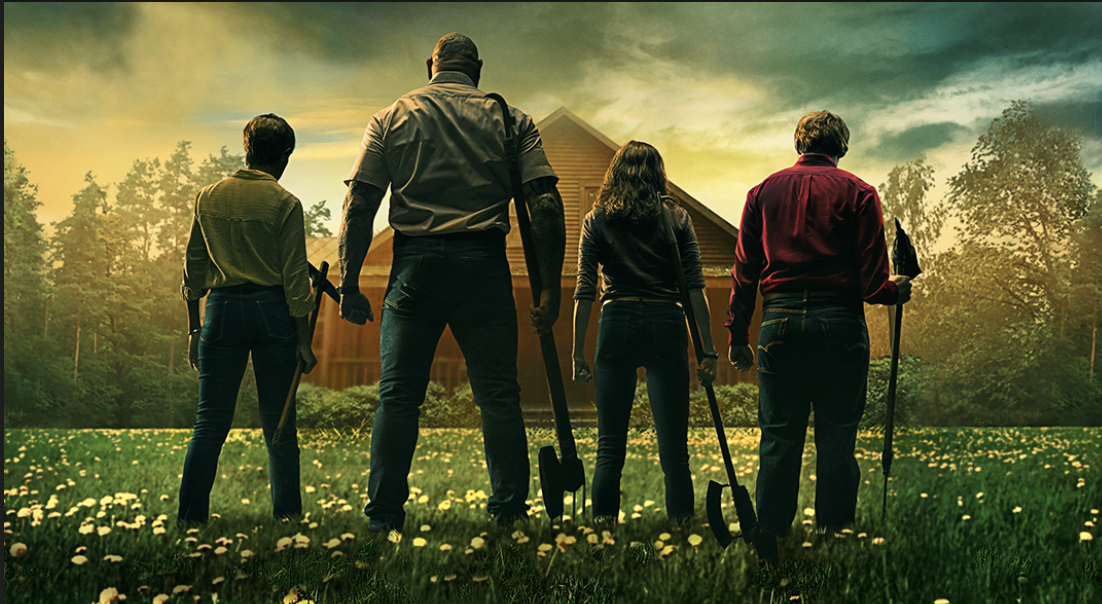
Last night I finally saw M. Night Shyamalan’s Knock At The Cabin. It’s more of a mystifying situational conceit than what most of us would call a movie or even a campfire tale. It’s based on Paul Tremblay‘s “The Cabin At The End of The World,” which I haven’t read. But the screenplay, co-authored by Shyamalan, Steve Desmond and Michael Sherman, feels like a surreal dream (i.e., arresting impressions minus a compelling narrative) that was never developed into the kind of thing that most films need — i.e., a story that coheres.
Is it okay to defy conventional storytelling logic in order to create a conceptual horror film version of a Luis Bunuel film (i.e., a kind of Exterminating Angel set in a woodsy cabin)? Yeah, you can do that, sure. But guys like me don’t have to like it, much less recommend it to their readers.
There’s a fanciful notion here — i.e., a couple of guys being asked to sacrifice one of their lives in order to stop a worldwide apocalypse — and I’m telling you it doesn’t pay off or hang together. Not even a little bit. I realize I’m obliged to at least consider it as Bunuel-influenced but my gut still wants to call it precious bullshit.
And how, by the way, does a gay couple’s experience with homophobia from all sides….how does this connect with a global apocalypse or, for that matter, an invading foursome (Tankbod Ripplehead, Nikki Amuka-Bird, Abby Quinn, Rupert Grint) who are described near the end as the Four Horsemen of the Apocalypse?
Which reminds me: Has anyone even thought of, much less seen, Vincent Minnelli‘s The Four Horsemen of the Aoocalypse (’62)? A MGM release that ran 153 nminutes, it costarred Glenn Ford, Ingrid Thulin (they exchanged fluids off-screen), Charles Boyer, Lee J. Cobb, Paul Lukas and Yvette Mimieux. I’ve never seen it, but I presume it was problematic
Boiled down, Knock At The Cabin is just a single-location “who dies and who lives?” thing, fortified or ornamented with a series of spooky end-of-the-world panoramas.
The best performance by far comes from Kristen Cui, who plays the adopted daughter of Jonathan Groff and Ben Aldridge‘s married couple.
Speaking as a serious fan of Groff (especially his starring performance in Mindhunter, which is only five or six years old), I was horrified to notice that he’s losing that young-guy physique and is becoming a bit stocky…no! What’s next — he grows a beard, puts on another 10 or 15 pounds and becomes a bear?
After Cabin ended I bolted upright, walked out to the lobby and immediately read the Wikipedia synopsis to see if I’d missed anything. I hadn’t. There’s a term for a movie like this — burn.
Why is it called Knock At The Cabin? Why isn’t it called A Knock At A Cabin? Why isn’t it called Tankbod Has An Axe?
“We’re supposed to hate Jaws now?” He was responding to “Did These Chinatown Viewers Understand?” And I replied by summarizing Peter Biskind’s “Easy Riders, Raging Bulls” as follows:
The huge primal successes of Jaws (6.20.75) and Star Wars (5.20.77) slowly bland-ified the moody, anti-establishment ‘70s thing that had permeated Hollywood…the New Experimental Anti-Conventional Hollywood Party Era that began with Bonnie and Clyde, The Graduate and The President’s Analyst (all released in ‘67).
Steven Spielberg and George Lucas, the directing maestros behind Jaws and Star Wars, pretty much killed the cool kidz party by injecting (a) a win-really-big greed jackpot virus into the Hollywood bloodstream and (b) a strain of thematic infantilization into movies in general.
These guys didn’t didn’t suck the creative oxygen out of the room deliberately or maliciously, but the massive success of their historic blockbusters gradually introduced the idea of “high concept” and suppressed the commercial intrigue factor among industry folk and audiences alike for adult movies like Night Moves, The Conversation, The Outfit, The French Connection, Z, Easy Rider, Mean Streets, Rosemary’s Baby, Raging Bull, Scarecrow, Get Carter, The Day of the Jackal, Dog Day Afternoon, Godfather I & II, That’ll Be The Day, Stardust, Sunday Bloody Sunday, Chinatown, The Hospital, Network, Prince of the City, The Ruling Class, Quadrophenia, The Last American Hero, Performance, Don’t Look Now, etc.