HE to wokester prigs: 42 and 1/2 years ago I was hitting hip parties and bars in London and hanging with some Time Out pallies and listening frequently to Bow Wow Wow, who were fresh and explosive and kicking it in early December of ’80.
Three ex-Adam Ant-ers (dummer David Barbarossa, guitarist Matthew Ashman, bassist Leigh Gorman) plus lead singer Annabela Lwin — 13 or 14 at the time, currently 56 or 57.
A TimeOut guy sold me a bootleg cassette that had, I felt, much better recordings of Bow Wow Wow’s early songs, including “Louis Quatorze.” And then I somehow lost the cassette and this (along with losing a nice leather handbag on the Underground) broke me.
“Louis Quatorze” is about a 14 year-old girl who’s into rape-sex with an older, gun-wielding hooligan boyfriend…perfect material for present-day Stalinists.
I was also occupied with interviewing Peter O’Toole for GQ and mourning the death of John Lennon and feeling the vibe of violent skinheads on the Underground…what an astonishing atmosphere it seems like now but not so much then.
Honestly? I’ve never been in love with Cuckoo’s Nest. It’s fine but it’s illogically plotted (McMurphy could have scooted any number of times), and I didn’t care for the lobotomy finale.
HE’s favorite Nicholson performances can be found in The Last Detail, Five Easy Pieces, Chinatown, Carnal Knowledge, Easy Rider, The Departed, Reds, As Good As It Gets, Wolf, The Shining, Terms of Endearment, Prizzi’s Honor, Heartburn, The Passenger, The Kings of Marvin Gardens. What is that, 15 films?
I saw Guy Ritchie‘s The Covenant last night, and was honestly blown away. As in amazed, startled, taken aback. And at the same time mesmerized and soul-panged. It’s a “do the right thing” rescue film against a ruggedly realistic war setting, and except for the formulaic (if irresistably satisfying) final act, it’s pretty close to perfect. Really.
Is it the best Middle Eastern war film since The Hurt Locker? Yeah, I think so. I liked it better that Lone Survivor.
Ritchie, to me, has always been an insincere fiddle-faddler and a cynical wanker, and all of a sudden he’s made a masterful, pared-to-the-bone Afghanistan war film for the ages? Pruned-down realism, emotional restraint, somber emotional tone…what the hell happened to the Ritchie I’ve known since Lock, Stock and Two Smoking Barrels (’98), or over the last quarter-century?
All these years he’s been saying “I’m a slick hack without a soul, a slick hack without a soul, a slick hack without a soul” and then he’s suddenly saying “wait, scratch that…I’m now a human being with a soul, and I’ve made a lean-and-mean war film that believes in honor and paying your debts and indisputable realism”?
HE to friendo (Friday, 4.21, 8:50 pm): “The Ritchie film is amazing. How could he make a slick, cynical piece of empty shit like Operation Fortune and then turn around and make The Covenant?”
Friendo to HE: “Indeed…How could he make these slick, empty-fake gangster films for 25 years and then make The Covenant? Really glad you liked it!”
Based on a script co-penned by Ritchie, Ivan Atkinson and Marn Davies, The Covenant feels like it’s based on a true story. It isn’t, but who cares? Remember that hairy combat sequence in TheHurtLocker in which Ralph Fiennes played a pivotal role? That’s what The Convenant mostly feels like apart from a Santa Clarita interlude and the gung-ho finale.
Jake Gyllenhaal is rooted and riveting as U.S. Army sergeant John Kinley, extra-sharp and focused and always looking for trouble out of the corner of his eyes.
But you know who steals this film? The second-billed, 45-year-old Dar Salim as Ahmed, Kinley’s interpreter who’s just as much in the crosshairs as Kinley, and who rescues the wounded Kinley from brutal Taliban termination during Act Two, and in turn is rescued by Kinley in Act Three. (Ritchie’s film was originally titled The Interpreter.)
You can’t take your eyes off Salim through the film, and the only time he doesn’t quite punch through and almost recedes into the background is during the thrilling, action-packed finale, which I didn’t mind at all because it’s truly wonderful to see the bad guys get ripped to pieces with burning hot lead.
And then a certain gut-punch wells up during the end credits, when we’re reminded that more than 300 Afghan interpreters and their families have been murdered by the Taliban, with God knows how many more currently in hiding, despite U.S. authorities having pledged to give them gold-plated visas for travelling to the U.S.
Seriously shot up and sinking in and out of consciousness, Gyllenhaal is carried up and down mountain trails and shielded from Taliban homicidals by Salim. He’s sent back home while Salim remains in-country, but there’s no peace in his soul…not a chance. Jake / Kinley knows he has to covertly return to Afghanistan and somehow get Salim / Ahmed and his family out of Afghanistan and into U.S. soil. It’s not easy and certainly not inexpensive, but the debt must be honored. Eventually it is.
It was only a few weeks ago, in my review of Operation Fortune, that I was insisting that Ritchie is a highly skilled but superficial-minded hack. The Covenant has proved me wrong. He may revert to hackery and whoredom down the road, but from this moment on I will never again call him a soul-less hustler. He has earned new stripes with this film.
Having arrived in the mid to late ’90s and therefore born with the internet in their blood and visually locked into screens, Zoomers are regarded with suspicion by GenX and certainly by boomers, and in some cases loathed.
They’re presumed to be short-attention-spanners who are not that good with face-to-face interactions (i.e., office environments). Self-centered, snooty or derisive with elders and reluctant (and in some cases unwilling) to negotiate or compromise.
Not to mention obstinate, living in their own digital realm, great at multi-tasking, quick to condemn and even boycott (i.e., cancel) those whom they regard as not up to speed in terms of progressive social issues.
They’re regarded as whiners, political hard-heads and job-hoppers…basically a pain in the ass.
If a couple of GenZ pilots were to magically time-travel to Barranca, the port-of-call in Only Angels Have Wings, they almost certainly wouldn’t last five minutes. Geoff Carter (Cary Grant) would see right through their entitled attitudes and dismiss their worthless asses before their first flight. He wouldn’t even let them drink at the bar. Plus they wouldn’t understand the emotional meaning of Thomas Mitchell‘s two-headed coin.
During last night’s “Overtime” segment, Bill Maher got into it with psychotherapist and sex educator Esther Perel. She ducked and dithered over the Dalai Lama’s “suck my tongue, kid” moment, and Bill challenged her sincerity in deciding to say nothing.
HE viewpoint: An 87 year-old holy man asking a tweener to suck his tongue is obviously perverse. One could go so far as to call it diseased.
What possible rationale could the 14th Dalai Lama have had in his head before saying this? My soul is so radiantly merged and perfectly harmonized with the infinite stream that whatever I, in a certain sense a mere mortal with the earthly name of Gyalwa Rinpoche…whatever I might say or think or do is so small and puny and insignificant that it can’t possibly interfere with the cosmic overall that represents the centrality of my being?
I am the Spiritual Bliss King of Tibet — I can do anything.
Whenever I run into Martin Scorsese, I say “Marty! Kundun! I liked it! I don’t want you to suck my tongue because you’re almost my age, for God’s sake, but I love you as much as the tweener child in question. We all need to offer the tips of our tongues to each other!”
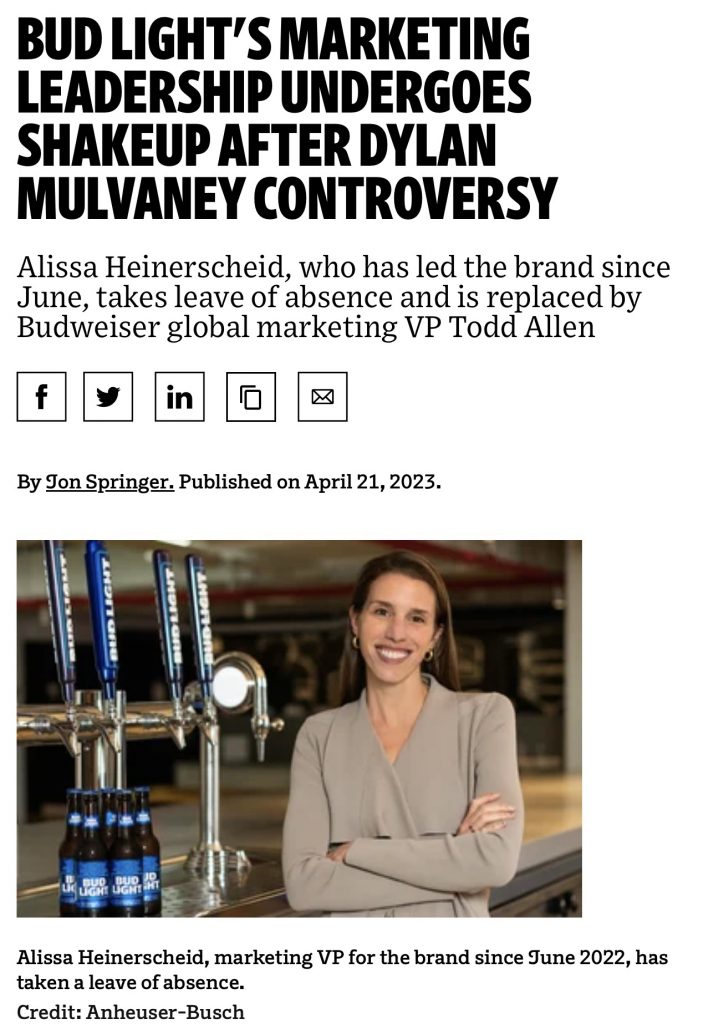
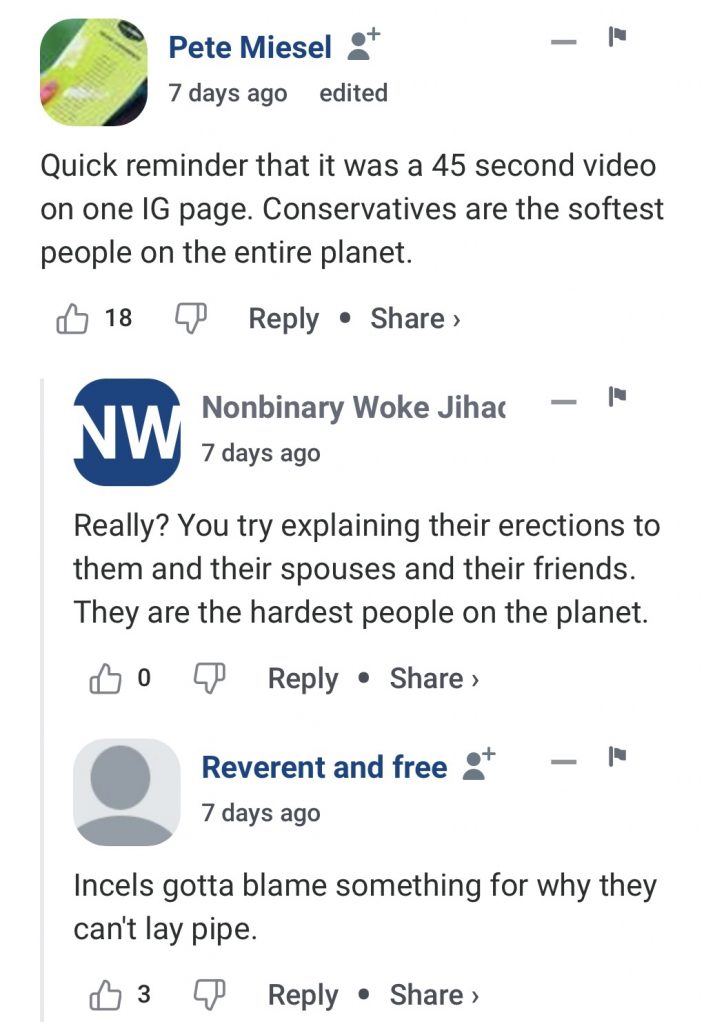
There are many HE commenters who called the Bud Light / Dylan Mulvaney thing a tempest in a teapot. They are now anxiously in search of tall grass. If they were men they would admit their error, but of course they won’t. Three of them are named below — one of them is Pete Miesel.
Being woke refers to “waking up to invisible alleged societal injustices, based on genetically inherited attributes — race, sex/gender and sexual orientation. And further, it creates a heirarchy, based on these genetic attributes, that says you’re either an oppressor or a member of an oppressed class.”
This is it — couldn’t be simpler or more concisely stated.
A couple of months ago Deadline‘s Pete Hammondsaid it was “as triumphant and tragic as Elvis“…nope. But it’s pretty good, and sometimes better than that. It’s certainly not a burn.
It’s a business-and-nothing-but saga of the meteoric rise and tragic collapse of the Blackberry device, spanning between the mid ’90s and 2012 or thereabouts.
I was never a BlackBerry owner but I loved the look of the later models (the convergent smartphone BlackBerry wasn’t released until ’02), and I understood the love from owners that I knew.
The three main characters are co-founder Mike Lazaridis (a white-haired Jay Baruchel), Jim Balsillie (a bald-headed Glenn Howerton) and Douglas Fregin (Johnson). It’s broken up into three chapters — awkward beginnings, riding high and crash-and-burn.
I didn’t really believe the first third (too clumsy and infantile), but the downfall section is quite gripping. BlackBerry is nowhere close to The Social Network, which is heads and shoulders more believable and better made. But it feels authentic (mostly) and generally hangs together
I’m not blaming Hammond for overselling BlackBerry in his Deadline review. He was a BlackBerry guy for years and years, and was shouldering a considerable emotional investment. Understandable.
To my slight surprise I liked Howerton’s “baldy” Balsillie more than I expected to. He’s a flinty hardnose with an explosive temper, but at least he’s a realist, which is more than you can say for Lazaridis and Fregin, or at least how they’re portrayed.
During the first half Baruchel and especially Johnson WAY overplay the nerd-child behavior…these guys behave like precocious twits who are verbally clumsy and certainly inarticulate, and they don’t seem to have a semblance of a notion of how to behave in a business-world realm. Guys this infantile and retarded can’t survive — I just didn’t believe their performances.
Johnson’s performance is especially infuriating. There’s an Act One scene in which he and Baruchel are making a presentation with an easel and several posterboards, and Johnson drops the presentation cards THREE TIMES. After the third time I threw up my hands and said “fuck this guy.” And he behaves like a precocious eight-year-old autistic savant. Over and over he’ll say maybe six or seven words to Baruchel and then freeze with his mouth open….stop acting with your mouth open!! And the GAH-GAH-DUHH-DUHH expression…Jesus!
Johnson to Howerton during their first meeting: “The internet is like the force….have you seen Star Wars?” Howerton (around 32 at the time) says no. What 30 year-old hadn’t seen Star Wars by the early ’90s? Howerton was 16 or 17 when it came out. No way he hadn’t seen it!
I can’t overemphasize how much I hated Johnson’s performance. I HATE GUYS LIKE THIS…guys with their infantile nerd-genius personalities and the head bandana and terrible dress sense. There’s no way the real Doug Fregin looked or behaved like that….there’s no way he used that frozen, open-mouthed, brain-meltdown expression over and over. I never want to see Johnson in a movie ever again. I wanted to see him shot or get hit by a car.
But the film is definitely decent and sometimes better than. It certainly held my interest, although it seemed to under-dramatize the heyday period. I wanted more specifics, more details about the tech and how this and that happened. The best parts of the film are the opening and closing chapters.
It should be noted that the real Mike Lazaridis, who’s worth hundreds of millions, appears to weigh at least twice as much as Jay Baruchel.
…aren’t the things you did wrong, but the things you didn’t do. These are the things that will surely haunt your soul into eternity.
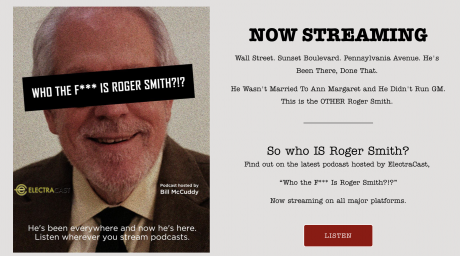
Roger W. Smith is one such haunted individual — tortured by the fact that Grace Kelly expressed a covert interest in meeting him clandestinely in Paris 40-odd years ago, in response to which Smith dropped the damn ball. Shame!
Smith (not the late husband of Ann-Margret) is the co-founder and executive editor of Global Media Intelligence, a media research service for major investors in media companies, and a former entertainment industry executive (1974-1996) with Warner Bros., Carolco and Live! Entertainment.
Smith worked for Carolco (Andy Vajna, Mario Kassar) in the mid ’80s, which is also when I worked as a Carolco under-publicist in the employ of Bobby Zarem and Dick Delson, so maybe I ran into him at one point. My memory is a blank.
The only thing that stands out for me is the Kelly episode. Smith was allegedly “hit on” by Monaco’s princess in July ’82. Smith took a meeting in Monaco with Grace and Prince Rainer, and in so doing pitched her on playing the Mary Astor part (a divorcee) in a remake of Dodsworth. Kelly was allegedly “quite keen” to play the part but was killed in a car crash, of course, in September of that year.
The important thing is that after the meeting Kelly discreetly asked Smith to pay her a visit a week or two hence at a certain Paris hotel. If you know anything about Kelly’s adventurous sexual history the invitation may have led to something (who knows?), but any self-respecting, red-blooded male would have at least given Kelly a call when she was in town.
What did Smith do? He either blew her off or forgot or had another appointment or something. Ignominious!
I’m horrified about Kokomo City star Koko Da Doll, 35, having been shot and killed last Tuesday in Atlanta. Variety‘s Angelique Jacksonreported her death last night (4.20).
The immediate assumption, of course, is that Koko (aka Rasheeda Williams) may have been killed by a hate-crimer, but no one seems to know what actually happened so let’s see how the story unfolds. Obviously a terrible tragedy. Hugs and condolences to friends, fans, colleagues.
Atlanta cops are saying Koko was found with a gunshot wound in Southwest Atlanta shortly before 11 p.m. eastern on Tuesday.
Directed by D. Smith, Kokomo City is a feature-length doc about four trans sex workers living in Atlanta and New York City — Koko, Daniella Carter, Liyah Mitchell and Dominique Silver — as they confront the dichotomy between the Black community and themselves, as well as the persistent threat of violence they face each day.”