Son of “If A Relationship Hurts and Eventually Draws Blood, It’s Wonderful”

Originally posted on 4.22.16: Yesterday that pithy Woody Allen line from Cafe Society — “Life is a comedy written by a sadistic comedy writer” — was ricocheting all over the twitterverse.

My first reaction was that shorter is better — “Life is a comedy written by a sadist.”

My second was that Allen’s line alludes to what I believe is the central sickening irony in romantic relationships, which is that the only way to last with someone is to not be 100%, head-over-heels, cunnilingus-two-or-three-times-per-day in love with them.

If you’re happily, contentedly, earnestly in love as far as it goes — if you’re settled, semi-complacent and comfortable with an attractive lady of good character but not down on your knees in love with her, things might work out.

But if the wonder and rapture of going to bed with this or that object of erotic deliverance is a prevailing current in your relationship, sooner or later she’s going to start assessing your feelings as neurotic and identifying them as a weakness, and she’ll soon after develop a distaste for it and gradually cut you loose. So the likelihood of getting dropped or jettisoned is unfortunately quite high.

You can’t be crazy in love — you have to be confidently, peacefully, sincerely, half-solemnly and moderately in love. Then and only then can things work out…maybe.

Posted on 10.28.13 after a breakup: “One of life’s darker ironies is that the relationships that I know could last forever are always the ones that I can walk away from without too much concern because I’m less smitten than she is.
Read more

Odious Hit Piece

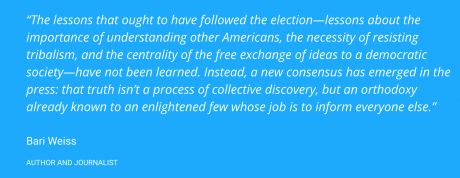
Earlier today I was urged to read The New Yorker‘s craven attack this week on FAIR (Foundation Against Intolerance and Racism) and Bari Weiss, titled “Is It Possible to Be Both Moderate and Anti-Woke?

HE to author Emma Green: It’s not only possible, but an actual story about the lives of many people these days…sensible liberals grappling with progressive nutterism on a day-by-day, blow-by-blow basis.

Friendo #1: “New Yorker editor David Remnick is all in on the woke agenda, and because he has the power and the intelligence to know better, he’s kind of a bad guy. As in ‘get outta here, man…you’re bad news!’

“In the FAIR/Bari Weiss piece, The New Yorker is trying to characterize the sensibles — not rabid right-wingers, but liberal/moderates who reject wokeness — into some tiny fringe group of stragglers, like the Japanese soldiers who were still fighting World War II after it ended.

“In fact, I would characterize the people who reject wokeness as 80% to 90% of liberal/moderate adults nationwide. Nobody and I mean nobody likes this shit.

Green’s New Yorker story is flat-out propaganda posing as journalism.”

Friendo #2: “Ww’re living through a kind of Weimar Germany time. Do the hard-left wackos really think it won’t lead to an even worse backlash on the right?

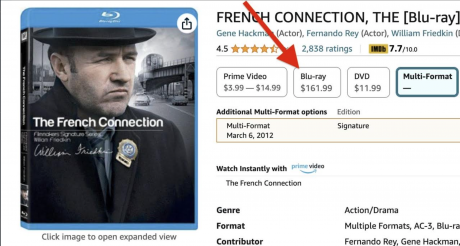
“The piece is so unfair to Weiss. For Remnick and Green to call her site, The Free Press, which she’s worked so hard to keep as neutral as possible, just another ‘far right’ site is really disgusting. I hate the gaslighting. These problems exist. They are real. No one would have even known about the French Connection censorship thing had one of Jeff’s readers not noticed.

“They’re going back and changing words of books, and suddenly we’re just like China [during the Great Cultural Revolution]. But don’t worry — it’s all okay because it helps the wokesters feel like they’re better people. Well, that’s what it did in China too!

“I miss the old left.”

Friendo #1: “The right is banning books (which I despise), but the left is banning ideas (which I despise even more). Both sides are cults. That’s a lose-lose situation.

Choose Your Own Derangement

In a just-posted comment in the “People’s Revolt” thread, Filmklassik responded to an observation by Lauren Bertrand about the wokey wackos.

“For all their faults and lack of vision, conservatives don’t seem too keen on boldly reinventing society with the hopes of a utopia on the horizon,” she wrote. “They understand how deeply flawed and corrupt human nature really is, in part because they’re much more likely to be religious (also explains their lack of vision), but this fosters an a priori cynicism that never expects humans to transcend their pettiness, greed, and envy.”

Filmklassik: “I understand why people of the 1990s preferred their own time to, for example, the Eisenhower era, when the McCarthy witch hunts were still going on, Jim Crow was still in effect, homosexuality was still a criminal offense, and women in many ways were still second-class citizens.

Bottom line: I understand why, for many people, the formulation was that Clinton’s America was vastly preferable to Eisenhower’s America. I get it.

“But for the life of me, I do NOT understand why anyone would prefer city life in 2023 compared to the mid-1990s. Or, God forbid, academic life in 2023 compared to the mid-‘90s. Or hiring practices in 2023 compared to the mid-‘90s. Or cultural restrictions on expression and storytelling in 2023 compared to the mid-‘90s.

“I mean, are you fucking kidding me??

“Who can view the trend-line in those areas as anything resembling progress? Answer: Progressives.”

“I’d Wake Up And There’d Be Nothing”

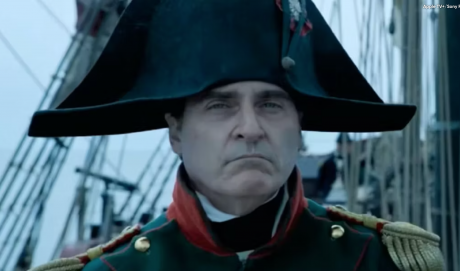
Reportedly Ridley Scott‘s Napoleon (Apple, 11.22) isn’t a chapter-and-verse history of the rise and fall of the mercurial French emperor (Joaquin Phoenix), but a story of “Napoleon’s rise to power through the lens of his addictive and volatile relationship with Empress Josephine (Vanessa Kirby).”

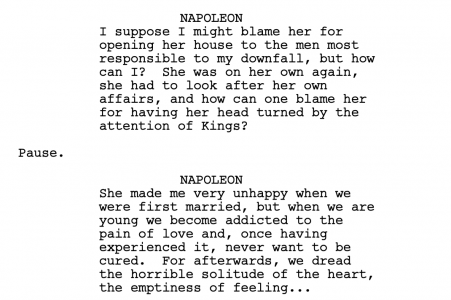
With this in mind, I was struck yesterday by a passage from Stanley Kubrick‘s Napoleon script, which of course was never filmed. It appears near the end of the story, and is basically Napoleon’s conveyance of the heart of his relationship with Josephine when they were both young.

The idea is that the pain and torment of a love affair is preferable to its absence — that nothing is worse than the void.

First Impression

“This Page Six article is so misleading,” an attorney friend wrote yesterday. “He, Elliott Page, did not have the affair with Olivia Thirlby. Ellen Page did. The article’s use of pronouns to me is totally misleading.”

The article is drawn from an excerpt from “Pageboy,” the trans actor’s recently published memoir.

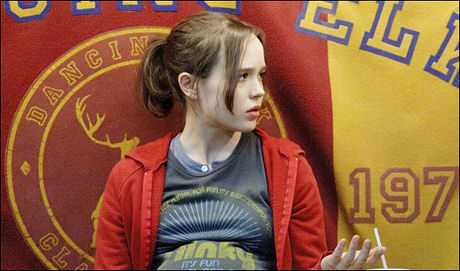
I was recalling last night how things were 15-plus years ago, back when Page, 36, was Ellen, 20 or 21, and the blogaroos (myself included) were having a field day with her/his/whatever’s performance in Jason Reitman‘s Juno.

Page’s performance was peppy and upfront and fully relatable, but I always had trouble with her (am I guilty of dead-naming Page by recalling the old days?) as a sexual being, which is to say a person who generates stirrings along said lines.

Posted on 12.16.07: Ellen Page‘s Juno performance is highly likable and sympathetic. You’re with her from the get-go because of her indefatigable spunk and pizazz. But the first time I saw Juno (at the Toronto Film Festival), I had a thought that wouldn’t leave me alone. It’s going to sound a little oddball but here it is. My first thought was ‘how and why did Page’s character get pregnant?’

More to the point, why did director Jason Reitman cast an actress based on her sass and spirit, but with no regard for the fact that in the real world a young woman who looks like Page — midget-sized, on the scrawny side, looking like a feisty 11 year-old with absolutely nothing about her that says ‘alluring breeding-age female’ — most likely wouldn’t exactly be fighting off the attentions of hormonally-crazed teenage boys, including nice-guy dweebs like Michael Cera‘s character?

Unfortunate pregnancies happen to young girls of all shapes and sizes — obviously, sadly — but I kept saying to myself (and I’m writing this having once been 16 and 17 years old) that Page is the super-bright girl you want for a good friend — someone you can talk to at 12:30 ayem on a school night when you’re depressed or in trouble or enthusing over a band you just heard. But she’s not what any teenaged boy would call a hot package. She’s got the soul and the wit and the attitude of a Dorothy Parker (and the value that comes with such a person is priceless), but Juno is about an accidental breeder, and certain qualities need to be evident for this to happen in most circumstances.

Every time I’ve seen a too-young pregnant girl in real life I’ve quietly remarked to myself for this or that reason, “Too bad, but I can sorta see how that happened.” I’m just saying it didn’t quite calculate when I first laid eyes on Page. I’ve been sitting on this impression for three months now, and didn’t express it because I knew people would call me a dog. But it’s a fair thing to say, I think. Page is great on her own, but she doesn’t seem right for the role. Or rather, she’s right in every way except physically.

Read more