Some people have voices that sound so steady and self-assured and velvety you almost don’t even care what they’re saying….you just want to listen to that rich timbre, those purring tones, that wonderful phrasing and diction. I’m not talking about singing voices but the simple realm of words, phrases, sentences, thoughts.
I was thinking the other day about Kamala Harris‘s profoundly annoying voice…thin, a bit raspy, no music or rhythm…and what a terrible speech-giver she is.
And this morning I was thinking about the other side of the coin — the voices of Barack Obama, Morgan Freeman, young and middle-aged Ingrid Bergman, JFK, Judi Dench, Freddie Jones, David McCullough, Richard Burton, Sean Connery, Sir Ian McKellen, Lauren Bacall, Helen Mirren, Carey Mulligan, James Earl Jones, Jeremy Irons, Michael Wincott. Who else?
Time and again Steve Schmidt, a brilliant political operator and a decent human being, refuses to even mention, much less speak out against, the lemmings-over-the-cliff insanity of the censorious wokester left and their relentless emphasis upon race, sexuality and gender ideology agendas. Everything he says below about Trumpism is true and real, but if he continues to ignore hard-left lunacy he will never be the influencer that he wants to be.
Steve Schmidt: “Make no mistake about it. Donald Trump stands for revenge and retribution. Against who? His enemies. And his enemies are anybody who isn’t in line…obedient, fully…to Donald Trump. Over and over and over again, he has made this clear, and what he have now is a whole of soceity problem. Because of the crisis of cynicism and cowardice that has fully and wholly overtaken the Republican party, and the crisis of competence within the Democratic party…[and this] the party, once stamped by FDR and John Kennedy, has not yet been unable to put down this anti-American fascist movement with argument to the American people…about is indecency, its immorality and its great danger.”
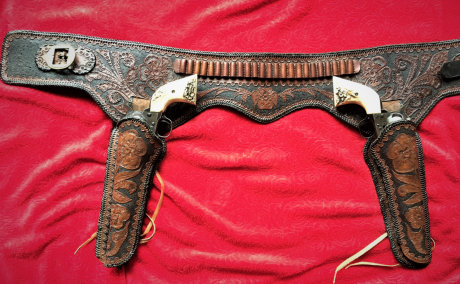
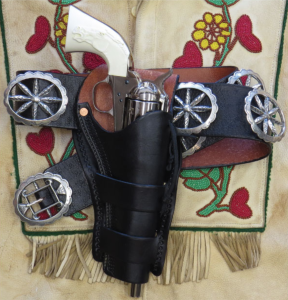
I feel sorry for any guys out there who’ve never known the deep pleasure of walking around with a serious, old-fashioned, heavy-leather gun belt, holster and Shane-style six-shooter.
I’m not talking about some cheap-ass, nickel-and-dime, half-plastic gun belt and six shooter cap pistol that you might’ve worn as a kid in the ’50s, ’60s or ’70s. (I don’t know when seven-year-old kids stopped pretending to be cowboys, but it was probably in the mid ’70s when Star Wars came along.) I’m talking about the kind of hand-crafted, real-deal rigs worn by Alan Ladd in Shane, Gregory Peck in The Gunfighter, John Wayne in Stagecoach and Red River, Burt Lancaster in Vera Cruz, Ricky Nelson in Rio Bravo, Gary Cooper in High Noon, Marlon Brando in One-Eyed Jacks, etc.
I strapped on a serious western leather rig on a movie set back in the late ’70s or early ’80s (I forget the details) and I’ve never forgotten the glorious manly feeling…the smell of well-oiled leather, the weight of those iron guns, those thigh straps, those bullets tucked into the bullet holders…all of it.
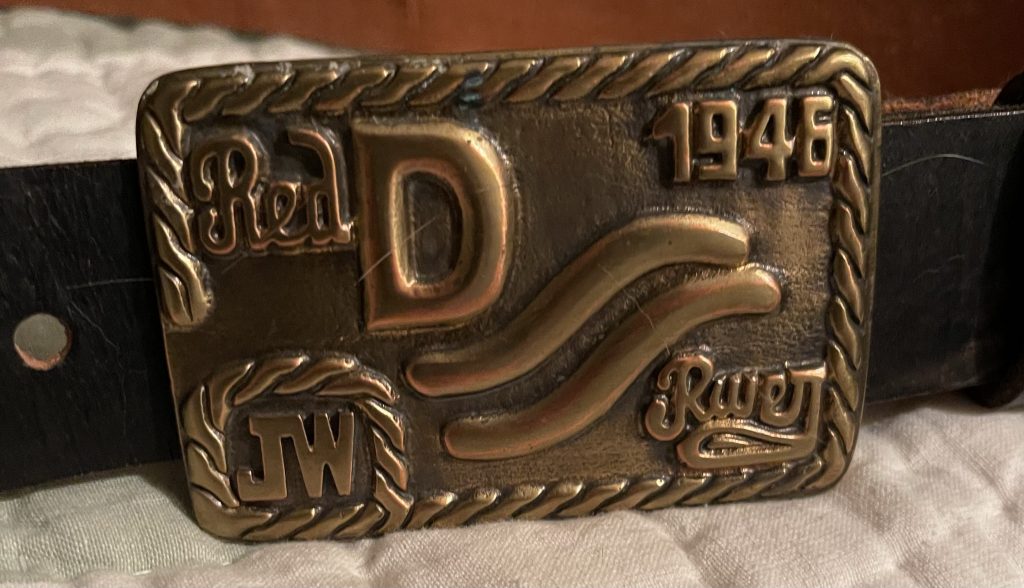
There’s something hugely joyful about reuniting with my mail-order John WayneRed Riverbrassbeltbuckle. The fact that I’m happy to once again have it in my possession means, of course, that I’m just as much of a racist swine as Wayne was during his lifespan, and has nothing to do with my loving the 1948Howard Hawkswestern (which, as the buckle points out, was actually shot in ‘46).
Anyone familiar with the famous jail-cell scene in Martin Scorsese and Robert DeNiro‘s Raging Bull knows something about irony. For watching a crude and bestial man experience the absolute nadir of his bruising (and bruise-dispensing) life…his explosive acting out of feelings of absolute and overpowering self-loathing…this horrific episode results, for viewers, in something oddly cleansing and almost therapeutic.
This was DeNiro’s all-time peak moment…the kind of bravura acting moment that only a young or youngish fellow can capture or deliver. It was also the grand crescendo of DeNiro’s initial glory chapter (’73 to ’80), the highlights of which were Bang the Drum Slowly, Mean Streets, The Godfather Part II, 1900 and Taxi Driver.
Chapter Two began right after Raging Bull and continues until this day — The King of Comedy (’82), Once Upon a Time in America (’84), Brazil (’85), Midnight Run (’88), Goodfellas (’90), This Boy’s Life (’93), Heat (’95), Casino (’95), Analyze This (’99), the Meet the Parents films (2000–2010), Silver Linings Playbook (2012), The Intern (’15) and The Irishman (’19).
If you start with Brian DePalma‘s Greetings (’68), DeNiro has been at it for 55 years.
Two-time Oscar winner Shelley Winters (1920-2006) was the absolute best — no side-stepping, said what she felt, straight-from-the-gut candor at all times. And I’m not just saying this because I ran into her a few times and liked her from the get-go. Always an artist first and a diplomat second. Smarts, steel, liberal-progressive views, etc.
I never realized she was a frank and gutsy personality until I saw her go up against the chauvinistic Oliver Reed on Johnny Carson‘s Tonight Show — a legendary encounter that ended with Winters pouring an alcoholic drink over Reed’s head.
My first conversation with Winters happened inside the Plaza Hotel during the filming of Frank Pierson‘s King of the Gypsies (’78), in which she was costarring with Sterling Hayden, Susan Sarandon and Eric Roberts. A brief exchange of pleasantries, nothing more.
My second Winters encounter happened in Los Angeles around five years later, in late 1983. I was seated right next to her at a Cannon Films press luncheon for Over the Brooklyn Bridge (held just prior to shooting). We were chatting amiably about everything…good vibes. When producer-director Menahem Golan got up before a mike and began making a speech, Winter began shaking her head and said to anyone within earshot at our table, “Don’t like him… nope, don’t like him.”
That was it — I was in love.
I met Winters again in 1997 at the Silver Spoon, a now-destroyed breakfast place in West Hollywood, while interviewing with Jackie Brown‘s Robert Forster She walked up to our table, Forster introduced us, I recapped our slight history, etc. Winters told me I reminded her of an old boyfriend from New York.
Winters knew Marilyn Monroe pretty well, roomed with her for about a year between 1947 and ’48. For decades after Monroe’s passing Winters was repeatedly asked about her, and offered pretty much the same recollections.
Monroe began to enjoy life a bit in the late ’40s, Winters said, and had a genuinely thrilling and abundant life in the ’50s, but not so much in the early ’60s. Monroe wasn’t well educated but was highly intelligent and constantly reading. Totally into older-guy father figures. No family, no support group, suspicious of most would-be friends or acquaintances. Key quote: “If she’d been a little dumber, she would’ve been happier.”
Monroe began to slip into an increasingly troubled place when she hit her mid 30s, which, back in the day, was when actresses needed to begin thinking about transitioning into character roles and/or playing mothers, or so Winters believed. But in the early ’60s the big studios didn’t want Monroe as a character actress — they wanted her to go on being a 25-year-old blonde sexpot forever. (When Winters signed to play a 40ish old-school motherly type in The Diary of Anne Frank, for which she later won a Best Supporting Actress Oscar, director George Stevens told her that “because of this role you’ll be able to work for the rest of your life.”)
Winters believed that Monroe’s August 1962 death from a sleeping-pill overdose was most likely an accident, and that she’d just forgotten how many she’d taken earlier. “I’ve done that,” Winters said.
HE to Venice Film Festival viewer: “What’s with the soft-focus appearance of Wes Anderson‘s The Wonderful Story of Henry Sugar (Netflix, 9.27 streaming)? Not to mention the very slight blueish tint? Was it shot in 16mm or something? It looks odd.”
Venice Film festival viewer to HE: “That was not my experience of it in Venice at all — it was pristine, perfectly focused, and correct in color. [And yet} it apparently was shot in 16mm. But it didn’t look hazy in Venice. The whole color scheme as it appears in the trailer does tend to blue, but that’s as much a function of the art direction as anything else. You can’t judge the whole by the trailer.”
“HE truth bullet” commentary represents the kind of bottom-line reality check that Feinberg isn’t allowed to pass along at this stage, as he’s obliged to be diplomatic.
BEST PICTURE FRONTRUNNERS:
Oppenheimer (Universal) / HE truth bullet: Academy members have no choice but to nominate Chris Nolan‘s film because of the great reviews and excellent box-office. The bottom line is that despite its many commendable aspects, Oppenheimer is overly dense (i.e., it doesn’t breathe) and is rather punishing to sit through when you watch it for the second time. Plus Nolan wimped out by avoiding the horrors of Hirsoshima and Nagasaki.
The Holdovers (Focus) / HE truth bullet: A well-written, perfectly acted, old-fashioned ’70s relationship film…pure crowd pleaser, total home run, flawless within its realm.
Barbie (Warner Bros.) / HE truth bullet: Guaranteed to be nominated for the box-office explosion aspect alone, and it might even wind up winning, especially given its popularity among the quarter-of-an-inch-deep New Hollywood Kidz. But it’s pure feminist candy and is really too misandrist when you step back and think about it. Best Picture Oscars should be about more than just the mere earning of big money.
Poor Things (Searchlight) / HE truth bullet: A glint-of-madness feminist fantasy…wildly imaginative, Terry Gilliam-like sexual Barbie with actual fucking going on. The sexual current will put off some within the 45-plus community.
Killers of the Flower Moon (Apple/Paramount) / HE truth bullet: A highly respectable historical drama as far as it goes, but far from a home run. No strong point of view about anything. HE gives it a respectable B or B-minus.
The Zone of Interest (A24) / HE truth bullet: Searing moral perceptions by way of alluded-to Nazi horrors, but overly dry, chilly and oblique. Yes, I know — “oblique” is the basic idea.
Past Lives (A24) / HE bullet: Forget it — an unsatisfying, wafer-thin non-romance that lacks nutritional value. Not happening.
American Fiction (Amazon — haven’t seen it)
Anatomy of a Fall (Neon) / “Good’ European courtoom drama but too long, too protracted, no real surprises, doesn’t really pay off.
Nyad (Netflix — haven’t seen it but Oscar action sounds like a stretch).
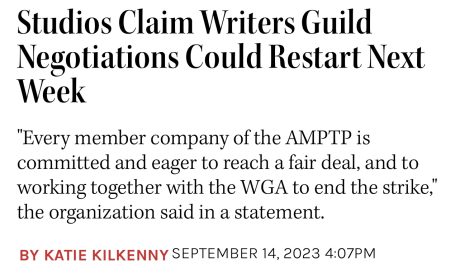
Director friendo #1 on the economic impact of the WGA and SAG/AFTRA strikes: “People are losing their homes. It’s happening all over town. I know a couple with two kids who’ve been forced to move out of their home and into a one-bedroom apartment. It’s awful. Writers, actors, crew people…everyone dependent upon any sort of industry-based income. Everything stops.”
“This is what the producers want, of course. They want to see this kind of desperation, this kind of pain.”
Director-writer friendo #2: “Indeed, people are suffering all over town, and not just below the line. The WGA was hellbent on a strike in a very different economic climate with transmuted players. Streamers aren’t vertically integrated studios.
“Yes, people are sinking. Some institutions are working with the casualties of this strike, which is akin to war, whilst others can’t due to still not recovering from the pandemic. Landlords need their rent and many didn’t receive the Covid subsidies.
“People are losing homes, cars and savings. Some are downsizing while others are fleeing the state or transitioning into other fields if they’re lucky.
“One young woman I met on the picket lines had been on a writing staff, but is now bartending again. That’s a job she’d left behind after becoming a writer.
“There is massive collateral damage from this strike.
“Nevertheless, with the dissolution of a traditional TV business and the marginalization of feature films, side hustles will soon become the primary sources of income for many…if they’re lucky.
“The WGA has a link on their page so striking writers can apply for food stamps. That speaks for itself about the state of things.
“Part of the problem is that WGA leadership, people like David Goodman and Patric Verrone, are outsiders steeped in animation. They’re not industry players like John Wells was.
“If someone like Chuck Lorre was a Guild president, the odds of avoiding a strike are always greater.
“I seriously doubt the WGA anticipated a strike would last this long, but they’re intractable in their positioning and this strike was preordained long before it occurred.
“The WGA guys couldn’t strike last time due to the pandemic, but were hellbent this time.
“When Goodman was previously Guild president, he fixated on eliminating packaging fees at the expense of other issues of greater importance.
“Goodman, Verrone and others enjoy being at the bargaining tables with power players because they’ll never meet these CEOs through their respective oeuvres.
“Of course artist need protections and more money, but they also need to be in a healthy business, which thisisn’t. The corporations and conglomerates ruined it.
“That wouldn’t have occurred if the companies hadn’t thought of art as content. And a bottom line mentality also means that their content creators are disposable. They’re not thought of as artists wherein talent relations are important.
“Instead, the oligarchs are punishing creative serfs, determined to insure that this is the last strike in a very long time.
“Negotiating wise, the WGA has yet to send a more detailed response to what’s considered egregious about the last offer, but it appears the CEOs and AMPTP are desperate to try to mostly hold the other unions to the same deal the DGA received. That won’t work for writers and actors, since both have different needs.
HE: “What are the principal differences between what actors and writers want?”
Director-writer friendo #2: “There are many differences since writers originate projects while directors =execute them. Directors don’t create TV shows, as one example, but the directors of pilots tended to get perpetual fees. James Burrows is a wealthy man.
“I would surmise AI doesn’t pose a threat to directors since it’s a tool that can budget and storyboard. AI replacing writers and actors are different scenarios.
“One wants more guarantees, and both want more residuals and transparencies from streamers.
“There are also new provisions being sought for free work and online auditioning, but it’s all bupkis. Everybody wants more money.
The key narrative focus, of course, is class warfare.
Dumb Money is a Frank Capra-esque tale of a battle of influence between financially struggling, hand-to-mouth Average Joe stock investors vs. elite billionaires who tried to reap profits out of shorting GameStop.
The legacy of the 2008-through-2010 recession and movies like Margin Call (’11), The Wolf of Wall Street (’13) and The Big Short (’15) resulted in considerable hostility towards Wall Street hedge fund hotshots.
The venting of this anger was enabled by the ability of hand-to-mouth, small-time traders keeping up with fast market changes through social media investment sites like R/wallstreetbets.
I’m too dumb to fully understand the intricacies of the term “short squeeze**,” but I understand the broad strokes.
I didn’t love Dumb Money, but I paid attention to it. It didn’t exactly turn me on but it didn’t bore me either. I didn’t once turn on my phone. I was semi-engaged.
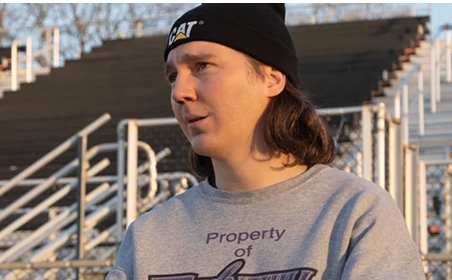
Paul Dano‘s performance as Keith Gill, the main stock speculator and plot-driver, is fairly compelling. The costars — Pete Davidson, American Ferrara, Seth Rogen, Vincent D’Onofrio, Nick Offerman, Anthony Ramos, Sebastian Stan and Shailene Woodley — deliver like pros.
I spent a fair amount of time wondering why the 39 year-old Dano is heavier now than he was as Brian Wilson in Bill Pohlad‘s Love and Mercy, for which he intentionally gained weight. The real Gill is semi-slender or certainly not chubby.
Clearly Margin Call, The Big Short and The Social Network have far more pizazz and personality.
** “A short squeeze is a rapid increase in the price of a stock owing primarily to an excess of short selling of a stock rather than underlying fundamentals. A short squeeze occurs when there is a lack of supply and an excess of demand for the stock due to short sellers having to buy stocks to cover their short positions”…huh?
Please go to the 8:37 mark in this discussion between CNN’s Anderson Cooper and Rep. Nancy Pelosi, who recently declared she’ll be running for re-election in 2024:
Anderson Cooper: “Is Vice President Kamala Harris the best running mate for [President Joe Biden]?” Nancy Pelosi: “He thinks so, and that’s what matters.”
In other words, Pelosi doesn’t think Harris is the best option but doesn’t want to rock the boat or stir up trouble.
Nakedly Honest Pelosi Translation: “Obviously she’s unpopular and not respected, and is therefore a terrible albatross for this president, but he appears to believe that he’s stuck with her and so we’re stuck with them both and it’s awful.
“People are truly terrified that President Biden, who, if re-elected, will be 82 when he takes the oath of office in January 2025, may become incapacitated or fall ill or worse sometime during his second term and that Harris will become president. If President Biden, in conversation, was as sharp and lively as myself, it would be a different story. But he can barely get through two or three sentences without stumbling.
“This is a truly terrible situation to present to American voters — a shuffling, muttering, forgetful, fuzzy-brained president, obviously diminished by age as we speak and sure to diminish further as the years takes their inevitable toll….a president who may or may not go the distance, God forbid, and so a vote for Biden-Harris is an automatic vote for a potential President Harris, and in the minds of tens of millions of voters, including a likely majority of Democrats, that is a terrible proposition to put forward. So obviously she is not the best running mate for President Biden.
“Honestly? Joe himself should give serous consideration to hanging up his holster and letting the far more age-appropriate Gretchen Whitmer or Gavin Newsom step in to the breach. But he won’t do that, of course. He can he drooling and half-conscious in diapers and pushed around a wheelchair and he won’t quit.”