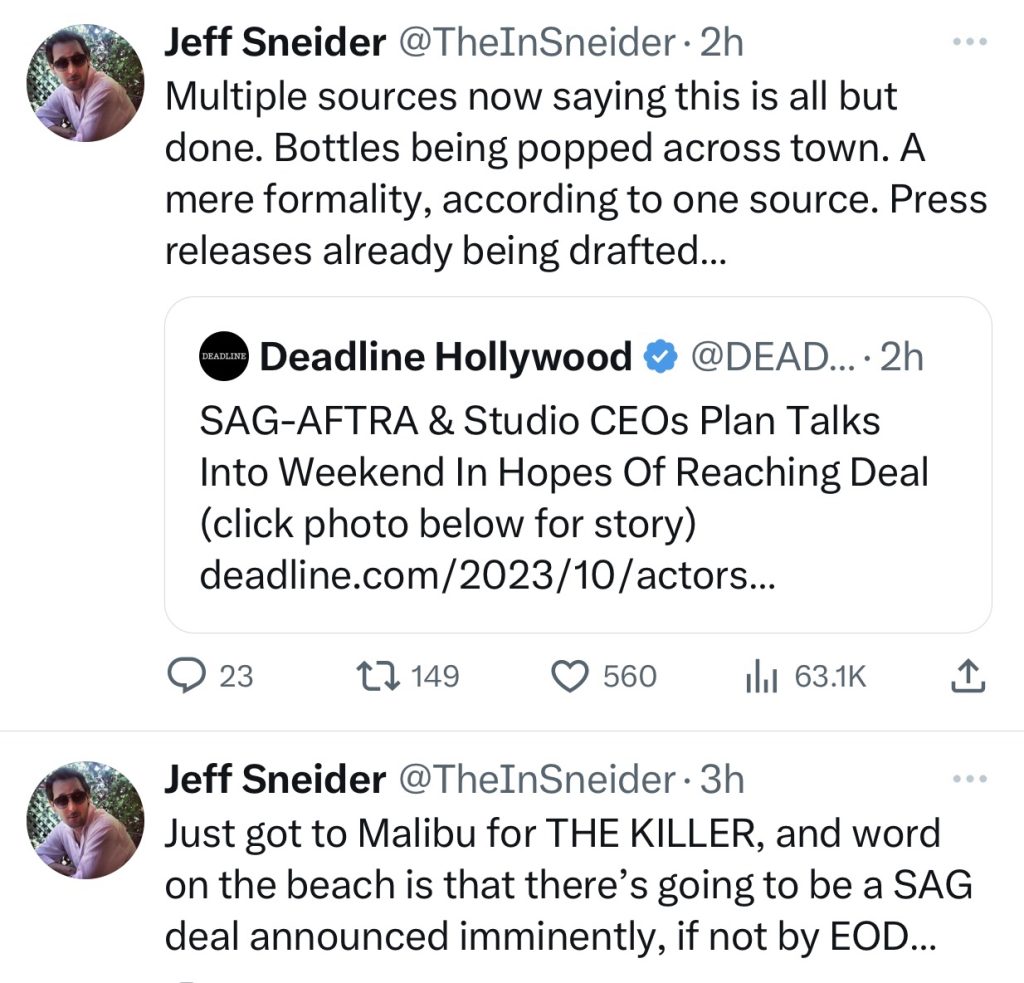

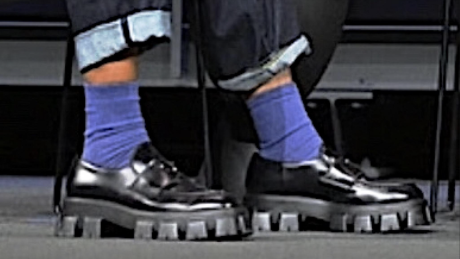
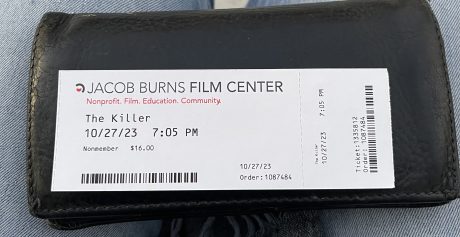
As far as I can discern Elvis Mitchell‘s “try-hard” shoes, worn during last Tuesday’s Academy q & a for David Fincher‘s The Killer, are made by Prada. A Prada web page describes them as “Monolith brushed leather lace-up shoes,” and says they cost $1270.



Before this mnorning I’d never seen Michael Epstein‘s 86-minute Hitchcock, Selznick and the End of Hollywood (11.1.99). I love Gene Hackman‘s narration! Epstein obviously reveres Hitchcock and thinks less of Selznick. Basically a story of creative conflict, Hitchcock vs. Selznick, the power of producers vs. directors and the end of Hollywood…how the power of the producer decreased. I immediately felt enveloped.
I need to finally watch Michael Ritchie‘s The Bad News Bears, I suppose, because a friend assures me it’s coarse and offensive and about as politically incorrect it could’ve been back then. But also hilarious.
That’s right — I never saw it. I ducked it like a champ. I thought I had seen it at first, but then I searched my memory but couldn’t find any shards.
Is it as coarse and un-p.c. as friendo is claiming? I’m asking.
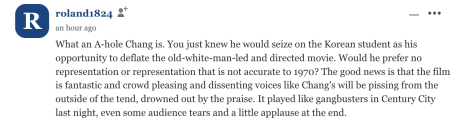
If so, I would seriously pay $50 if L.A. Times critic Justin Chang would re-watch it and review it the way he’s just reviewed The Holdovers.
Friendo: “This movie showed how racism was in the 1970s. Meaning that no one took it that seriously — they made fun of it. This kind of film could never be re-made today. Everyone in the cast is mocked. It’s 100% politically incorrect. Every racial slur imaginable. N-word used freely. But absolutely hilarious. Tatum O’Neal as an 11 year old who smokes and talks about being on the pill. If only someone had the guts to make it today as it was then. A great little movie.”
Nobody loves Albert Brooks more than myself…nobody. I’ve worshipped him since the early ’70s…a long time. In fact, please listen or re-listen to this relaxed 2012 phoner I did with him…sounds good, nobody’s trying too hard, only 11 years old.
Rest assured I’ll be watching Albert Brooks; Defending My Life (HBO, 11.11) without fail, but I wish these tribute docs could occasionally be different or surprising in some way. You know what I mean. I wish they could somehow unfold without the same old talking heads delivering the same old praise cliches. Make no mistake — Brooks deserves all praise and more, but he also deserves ingenuity and unusualness from his admirers.
I would rather watch an essay piece in which some bright person analyzes Brooks’ best material (stand-up, SNL, self-directed movies, performances for other directors) and then ties them all together…ties his life together in terms of universal themes and how his films reflected the changing zeitgeist, etc. I’d like to see an Albert Brooks tribute doc that’s conceived, written, performed and directed by Brooks himself…how about that?
Almost exactly 13 years ago I riffed about films that have dealt with death in a “good” way: “The best death-meditation films impart a sense of tranquility or acceptance about what’s to come, which is what most of us go to films about death to receive, and what the best of these always seem to convey in some way.
“They usually do this by selling the idea of structure and continuity. They persuade that despite the universe being run on cold chance and mathematical indifference, each life has a particular task or fulfillment that needs to happen, and that by satisfying this requirement some connection to a grand scheme is revealed.
“You can call this a delusional wish-fulfillment scenario (and I won’t argue about that), but certain films have sold this idea in a way that simultaneously gives you the chills but also settles you down and makes you feel okay.
“Here’s a list of seven top achievers in this realm. I’m not going to explain why they’re successful in conveying the above except to underline that it’s not just me talking here — these movies definitely impart a sense of benevolent order and a belief that the end of a life on the planet earth is but a passage into something else. I’ve listed them in order of preference, or by the standard of emotional persuasion.
“1. Martin Scorsese‘s The Last Temptation of Christ. 2. Stephen Frears‘ The Hit. 3. Brian Desmond Hurst‘s A Christmas Carol. 4. Warren Beatty and Buck Henry‘s Heaven Can Wait. 5. Henry King‘s Carousel (based on Ferenc Molnar‘s Lilliom). 6. Tim Burton‘s Beetlejuice. 6. Michael Powell‘s A Matter Of Life And Death, a.k.a. Stairway To Heaven. 7. Albert Brooks‘ Defending Your Life.
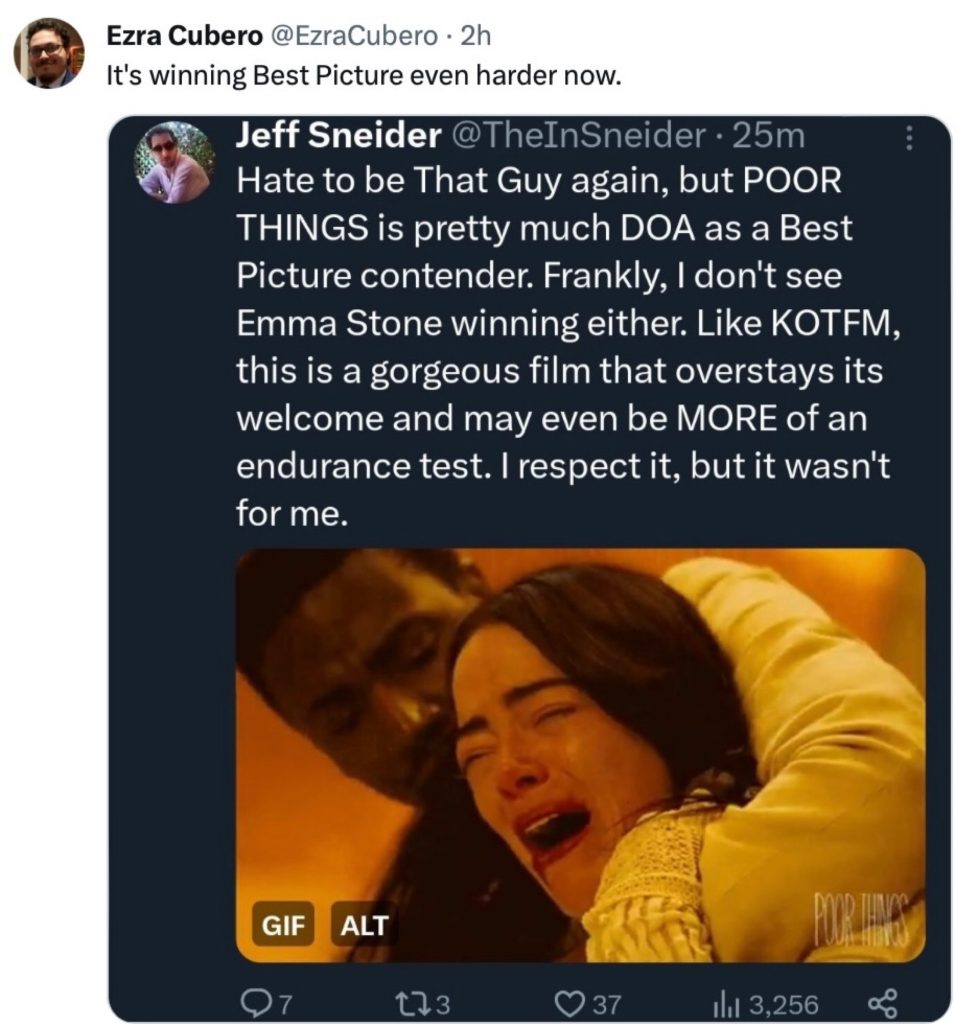
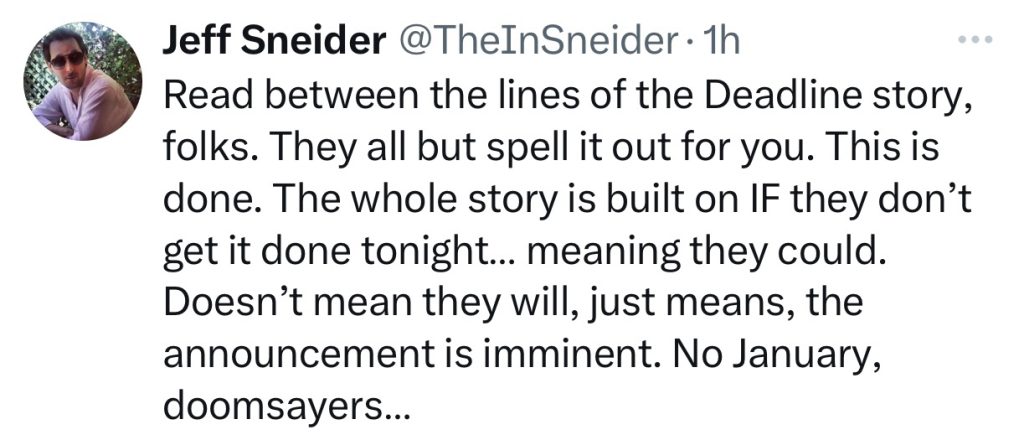
…when a brazen envelope-pusher has been heavily hyped in overlapping festival pressure-cooker environments like Venice and Telluride, and then Jeff Sneider comes along and goes “wait…whut?”
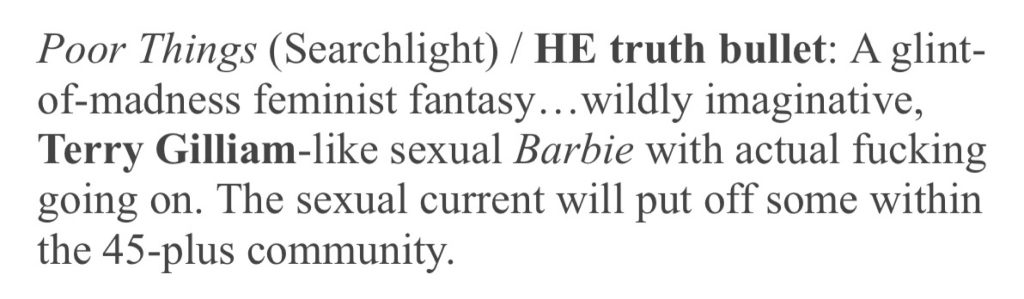
Allow me to clarify — Poor Things is Barbie meets a heterosexual Victorian British empire version of Fellini Satyricon.