Victory Lap

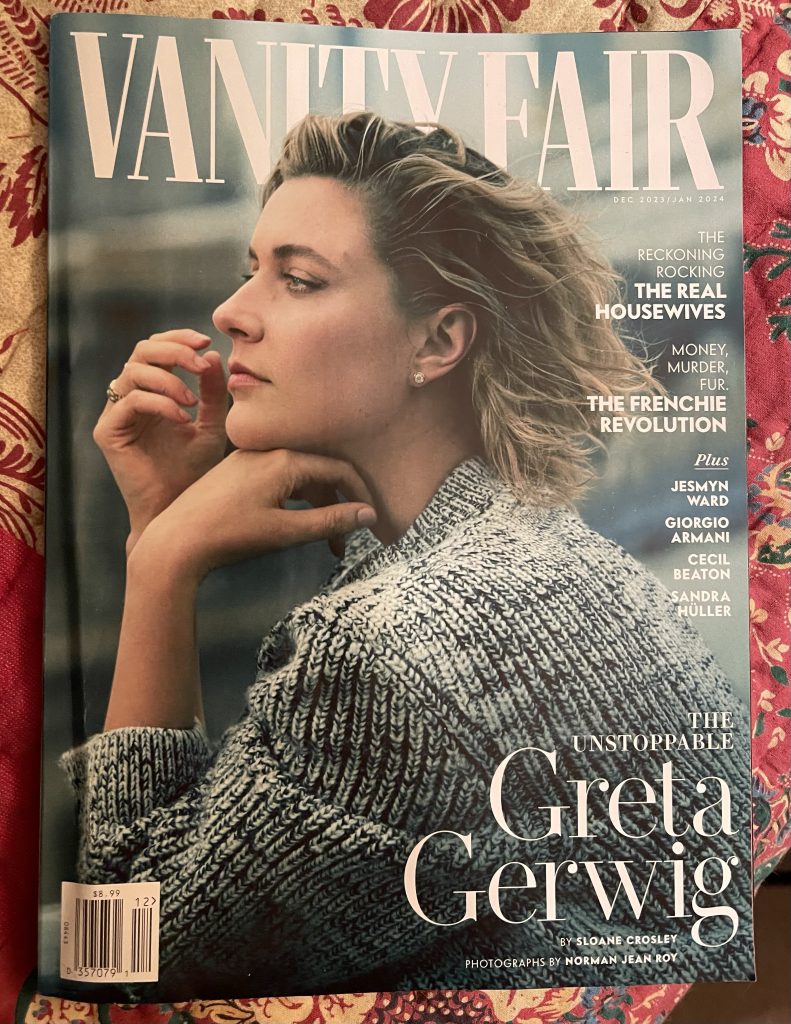
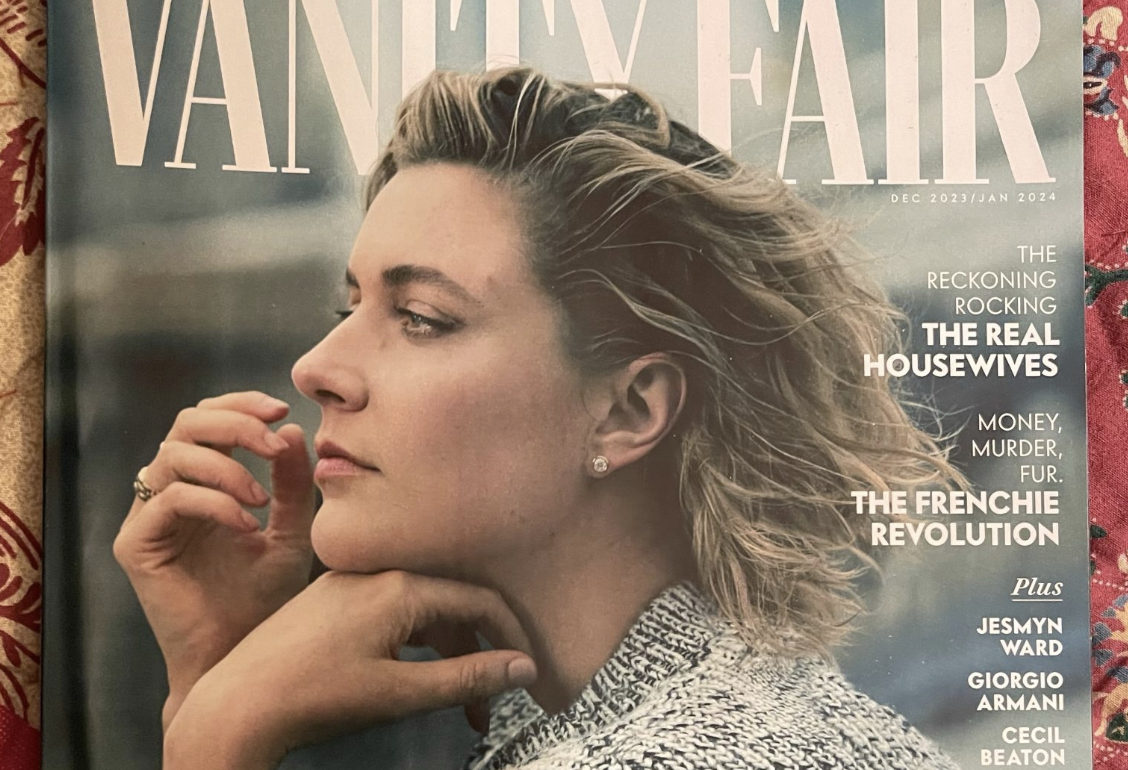
Barbie’s phenomenal summer success wasn’t/isn’t enough. Greta Gerwig wants Oscar ratification on top of all that. Even while Yorgos Lanthimos and Emma Stone’s Poor Things (i.e., Barbie meets Radley Frankenstein Metzger Satyricon) nibbles away at the mystique. Perhaps last summer will have to do?

Friendo: “Greta appears to be sniffing her fingers.”

No One’s Allowed To Say This

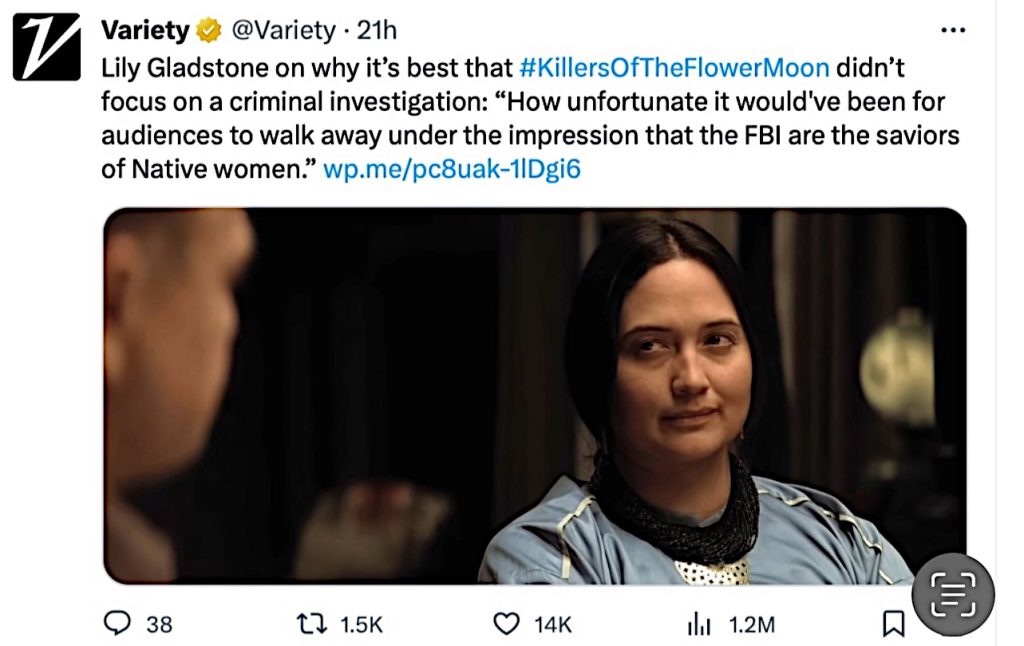
…but if Killers of the Flower Moon had resorted to the same dishonest-but-effective Hollywood tactics that Alan Parker’s Mississippi Burning deployed (depicting Tom White in roughly the same fashion as Gene Hackman’s charismatic FBI tough guy, well-crafted villain performances, sprinklings of historical bullshit, an emotionally satisfying resolution)…

If Team Killers had adopted an old-fashioned Alan Parker-like approach it wouldn’t have been as virtuous, but the popcorn crowd would have enjoyed it more.

I’ll never watch Killers again (twice was enough) but I could watch Mississippi Burning any day of the week.

White’s FBI team weren’t “saviors”, but they sure as hell busted WilliamKing” Hale and Ernest Burkhart.

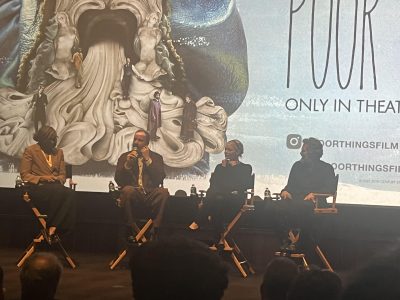
“Poor Things” Academy Viewing (11.18.23)

HE to Academy member who saw Poor Things at Fox Zanuck on 11.18: “Do you agree that Poor Things is basically Barbie meets Frankenstein? Or, if you will, Barbie meets Terry Gilliam + multiple orgasms + Fellini Satyricon?

“A feminist journey of self-realization and self-fulfillment in which Barbie channels Radley Metzger?

“What did the proverbial room seem to think or feel about it? It was speculated back in Telluride (where it was rapturously received, to put it mildly) that the older Academy crowd might have problems with it.

Jeff Sneider tweeted that he didn’t like it. Bill McCuddy told me the same thing, Perhaps it’s not as ‘Academy-friendly’ as some believe”?

Academy member to HE: “The somewhat younger crowd (average age around 45 ) went wild for the film. After a slow start they seemed to resist the tone, but they were eventually mesmerized by the film’s audacity.

Emma Stone was applauded repeatedly during the q & a. She expressed her complete trust for her director as a key part of her willingness to repeatedly bare all.

“There was no mention of the screenwriter or screenplay during the q & a.

“And YES, it’s Barbie on steroids. Ten nominations, seven wins. Academy-friendly.”
The Film Stage’s Luke Hicks, filed on 9.1.23:
Posted on 10.2.23: Barbie and Poor Things are almost exactly the same movie — an attractive, spirited and completely naive (or childlike) young woman in her 20s encounters the big, bad, male-corrupted world for the very first time and somehow finds her way through the thicket, and emerges at the end of the tale with an emboldened, seen-it-all, “done with that bullshit” feminist attitude.

The only difference is that Poor Things is somewhere between throbbingly and obsessively sexual in an early ’70s sense of the term, and Barbie is plastic-ironic PG-rated by way of the Mattel corporation and a determination to be gay without actually being “gay”. Plus the only sexual act Barbie engages in, at the very end, is asking about birth control (“I’m here to see my gynecologist”).

Poor Things is obviously more perverse, not to mention more wildly imaginative in a Terry Gilliam kinda way, and Barbie is certainly slicker and more superficial in a consumer-friendly, vaguely toothless, wind-up-doll sort of way.
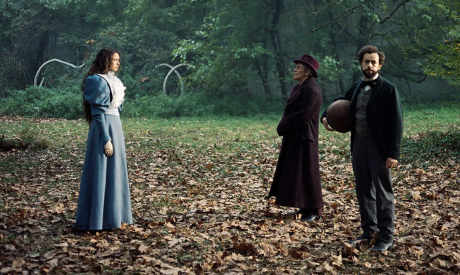
But when you get right down to it and boil out the snow, they’re pretty much the same movie, and this will factor heavily into the final voting for the Best Picture Oscar.

THR‘s Scott Feinberg, posted on 9.3.23: “While more than a few [Telluride] attendees found Poor Things — which I will only describe as Frankenstein meets Barbie, and which Searchlight will release on Dec. 8 — a bit too weird, and/or risqué and/or lengthy for their taste, the critical response to it has been off the charts.”

Critic friendo: “I agree completely [about the Barbie-Poor Things parallels]. I would add, however, that both movies are show-offy yet half-baked. In this context I’m almost enjoying the pile-up of woke piety — the Poor Things splooge fest.”

Snoopy Hears All, Knows All

From Anthony Lane’s 11.17.23 Maestro review:

Felicia Montealegre is the last character whom we see in Maestro, and the first actor’s name in the end credits is that of Carey Mulligan. This is her movie, and Bradley Cooper, to do him justice, knows it.

“How Mulligan can manifest such sweetness of nature without a trace of cloying, let alone mush, beats me. I spy a ghost of Julie Andrews in Mulligan’s smile, at once forgiving and brisk, and what she establishes, in Felicia, is the perfect ratio of rose to thorn. Hence the film’s best sequence, which is shot in one take, with no music and no camera movement at all. Mr. and Mrs. Bernstein talk, just the two of them, in a room overlooking Central Park West, during a Thanksgiving Day parade. The conversation stiffens into repartee, and then into rage. ‘If you’re not careful, you’re going to die a lonely old queen,’ Felicia cries.

“Behind them, through the window, we glimpse the huge head of a Snoopy floating by. Amid the Pax Americana, here is war.

“The movie does feature a death, though whose I will not reveal. Suffice to say that, in its wake, some viewers will have to be mopped up from the floor of the cinema. The looming pain is both sharpened and soothed not by Mozart or Mahler but by the sight of the Bernstein children larking around to Shirley Ellis’s ‘The Clapping Song.’ This is where Maestro scores.

“Spurning a fruitless bid at comprehensiveness, Cooper has conjured something as restless and as headlong as his subject. (‘I’m always just barely keeping up with myself,’ Bernstein once said.) To and fro we go, from the incisive bite of black-and-white, for the dawning of Bernstein’s fame, to the rich ironic glow of color in his later, grander, and less contented years; from the furious bliss of ambition to a kind of exhausted peace. And if Leonard Bernstein never got to star as Tchaikovsky in a Hollywood biopic, opposite Greta Garbo as the composer’s patron — a project that was seriously mooted in 1945 — then let us not lament too long. The guy had other things to do.”