Unsung 1999 Classic

I’ve just decided to re-watch Lawrence Kasdan‘s Mumford (Touchstone, 9.24.99). It’s about a fraudulent but extremely charismatic small-town therapist (Loren Dean), whom almost everyone loves to chat with and confess to. I loved it from the get-go (it has a dead perfect ending), but too many critics disapproved and it managed only a lousy $4.5 million gross. But it’s a really, really good film, I swear. Exudes a certain sly, low-key charm.

Roger Ebert, 9.24.99: “There are no earth-shaking payoffs here. No dramatic astonishments, vile betrayals or sexual surprises. Just the careful and loving creation of some characters it is mostly a pleasure to meet. And at its deepest level, profoundly down there below the surface, it is something more, I think: an expression of Kasdan’s humanist longings, his wish that people would listen better and value one another more. It is the strangest thing, how this movie sneaks up and makes you feel a little better about yourself.”
Read more

Annual Sentiments

I don’t feel an obligation to state what I’m thankful for today, just because the calendar says this is the day to put your feelings on the table. For I feel thankful 24/7/365.

I’m especially grateful, very grateful, for the luck that has come my way. And for the bad luck, in a way, as all misfortune is character-building. And for the daily opportunity to show love for my two sons and the overall community (old friends, business pallies, colleagues, cats) and the general feeling of loving or liking or aligning with others in whatever way.

Plus I’m hugely grateful that I wasn’t born to a downmarket family in Nebraska or Montana or to some resigned, lethargic, drinking-class environment. I’m very thankful, in other words, for what my parents and grandparents bequeathed.

Surly Sulking Infant

“In the early scenes [of Ridley Scott‘s Napoleon], the titular figure seems to be another of Joaquin Phoenix‘s taciturn, unnervingly volatile, enigmatically damaged, violent men.

“The difference is that this Napoleon, with his bloat, scowls and consuming needs, often resembles nothing as much as an angrily petulant baby, one whose cruelty and pathological vanity make the horror he unleashes unnervingly familiar.” — from Manohla Dargis’s 11.22 N.Y. Times review.

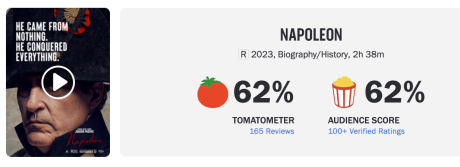
It’s fairly uncommon for critics and the ticket-buying public to feel exactly the same way about a new release. To go by Rotten Tomatoes the elite know-it-alls and your Joe Popcorn types agree that Napoleon is the same kind of problem.

Whites Of His Eyes

An old HE chestnut, updated:

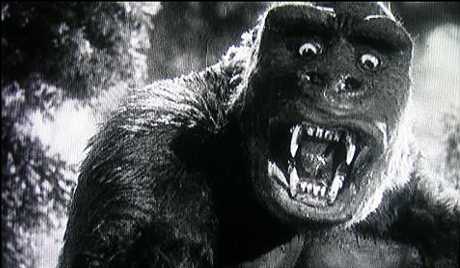
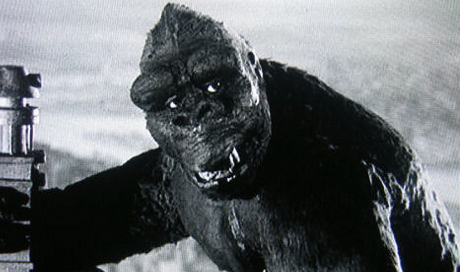
There’s a very significant difference between all the big-screen King Kongs we’ve seen since Peter Jackson‘s 2005 disappointment and Merian C. Cooper and Willis O’Brien‘s classic, stop-motion, herky-jerky version.

I’m not saying that Jackson and the others made the right or the wrong call in the fashioning of their Kongs, but here’s the thing:

Cooper’s Kong didn’t look like any gorilla, chimp or orangutan that had ever walked the earth. He was something between a prehistoric hybrid and an imaginary monster of the id…a raging nightmare beast designed to scare the bejeesus out of 1933 moviegoers.

O’Brien, the legendary stop-motion phtography pioneer, used three slightly different-looking Kong models during filming, but for me the master stroke was deciding to give his Kong a set of gleaming white teeth and a pair of very bright white eyes.

In some of the darker shots of Kong in the 1933 film those teeth and those eyes just pop right out, and the effect is still primal as hell. Those white eyes and black pupils look so fierce and almost demonic…contrasting as they do with that black bear fur that Kong was covered in…that they almost give you the willies, even now.

There’s no such aura with all the National Geographic Kongs we’ve seen this century. The realism element is awesome but the spook factor is nil. In going for anthropological realism Jackson and the others threw out that creepy, better-than-reality, only-in-the-movies element that gives the 1933 film a serious-nightmare quality.

President Lincoln Set The Stage

It was Abraham Lincoln, remember, who, in 1863, officially proclaimed that Thanksgiving would be celebrated on the final Thursday in November. And that’s how it’s been ever since. I don’t know how Thanksgiving worked before that year — does anyone? All I know is that everything was cool until the wokesters came along and began to throw shade upon the origins of Thanksgiving, or more precisely the relations between white settlers and Native Americans.

Read more

Oswald Family Thanksgiving

“Happy families are all alike, but every unhappy family is unhappy in its own way.”

This Oswald family footage, taken on 11.22.62 or Thanksgiving Day, is indistinguishable from tens of thousands of home movies taken that very same afternoon. Family celebrations are pretty much all the same, and are always about facades. The insisted-upon emotions of these gatherings (happiness, contentment, alpha vibes) always mask the undercurrents.

Even the 23-year-old Lee Harvey Oswald wore a happy face that day…imagine.

American Thanksgiving celebrations are about hope and cheer and togetherness. In every home and at every dinner table everyone is presumed to be doing reasonably well or at least trying to do better, and planning for the best. But you never know.

Sasha Stone, currently in Ohio, just told me about joining her daughter, her daughter’s boyfriend, the boyfriend’s brother and other family members for a pre-Thanksgiving get-together. “And the vibes were really great,” she said, “because the family members seemed genuinely happy…unlike so many extended families today they don’t all hate each other….they get along.”

Happy Sliced Turkey Breast with Micro-Waved, Deli-Prepared Gravy plus Garlic Mashed Potatoes and Green Giant or Del Monte Peas and Beans.

.