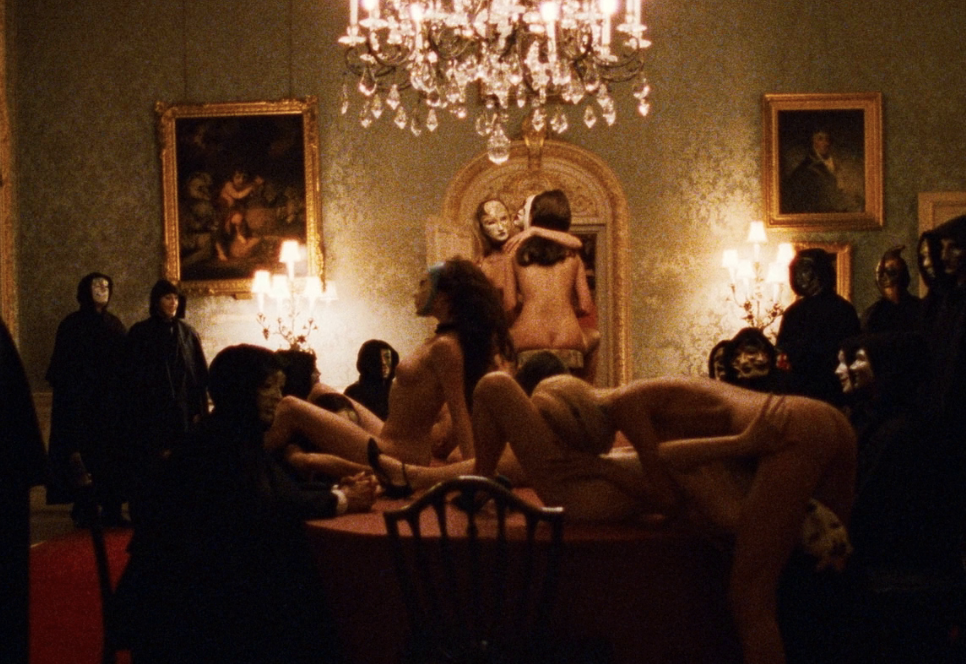
Posted on 10.10.25, “Elvis on The Titanic” is from “AI in Euphoria“, who’s also (and very recently) given us “The King & Kong“,”The King of Steel” and “Blue Suede Aliens“.
Jeff Wells
’50s VistaVision Films Popped — “OBAA” VistaVision Is Kinda Meh
The large-format, high-resolution VistaVision process only lasted from ’54 to ’61, but it certainly made films look extra-sharp and luscious during that brief heyday — The Ten Commandments, Richard III, Strategic Air Command, To Catch a Thief, The Searchers, The Man Who Knew Too Much, Loving You, Gunfight At The O.K. Coral, North by Northwest, One-Eyed Jacks, etc.
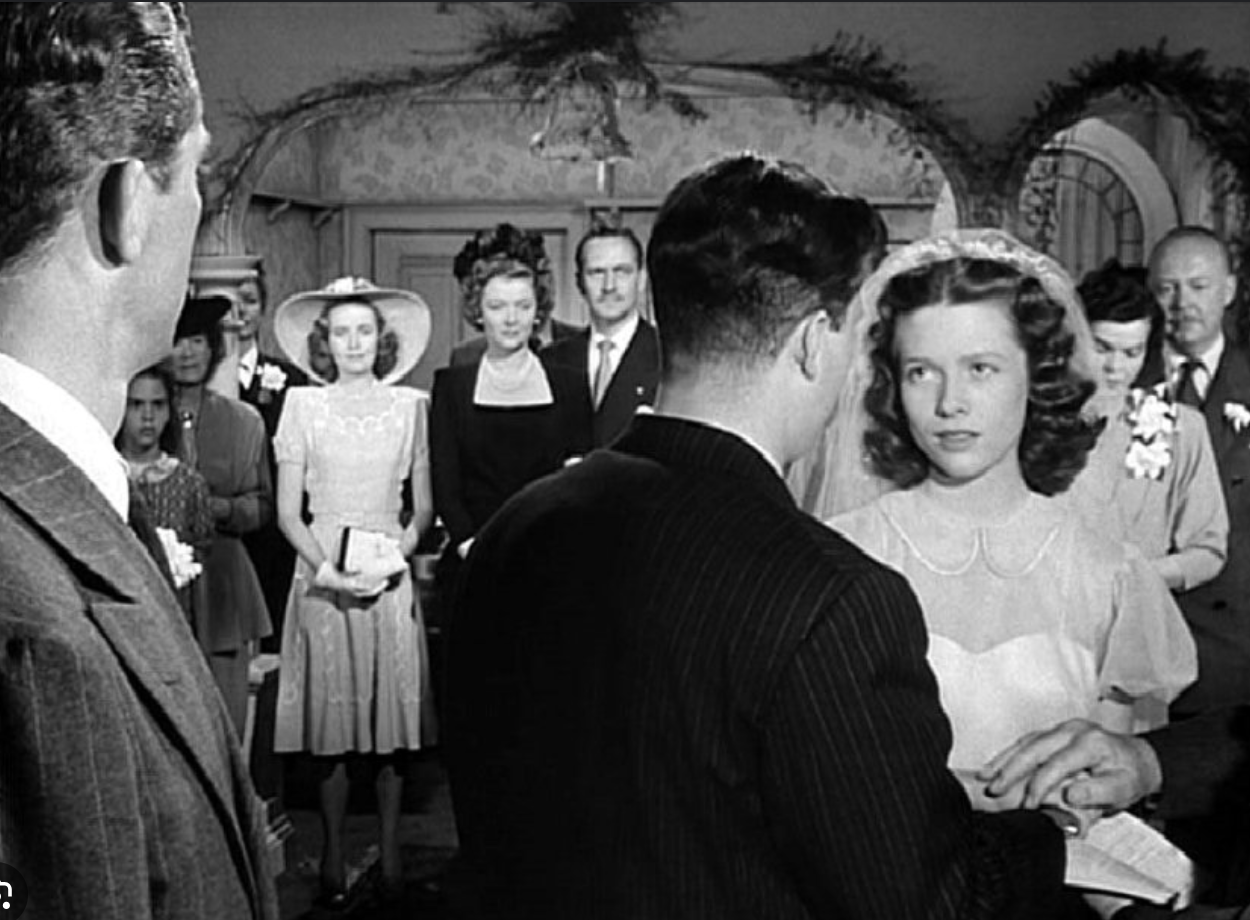
VistaVision generally made color features look like eye-popping, high-calorie desserts, and the black-and-white ones — The Desperate Hours, Fear Strikes Out, The Joker is Wild, Desire Under The Elms, The Tin Star — looked extra smooth and needle-sharp with wonderful deep blacks. Present-tense Bluray and 4K renderings of these films are always extra-pronounced…good enough to eat.
So why don’t the new VistaVision films — Paul Thomas Anderson One Battle After Another and Brady Corbet‘s The Brutalist — look as good as the oldies? To me the newbies look okay but that’s all. The 35mm process via the Beaumont VistaVision camera or “Beaucam”, which Anderson and Corbet used, is roughly the same calibre as the VV cameras used in the ’50s, but neither OBAA or The Brutalist deliver that special VistaVision schwing. There isn’t a single moment in Anderson’s gritty-ass film that delivers any kind of super-pleasurable eye bath.
I’m presuming that Anderson wasn’t interested in giving his films a ’50s visual sheen and may have been looking to deliver that hand-held, you-are-there verite quality that Gillo Pontecorvo used for The Battle of Algiers, and that’s fine. But why shoot the fucking thing in VistaVision then? Because OBAA just looks like a normal, no-big-deal 35mm movie. It certainly doesn’t make your eyes go boiiiinng!

Still Seeking Monochrome “Darling” Orgasm
Nothing quite gets me off visually like a rich, luscious, black-and-white ’60s film. Particularly those wonderfully detailed flicks shot between the early to mid ’60s, when the competition from color TV was starting to breathe down everyone’s neck, which prompted certain dps to try harder or push it on some level. This Sporting Life, Sons and Lovers, Seven Days in May, The Train, The Spy Who Came In From The Cold, A Hard Day’s Night, etc.
But for some curious reason, Kenneth Higgins‘ monochrome capturing of John Schlesinger‘s Darling (’65) has never quite done it for me. Appreciation sans levitation.
The lighting in some portions seems unexceptional, the details and textures don’t quite pop, here and there it almost flirts with humdrum. It’s a wee bit underwhelming.
But next week I’ll be giving Darling another chance at Manhattan’s Film Forum, which is showing a newish 4K restoration.
Julie Christie is incandescent, of course (Darling launched her into the stratosphere), despite the fact that she’s playing a shallow, opportunistic, fairly loathsome person. Dirk Bogarde is wonderful, as usual.
Wiki excerpt: “In 1971, New York magazine wrote of mod fashion and its wearers: ‘This new, déclassé English girl was epitomized by Julie Christie in Darling — amoral, rootless, emotionally immature, and apparently irresistible.”
If I’d Taken The Time To See “Tron: Ares”…
…I could say with absolute authority that it smells or, you know, blows the proverbial big one. But I’ve refused to see it. Has anyone submitted? If so, may I ask why?

’70s Icons Redford and Keaton, Gone With 25 Days of Each Other
It was startling enough when the universally loved and seriously admired Robert Redford suddenly slipped beneath the waves on Tuesday, 9.16. But within a mere twinkling of time….three and a half weeks or 25 days later…the cosmic trap door suddenly gave way underneath Diane Keaton also and she, too, was gone like that.
A half-century ago Redford and Keaton, who probably met a few times but never worked together…in the mid ’70s they were as magnetic and glistening and era-defining as it got…both commandingly charismatic and wrapped up in the social-political-cultural current like few other Hollywood hyhenates.
Even the HE readers who hate my “hot peak period” obits have to admit Redford and Keaton were seriously peaking in ’75. Okay, Keaton’s Everest moment didn’t happen until Annie Hall popped on 4.20.77 but still…
Redford (born on 8.18.36) and Keaton (1.5.46) will receive extended tributes at the end of the Oscar death reel on Sunday, 3.15.26, but who will be given the very last spot?
“A slave stood behind the conqueror holding a golden crown, and whispering in his ear a warning: that all glory is fleeting.” — Francis Coppola by way of George C. Scott by way of George S. Patton.
Best Picture-wise, “One Battle After Another” Is Finished
Gutslammy, power-punchy, fleet-of-mind-and-foot and masterfully crafted as it is, Paul Thomas Anderson‘s One Battle After Another has been defeated in the ongoing online argument over the last two weeks or so, at least as far as the Best Picture category is concerned.
It has lost the verbal battle because everyone realizes it’s a vessel of extreme-left POC girlboss agitprop, and that the rave reviews are basically about fuck-yeah political agreement first and artistic-cinematic admiration second.
Plus it goes against the expanding realization that hard-left wokey wackos have all but destroyed the Democratic party’s profile among middle-of-the-road voters, and that it’s time to pull back on that shit right now and for the wokeys to flee into the forest and stay there.
We all know that Christian Toto made a fair point a couple of weeks ago when he claimed that if OBAA had been about rightwing activists engaged in shootings, robbings and hiding out under fake identities, it would have been totally assassinated by the Rotten Tomatoes and Metacritic gang.
So Best Picture-wise it’s over, okay? Forget that category and move on.
PTA’s film will be nominated in eight or ten or even twelve categories, of course (Leonardo DiCaprio for Best Actor without question, Best Director, Cinematography, Best Adapted screenplay + Chase Infiniti‘s category-fraudulent, phoney-baloney Best Actress campaign will probably snag an actual nom), but a Best Picture win is simply not happening.
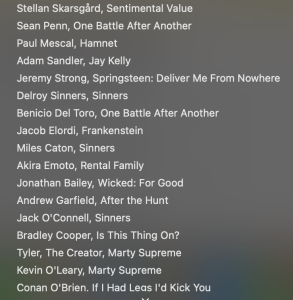
The top finalists are a pair of emotionally riveting, deeply penetrating family dramas — Chloe Zhao‘s Hamnet vs. Joachim Trier‘s Sentimental Value, which blew the roof off and triggered a standing ovation after a Hamptons Film Festival screening yesterday afternoon at Guild Hall. (Bill McCuddy was there — he saw it, heard it, felt it.)
Hamnet is favored to win, yes, but Value clearly has the stuff to aggressively compete and heel-nip like a sonuvabitch, and it seems to be gaining ground.
So Many Appalling Woody Haters Out There…So Many…Sickening
Joe Leydon is completely correct. When Mia Farrow passes, the expansively written obits and summing-up essays will have no choice but to conclude that, like all successful actresses, she was a very shrewd and calculating careerist who boosted her profile and cultural standing big-time by connecting with Woody Allen in the ’80s. And that she turned feral and ferocious in August ’92 over you-know-what and that Moses Farrow knows a thing or two about that (as do many others), and that she’s long praised and stood solidly behind her genius-level Rosemary’s Baby director, Roman Polanski, and admirably so.

@askdarlingnikki Today the has two less child/sexual abuse perps and defenders. #childabuseawareness #sexualabuse #lostprophets #dianekeaton #woodyallen ♬ original sound – askdarlingnikki

Guy Knows His Stuff
Especially in the matter of Martin Scorsese ‘s The Last Temptation of Christ (’88), which, for me, delivers the most transportational, mystically-imbued, heart-melting death scene in the history of cinema.
Cooper’s “Is This Thing On?” Is…Uhm, Congenial
Variety‘s Owen Gleiberman has called Bradley Cooper’s Is This Thing On? (Searchlight, 12.19), which I saw last night at Alice Tully Hall, “a feel-good divorce film”.
That’s a fairly accurate description — it’s a kinder, warmer, far-less-hostile Marriage Story, and the general behavioral drift is amiable. It’s superbly acted all around, but it also has a bit of a flabby belly. For my money it’s way too happy, too mellow, too easygoing, too turn-the other-cheek. No real conflict, no real challenges, no “drama”, no heavy pivots.
Set in the flush environs of Manhattan’s West Village and a handsome home in Westchester County, it’s mainly about Alex and Tess (Will Arnett and Laura Dern), a 40ish husband and wife with two ten-year-old boys (they’re called “Irish twins” due to having been born less than a year apart).
The key situation is that Alex and Tess have decided to call it quits because…well, because they’ve been written this way. The dramatic engine, if you will, is basically about Alex dipping his toe into the waters of Manhattan stand-up comedy as a form of therapy, using his personal saga for material. It’s also about personal renewal.
But the film, directed and co-written by Cooper, is also about gliding and sliding and loping along without pushing any of the usual emotionally fraught buttons.
It’s obvious early on that Cooper has decided to steer clear of Noah Baumbach territory and the usual “we’re getting divorced and boy, it’s pretty hard to do this with kids”, not to mention zero interest in the usual dramatic devices and considerations (lawyers, alimony, etc.)
But mainly it reminded me of a French ensemble relationship dramedy, except these French films (we’ve all seen dozens over the decades) tend to throw in more in the way of plot surprises, goofball humor, narrative curve balls.
For those who haven’t had the repeated pleasure, French ensemble relationship movies are defined by their complex, character-driven narratives that explore the messy, intertwined lives of a group of friends or family.
I can’t imagine anyone hating or even disliking Is This Thing On?, but it’s not meaty or nervy or risky enough to inspire anything more than easy smiles and shoulder–shrugs.
Is This Thing On? is the kind of film that a loaded, well liked actor-director makes when he has several reasons to be feel pumped and happy about things…a guy who feels abundantly massaged and tickled by his more-or-less fantastic life.
Compare Cooper’s film with another NYC dramedy about four highly perceptive, financially comfortable, middle-aged marrieds coping with divorce — Woody Allen’s Husbands and Wives. That 1992 film has always been aces on its own terms, but compared to Is This Thing On? it’s an earth-shaking Chekhovian classic.
It’s worth noting that Alex and Tess are living flush, bordering-on-financially-opulent lives without the movie even glancing for a split second at where all this money-from-heaven is coming from. (Alex, we’re told, is in “finance”…pretty vague.)
Alex’s reasonably spacious West Village pad rents for, I’m guessing, at least $6K or $7K a month, if not more. Compare Alex’s living situation (he owns a car and probably pays $1500 or $2K a month for the garage-space rental, and yet, early on, he doesn’t want to pay a $15 cover charge at the comedy cellar)…compare Alex’s place to Chris Evans’ appallingly grungy Brooklyn-bro share or even Dakota Johnson’s slightly modest 1 bdr. apartment in Materialists.
If Arnett and Dern were in their early to mid 40s, it would be one thing in terms of the lore of Alan J. Pakula‘s Starting Over (’79) and middle-aged crazy and hormonal activity and whatnot. But Arnett is 55 and looks it (dyed hair, salt-and-pepper whiskers, not rail thin) and Dern is 58.
That said, I reveled in one of the most vigorous and glorious sexual affairs of my life when I was past my 50s so who am I to talk, right?
Gleiberman: “It’s an observant, bittersweet, and highly watchable movie, yet there’s a softness to it, a slightly pandering quality. It’s like a James L. Brooks movie with hipper camerawork. Arnett, who has the look and demeanor of a less energized Michael Keaton, is a likable enough actor in a rather mopey way, but he’s done a lot of sitcom work and it shows. Arnett seems, in essence, to be playing Alex as a sitcom dad — sharp-tongued yet benign, lost in his daze of self-interest, with an essential quality of harmlessness that’s the opposite of movie-star danger.”
Perfect Denouement
“I’ve been poor my whole life. So were my parents, and their parents before them. It’s like a disease, passing from generation to generation [and] becomes a sickness. That’s what it is.”
Astrological Bigotry
I’ve been coping all my life with astrology bigots who’ve been describing me and my flock (Scorpios) as scalpel-tongued, stingingly judgmental, mysterious, secretive and overbearing, not to mention ravenous sex serpents.
To which I’ve been saying for decades, “Okay, sure, here and there… HE would be nothing if not for my surgical precision with words and a natural tendency to cut through the bullshit, but otherwise take your toxic character assassination tropes and shove them up your ass, and sideways at that.”
This is the basis for my empathy with POCs who’ve been fending off crude cultural stereotype descriptions all their lives.
The idea that everyone born each year between October 24th and November 22 shares many of these basic traits is, of course, absurd. Plus whatever I may have been (or have been like) in my youth and early middle age…all that hormonally intense crap sailed a long time ago.
According to The Astrology Bible, Scorpio’s colors are deep red, maroon, black, and brown. Bullshit — all my life I’ve been drawn to deep blues, blacks and grays. I own one deep red garment — a 1950s James Dean Rebel Without A Cause jacket — but I always feel uncomfortable wearing it. Plus I hate maroon, burgundy, or ox-blood colors.