This morning I accidentally sliced into the tip of my left index finger. An Exacto knife…don’t ask. You think Tony Perkins coped with a bloody bathroom situation in the wake of Janet Leigh‘s stabbing death in Psycho? Nothing compared to what I was dealing with an hour ago. It’s all bandaged up now and will be more of less healed in four or five days.
I immediately flashed on the Yubitsume scene at the end of Sydney Pollack and Paul Schrader‘s The Yakuza (’74), in which Robert Mitchum‘s “Kilmer” slices off half of his pinkie finger as a gesture of regret.
Yubitsume or “finger shortening” is a Japanese ritual to atone for offenses to another, a way to be punished or to show sincere apology and remorse to another, etc. In The Yakuza Kilmer is offering a gesture of apology to Ken Takakura‘s “Ken Tanaka” fof having brought pain into his life.
Pollack depicts this amputation as akin to a skin prick from a rose thorn. In actual life Mitchum would be covered with spurting cherry-red vino…splattered all over his suit plus the table, tablecloth and floor. I just went through a relatively minor sliced-finger episode and it was The Texas Chainsaw Massacre.
All to say that if I’m ever in Tokyo again (unlikely) and I somehow wind up bringing great pain into the life of a close Japanese friend, I’m not cutting my finger off as a way of saying “sorry, bruh”. The offended guy will have to take my word of it.
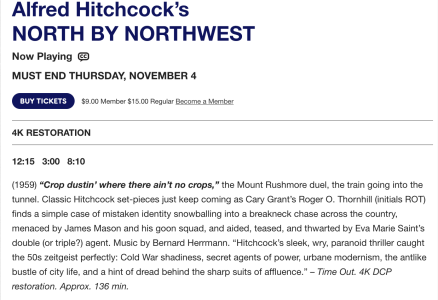
I’m sorry to have missed last weekend’s Los Angeles showing of a freshly restored 4K version of North by Northwest, which will be the basis of a forthcoming 4K UHD Bluray that will street late this year. Alfred Hitchcock‘s 1959 classic screened Saturday afternoon (4.20) under the auspices of the TCM Classic Film Festival.
I presumed the TCM NXNW screening was a premiere. (Distributors routinely debut new restorations at TCM Classic Film Festival.) Which is why I was thrown when I discovered yesterday that a “4K restoration” of North by Northwest played at the Film Forum roughly five months ago (late October-early November).
This morning I called the Film Forum and was told by a seemingly knowledgable employee that the restored 4K version of NXNW that played at the West Houston Street theatre last fall was the same version that played last Saturday at the Chinese on Hollywood Blvd.
The employee mentioned that FF senior programmer Bruce Goldstein, who’s also involved with the TCM Classic Film Festival, had finessed the booking, etc.
And yet this didn’t seem right. Why would Warner Bros. Discovery, which oversaw the NXNW restoration and will release the 4K UHD disc…why would they present a freshly minted NXNW 4K restoration at the Film Forum five months before the big TCM Classic Film Festival debut?
Then again, the FF page plainly states “4K restoration.”
Just before last weekend’s TCM showing I reached out to George Feltenstein, WBD’s in-house archivist and restoration hotshot (his technical job title is WBD Library Historian). I wanted to learn about the technical details of the restoration and when the disc might be released, etc.
I didn’t hear back until this afternoon. I was informed as follows by email:
Sentence #1: “The version of North by Northwest that was shown at the TCM Film Festival last weekend is a brand-new scan from the original camera negative, using a new scanner adapted for VistaVision.”
Sentence #2: “To confirm, this is not the same version of the film that played at Film Forum last year.”
Yet another team — New Regency, director John Hillcoat, screenwriter John Logan — is trying make Cormac McCarthy‘s “Blood Meridian” (’85) into a movie.
Don’t they understand this is an all-but-unfilmable property?…that the history of failed adaptations stretches back at least 25 years?…that Joe and Jane Popcorn lack the constitution to cope with frank depictions of such a blistering and ultra-violent book?
“The black stepped out of the darkness bearing the bowie knife in both hands like some instrument of ceremony. The white man looked up drunkenly and the black stepped forward and with a single stroke swapt off his head. Two thick ropes of dark blood and two slender rose like snakes from the stump of his neck and arched hissing into the fire. The head rolled to the left and came to rest at the ex-priest’s feet where it lay with eyes aghast.”
Producer Scott Rudin has been riding herd on a Blood Meridian adaptation for many, many years.
In the late ’90s, Tommy Lee Jones acquired the adaptation rights to the story and subsequently rewrote Steve Tesich‘s 1995 screenplay. Never happened, deemed too violent.
Ridley Scott and screenwriter William Monahan entered discussions with Rudin for adapting “Blood Meridian” with Paramount Pictures financing. Abandonedm, too violent, etc.
James Franco took a crack at McCarthy’s novel in 2011. He shot 25 minutes of test footage starring Scott Glenn, Mark Pellegrino, Luke Perry and Dave Franco. Never went anywhere.
On 5.5.16 Variety reported that Franco was negotiating with Rudin to write and direct an adaptation to be brought to the Marché du Film, starring Russell Crowe, Tye Sheridan and Vincent D’Onofrio. Nope.
I’m presuming that the partly-diseased, woke-stricken HE commentariat is going to respond to this frank and seemingly fair-minded video essay by attacking me.
Let me say two things before this discussion begins. One, to the best of my knowledge Angelina Jolie‘s daughter Shiloh is not trans. And two, the preemptive HE attackers probably need to go fuck themselves. Because like it or not, there really are an awful lot of trans kids being raised by celebrities, and it’s certainly fair to ask why.
Bill Maher in ’23: “Yes, part of the reason for the rise in LGBTQ numbers is from people feeling free enough to tell it to a pollster, and that’s all to the good. But some of it is ‘it’s trendy.’
“If you attend a small dinner party with [some] typically liberal, upper-income Angelenos, it’s not uncommon to hear parents who each have a trans kid, having a conversation about that. What are the odds of that happening in Youngstown, Ohio? If this spike in trans children is all natural, why is it regional? Either Ohio is shaming them or California is creating them.”
There are reports that Megan Fox has three bio-boys who identify as trans girls. The odds of this happening naturally are astronomical.
Talk about priceless remnants of ancient civiizations and the various complications (ethical and otherwise) that ensue when a very special remnant is discovered…
Jean Negulesco‘s Boy on a Dolphin (’57) is about as far away from Alice Rohrwacher‘s La Chimera as you can get. The first Hollywood film shot in Greece, this 20th Century Fox release is square, schmaltzy, simplistic, sentimental and very strongly opposed to any sense of native authenticity.
Set in Hydra, Sophia Loren is a poor local girl with great boobs, Alan Ladd is a good-guy archeologist with shimmering blonde hair, and Clifton Webb is a nefarious sophisticate with links to the black market.
The only anecdote I can recall is the one about a two-inch height disparity between Ladd and Loren (who was making her English-language debut).
Wiki excerpt: “The dissimilarity in heights between the 5 foot, 8 inch Loren and 5 foot, 6 inch Ladd led to complications. Some of their scenes together required him to stand on a box; another forced a trench to be dug for Loren when the pair walked along the beach.”
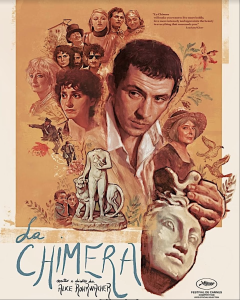
I missed Alice Rohrwacher‘s La Chimera at last year’s Cannes Film Festival and then again in Telluride eight months ago, but I finally saw it at the Jacob Burns on Sunday night and man, it has a real unwashed, hand-to-mouth, transportational spirit thing going on.
It’s about the ancient past (Etruscan artifacts) being dug up in Tuscany and sold and exploited by lowlife scruffs, and how this all shakes down in a moralistic or fable-like sense. It doesn’t pay off emotionally, or at least not in a way that I recognize, but it almost does. And it definitely feels whole by the end — I can say that for sure.
Rohrwacher, her dp Hélene Louvart (who mostly shoots within 1.37 and 1.66 aspect ratios), editor Nelly Quettier and the mostly tramp-like, generally unattractive cast (except for the radiant Carol Duarte, a Brazilian actress playing a kind of Gelsomina- or Guilietta Masina-like innocent, and the white-haired, eternally beautiful Isabella Rosellini)…Rohrwacher and friends are definitely up to something here.
Tall, pale-faced, unshaven Josh O’Connor plays Arthur, a kind of artifact whisperer — a filthy British-born bilingual fellow who smokes all the time, wears dirty clothing and ugly footwear and shuffles around with one of the worst haircuts in movie history.
But Arthur is about more than just stinky socks and rancid cigarette breath — he can sense or smell where Etruscan artifacts (sculpture, goblets, statues, frescoes) are buried, and so most of the film is about Josh guiding a band of tomb robbers on illegal digs. Their findings are sold to a sinister art dealer (Alba Rohrwacher, the director’s older sister), and that’s how they make ends meet.
La Chimera is about hundreds upon hundreds of spirit elements coexisiting in a hungry, dirt-poor realm without showers or deodorants or laundromats…the soiling and pirating of ancient remnants by low-life scuzzies…buried Etruscan pottery and tiled floors and erotic figurines…soil whispers, dusty ghosts.
Ethical conflicts abound, of course, but what matters is treating the past with care and reverence and allowing others to bask in its beauty. I don’t see what’s so bad about selling found history. As long as the artifacts are respected and not hoarded, what’s the problem?
It took me a good half hour before I got past O’Connor’s smelly feet and disgusting cigarette smoking and began to realize where the film is headed — before it hit me that it’s a casting a kind of underclass spell that really takes hold…that it’s a La Strada-like adventure or dirt poem, a half-fantasy or fairy tale about wretched refuse types looking to survive as best they can and not fretting about ethical issues…about digging up Etruscan pots and cups and marble statues and you-name-it…poor folks sifting through soil in Tuscany’s hidden regions (i.e., the kind that tourists rarely gaze upon).
Talk about a curious turn-on mechanism but this is Rohrwacher’ssignature…she takes all kind of disparate, haunting, non-hygenic elements and throws them together like a salad maker…nothing is the least bit glammy or posed or polished or conventionally alluring…everything is half-assed, raggedy-assed…the sublime merged with the ugly.
La Chimera features one of the ugliest coastline super-sized factories I’ve ever seen in my life — it reminded me of a coastline factory in Piombino, a working-class town where tourists catch the ferry to Elba.
La Chimera has a real sense of spirit. Rohrwacher (her first name is pronounced Ahh-LEE-chuh) really goes for the off-handed, the weird, the gunky, the untidy, the muddy. It’s not exactly pleasant, but is kind of wonderful all the same.
…but dear God, it feels so good when Alec Baldwin slaps Crackhead Barney and Friends‘ phone…I would have held myself in check, but my God, what a wonderful thing it can be to swat a mosquito.
This 1976 Benefit Blowout poster was posted on Facebook this mornhing by musician and old friend Eric Pearson. It was composed by the late Chris Browne (Hagar the Horrible). His older brother, fellow cartoonist and extraordinary musician Chance Browne, passed away a few weeks ago. Notice the “BlackWellsFiasco” logo at the bottom left.
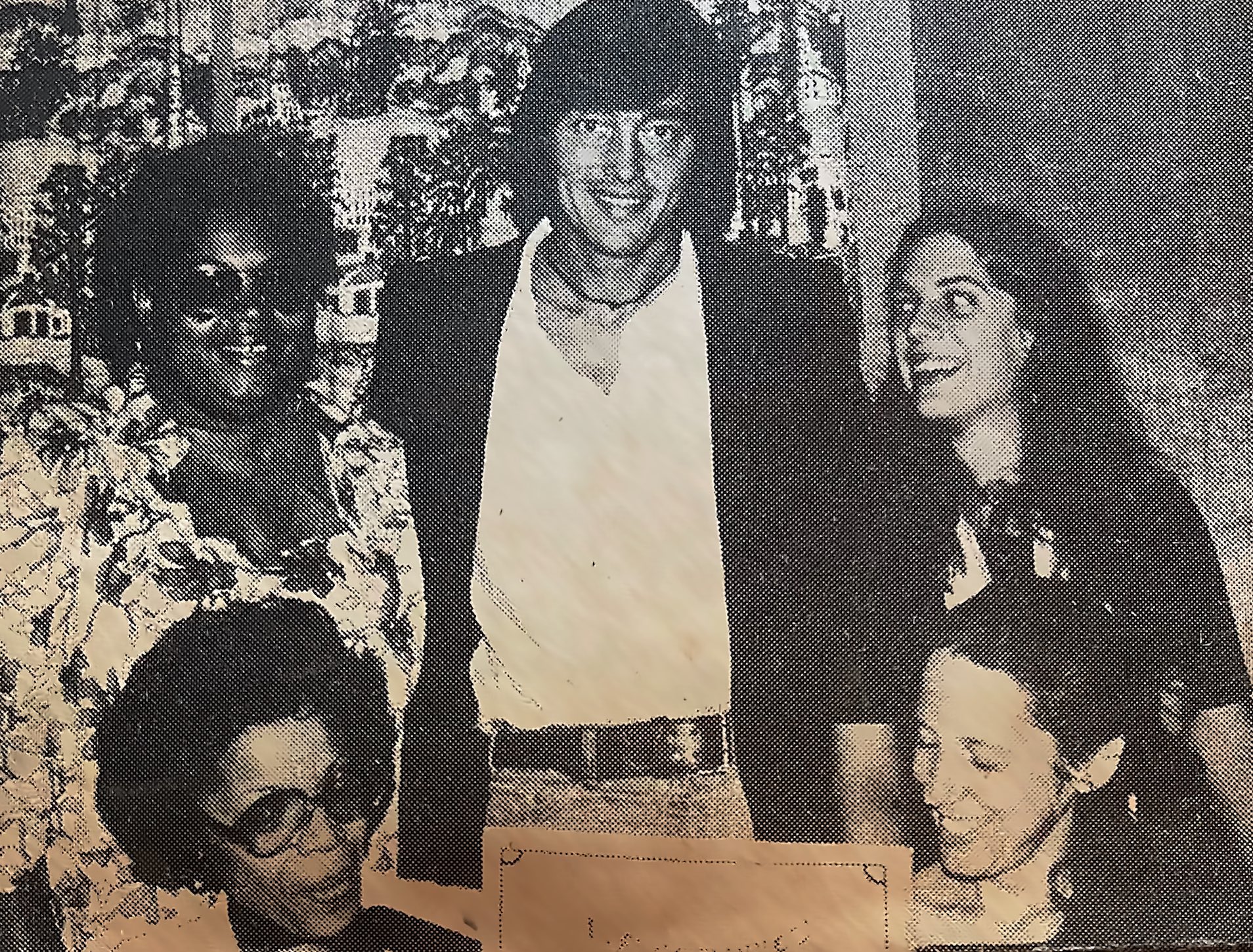
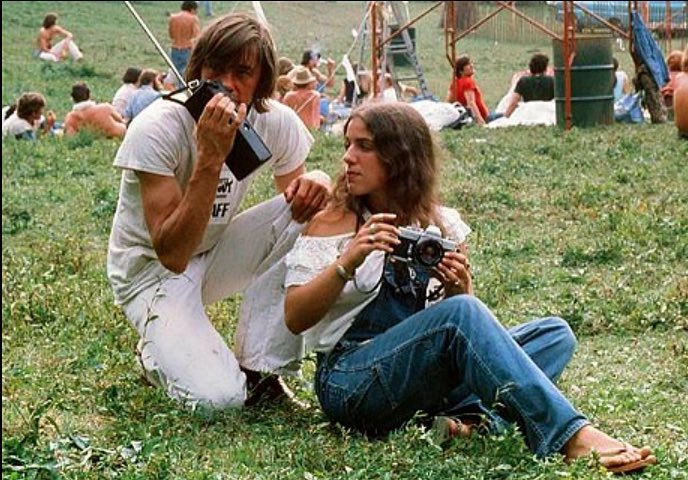
The below photo ran in the Wilton Bulletin in early August ’76. It accompanied a story about a then-upcoming Save The Whales concert, which then-girlfriend Sophie Black (on my left) and I co-produced, and which was held on a hilly 52-acre farm owned by Sophie’s parents, David and Linda Cabot Black. The focus of the story was that a portion of the proceeds would be donated to Camp PIP, a non-profit that offered recreational facilities help to lower-income kids.
2. Its findings have been disputed by more enlightened voices.
3. It’s been totally covered by the American media**.
4. And why are you so obsessed with this issue anyway, Jeff?
5. Do you really think Joe Biden wants genital mutilation for five-year-olds on demand?
All in all, the HE comment chorus has Cass Review supporters outflanked and boxed in six ways from Sunday.
Seriously, this is how progressive ditto-heads rationalize reality…
** In point of fact, places like the Times did an obligatory news piece, but they’ve done no reporting on the reaction and fallout in, you know, the United States.
“The British doctor behind a landmark study into transgender treatment in the UK has called criticism of her research ‘inaccurate’ and ‘unforgivable’.”
“Dr. Hilary Cass told the Times she wished to address the ‘disinformation’ circulating about the findings and recommendations handed down by the Cass Review when it was published on April 10th.
“The physician also said she fears using public transport and for her personal safety after receiving online abuse in the wake of the report’s release.”
Michael Douglas on age and Joe Biden, 7:14 mark: “The people I’ve talked to say he’s sharp as a tack. We all have issues with memory as we get older [but] let’s just say that Joe’s entire cabinet would be more than happy to work wth him again [over] the next term. I cannot say that about the other candidate [as] nobody in his cabinet from 2016 wants to be involved with him.”
HE agrees with YouTube guy #1: “No smart, talented, experienced, accomplished, reasonable person…a person who puts the country first…no one with those qualities will endorse Trump in 2024.”
Ditto YouTube guy #2: “Right now it doesn’t matter if Biden is too old. I would rather have a too-old guy who will uphold the constitution than someone who actively wants to destroy it.”
“Do I have to pretend [this stuff] is cool in order to keep my liberal ID card? Sorry — can’t do that.”
“Wokeness is no longer an extension of liberalism — it’s more often taking something so far that it becomes the opposite — at a certain point inclusion becomes promotion. Endlessly talking about gender to six year-olds isn’t just inappropriate — it’s what the law would call entrapment.”