Best Wedding Scene Ignored By Pinterest Dingbats

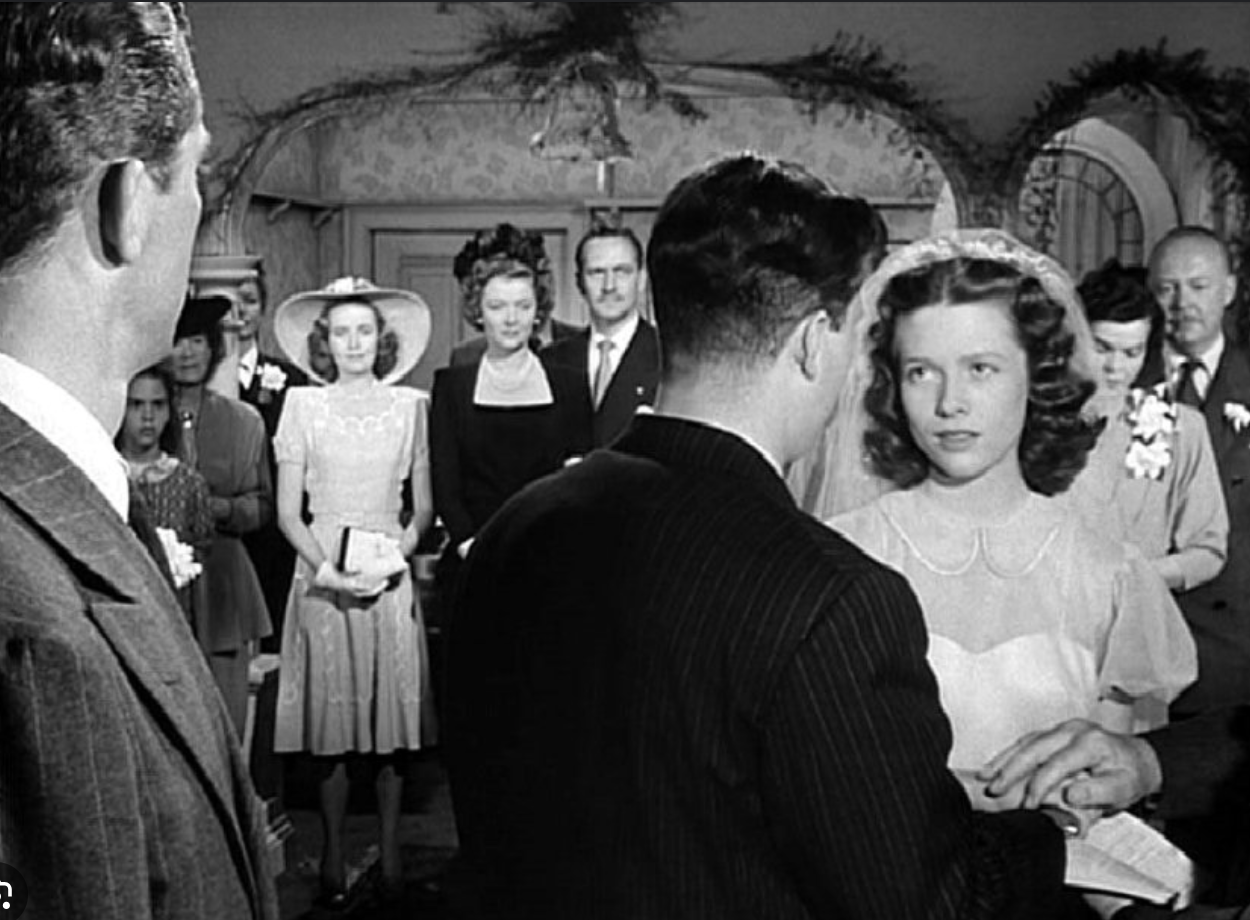
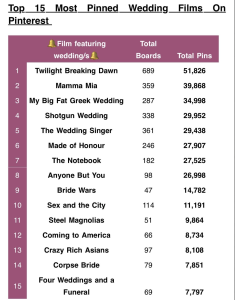
The wedding scene that concludes The Best Years of Our Lives is easily the most emotionally affecting in Hollywood history…easily. And yet a list of the 15 Most Pinned Wedding Scenes on Pinterest ignored it in favor of…not worth mentioning. I’m not saying the people who voted are idiots, but they’re certainly ignorant.

Monoculture Nostalgia Makes Me Weep On Occasion

This morning Matt Walsh posted a video essay about the last peak period of movies (“06 through ’08) and the all-but-total disappearance of our shared American monoculture.

This is arguably the best essay Walsh has ever written. The basic thought is “don’t it always seem to go, that you don’t know what you’ve got ’til it’s gone.”

Alternate theme or slogan: “Over the last 18 years I’ve been suffering the slow spiritual death of a thousand cuts…blood drop by blood drop.”

8:35 excerpt: “We have lost something very important. We no longer have a shared cultural experience, or what some have called the ‘monoculture’ or what you might just call ‘mainstream culture.’ The monoculture began its march to extinction in 2007. Today the march is over. The process is complete. The monoculture gave way to the fragmented culture…a culture broken and divided into 300 million little pieces.”

HE to Walsh: “I 100% agree about ‘06 through ‘08 being a great movie era, and probably the last great one. But I don’t think that oppressive wokeness started with Barack Obama. The first fumes of wokeness started wafting around in 2016, but it was essentially launched when the Harvey Weinstein story broke in the fall of ’17. But the loss of a mono culture is 100% real, and your lament almost brought a tear to my eye.”

AI sez: “The monoculture was killed by the rise of the internet and digital streaming services, which broke up mass media consumption and allowed for a more personalized and fragmented media landscape. Factors like streaming algorithms, social media, and a greater focus on niche interests replaced the shared cultural experiences of the past, leading to a decline in a single, unifying mainstream culture.”

2007 is the New 1999,” posted on 4.17.99. “25 in 2007“, posted on 9.21.21.

Read more

The Pull of Exceptional History

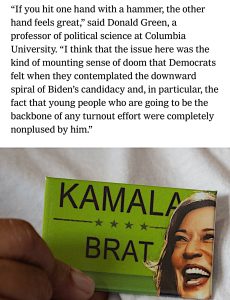
The Kamala surge is, I believe, mainly about two things — (a) people feeling lit up or joyful about being freed from the horrific old-guy equation…the bitter gruel choice of drooling, bent-over Biden vs. pushing-80, flabby-neck-wattle Trump…thank you, God!; and (b) the historic, undeniably exciting opportunity to elect a fairly sharp, tough-minded, semi-youngish woman of color as U.S. President. Hard to resist.

If I Was Costner, I’d Probably Throw In The Towel

Unless Part Two of Kevin Costner‘s Horizon (Warner Bros., 8.16) somehow improves upon the sluggish initial installment and delivers something that feels whole and alluring and thematically fulfilling, he should probably forget about Parts 3 and 4.

If, God forbid, the next chapter makes the same kind of mistakes that Chapter One did — if it kinda moseys around and half-assedly hopscotches and fritters away story tension — the wisest course (and I’m saying this from the core of my heart) will be to cut bait and let it go.

Because no one will want to even think about the last two installments, much less pay to see them.

Let’s face it — a second Horizon wipeout is certainly possible. If audiences blow it off…well, I’ll be sorry again. I want the opposite to happen, of course, but there’s an odd whiff in the air.

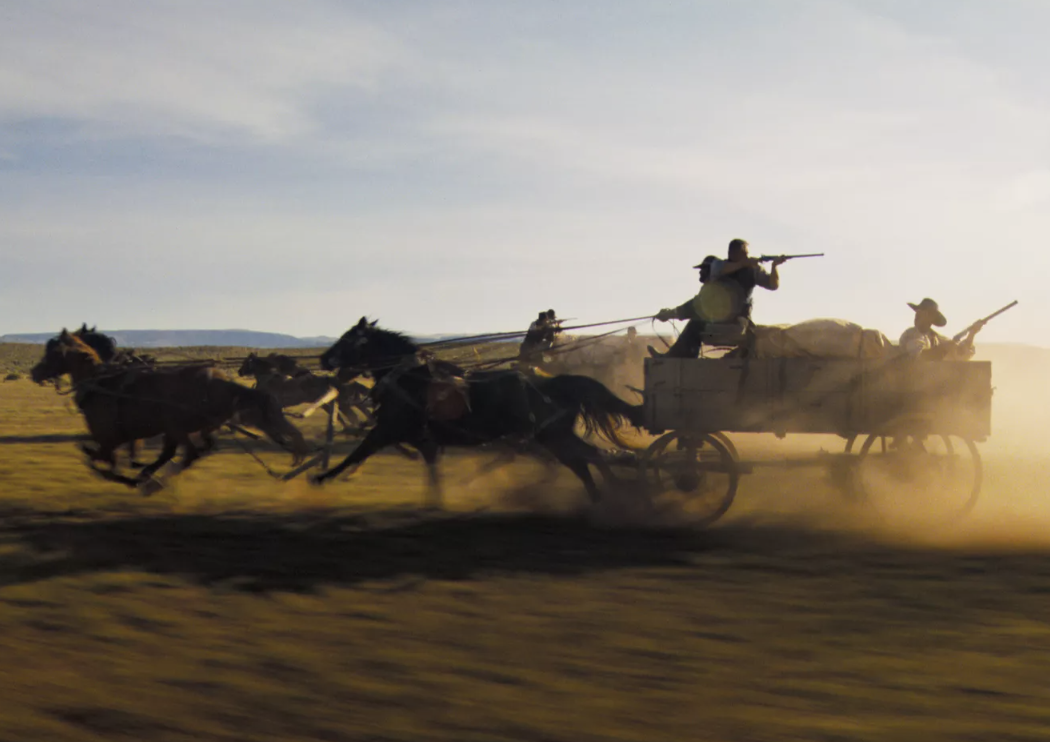
It really and truly breaks my heart to say this. I love Costner as a man of character, consequence and sincerity, and I truly worship some of the films he’s directed and starred in. Open Range especially.

So I really hope to God that Chapter Two brings the magic, in which case no one will be happier than myself.

Before I saw Chapter One in Cannes I wanted it to play like Open Range: Westward Ho The Wagons. Alas…

No 2024 film has bummed me out worse than Horizon, Chapter One did. If on my way out of the Salle Agnes Varda a friend had offered a couple of snorts of Vietnamese heroin, I would have followed him right into the bathroom.
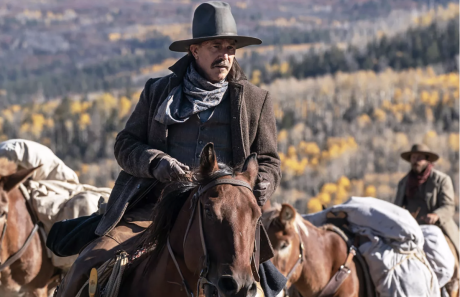
And by the way, Horizon costar Michael Rooker doesn’t seem to understand what happened with this unfortunate effort.

One, “real cinema” in the classic western mode, especially when you’re talking about three effing hours, is about delivering a solid, well-strategized, self-contained story with emotional currents. It needs to deliver a beginning, a middle and hopefully a bull’s-eye ending. Horizon Chapter One doesn’t do that. It just plants seeds by introducing characters along with the beginnings of six or seven story lines. In so doing it refuses to deliver a movie for anyone looking to enjoy a serious, nutritional, stand-alone meal right then and there.

Two, Rooker’s statement that Horizon‘s opener “tells a story where you learn about the people and grow to like them or hate them”…that doesn’t happen either. Again, it’s too all-over-the-place, too meandering, too unconcerned with classic narrative strategy.

Three, big movies these days are not about Tik-Tok sensibilities. They’re not about 90 minutes and out. They’re about running times of 130 to 150 minutes and people like me glancing at our watches three or four times before it’s half over.

Think of the huge, sprawling, emotional story that Red River told, and it did so in 133 minutes

No good movie is too long, and no bad movie is too short.

Delicious, Demonic Otto Gross

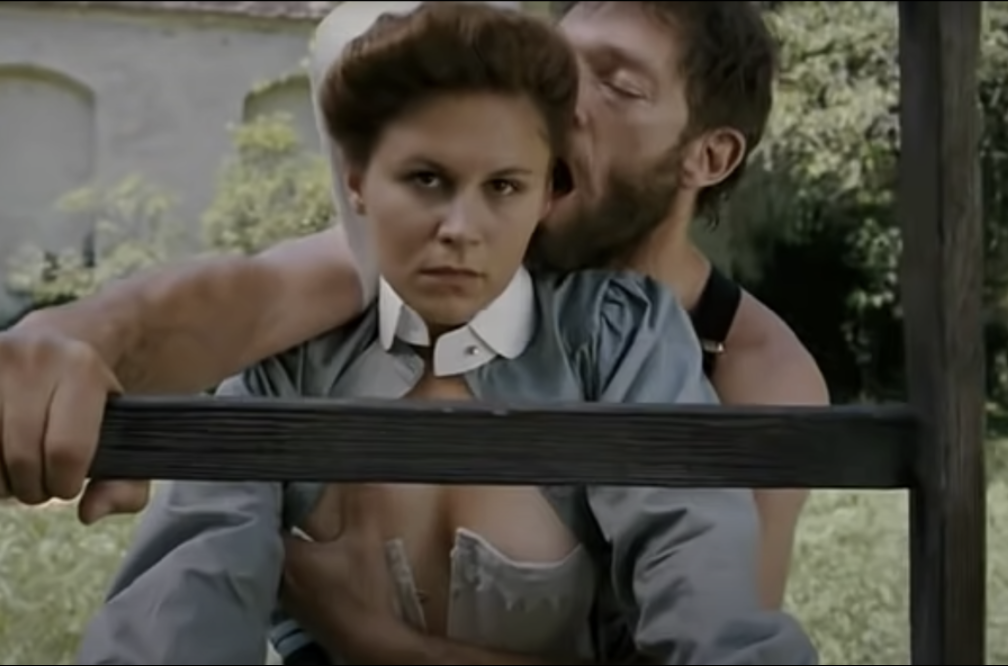
For me, A Dangerous Method (2011) is David Cronenberg‘s tastiest and wickedest film — intense, sexually upfront and occasionally arousing and yet highly cerebral, dramatically complex and certainly perverse.

I watched it again last night, and whoa, mamaVincent Cassel‘s Otto Gross (1877-1920), a real-life Austrian psychoanalyst and sensualist outlaw, is easily the most fascinating character.

Not to take anything away from the carefully calibrated performances of co-leads Michael Fassbender (Carl Jung), Keira Knightley (Sabina Spielrein) and Viggo Mortensen (Sigmund Freud), but they’re made of earnest dramatic fibre. Cassell’s Gross is a pure groin rebel, and serving of dessert.

Cassel to Le Soir: “The character of Otto Gross is special, a kind of trap…a kind of Trojan Horse! That is to say, we send him for something and he does something else. I find my character very modern. It’s a bit like the manager of the Rolling Stones finding himself dropped into a period film. And, above all, he has very good lines. So, all in all, I couldn’t refuse. I had to play this role.”

Read more

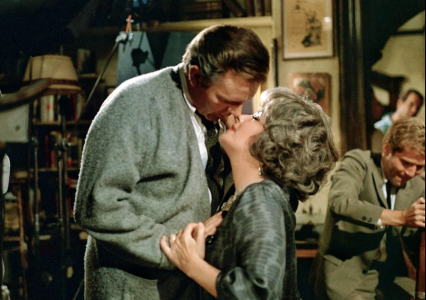
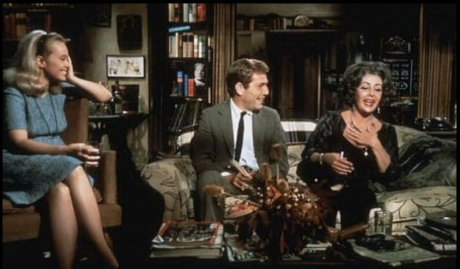
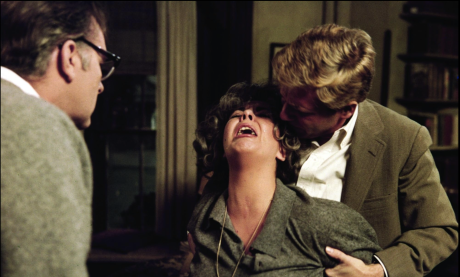
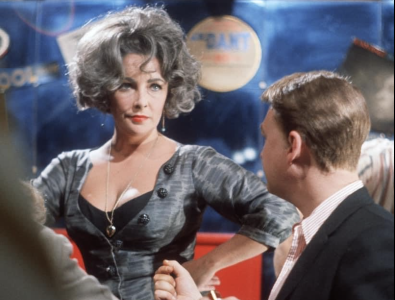
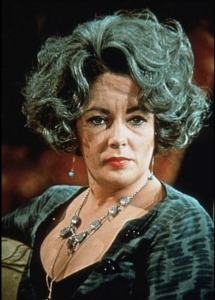
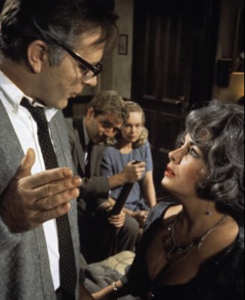
Queer for “Virginia Wolff” Color Snaps

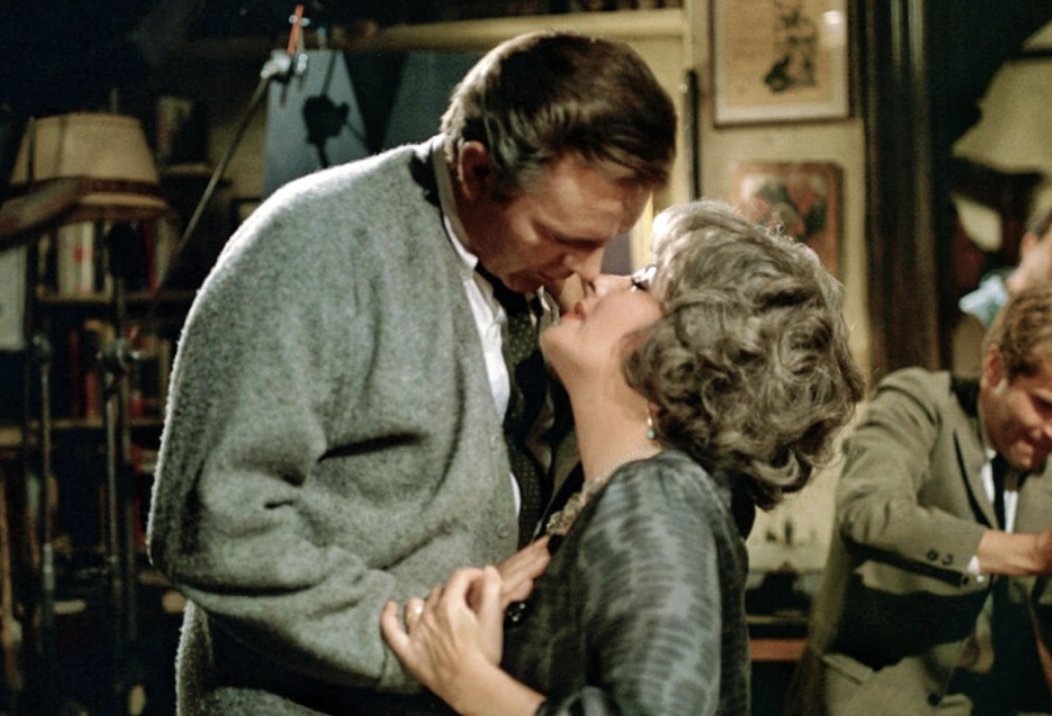
Posted on 11.27.23: “One thing that’s always bothered me about Virginia Wolff is that George and Martha’s young guests — George Segal‘s Nick and Sandy Dennis‘s Honey — arrive around 2:30 am. The four of them have already been to a previous faculty party which presumably started at 8 or 9 pm, and now it’s five or six hours later and they’re about to start drinking and chit-chatting all over again?

“Even at the height of my most rambunctious youth I never showed up anywhere — a friend’s home or a bar or anything — at 2:30 am. During my drinking days I might’ve crashed at 2:30 or 3 am, but I never partied until dawn killed the moon…never. And I was a wild man, relatively speaking.”

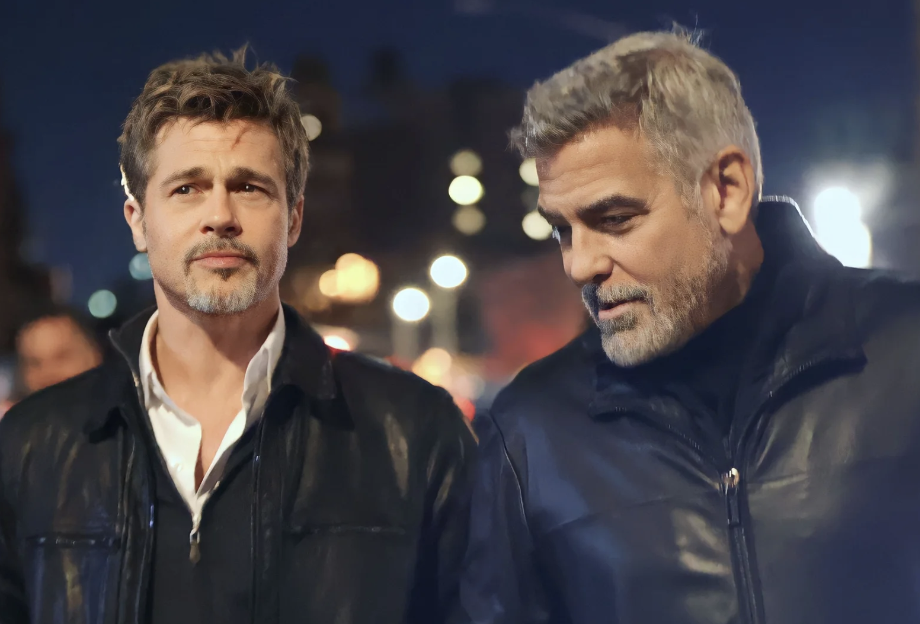
Alternate Title: “Wolfies”

I prefer Wolfies because it sounds flip and irreverent — a title you can repeat to your friends with a slight grin on your face.

I really don’t like saying Wolfs.

The tone is deadpan sardonic — flirting with dark comedy without actually going there. This might be okay.

Hedren’s 94th

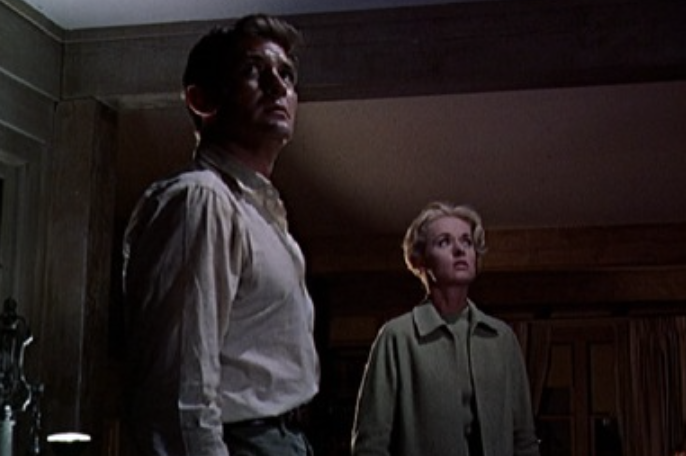
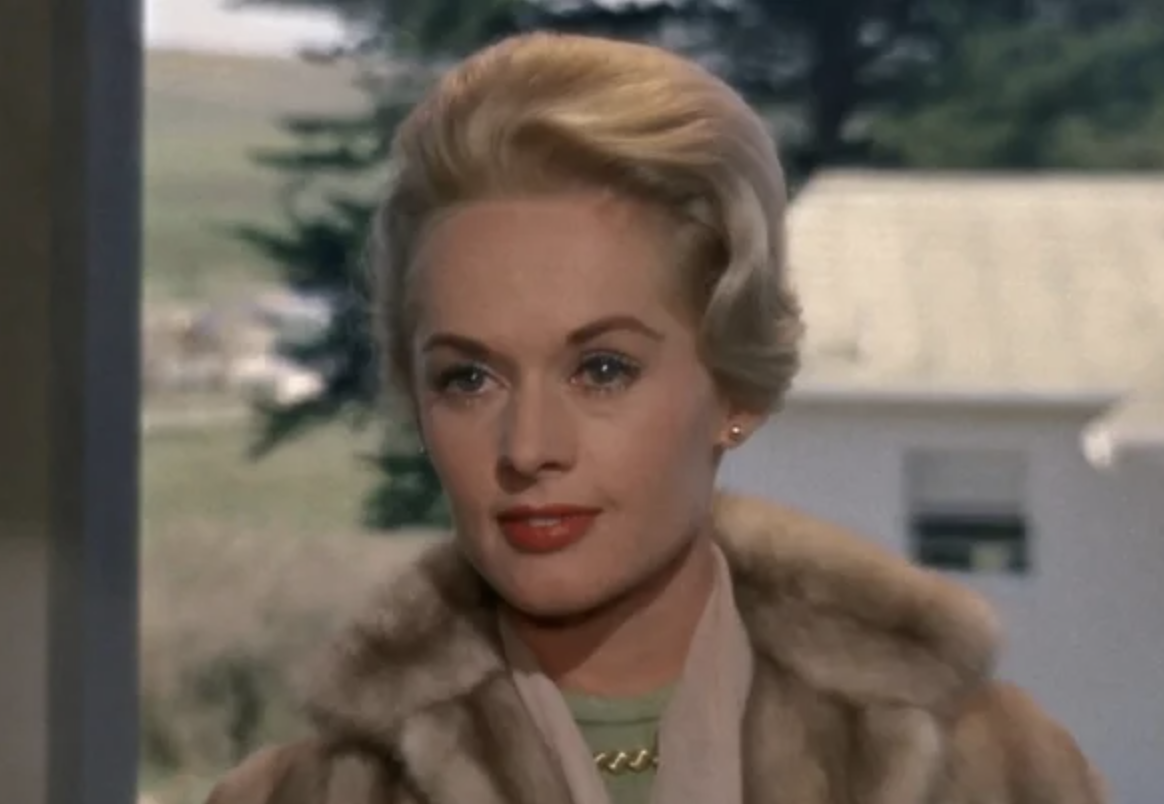
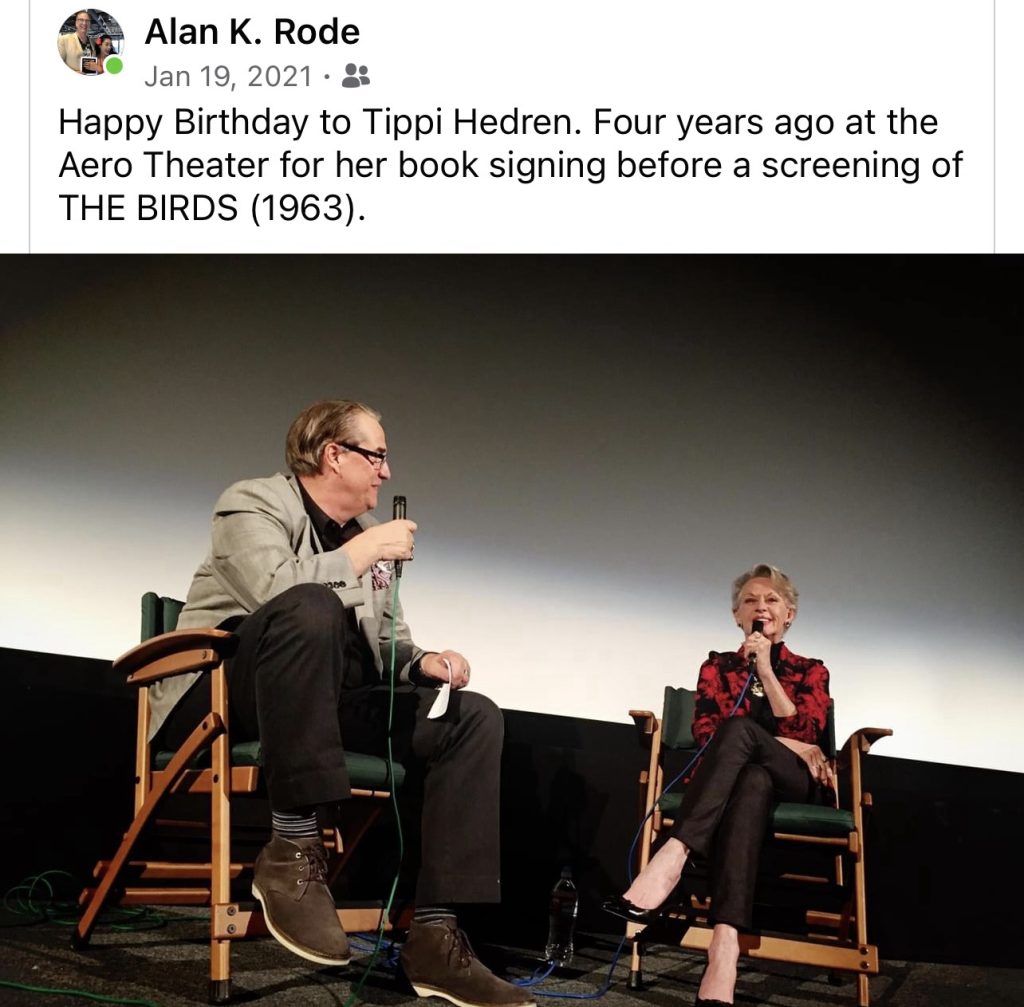
Two days ago (1.19) a Facebook tribute congratulated Tippi Hedren for having reached her 94th year (blow out the candles!) as well as her acting in Alfred Hitchcock’s The Birds (‘63) and Marnie (‘64), among other efforts and creations.

HE to Hyland: She hasn’t out-lived this critic.

Hedren’s characters in The Birds and Marnie have always struck me as curiously prim, overly tidy mannequins. She fit that immaculate, early ‘60s department store window persona — not just conservative, but a bit chilly and brittle.

I’m sorry but you don’t believe for a second that either character has ever been possessed by a single erotic impulse.

Hitchcock was once quoted saying that Hedren “didn’t bring the volcano.” He wasn’t wrong.

Grace Kelly had a similar porcelain quality, but one always sensed an undercurrent of suppressed hunger and passion from her performances.

There’s nothing wrong with inhabiting or conveying a curiously chilly and brittle persona, but if that’s your main game there’s not a lot of range involved.

Try to imagine Hedren as Blanche DuBois — you can’t.

She radiates a certain cool officiousness, a real-estate agent vibe. As such Hedren has reminded me of many women of wealth and assurance that I’ve run into or have known in upscale circles. There’s nothing false or ungenuine about this.

Is the private, off-screen Hedren a woman of kindness, elegance, poise, compassion, etc.? Allegedly so and good for her. She’s lived a good, long, healthy life, and she loves her big cats.

But remember Mitch Brenner mentioning that salacious news item about Melanie Daniels having allegedly taken a nude dip in a pool surrounding a large Roman fountain? The instant he brings this up you say to yourself “no way…Melanie Daniels isn’t the type to disrobe in public, drunk or sober, and she never will be.”

And that’s fine. No disapproval — just a statement of fact. I wrote this as a retort to Tom Hyland.

Criminal Protagonists

A friend suggested a list of the Ten Best American Crime Flicks of the ‘70s.

By which he meant films that spend more time on criminals than people trying to catch them, or no time with the catchers at all.

No cop movies, he said, which eliminates Dirty Harry, The French Connection, The Seven-Ups, etc. Also no period caper or con movies (The Sting, The Great Train Robbery), no historical gangster flicks (The Godfather I and II). Strictly contemporary crime pictures in which the protagonists are engaged in criminal activity. Hence Friedkin’s Sorcerer (desperate struggle over rough terrain) and Don Siegel’s Escape From Alcatraz don’t qualify. And no Juggernaut because it’s told almost entirely (98%) from the point of view of the catchers.

Three of his picks I immediately scratched off — Richard Brooks$ (aka Dollars), Michael Cimino‘s Thunderbolt and Lightfoot (fuck Cimino) and Walter Hill‘s The Driver (too loud, brutalist, mechanical). Which left seven.

I then added seven more for a total of 14 films, all released between 1.1.70 and 1.1.80.

Three of my top ten opened in ’77 and ’78, but the other seven were released between ’71 and ’73. In order of preference…

1. The Day of the Jackal (’73)
2. The Friends of Eddie Coyle (’73)
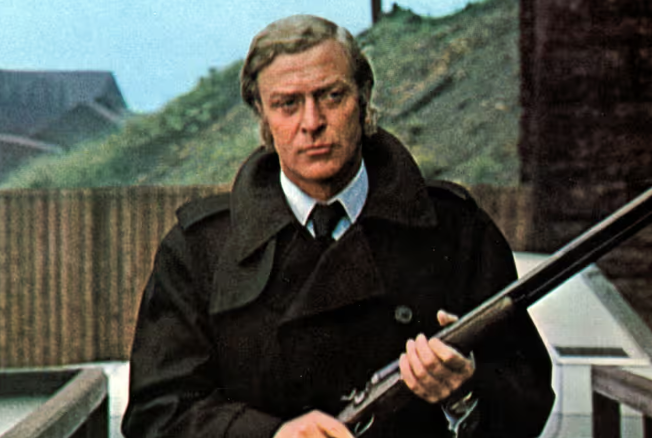
3. Get Carter (’71)
4. Badlands (’73)
5. The Outfit (’73)
6. The American Friend (’77)
7. Who’ll Stop the Rain? (’78)
8. Charley Varrick (’73)
9. The Hot Rock (’72)
10. Straight Time (’78)

Slightly second tier but at the same time smart and engaging:

11. The Taking of Pelham 123 (’74)
12. The Getaway (’72)
13. The Silent Partner (’78)
14. Going in Style (’79)

Read more

“‘Moby-Dick’ on Horseback”

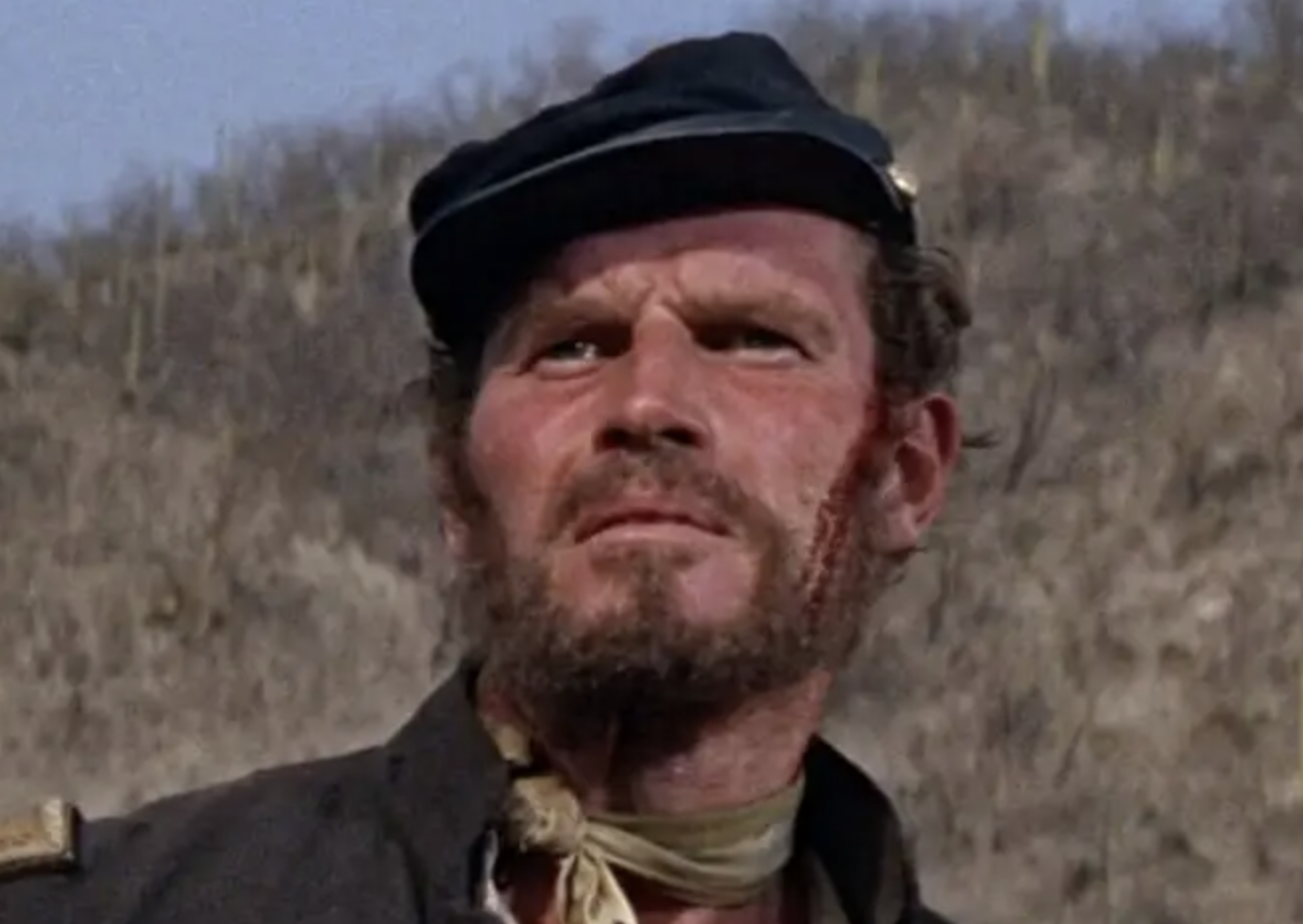
I’ve never been able to give myself over to Sam Peckinpah’s Major Dundee, a 1965 Civil Warera western, and I’ve frankly stopped trying.

Was the 156-minute version ever seen by anyone except R.G. Armstrong? The 136-minute version is longer but is it necessarily, positively better? I’ve only seen the shortest version (126 minutes) with the Mitch Miller singalongers on the soundtrack.

I know two things — during the ‘60s, ‘70s and early ‘80s Peckinpah allowed his career to be stained and diminished by raging alcoholism, and that with the exception of three films (Ride The High Country, The Wild Bunch and Straw Dogs) everything he was involved in was to varying degrees colored by rage and snarls and waste.

Over the years his persistent asshole-ishness overwhelmed his creative visions, and people just got sick of him.

I own a Bluray of Bring Me The Head of Alfredo Garcia (‘74) and I’ve watched it exactly once. There’s a reason for that. The nihilistic finale leaves you with nothing. Maybe I should give it another go.

I’ve seen Cross of Iron (1977) once, and while I have a favorable recollection of James Coburn and Maximilian Schell’s lead performances, I mostly recall Gene Shalit calling it “a movie of bad.”

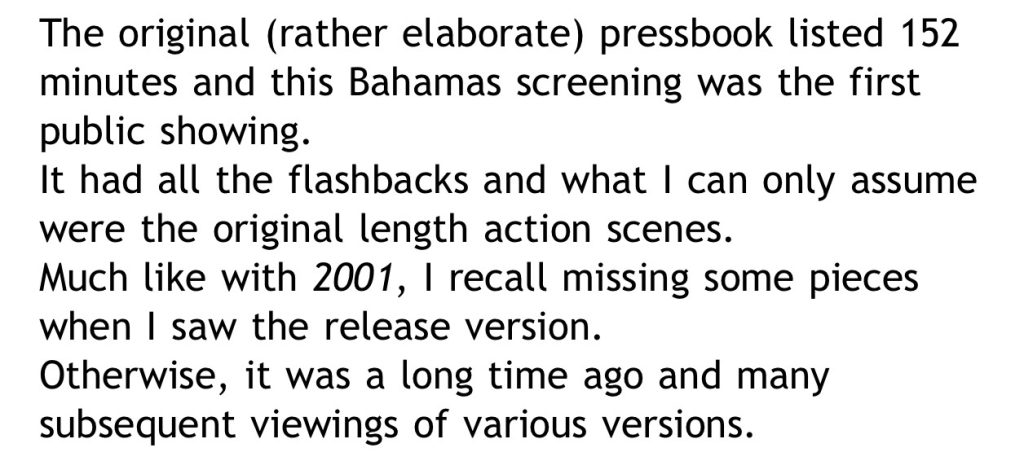
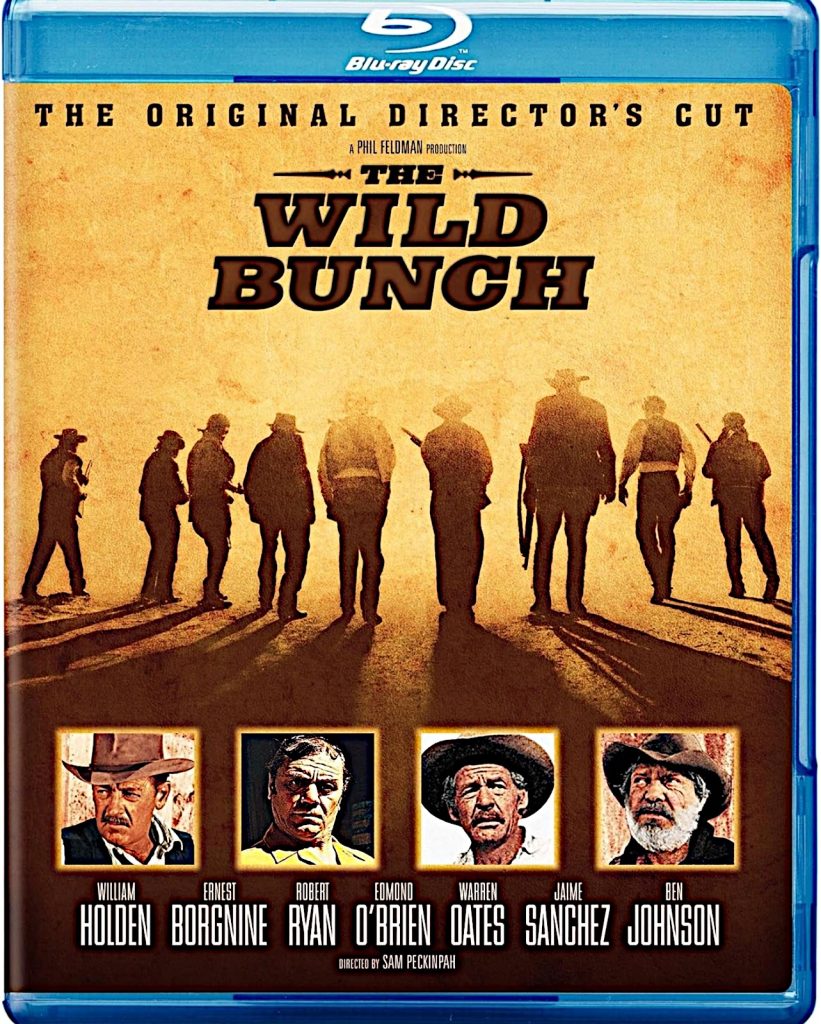
All this aside, I sure do envy Joe Dante for having seen the 152-minute version of The Wild Bunch (7 minutes longer than the official, definitive 145-minute Bluray) during the 1969 Bahamas press junket.

Dante recalls as follows:

No-Neck Celebrities

How many famous people could be described as “no neck” types? We all have necks, of course, but some celebrities don’t (or didn’t when they were alive) have the kind you would notice. I don’t literally mean no necks — I mean necks that are barely there.

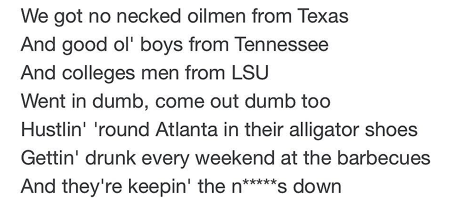
I’m thinking particularly of Mickey Spillane and Claudette Colbert, and of Randy Newman‘s “no-beck oilmen from Texas” (a lyric from his 1971 tune “Rednecks“).

I got started on this when I noticed a Facebook posting by Harlan Jacobson that described Maestro‘s prosthetics manager Kazu Hiru as an “Ears, Nose, and No Throat guy“….what does this mean? Is there a featured player in Maestro who has no visible throat to speak of?

I’m having trouble thinking of other no-neckers besides Spillane and Colbert. They have to be out there. Assistance?

Latest Greeting to “2001” Bone-Toss Guy

Posted three years ago:

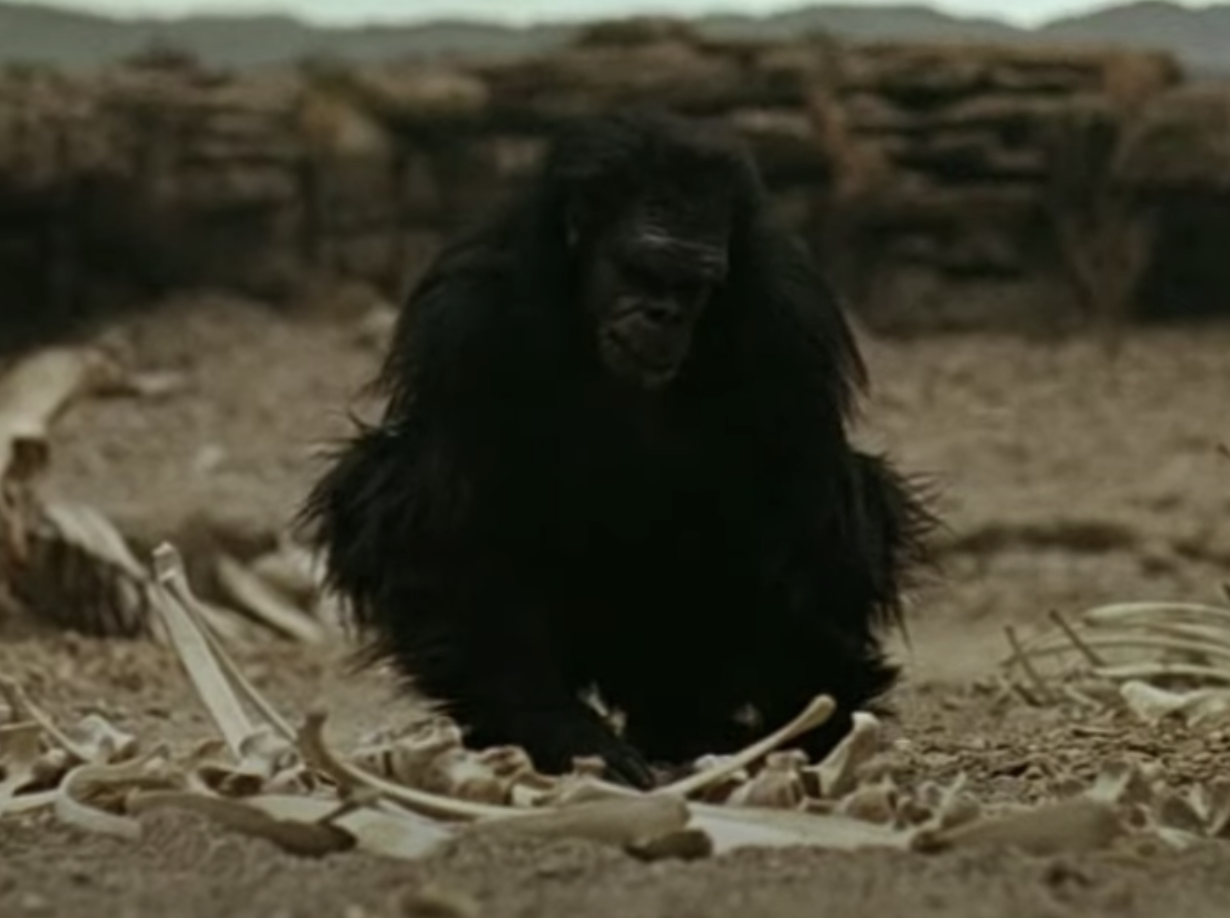
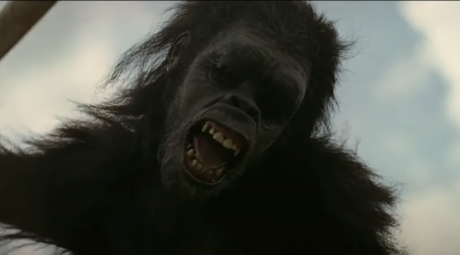
The famous animal bone sequence in 2001: A Space Odyssey lasts one minute and 54 seconds. It shows the moment in which Moonwatcher (Dan Richter) discovers a certain killer instinct that will save his tribe from extinction.

My favorite part is the final six seconds, starting at 1:48. This is when Moonwatcher says “okay, that was cool, I now understand how to kill prey for food…and now that I’ve figured this out I’m going to throw the fucking bone in the air and forget about it.”

Which he does. And then he runs his fingers through the sand and starts…whatever, daydreaming.

I love this part…”fuck it, fuck the bone, I’m not doing this all day, I’m taking a break.”

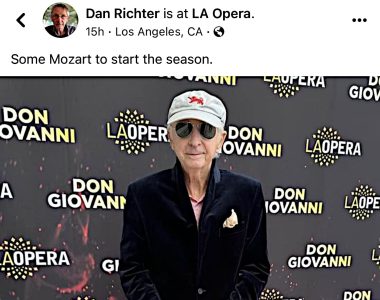
The legendary Mr. Richter recently merging with Mozart: