Goldstein on WGA Strike, week #2

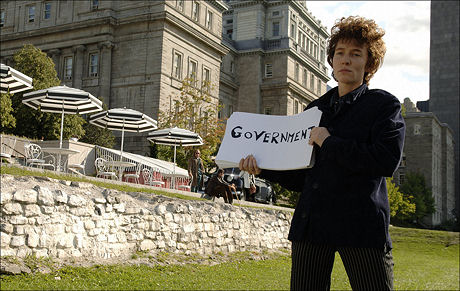
L.A. Times “Big Picture” columnist Patrick Goldstein “spent much of last week talking to studio executives, eager to hear a good explanation for months of one-sided negotiations, where the studios essentially presented a series of rollback offers and then bashed the writers for not embracing them. None of the studio chiefs would talk on the record, but if I were to sum up their views, I’d put it this way: The future is too uncertain for us to give anything away.”

Goldstein explains that Hollywood “has always been a land of fear and anxiety. It’s why the town’s most-repeated maxims involve the slippery grip on the pole of success — why just root against your enemies, for example, when you can root for your friends to fail too. Everyone in this nasty labor dispute has profound insecurity about the future, an attitude deeply rooted in industry history.”

You Tube addendum: Jason Ross, one of the Daily Show‘s 14 writers, explains things from his perspective in this video dated 11.13.07, or yesterday.

Hillary weakened?

Hillary Clinton‘s performance in the 10.30 debate made her seem vulnerable for the first time. And now Robert Novak is reporting that “an 11.6 Zogby poll of 502 likely Iowa caucus-goers showed Clinton’s lead had shrunk to three points — within the survey’s 4.5% margin of error. The narrowing, however, is mostly due to an Obama surge, from 19 percent in Zogby’s August poll to 25 percent.”

A N.Y. Times assessment, based on a Times/CBS News poll, finds the Democratic contest “essentially tied in Iowa” between Clinton, Obama and Edwards. The mind-blower is that a strong majority of respondents said that Obama and Edwards are more likely than Clinton to say what they believe, rather than what they think voters want to hear. And yet Clinton, respondents feel, is “the best prepared and most electable Democrat in the field.”

Silly me thinking all this time that likability — how high a candidate ranks according to Dating Game criteria — was a deciding factor among most voters.

The dream scenario is that Clinton comes in second to Obama in Iowa, and Obama takes this momentum with him to New Hampshire and South Carolina. Of course, the only way to really take her down is for Edwards to bail so everyone can rally around one Hillary-alternative candidate instead of two.

White goes after Baumbach

Margot at the Wedding “isn’t a story of neurotics struggling to be loved” but an example of director-writer Noah Baumbach “struggling to validate middlebrow narcissism,” writes N.Y. Press critic Armond White. White can be oddly hilarious when he goes after someone, and in this case he outdoes himself by comparing Baumbach to a rodent. [Note #1: Running this item shouldn’t and doesn’t indicate agreement with White about the analogy, but I chuckled at it.]


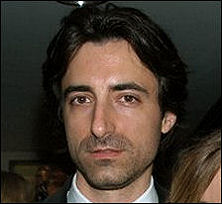
Margot at the Wedding director-writer Noah Baumbach (l.)

Baumbach “perverts lessons in humanity taught by Eugene O’Neill, Tennessee Williams and even Wes Anderson, the great visionaries of American family and class warfare,” White goes on. “He domesticates bigotry. The kitchen confrontation between Jennifer Jason Leigh‘s Pauline and Jack Black‘s Malcolm is not an ethical, emotional trade-off; each cowardly egotist talks at cross purposes through Baumbach’s smug dialog. He’s always looking for malice and humiliation, as when a rat is discovered at the bottom of the family swimming pool.

Nicole Kidman tries making Margot pitiable, but she remains a cold actress. Brave Leigh, the finest film actress of the ’90s, gets disgraced. Baumbach not only turns Leigh’s fearlessness into Isabelle Huppert-style masochism, he offends her person with a scene where Pauline shits her panties. And we see it. Baumbach can’t guide us through troubled emotions like O’Neill, Williams and Anderson; he leads us into the shallow end of arrogance, conceit and ugliness. The rat at the bottom of the pool is Baumbach himself.”

[Note #2: Baumbach actually shows us a small dead mouse, not a rat. If I’m wrong, it’s one of the smallest dead rats I’ve ever seen, and I’ve seen a few. A real dead rat is the size of the one Marlon Brando holds by the tail in Last Tango in Paris.]

Blanchett’s attention-seeking

In an 11.12 Commentary piece, Kyle Smith straddles the line between praise and derision in this short essay about Cate Blanchett‘s already-legendary Bob Dylan performance in Todd HaynesI’m Not There. When Blanchett “pops up it is immediately clear” — and as was the case with her appearance as Kate Hepburn in The Aviator — “that this is an Oscar role,” Smith says.


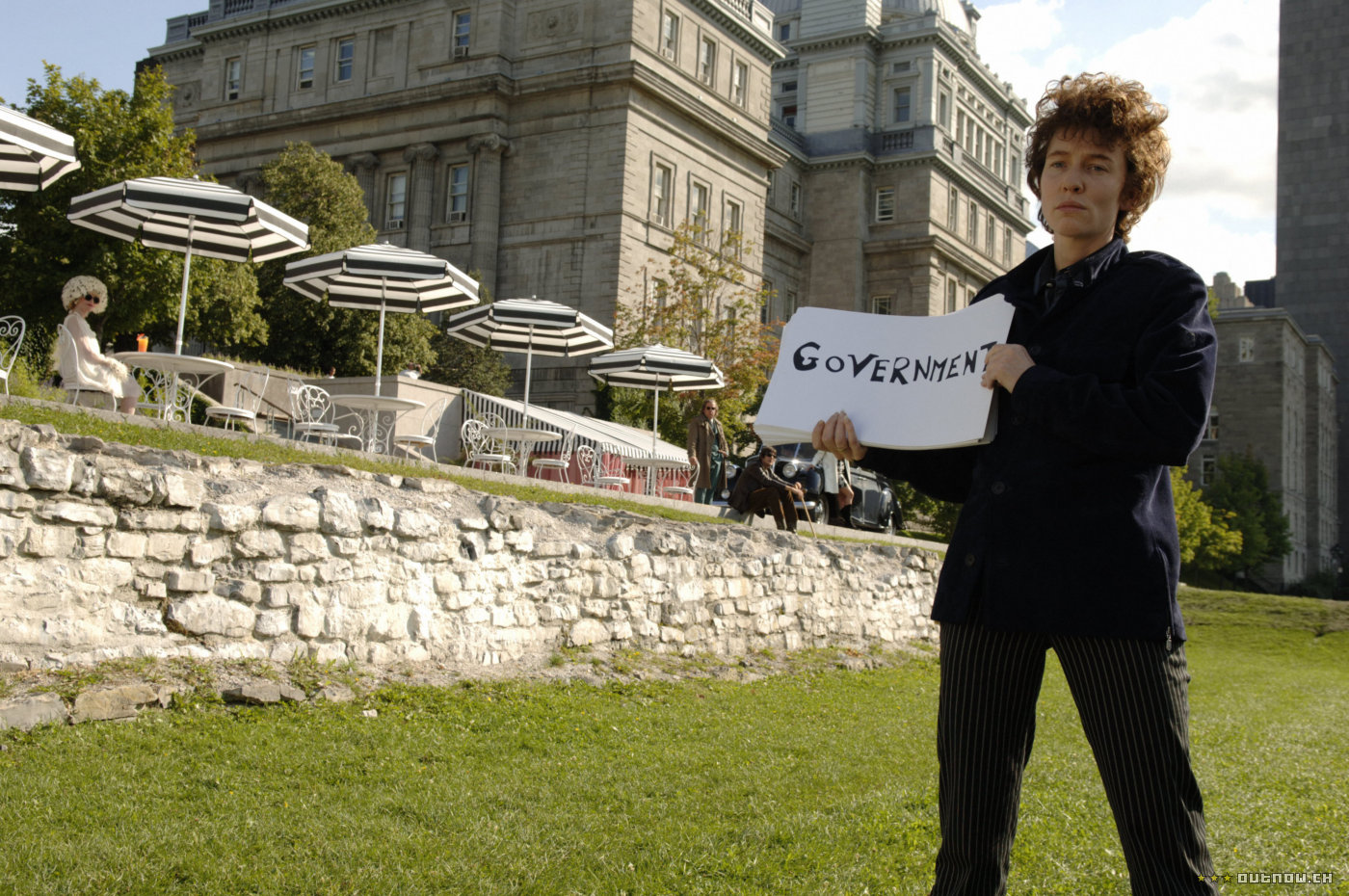
Cate Blanchett in Todd Haynes’ I’m Not There

What he means is that it’s one of those “look at me!” performances, and is more about Blanchett wanting attention for being adventurous in playing a guy than her finding the soul of the Dylan character and making it come newly alive. Smith is saying, in short, that Blanchett is faintly obnoxious on some level. He couldn’t be more wrong. She’s intoxicating. But more to the point, you can see into the angst and weariness of the Blonde on Blonde-era Dylan. (I’ve always loved that line “my weariness amazes me.”)

Has there ever been an Oscar-contending performance that hasn’t been at least partly about “look at me!”? Does Smith think Laurence Olivier wasn’t doing this in his 1948 Hamlet? How is wanting audiences to stop what they’re doing and pay attention to an particular actor’s energy or technique a bad thing? As long as these aspects don’t overcome the soul of a performance, where’s the harm?

“Though Blanchett is strenuously coiffed and made up to look like Dylan, [her] wisp of a figure and porcelain cheekbones make it impossible to forget this is a drag performance. In a scene in which her Dylan chases an Edie Sedgwick-like object of obsession around a park, she doesn’t seem remotely masculine. She gives off no sexual hunger, no sense of need.”


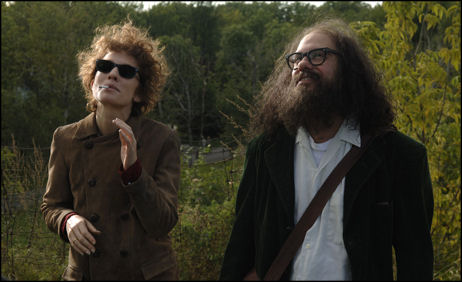
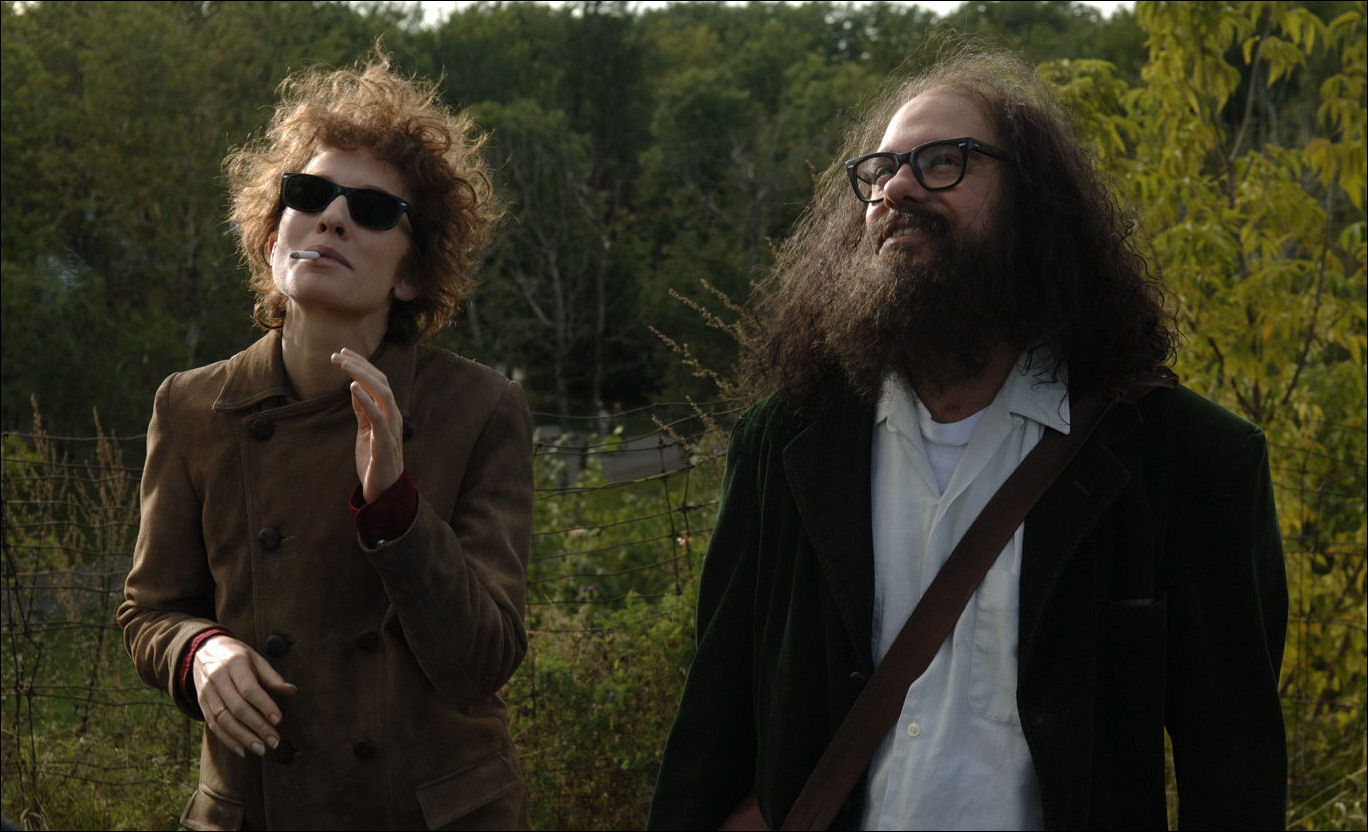
ditto, with David Cross and Allen Ginsberg.

Exactly! She’s playing Dylan chasing a girl but also Blanchett-the-temporary-lesbian chasing a girl, which gives it a whosis-whatsis dimension. Nothing is totally straight and sincere in I’m Not There. Everything you see and hear is a kind of mind game. I loved this aspect. It’s so trippy and experimental that it almost leaves you with a kind of pot contact high.

“In the end,” Smith conclude, “all Blanchett ever needs in any film is our rapt attention.”

And she’s gotten it from me and just about everyone I else I’ve spoken to. She’s dead certain to be nominated for Best Supporting Actress, and you have to figure she’ll prevail with this and that critics group also.

Here, again, is a like to Kyle Smith online, and to his Blanchett Commentary piece.

O’Neil, Hammond on “No Country”

Although he’s now allowing that No Country for Old Men will probably eke its way into one of the five Best Picture slots, The Envelope‘s Tom O’Neil is reporting, based on five or so conversations, that the widely-admired Coen brothers film is eliciting respect but not a lot of great passion among Academy fudgeballs.

O’Neil speaks here to Envelope columnist Pete Hammond about No Country‘s lofty rep among critics, and how this will most likely translate into Academy-level support. Unless, that is, the softies dig in their heels and “just say no,” either directly or passive-aggressively.

O’Neil himself isn’t a great No Country admirer (he admits this), but if you know Tom you know he isn’t really speaking about quality judgment as much as the proverbial “longing for comfort” factor. We all understand, I think, why O’Neil and his Academy chums are cool to this landmark film, and it starts, oddly enough, with what N.Y. Press critic Armond White called it — “a crime movie for a world at war.”

In saying this White is rehashing an old truism, which is that all great films reflect the world in which they were made as much as the literary source material that they’re based upon. A-level artists are always responding to the electric here-and- now, and the Coen brothers were certainly in this groove when they shot and cut this film in ’06 and early ’07.

No County for Old Men is a period film set in 1980, but it’s saying four dark things about the world of 2007. One, you can’t see what’s coming. Two, you can’t stop what’s coming. Three, the decent people are starting to be outnum- bered by the indecent ones. And four, a kind of spiritual apocalypse is gathering like storm clouds and surrounding our culture.

So there is no comfort for old Academy members in this film, even though it embodies lasting art and immaculate craft. Especially with that “unsatisfying ending” that I’m sure is sticking in their craw — that kitchen-table scene with Tommy Lee Jones lamenting the loss of decency and dependability (as embodied by his father) in his own life, and again admitting to himself and to us that he’s feeling overwhelmed and outflanked by the bad guys.

It’s also interesting that neither Hammond nor O’Neil mention Sidney Lumet‘s Before The Devil Knows Your’e Dead as a Best Picture contender. They apparently feel it’s out of the running — when did that happen? Hammond feels, however that Sidney Lumetis in contention for Best Director. How do you say “yes” to a director but “no” to his/her film?

The leading feel-good comfort providers, according to these two, are The Kite Runner, The Diving Bell and the Butterfly and, in O’Neil’s words, “even” Atonement.

Kennedy’s King speech

Newsweek‘s 1968 issue — “the year that made us who we are” — has a strong, finely woven article called “The Worst Week,” about the five-day span in which LBJ announced his decision not to run that year and the assassination of Martin Luther King. This mp3 of Kennedy delivering his famous speech in Indianapolis in which he announced King’s death is still pretty moving. Who among the current Presidential candidates could have delivered an impromptu speech of this calibre if they’d been in the same position? Not Mitt Romney.

Ira Levin is dead

Ira Levin, the original writer of Rosemary’s Baby, The Stepford Wives and The Boys From Brazil, has passed on. Levin’s book of Rosemary’s Baby was engrossing, quietly chilling and well-crafted but Roman Polanski’s film was somewhat better. And yet Levin’s books of The Stepford Wives and The Boys From Brazil were much, much better than the films. Not great literature and not trash, but crafty, well-shaped reads that were definitely a cut or two above “airport fiction.”

Paul Dano interview

I sat down earlier this evening with There Will be Blood costar Paul Dano. We know the same people and have talked at a couple of parties, but this was the first interview. Dano plays a dual role — twins, actually — in There Will Be Blood. “Paul” is a bright, mature, realistic fellow; “Eli” is an opportunistic evangelical creep. Dano delivers on the intensity and then some. He and Daniel Day Lewis have a helluva final scene together.

Here are two mp3 files of our talk. The first is longer than the second.

For my money Dano had a slyer, deeper, more interesting thing going on in Little Miss Sunshine than did his Oscar-winning costar Alan Arkin. Dano and Steve Carell obviously share the film’s richest and most intimate scene.

Our common denominator is having both lived in Wilton, Connecticut, for a few years. Dano, 23, graduated from Wilton High School in ’02. He’s currently living in Manhattan’s East Village and starring onstage in Jonathan Marc Sherman‘s Things We Want, directed by Ethan Hawke and costarring Peter Dinklage, Josh Hamilton and Zoe Kazan.

Daniel Day Lewis

As promised, here are those three Daniel Day Lewis clips — #1, clip #2, clip #3 — from last night’s WGA discussion following a screening of There Will Be Blood. Newsweek‘s David Ansen moderated; costar Paul Dano and director-writer Paul Thomas Anderson also participated.


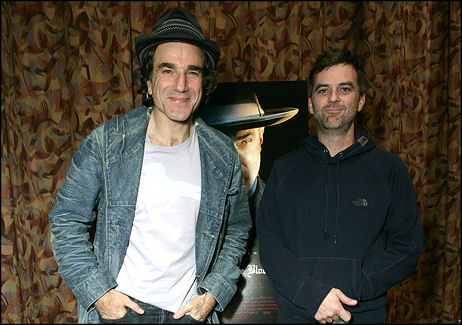
Lewis, Paul Thomas Anderson

I love the gentle British inflections in Lewis’s natural speaking voice. When was the last time he used them in a film? Not recently. And not The Age of Innocence, not The Crucible, not In The Name of the Father. Was it A Room With a View? The Boxer?

I was struck by how tall and gangly Lewis is when he first walked into the WGA theatre lobby while the film was still running. I’ve never sensed his being this Abraham Lincoln-ish — rain-thin and about 6′ 3″ — from his appearances on film. There’s also the matter of his big head. Almost all big stars have them. I thought of this as Lewis sat next to Ansen during the q & a. Lewis’s face is a good 35% to 40% larger than Ansen’s, and that’s a conservative estimate. (It was about the same ratio as indicated in the above photo of Lewis and Anderson.)

In clip #1, Lewis explains the attitude of his Blood character, Daniel Plainview, toward Paul Dano‘s Eli, an evangelical huckster, to a woman in the audience.


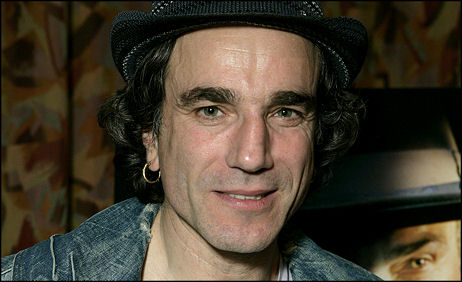
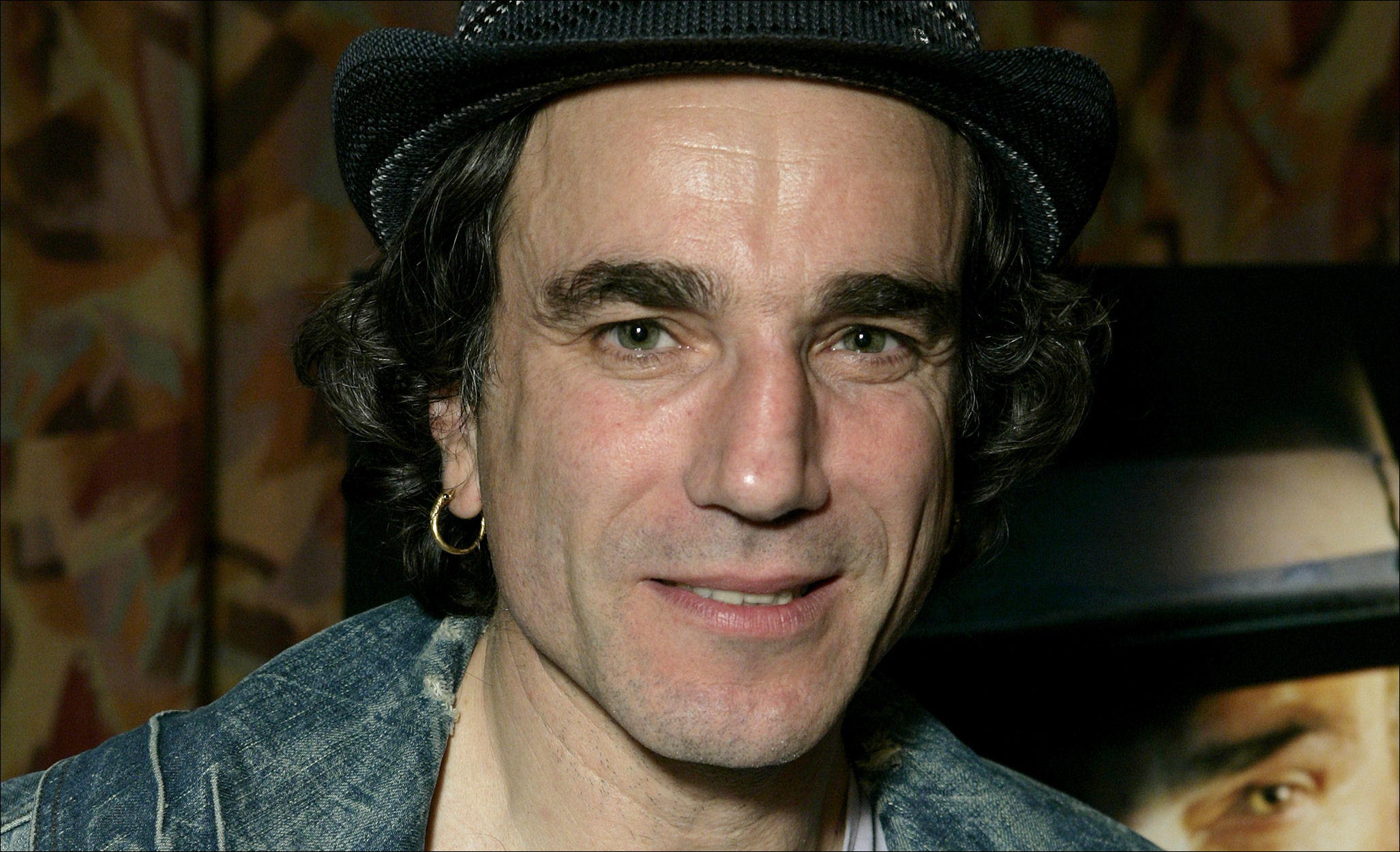
There Will Be Blood star Daniel Day Lewis — Monday, 11.12.07, 10:25 pm

In clip #2, he’s explaining to another female questioner how Plainview comes to suspect that Kevin J. O’Connor‘s Henry character may not be his actual brother, as has been claimed. It’s not a very smart question, but Lewis has fun with her and shows good humor. (At one point he says, “I’m so confused!”) As I said to Ansen later, sometimes the dumber questions get the better answers.

And in clip #3 — the best — Lewis responds to that question that young actors refuse to stop asking in situations like this, which is “what advice would you have for an actor just starting out today?” Lewis’s response, which mainly offers a warning and an urge to come to grips, is quite good. Gets a round of applause.