“Hitlerian Race Theory”

Froµ Matt Taibbi’s 6.28 essay on Robin DiAngelo’s “White Fragility“:

“It’s been mind-boggling to watch White Fragility celebrated in recent weeks. When it surged past a Hunger Games book on bestseller lists, USA Today cheered, ‘American readers are more interested in combatting racism than in literary escapism.’ When DiAngelo appeared on The Tonight Show, Jimmy Fallon gushed, ‘I know…everyone wants to talk to you right now!’

White Fragility has been pitched as an uncontroversial road-map for fighting racism, at a time when after the murder of George Floyd Americans are suddenly (and appropriately) interested in doing just that. Except this isn’t a straightforward book about examining one’s own prejudices. Have the people hyping this impressively crazy book actually read it?

“DiAngelo isn’t the first person to make a buck pushing tricked-up pseudo-intellectual horseshit as corporate wisdom, but she might be the first to do it selling Hitlerian race theory.
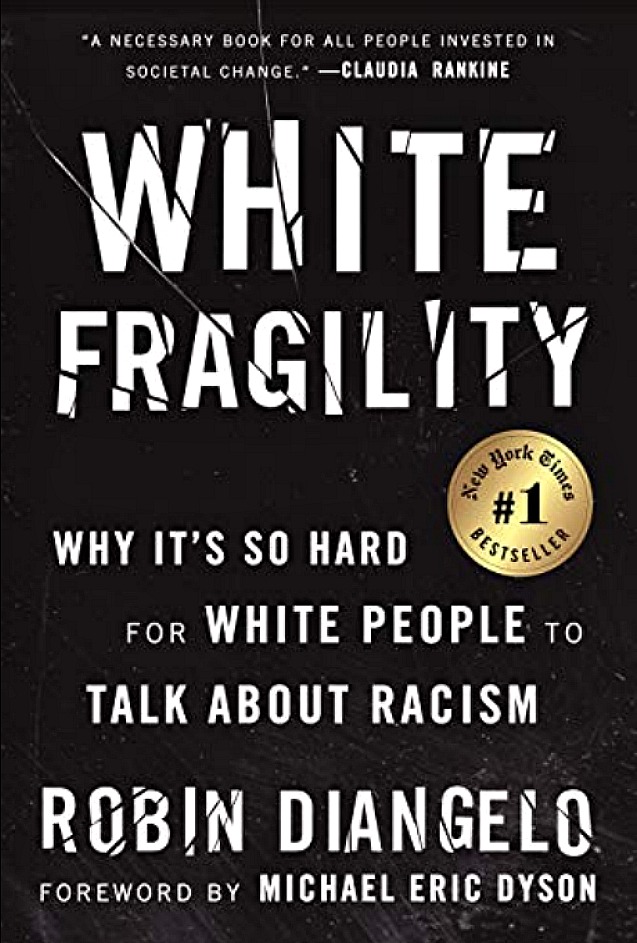
White Fragility has a simple message: there is no such thing as a universal human experience, and we are defined not by our individual personalities or moral choices, but only by our racial category.

“If your category is ‘white,’ bad news: you have no identity apart from your participation in white supremacy (‘Anti-blackness is foundational to our very identities…whiteness has always been predicated on blackness’), which naturally means ‘a positive white identity is an impossible goal.’

“DiAngelo instructs us there is nothing to be done here, except ‘strive to be less white.’ To deny this theory, or to have the effrontery to sneak away from the tedium of DiAngelo’s lecturing – what she describes as ‘leaving the stress-inducing situation’ — is to affirm her conception of white supremacy. This intellectual equivalent of the ‘ordeal by water’ (if you float, you’re a witch) is orthodoxy across much of academia.

“DiAngelo’s writing style is pure pain. The lexicon favored by intersectional theorists of this type is built around the same principles as Orwell’s Newspeak: it banishes ambiguity, nuance, and feeling and structures itself around sterile word pairs, like racist and antiracist, platform and deplatform, center and silence, that reduce all thinking to a series of binary choices.”

The Moment Has Passed

A little less than five years ago I badly wanted to catch Lin Manuel Miranda‘s Hamilton on Broadway. It had opened at the Richard Rodgers theatre in August 2015, and for a good year or so I kept reminding myself to somehow catch it during one of my NYC visits. But I was also repelled by the absurdly high ticket prices, and I gradually convinced myself that it wasn’t worth the candle.

I then told myself that I’d catch a roadshow version or at the very least a video-captured version on cable or streaming. But neither scenario happened. The cable/streaming thing stalled because the producers felt this would cut into roadshow revenues.

And so gradually the Hamilton moment — the late-Obama-era, fresh-out-of-the-box excitement — began to wear off.

Now the Hamilton “movie” is finally about to stream on the Disney channel (starting on 7.3). Obviously a good thing for millions who never saw it. But honestly? As brilliant and universally applauded as the stage show was (and to go by reviews of the streaming version), it’s no longer a thing with special vitality.

Hamilton doesn’t seem to have opened five years ago (it actually began at the Public Theatre on 2.17.15) but more like a decade ago, given everything that’s happened since that first electric moment. And it’s always been my feeling that movies don’t just connect because they’re exceptional but because of the timing — because they’ve opened at just the right time and have struck when the iron is hot.

A Hamilton press screener has been sitting in my inbox for a couple of days, and I’m thinking of catching it tonight. Why didn’t I watch it immediately? Because it’s an old show now.

Read more

All Spelled Out

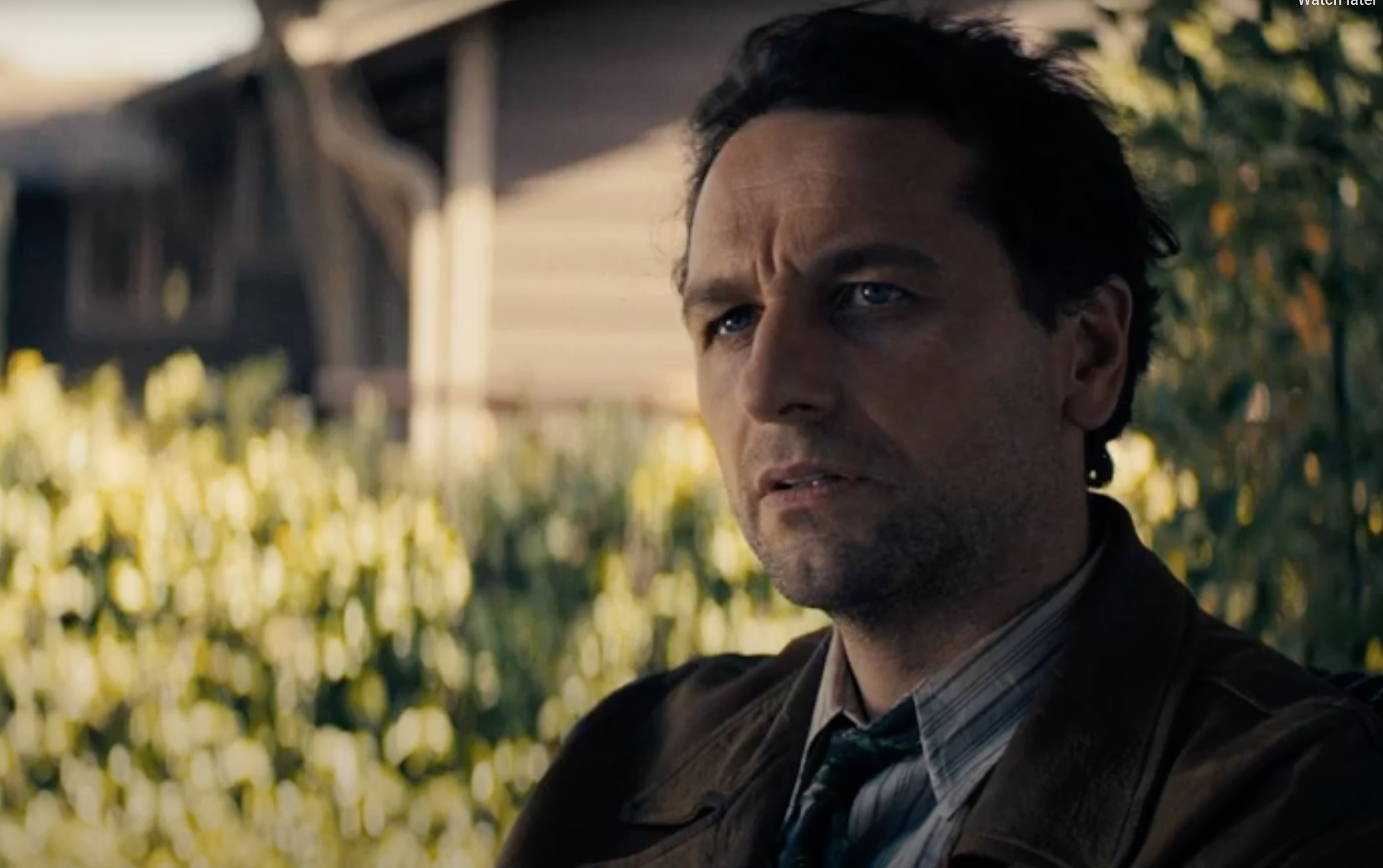
Last night I finally watched episode #2 of HBO’s Perry Mason series. It continued, of course, with that smokey, gunky, grimly desaturated, grimey thing. But I finally figured out what’s really bothering me about this show, and here it is:

Matthew Rhys, who plays the titular lawyer-investigator, is too long of tooth to be playing a World War I veteran in 1931.

Combat soldiers are generally 18, 19 or 20, so let’s bend over backwards and say Mason was 20 when he fought against the Germans in 1918. That would make him 33 in 1931. Except by any biological yardstick Rhys looks at least 12 or 14 years older than that. He’s currently 45, but with his creased Elmer’s Glue-All complexion and facial features starting to sag he might as well be 47 or even 48. (Remember how Cary Grant looked in Mr. Blandings Builds His Dream House? He was 44 or thereabouts, but he looked 38 or 39 at the oldest.) And if Rhys looks 47 or 48 he might as well be 49 or 50.

It just doesn’t work to watch a guy who’s well into middle-age try to figure out if he wants to be a private-eye bottom-feeder or not. Professional identity crises are something you go through in your mid to late 20s or, at the very latest, your early 30s. I for one don’t want to watch a 45 year-old guy trying to figure out who and what he is. He should handled that shit 15 or 20 years ago. So there it is — my basic problem with Perry Mason.

Farewell, “People of Color”

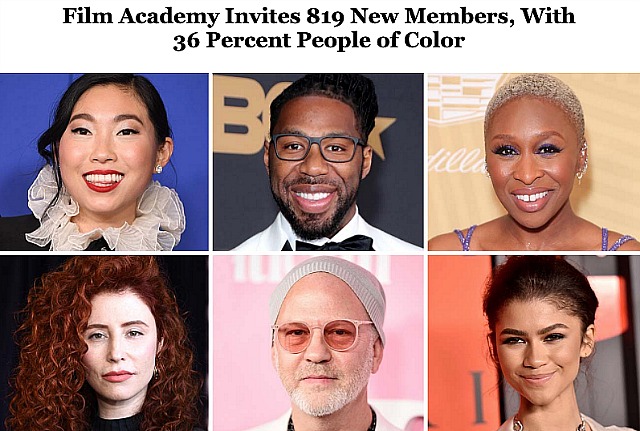
The Academy of Motion Picture Arts and Sciences has invited 819 actors and filmmakers to join up and pay their dues. The AMPAS membership tally now comes to now 9300. In keeping with recent patterns, the additions will further diversify the ranks. 45% of the fresh recruits are women and 36% are under-represented ethnic/racial minorities, for a total of 86%. The international (i.e., non-domestic) makeup of the new crew is 49% from 68 countries.

So are the remaining invitees who aren’t female or under-represented ethnic-racial minorities (what is that, 55% or less?) males or, God forbid, European-descended males with pale complexions?

As I understand the new-members situation, Scott Feinberg‘s Hollywood reporter headline — “Film Academy Invites 819 New Members, With 36 Percent People of Color” — isn’t quite right as the term “people of color” has been retired in favor of the above-mentioned URERM (i.e., under-represented ethnic/racial minorities).

For years the Academy has used the “person of color” term. Except that partly alluded, I’m told, to people of Spanish heritage and residence (i.e., citizens of Spain). In the eyes of the Academy, for example, Antonio Banderas was regarded (until today) as a person of color. Which is kind of odd as Spaniards are not “people of color” any more than Mick Jagger is. Anyone who’s seen a Pedro Almodovar film will tell you that while their hair is frequently dark (along with auburn, blonde and what-have-you), they all have fair, Wonder Bread-ish, Ozzie-and-Harriet complexions.

And so AMPAS is now going with the more egalitarian-sounding under-represented ethnic/racial minorities, which draws a sharper line. As long as they continue to keep white guy additions to a bare minimum, we’re good.

So Hathaway Got It Wrong?

After yesterday’s coinage of “No Chairs Nolan“, his p.r. rep Kelly Bush issued the following statement: “For the record, the only things banned from [Christopher Nolan’s] sets are cell phones (not always successfully) and smoking (very successfully). The chairs Anne [Hathaway] was referring to are the directors chairs clustered around the video monitor, allocated on the basis of hierarchy not physical need. Chris chooses not to use his but has never banned chairs from the set. Cast and crew can sit wherever and whenever they need [to] and frequently do.”

Mueller Blew It (What Else Is New?)

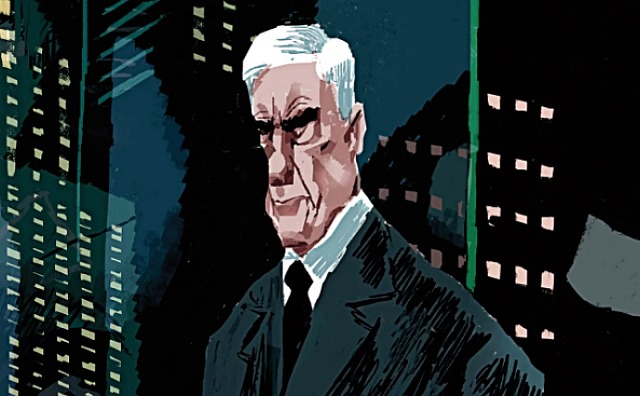
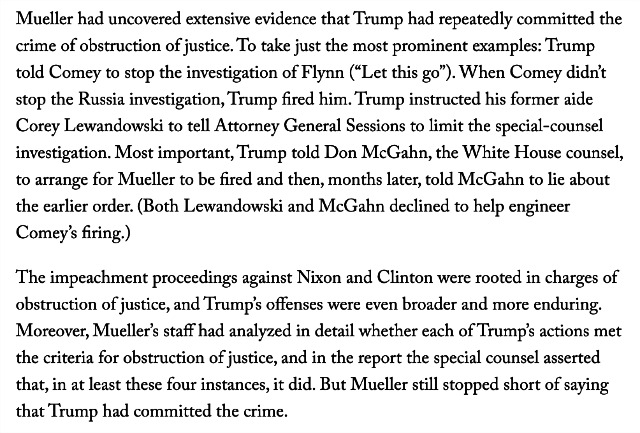
From Jeffrey Toobin‘s “Why The Mueller Invetigation Failed,” posted a day or sp ago by The New Yorker: “The President has tweeted about Mueller more than three hundred times, and has repeatedly referred to the special counsel’s investigation as a ‘scam’ and a ‘hoax.’ Barr and Graham agree that the Mueller investigation was illegitimate in conception and excessive in execution—in Barr’s words, ‘a grave injustice’ that was ‘unprecedented in American history.’

“According to the Administration, Mueller and his team displayed an unseemly eagerness to uncover crimes that never existed. In fact, the opposite is true.

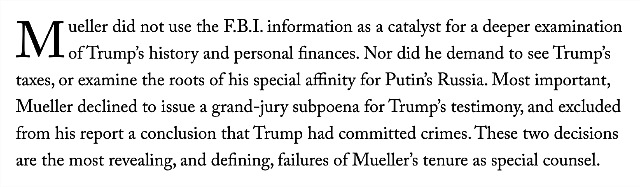
“Mueller had an abundance of legitimate targets to investigate, and his failures emerged from an excess of caution, not of zeal. Especially when it came to Trump, Mueller avoided confrontations that he should have welcomed. He never issued a grand-jury subpoena for the President’s testimony, and even though his office built a compelling case for Trump’s having committed obstruction of justice, Mueller came up with reasons not to say so in his report.

“In light of this, Trump shouldn’t be denouncing Mueller — he should be thanking him.”

Carl Reiner Was God

No sadness in the passing of the great Carl Reiner at age 98 — only cheers, gratitude and celebration. I worshipped the fact that he was on Twitter and a lucid Trump hater right to the end. Reiner once told Larry King that he didn’t post his tweets from a smart phone but from a desktop — whatever works.

A couple of days ago I happened to re-watch Reiner’s All Of Me (’84) and decided it was both his and Steve Martin‘s finest flick ever. Not to mention Lily Tomlin and Richard Libertini‘s.

My second favorite Reiner film is (and has been for a long time) Where’s Poppa? (’70), followed by the interesting if somewhat preachy Oh God! (’77) and finally The Jerk (’79), which also starred Martin.

On The Dick Van Dyke Show, which Reiner created, produced, cowrote and costarred in as the Sid Caesar-like Alan Brady, he was the original tempestuous, egotistical, insecure tyrant. (On a sitcom, I mean.) And he was a great straight man to Mel Brooks in their “2000 Year Old Man” routines, and I loved his angry impatient guy schtick in It’s a Mad, Mad, Mad, Mad World (’63) and The Russians Are Coming, the Russians Are Coming (’66).

Reiner Wiki: “Of all the films I’ve directed, only Where’s Poppa? is universally acknowledged as a cult classic. A cult classic, as you may know, is a film that was seen by a small minority of the world’s filmgoers, who insist it is one of the greatest, most daring, and innovative moving pictures ever made. Whenever two or more cult members meet, they will quote dialogue from the classic and agree that ‘the film was ahead of its time.’ To be designated a genuine cult classic, it is of primary importance that the film fail to earn back the cost of making, marketing, and distributing it. Where’s Poppa? was made in 1969 for a little over $1 million. According to the last distribution statements I saw, it will not break even until it earns another $650,000.”

Reiner was a Jewish atheist, which he came to largely from the influence of the Third Reich. Quote #1: “I became an atheist after Hitler. I said, what is this? If there was a God, would he not be hearing 18 million people, 16 million Jews, or 20 million other people, saying, ‘Please God, don’t do this, make him stop?’ God was so busy doing what? Striping zebras or fixing the long necks of giraffes?” Quote #2: “I have a very different take on who God is. Man invented God because he needed him. God is us.”


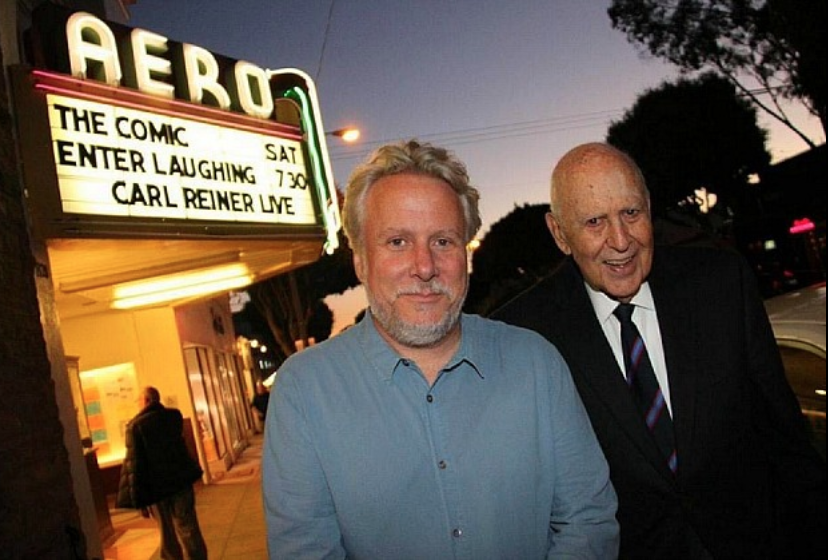
Director-screenwriter Larry Karaszewski, Carl Reiner in front of the Aero on 9.20.14.

Read more

More Exhausting Than “Funny”

The acrobatics are applaudable, but who climbs up the side of a building in shiny leather street shoes? Especially while wearing glasses and a straw hat? Almost dying from falling five or six stories and slamming into the pavement at 100 mph is deeply unsettling and therefore not the least bit entertaining. This is basically a stretched-to-the-limits-of-crediblity suspense sequence, and over-rated at that. Sidenote: Harold Lloyd died in ’71, but I was invited to a party at his Green Acres estate (or at least what remained of it) sometime in ’83. I’ve never forgotten the magnificent 1920s interior design (Mediterranean / Italian Renaissance) and furnishings, particularly the Tiffany lamps.

Read more

The End of Flash Means…?

Jeffrey Wells / Hollywood Elsewhere to PicMonkey:

As we all know, official support for Flash will finally end on 12.31.20, with interactive HTML5 content replacing it. HTML5 is lightweight, fast and takes less time to render web pages whereas Flash is CPU intensive and not as lightweight as compared to HTML5.

I writing to ask you or a PicMonkey colleague to please explain IN DUMB PERSON LANGUAGE what will be be specifically different in terms of capturing and refining images on PicMonkey after Flash is discontinued and HTML5 kicks in.

I know how everything works now as I’ve been using PicMonkey for several years. I capture an image, save it to my desktop and then use PicMonkey to crop and enhance or what-have-you. But I want to know how things will be different (if at all) after 12.31.20.

Kindly don’t answer with confusing techno-jargon. Just talk to me like I’M A CHILD….like I’M AN IDIOT…like I’m a GOLDEN RETRIEVER…what exactly will be different in terms of commands, basic capturings, refinings and whatnot.

And please promise me you won’t dump classic or, as you describe it, “old” PicMonkey in favor of your reprehensible new version[s], which are apparently aimed at the tens of millions of vapid, ADD-afflicted, selfie-taking, Tik Tok-frequenters out there.

Thank you very much & have a nice day.

“No Chairs” Nolan

I understand the idea that it’s not a desirable thing if too many people are laughing and chatting and kicking back during principal photography (Brian De Palma used to frown at same). But if you’ve even hung out on a set you know it’s all about waiting for the director and the dp to create the right lighting and figure out the camera movement, and that this always takes hours and hours. So denying people the option of sitting down (even in jest) is, like, “what?”

No Boxy, No Buy

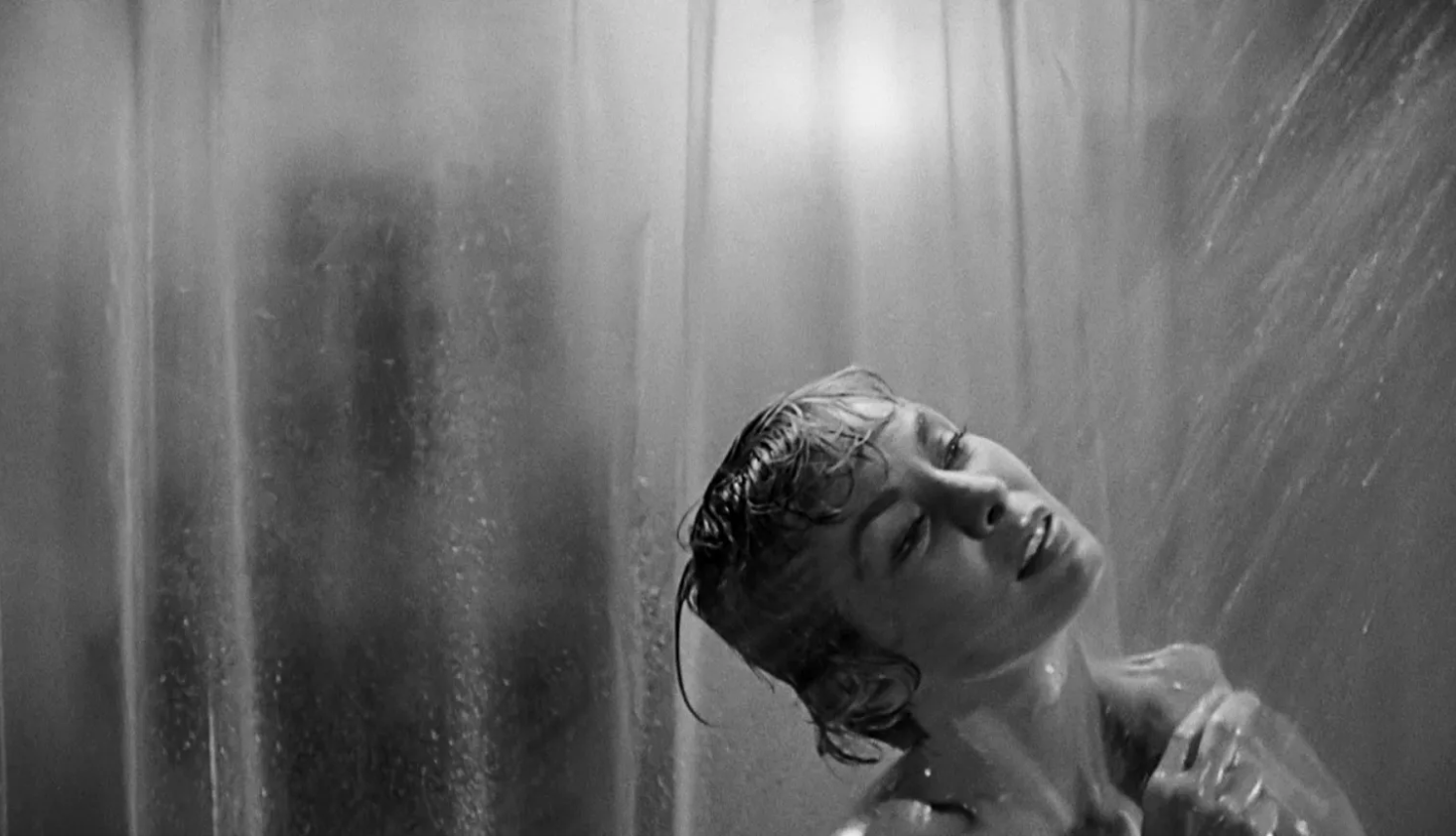
So it’s been semi-confirmed that the slightly more risque version of Psycho (half-glimpse of Janet Leigh side boob, extra stabbings of Martin Balsam) will be included in Universal Home Video’s forthcoming 4K UHD Alfred Hitchcock box set. Terrific, but it’s not enough. As I explained a couple of weeks ago, the only thing that will deliver serious tumescence will be the boxy (1.37:1) version of Psycho — a version that was shown on TV and pay cable tens of thousands of times during the ’70s, ’80s and ’90s. It was only in the mid aughts, or when the influence of Bob Furmanek and the 1.85 fascist cabal began to hold sway, that the idea of only showing a cleavered version of Hitchcock’s 1960 classic became the default go-to. HE believes that aspect ratio crimes should be prosecuted in the Hague, and that Furmanek, no offense, should be defendant #1 in the dock.