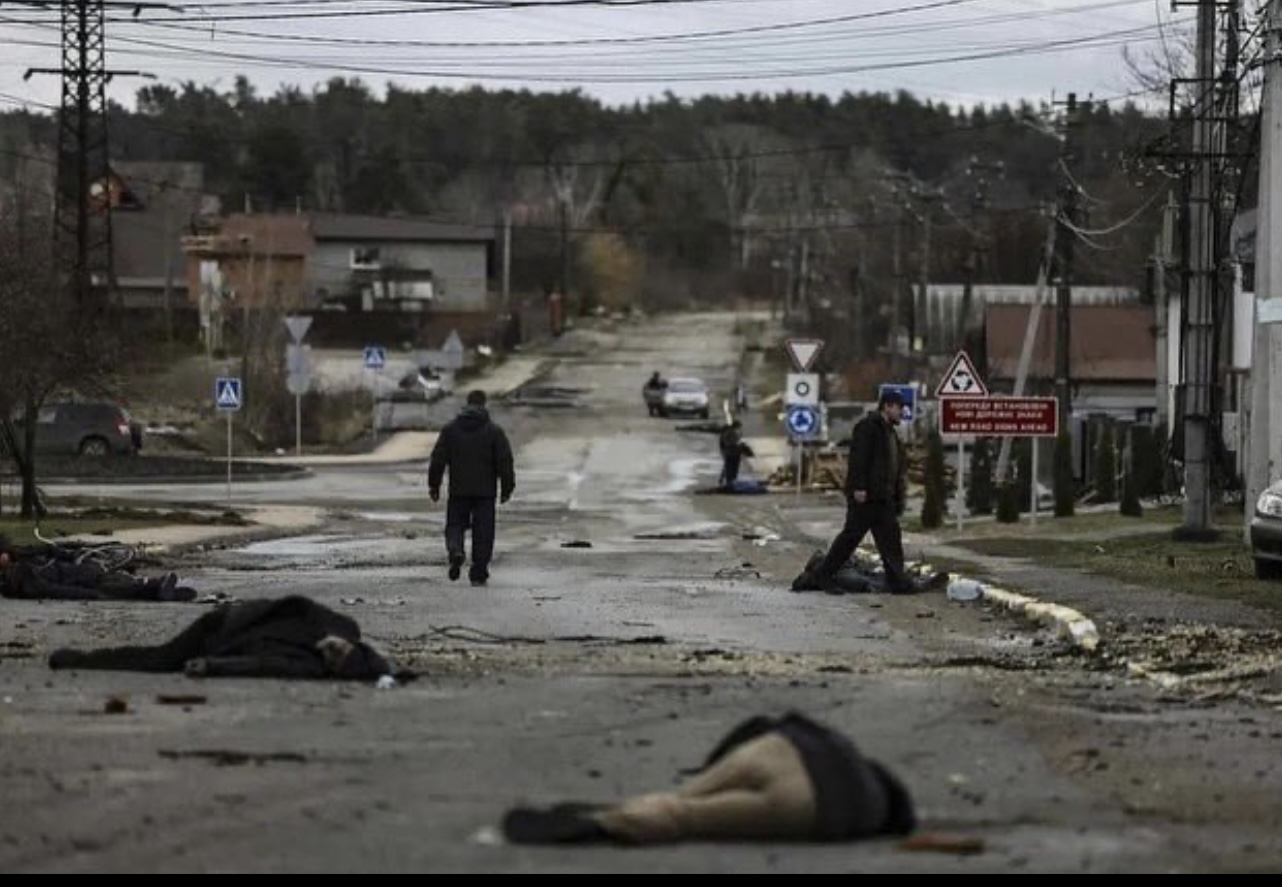
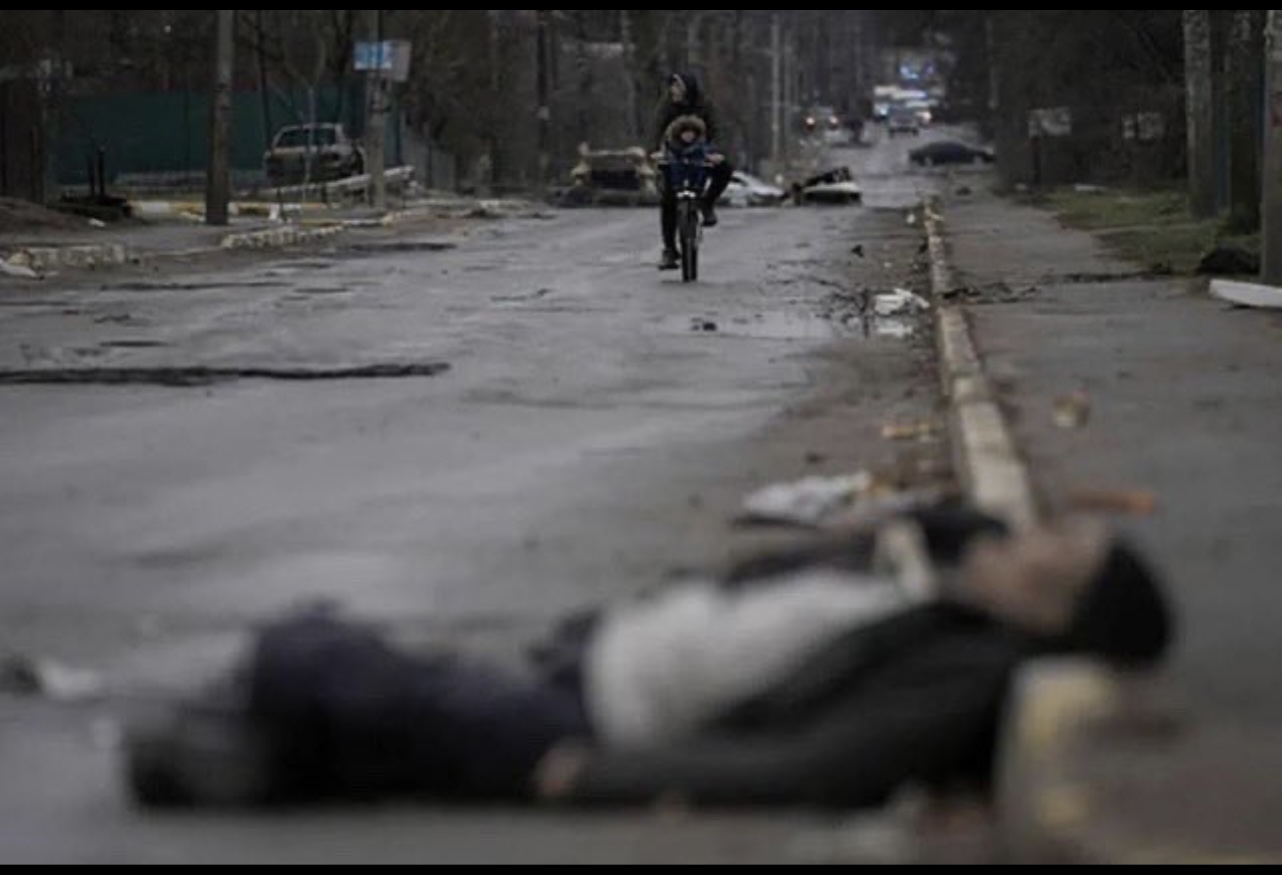
Zelensky’s Grammy speech was rather good — morally urgent, concisely written, well delivered, presumably rehearsed. Did the Oscars blow him off? If so, they shouldn’t have.


Zelensky’s Grammy speech was rather good — morally urgent, concisely written, well delivered, presumably rehearsed. Did the Oscars blow him off? If so, they shouldn’t have.
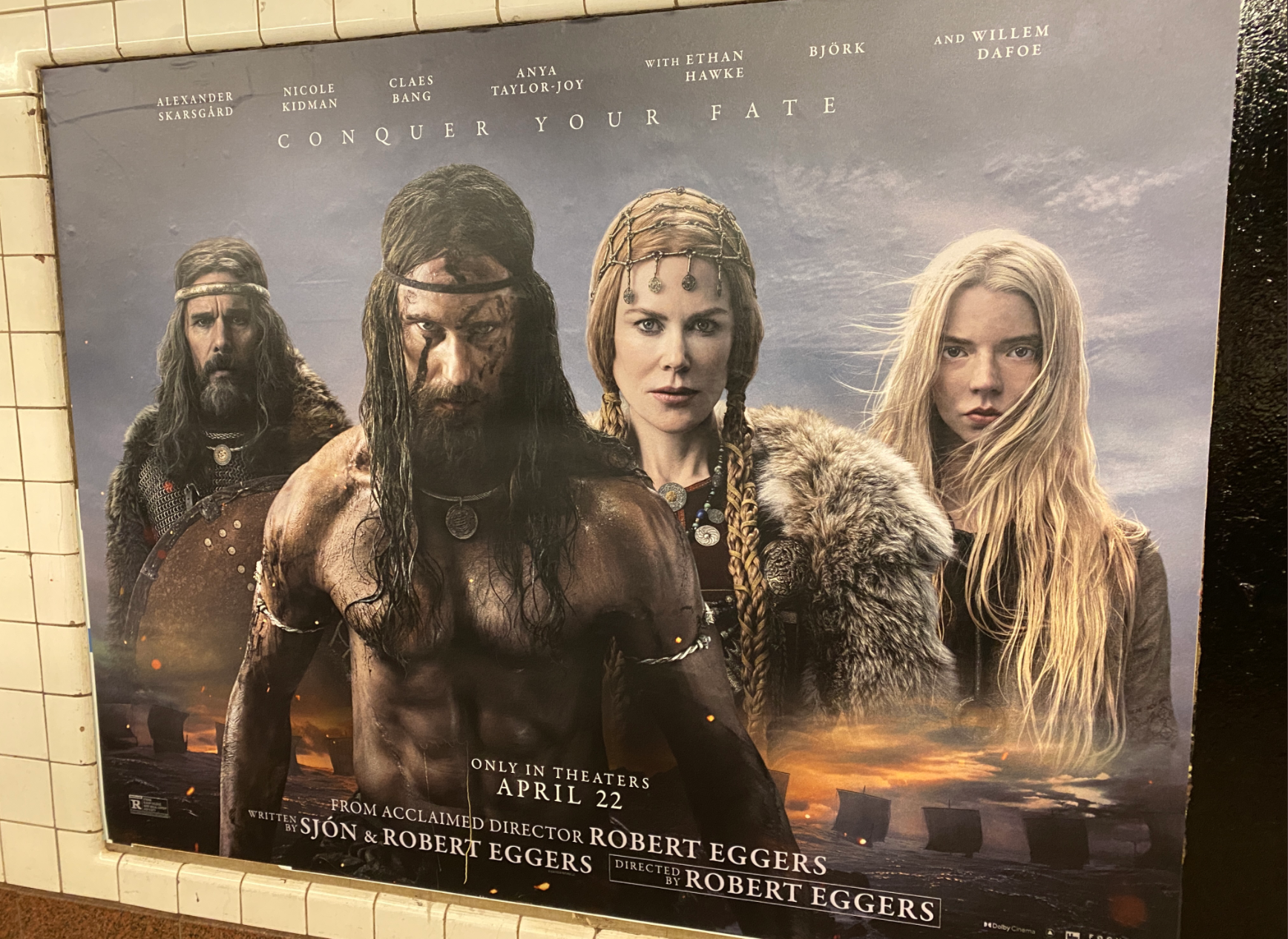
The Focus marketing team sat down and decided that the title doesn’t mean much — no one will remember it, they’re thinking, certainly when it comes to NYC subway riders — it’s the Viking vibe, the beards, the long hair, the axes, the wounds, the grayness and grimness.
Feverish rock-guitar solos are the topic of this interactive N.Y. Times piece, “Why We Can’t Quit the Guitar Solo” by Nabil Ayers.
I’ve never been a fan of wailing, reach-for-the-heavens solos; the short guitar bridges are what matter, and the more concise the better. The 23-second bridge in Eric Clapton‘s “She’s Waiting” (2:10 to 2:33), say. Or the 3:02 to 3:19 bridge in this Jackson Browne song. Or my all-time favorite, the twelve-second bridge in “The Song Is Over” (:42 to :54).
I have this idea that “Pretty Ballerina” is kind of timeless. Okay, maybe not but it feels like a close relation of a 21st Century Emo song. If it had never been recorded and released several decades ago but if someone current had recorded it in precisely this baroque way, would it fit right in or would your music cognoscenti go “the fuck?”
HE to Jett: “If this song was released today, would it fit in as a kind of EMO thing?”
Jett to HE: “It would be more indie pop-rock. Not really Emo by today’s standards.”
HE to Jett: “What is it missing Emo-wise? I thought EMO was defined by a kind of whiny feeling…a soft emotional core.”
Jett to HE: “Emo is just more over-the-top these days, lyrically and production-wise.”
HE to Jett “Ballerina has strings, a falsetto singing voice, a feeling of longing.”
Jett to HE: “That’s fine but Emo is a subculture that’s completely detached from this.”
HE to Jett: “Detached from what? Good lyric writing?”
Jett to HE: “I’m not saying Pretty Ballerina is bad. It’s just not Emo. Today’s Emo is hyper-pop. You’d hate it.”
From The New Yorker‘s Richard Brody: “During the New York press junket for the film Morituri, in 1965, its star, Marlon Brando, received a series of journalists for brief interviews at a table in the Hampshire House hotel and toyed with them gleefully and mercilessly.
“This 1966 documentary, by Albert and David Maysles, captures Brando’s transformation of the setup, through the sheer force of his personality, into a grandly ironic variety of performance art.
“Brando brazenly flirts with several female journalists, complimenting them on their appearance, and aggressively questions male interviewers about their looks, too (with particular attention to their fingernails and their clothing). Challenging the interviewers’ readiness to act as ‘hucksters,’ Brando mocks the blatantly promotional conversations with sly or flamboyant sarcasm and disarmingly sincere reflections.
“In a streetside interview, Brando speaks French with a French interviewer, and in response to a political question about the circumstances of black people in the United States, he beckons to a black woman who’s passing by and poses the question to her. The resulting portrait of Brando — sexual, intellectual, aggressive, vulnerable, seductive, rebellious — shows him creating a greater character than any ever written for him: himself.”
Richard Linklater‘s Apollo 10½: A Space Age Childhood (Netflix) is a plotless boomer nostalgia thing — a visit to the oasis of suburban family life in the mid to late ’60s and a re-sampling of all the pop cultural stuff of that era (late LBJ, early Nixon).
Like Linklater’s Waking Life (’01) and A Scanner Darkly (’06), Apollo 10 and 1/2 is rotoscoped — the only kind of animation I really enjoy. Performed by skilled actors and then converted to subtle, ultra-realistic animation.
It’s set in a bland Houston suburb, and is oriented to some extent around NASA and the July 1969 Apollo moon voyage. It’s about a Brady Bunch or Wonder Years-type family, of which Stan (voiced by Milo Coy) is the young lead protagonist. Dad (Bill Wise) works in shipping and receiving for NASA. It’s narrated by an off-screen Jack Black, playing an adult Milo. There’s a mom, an older brother plus two or three sisters.
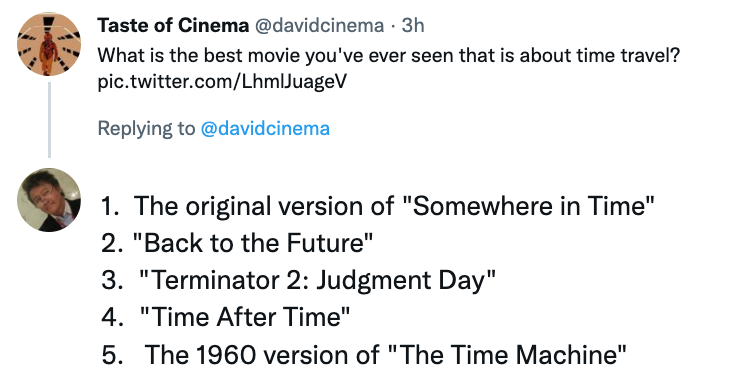
Apollo 10 and 1/2 is an easy-going, laid-back time machine. Boomers and older GenXers will sink right in — it’s an amiable return to their young lives and everything that was happening in terms of music, TV, cultural changes, the Vietnam War, racial conflict, evolving sexual mores, etc.
I had a nice mellow time with it.
The only problem is that Linklater’s time trip has no POCs. If I were Jon Stewart or Race2Dinner’s Lisa Bond I would say that this absence reflects a foul racist agenda on Linklater’s part, and that he has to be lashed along with all the other white animators who’ve committed similar crimes.
To those who would say “but Linklater based it on his own childhood to some extent and it’s set in a ’60s whitebread neighborhood…there were no kids of color in this neck of the woods back then,” I would say “have you never heard of presentism? It doesn’t matter if there were no black kids in Linklater’s old neighborhood — this is 2022 and he should’ve blacked it up.”
I’ll tell you what I did last night while watching Apollo 10 1/2. I ignored the whole doofus fantasy subplot about the 14 year-old Stan being selected by NASA engineers to go on a secret Apollo mission, blah blah. I watched it, yes, but I didn’t give a damn. It bypassed my aesthetic digestive system entirely.
I was totally stone-faced throughout 95% of last night’s SNL, but then “Short-Ass Movies” came on…okay! I sat up, I woke up, the color returned to my cheeks, etc. Yes, being a short-ass movie hound means a moronic “no” to Heat, Barry Lyndon, Schindlers List, The Godfather (Parts I and II), Prince of the City, Malcolm X, Lawrence of Arabia, Malcom X, The Wolf of Wall Street, The Irishman, Spartacus and dozens of others, but compared to last night’s other skits, “Short-Ass Movies” was the shit.