Shadows and Mud

A MOMA-supplied 35mm Technicolor print of King Vidor’s Duel in the Sun (‘46) screened this afternoon at the Lincoln Center Film Society’s Walter Reade theatre, and man oh man oh man…they got me.

The images were so dark and murky you could only see about half of what had been captured by dps Lee Garmes, Ray Rennehan and Harold Rosson. The rest, it seemed, was hiding in shadows, smeared with lentil soup, covered by a scrim.

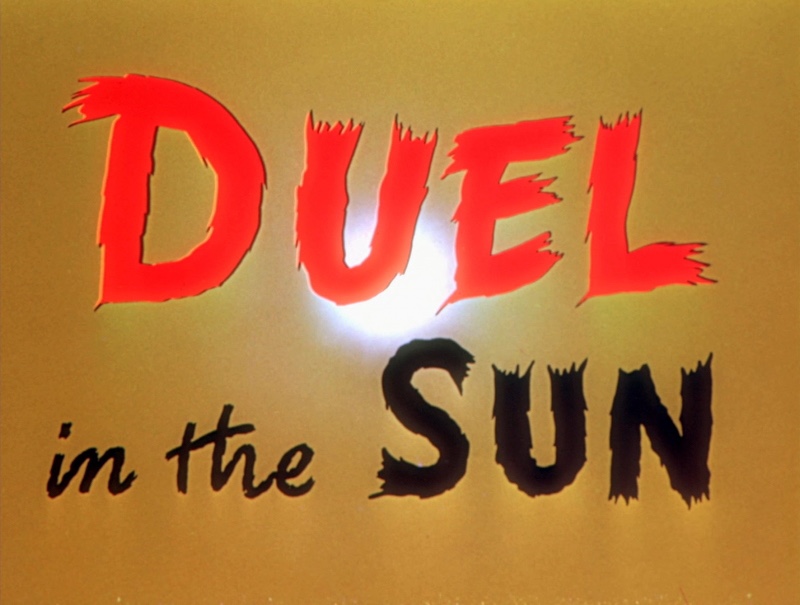
Even the brightly lighted Technicolor Selznick logo sequence (the Gone With The Wind Bluray delivers a perfect rendering) looked like it was shot during a solar eclipse.

I was told by management that it wasn’t a case of poor illumination (the projectionist told a theatre employee that the image was lit by 16 foot lamberts) but a darkass print. Besides the lack of sharpness (the clarity difference between Duel and GWTW is like night and day), the cinematography had a generally thick and heavy quality. Nothing looked beautiful; it was horrendous.

I got up and left around the 40-minute mark. “Why am I watching this?” I muttered to myself. “I feel like I’m going blind.”

These DVD Beaver screen captures from a 2017 Kino Bluray simulate the difference between a properly illuminated Duel in the Sun image (above) vs. how it looked inside the Walter Reade (below) — the projected images actually looked worse than this.
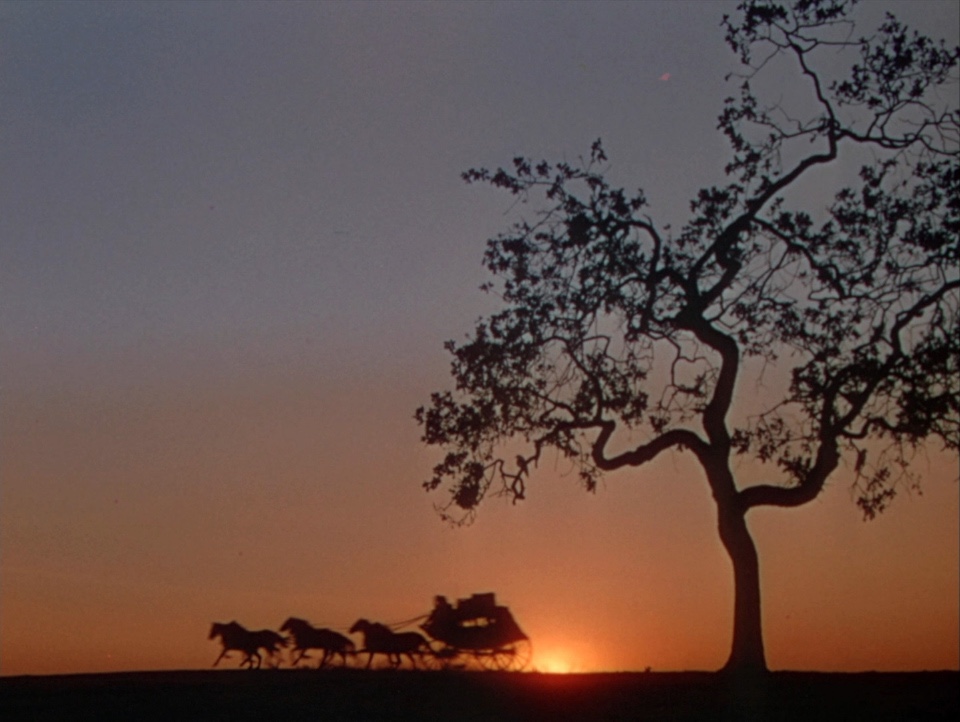
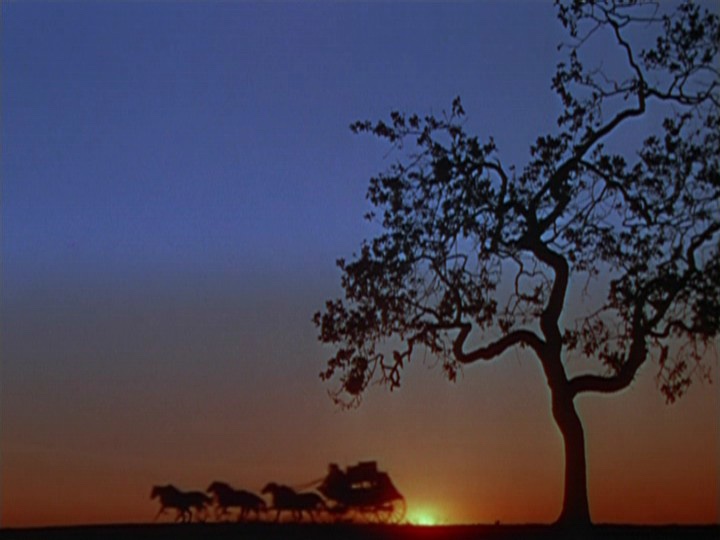
The projected main title sequence looked dark and muddy — it didn’t pop in the slightest. This is how it should have looked (but didn’t):
Going Mental

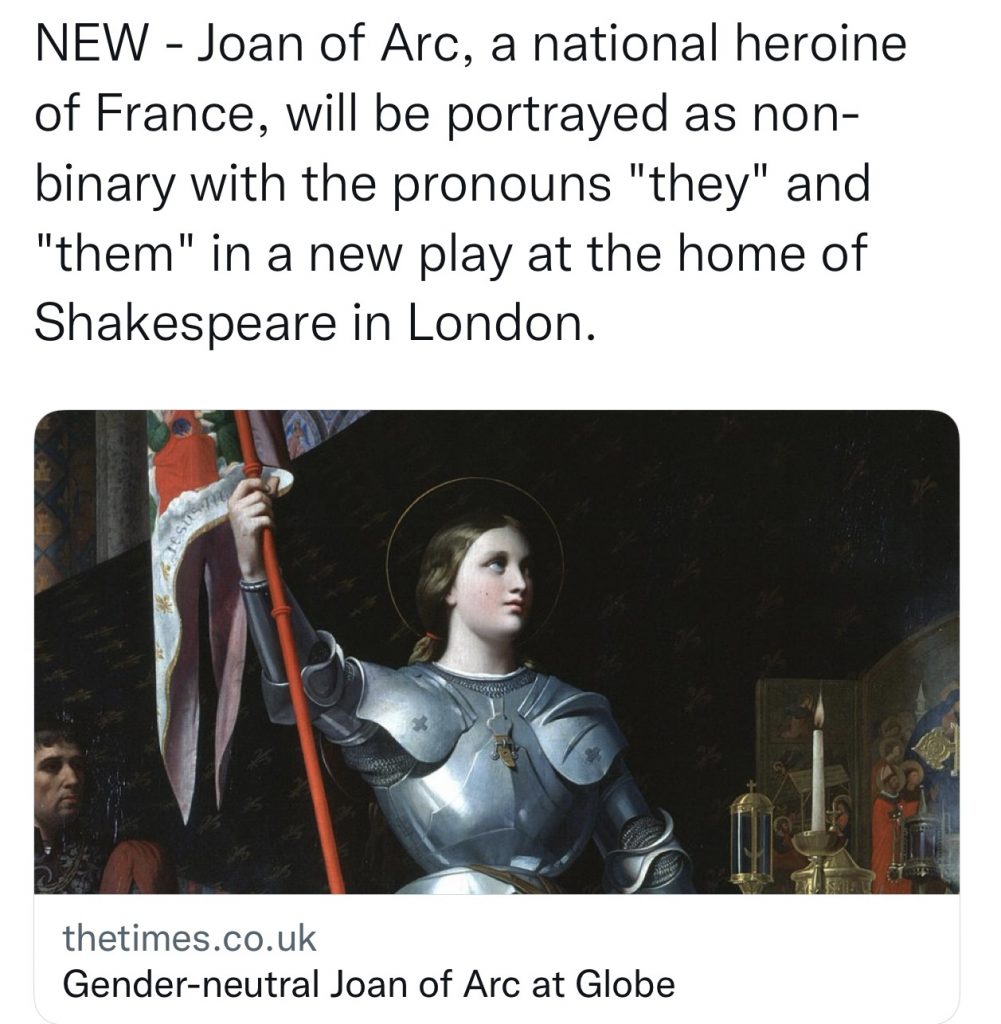
The last time I checked Joan of Arc and Queen Elizabeth I were women — extraordinary women who lived boldly and courageously. I thought their unfettered gender was fundamental to their lore.,

In any event their eternal spirits (aka “ghosts”) have only just learned about certain 21st Century dramatists having decided to give them non-binary status, etc. Are Joan and Elizabeth pleased? You tell me.

Read more

Leo’s James Dean Screen Test

I struck up an acquaintance with Michael Mann in the summer of ‘97, when I was working as an in-house People freelancer. He knew I was a fanatical longtime fan, etc. One afternoon Mann invited me over for a brief sitdown at his office (Olympic near Bundy), and it was strictly about feeling me out. No quotes or notes.

It was right in the first cautious blush of that relationship that Mann allowed me to look at a James Dean screen test that Leonardo DiCaprio performed in ‘93. It was filmed footage on a VHS cassette, and Leo was wearing a red Rebel Without A Cause jacket and ‘50s Brylcream pompadour hair.

The deal was that I couldn’t mention to anyone (not even my mother) that I’d seen it, and there could certainly be no filing of any kind.

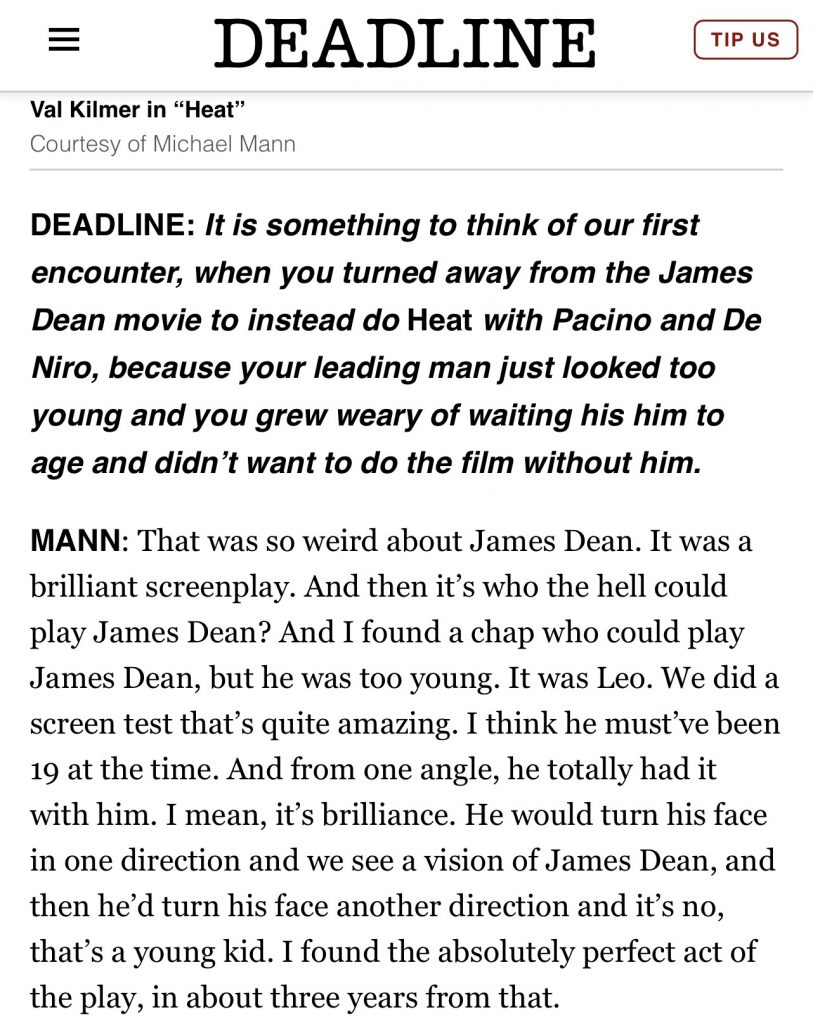
I agreed, of course, but I was so knocked out by how well DiCaprio had captured Dean’s expressions during his big scene with Jo Van Fleet in East of Eden (‘55)…I was so turned around that it broke my heart to have to sit on my impressions forever. But now that Mann has discussed the DiCaprio-Dean thing in a chat with Deadline ‘s Michael Fleming, it seems okay to mention my quick peek.

Ernst Stavro Blofeld

Or more precisely, Christoph Waltz as Blofeld in No Time To Die. That was my first association. I’m sorry but the ogre-ish Cyclops vibe (i.e., not Gene Hackman in Superman) does something to me. Nobody has ever approved of Trump’s hair, but this proves he needs some kind of dramatic hair statement to make it all work. (I’d like to credit the CG guy who composed this but I’ve lost track of the original.)

https://vimeo.com/739224030

No Sweats

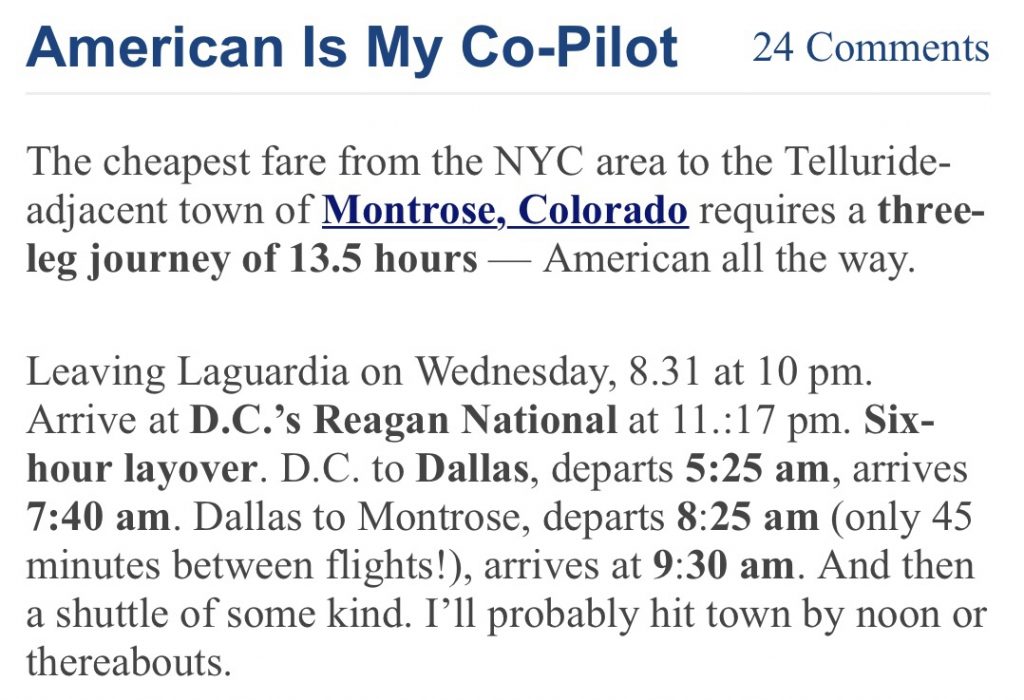
In an 8.9 piece called “American Is My CoPilot,” I mentioned a concern about only having a mere 45 minute window in Dallas-Ft. Worth airport to catch a connecting flight to Montrose, Colorado.

A rep assures that (a) 45 minutes is enough given the early hour, but (b) if I miss it there’s a 12:59 pm Dallas flight that lands in Montrose at 2:14 pm. If American causes me to miss the 8:25 am flight, they’ll surely put me on the later one.

Read more

Carter’s Tut-Tut Response to “Verses” Furor

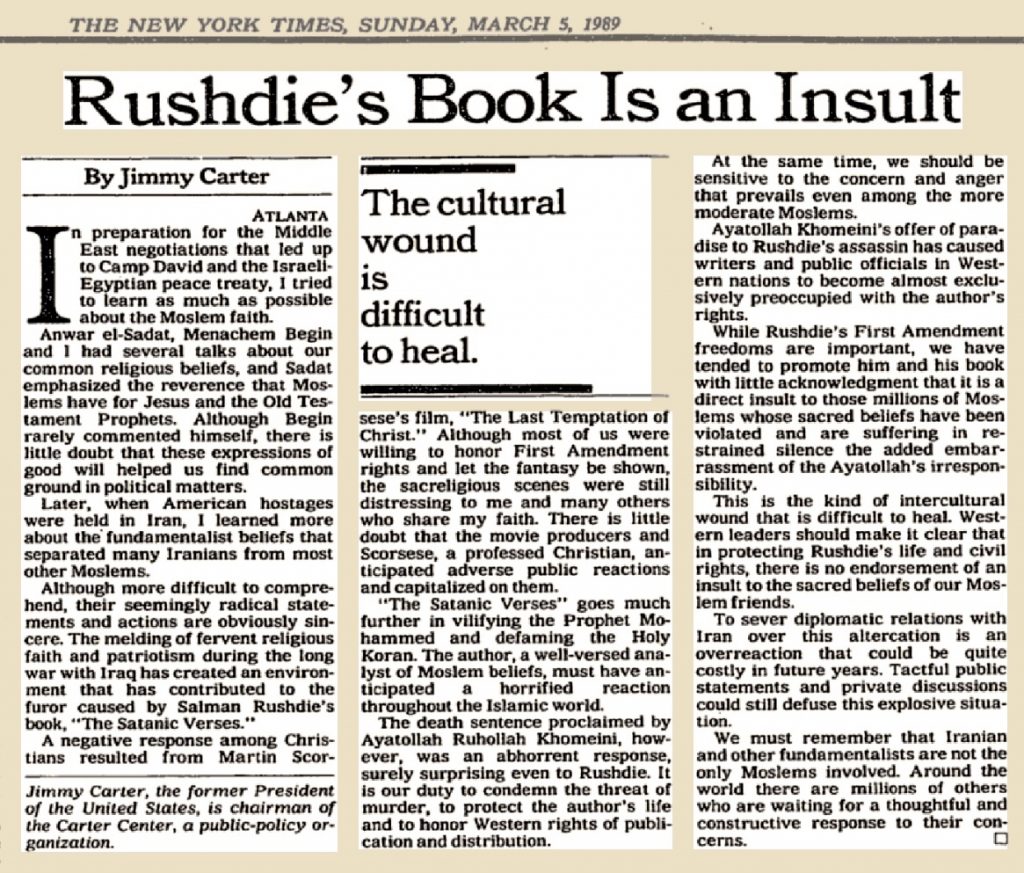
On 3.5.89 an essay titled “Rushdie’s Book Is An Insult,” authored by former President Jimmy Carter, was published in the N.Y. Times. He condemned Ayatollah Khomeini’s “fatwa” — a decree calling for Rushdie’s murder — as “an abhorrent response,” but he also cut apoplectic Muslims a little slack.

Carter compared the Islamic outrage that greeted Rushdie’s “The Satanic Verses” to the lunatic conservative Christian fury provoked by Martin Scorsese’s The Last Temptation of Christ (‘88) — an accurate analogy in that both firestorms arose out of rank fundamentalist ignorance. Except Carter said that he half-sympathized with (or at least understood in an emotional Christian-bedrock sense) the anti-Temptation mob.

Carter’s basic point was “try to see things from the Muslim perspective…if you do that their rage will become half-understandable ” His implication was that Rushdie had only himself to blame for poking the hornet’s nest.

Read more