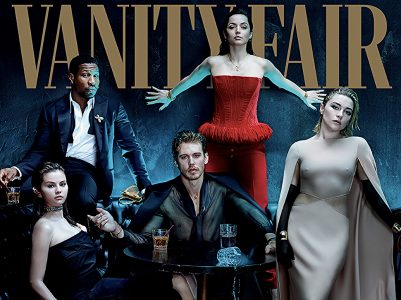
Raquel Welch Mattered A Great Deal

It feels strangely unreal and almost spooky that Raquel Welch, whose erotic vibrancy seemed so overwhelming and ice cream sundae-ish back in the day, has actually died. She had a poised and occasionally brittle quality, but more essentially a pulse and a presence you could actually feel through the big-screen membrane. Alas…

Born into a Bolivian family in 1940, Jo Raquel Tejada (Welch was an acquired last name through an early marriage to Richard Welch) grew up in the San Diego / La Jolla region. Her beauty and hot bod opened many doors during her late ‘50s to mid ‘60s struggling period, but she always resisted attempts by filmmakers to over-exploit her sexuality.

It is HE’s humble judgment that the best film in which Welch starred or at least costarred in was Richard Lester‘s The Three Musketeers (’73), in which she played Constance Bonacieux, the live-wire ally and girlfriend of Michael York‘s D’Artagnan.

Geraldine Chaplin had the more central or commanding female role, but Welch and Faye Dunaway were strong seconds. Plus Welch’s performance won a Golden Globe Award for Best Actress — Motion Picture Comedy or Musical.

It should also be acknowledged that the deerskin bikini that Welch wore in One Million Years B.C. made her into an iconic figure in the mid ’60s. (Are we allowed to acknowledge the long-ago existence of glammy sex symbols? Will the Khmer Rouge commissars put an asterisk next to our names if we do?) And yes, she was pretty good in Bedazzled, I suppose, and in 100 Rifles with Jim Brown. And there was Myra Breckenridge, of course. And Bandolero!

Yes, she acquired the backstage rep of a difficult bitch during the making of The Last of Sheila (’73) and especially following her dismissal from Cannery Row (‘82).

But the only truly good, triple-A film that Welch was part of (and to her eternal credit) was the first Musketeers film. I never cared as much for the darker-flavored second one, The Four Musketeers (’74), in which Welch’s character was strangled to death by Faye Dunaway’s ruthless Milady de Winter.

The idea of Welch and Tom Luddy strolling through that Heaven Can Wait soundstage, knee-deep in those clouds and being asked to get in line and provide their names to the gray-suited checklist guy as they wait to board that white Concorde jet…

Posted on 8.22.22: Perhaps it’s time for Raquel Welch, now 82, to step up to the plate and explain what happened a half-century ago during the making of The Last of Sheila (’73). Is she going to let the statements of costars James Mason and Ian McShane go unchallenged, or does she have fresh information that might alter the classic narrative?

According to an 11.12.72 Chicago Tribune piece titled “Raquel Plans Suit Against Director”, there were also complaints about Welch’s behavior. Welch announced she was suing director Herbert Ross for assault and battery as a result of an incident in her dressing room. She claimed she had to flee to London during the shoot “to escape physical harm”. Warner Bros later issued a statement supporting Ross and criticizing Welch for her “public utterances”.

Excerpt: “Shooting the monastery sequence just off Cannes proved to be troublesome for Welch. Gale force winds and rain disrupted the night shoot, and Welch was reluctant to leave her Venice hotel for fear of getting stuck in the storm.”

Mason said that Welch “was the most selfish, ill-mannered, inconsiderate actress that I’ve ever had the displeasure of working with”.

McShane: “Raquel Welch isn’t the most friendly creature. She seems to set out with the impression that no one is going to like her.”
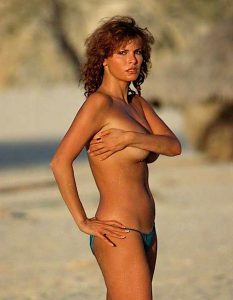
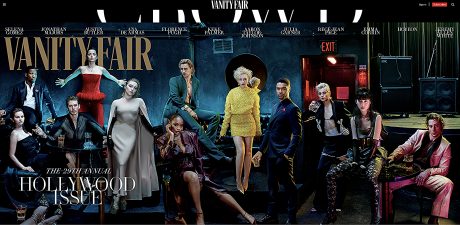
Body Positivity Activists to Vanity Fair: “Where’s Our Representation?”

Twelve progressive artists-celebrities featured on the cover of Vanity Fair‘s 29th annual Hollywood issue, and not one of them with a Jabba bod or at least one that tips the scales a bit? Slimness is a form of elitism, and we are here to shut that shit down!

The VF cover stars are Selena Gomez, Jonathan Majors (“yo!…bad guy in the shitty new Ant-Man flick!”), Austin Butler (“I might win!”), Ana de Armas (“everyone hated the film but at least they respected my performance!”), Florence Pugh (“Held onto an old grudge with my Don’t Worry Darling director, Olivia Wilde, and kept it going right up through the Venice Film Festival”), Keke Palmer (“refused to specifically clarify or deny that the Bill Murray thing had nothing to do with me, and then tried to land a Best Actress nom based on a force-of-personality performance that was okay at best”), Aaron Taylor-Johnson (the next James Bond?), Julia Garner (sociopathic teen bitch in Ozark), Rege Jean-Page (Bridgerton heartthrob + another possible James Bond), Emma Corrin (totally non-binary trans-abdominals), Hoyeon (South Korean model whom I had to Google to identify) and Jeremy Alan White (Chicago sandwich king).

Andrea Riseborough + Duelling Concepts of Meritocracy vs. Equity

We’re all familiar with the recent complaints about the Oscar nominations by the sore-loser quartet — Till director Chinonye Chukwu and lead actress Danielle Deadwyler, along with Woman King director Gina Prince-Bythewood and its star, Viola Davis.

In their minds they all got blanked by embedded white elitism or misogynoir or some other racist variant.

In response Everything Everywhere All At Once‘s Michelle Yeoh, a Best Actress nominee, suggested that they should cool their jets and wait their turn.

Prince-Blythewood: “There is no groundswell from privileged people with enormous social capital to get behind Black women. There never has been.” Deadwyler: “We’re talking about misogynoir. It comes in all kinds of ways. Whether it’s direct or indirect, it impacts who we are.”

The essence of the lament seemed to be “we’re looking for some equity here and we haven’t received it…progressive Academy members know that the BIPOC narrative is about giving us the respect and adulation that is our due for the work but also in a payback sense, considering the decades upon decades of racist exclusion in this industry…we know we delivered first-rate work and yet we got shut out…some of you won’t say what happened but we can smell it in the wind…Andrea Riseborough‘s white supporters pushed her though but perhaps at our expense, or so it seems.”

In short, the sore losers were saying that in this time of revolutionary overhaul and the diminishing of Hollywood’s white-male heirarchy, equity needs to count as much as meritocracy (and perhaps even a bit more) in terms of handing out Oscar nominations.

In an exclusive Hollywood Reporter interview with Seth Abramovitch, Andrea Riseborough has addressed the sore losers with two statements — one sympathetic and understanding, and the other a bit more frank.

A.R.’s compassion and sympathy responise: “The film industry is abhorrently unequal in terms of opportunity. I’m mindful not to speak for the experience of other people because they are better placed to speak, and I want to listen.”

A.R.’s plain-spoken statement: “Awards campaigning is as acerbically exclusive as it has always been. I do not yet know which measures will best encourage meritocracy [but] I’ve been working toward discovering them and will continue to.”

Spielberg to Cruise: “You Saved Hollywood’s Ass”

Should have posted this yesterday: Last Saturday (2.11) I posted a “go, Maverick!” piece called “Lightning Can Strike Again.” The first four paragraphs read as follows:

“A while back I tried to sell my Paramount homies on a special Top Gun: Maverick HE advertorial. The idea had already been written and posted on 1.13.23 — I just wanted to repeat it with a little Paramount dough behind me. The piece was titled ‘A Film That Saved Hollywood Could Also Save The Oscars.”

“It seemed like the right pitch, and if you ask me this was underlined by the fact that Paramount recently launched a billboard ad campaign that echoed what my piece said.

“At a time when the old energy current between Hollywood and mainstream audiences seemed to be dropping left and right, Top Gun: Maverick had pumped new life into the spirit of things, and should be roundly celebrated for reaching out and connecting…for making something actually happen in theatres at a time when too many films seemed to be limping along.

A Best Picture Oscar for a movie that had not only restored faith in exhibition but in Hollywood itself.”

Yesterday afternoon The Hollywood Reporter‘s James Hibberd reported about an overheard conversation between Steven Spielberg and Tom Cruise during Monday’s Academy luncheon, and a highly significant one at that. Spielberg told Cruise that Top Gun: Maverick had “saved Hollywood’s ass” and might, in fact, have “saved the entire theatrical industry.”

I’m certainly not claiming authorship of this sentiment (a lot of people feel grateful about what Maverick accomplished) but it’s fair to say that I posted it first.

Five years ago Hollywood and especially exhibition struck a slow-moving iceberg (Covid, streaming, older audiences forsaking the cineplex habit) and began to sink. The freezing sea water was almost up to the main-deck railing, and then along came the RMS Carpathia…I’m sorry, Top Gun: Maverick to at least temporarily save the day. “The industry doesn’t have to die!”, said Maverick. “All we have to do is stop churning out castor oil woke movies and give Joe and Jane Popcorn what they want…films that actually engage and entertain.”

This is why Top Gun: Maverick deserves the Best Picture Oscar — not because it’s better than Tar or Banshees of the hellish and godforsaken EEAAO, but because it stood up and pumped new life into the spirit of moviemaking and movie-exhibiting.