In early 2003 (or was it late ’02?) I pitched a big Matrix story to Rolling Stone‘s Peter Travers. With The Matrix Reloaded due to open on 5.15.03, I had gotten hold of a copy of the Wachowskis’ script and was looking to scoop the world with a few plot points (including the hair-raising freeway chase sequence) but without spoiling the whole thing. (Naturally.) I’d also picked up some odd domestic details about The Wachowskis, who were then called Larry and Andy and known for being extra-reclusive.
Travers was interested in running a scoop of this kind. We sat down and talked it over at a Manhattan eatery. I didn’t know for a fact that Travers had briefed Rolling Stone publisher Jann Wenner, but it would have been odd if he hadn’t.
The Reloaded script had been passed to me by former Silver Pictures executive Dan Cracchiolo, who had worked for the company’s founder, Joel Silver, between the mid ’90s and early aughts. Dan had struck out on his own a year or so earlier, although I suspected that things may have soured between Silver and himself over possible drug issues — Dan’s, I mean.
I had been especially chummy with Silver between mid ’92 and early ’94, but then relations chilled. (The reasons are too complex to recite here.) The occasionally tempestuous Silver was the real-life model for Saul Rubinek‘s “Lee Donowitz” character in True Romance. (It’s also been said he was at least a partial model for Tom Cruise‘s “Les Grossman” in Tropic Thunder.)
In any event I met with Travers to discuss the shape and tone of the Reloaded article — a few Wachowski morsels, a few plot leaks but not too many, etc. I tapped it out and sent it along. The article definitely worked on its own terms but of course it had to be fact-checked and whatnot. Which meant calling Silver, of course. It was my understanding that Silver hit the roof and called Wenner to yell and scream.
The next thing I knew the piece had been killed. When I called and wrote Travers to ask what happened he wouldn’t respond…silencio. I presumed it had been killed by Wenner. I can’t recall if I was paid a kill fee. I only know that the Rolling Stone vibes were pretty good before I turned the piece in, but after it was killed I was Nowhere Man.
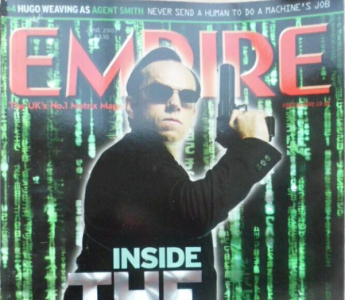
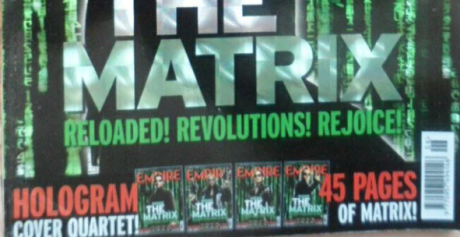
So I sold the article to Empire magazine, and it wound up running right around the time of the May opening of The Matrix Reloaded. Nobody liked the film that much, and everyone hated The Matrix Revolutions.
Dan died in a motorcycle accident the following year.