In last night’s death-of-Robert Blake post (“Blake’s Epitaph“), I mainly focused on a 1983 stolen Vespa scooter episode that involved Blake. The 50-year-old actor had found my stolen scooter abandoned on the concrete L.A. river bed near Magnolia Blvd. and reported it to the fuzz. I met Blake around dusk and thanked him, etc.
Blake was always a fascinating, first-rate actor, but the truly worthy films that he starred or costarred in were relatively few.
His most fully realized performance was a somewhat sentimental capturing of the real-life Perry Smith, a sadly abused, frustrated and emotionally constipated mass murderer, in Richard Brooks‘ In Cold Blood (’67). His second strongest performance was as a Native American fugitive in Abe Polonsky‘s Tell Them Willie Boy Is Here (’69 — unavailable to stream), opposite Robert Redford and Katharine Ross. At age 14, the cherubic Blake was spot-on as a Mexican lottery-ticket seller in Treasure of the Sierra Madre (’48) –= his third most vivid performance.
Blake played affecting supporting roles in Pork Chop Hill (’59), Town Without Pity (’61) and This Property Is Condemned (’66). I somehow never got around to seeing James William Guercio‘s Electra Glide in Blue (’73). I never wanted to see Busting (’74) because of my general loathing of director Peter Hyams. And I never saw Hal Ashby‘s Second Hand Hearts (’81) in which Blake costarred with Barbara Harris, as the word of mouth was awful. And I never saw a single episode of Baretta, the colorful cop series (’75 to ’78) in which Blake starred, and which made him fairly rich.
Blake was impressively creepy, of course, in David Lynch‘s Lost Highway (’97).
Originally posted on 8.30.15: “The older Richard Brooks‘ In Cold Blood gets, the more Hollywood-ized it seems. Much of the film has always struck me as an attempt by Brooks (who once sat right next to me in a Manhattan screening room during a showing of his own Wrong Is Right) to almost warm up the Perry Smith and Dick Hickock characters (played by Robert Blake and Scott Wilson) and make them seem more ingratiating and vulnerable than how they were portrayed in Truman Capote‘s nonfiction novel.
“You can always sense an underlying effort by Brooks and especially by Robert Blake to make the audience feel sorry for and perhaps even weep for Perry Smith. That guitar, the warm smile, the traumatic childhood. Take away the Clutter murder sequence and at times Blake could almost be Perry of Mayberry. Scott Wilson‘s Dick Hickock seems a little too kindly/folksy also.
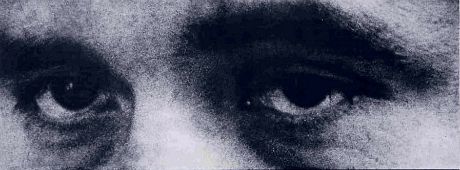
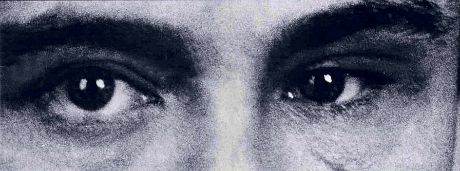
“These are real-life characters, remember, who slaughtered a family of four like they were sheep. I realize that neither one on his own would have likely killed that poor family and that their personalities combusted to produce a third lethal personality, but I could never finally reconcile Blake and Wilson’s personal charm and vulnerability with the cold eyes of the real Smith and Hickock (which are used on the poster for the film).
“In Cold Blood is nonetheless a striking, reasonably honest, nicely assembled re-telling of the Smith & Hickock story. I respect it. I worship Connie Hall‘s cinematography. I love the editing. Quincy Jones‘ blues combo score is partly haunting and even mesmerizing and partly laid on too thick at times. The film is certainly a cut or two above mainstream fare of the ’60s. But it’s not a great film. It feels a bit too cloying and manipulative too often. Those memory and dream sequences (the sound of the mother’s voice going “Perrrry!”) are a bit much.
HE reader Michael Gebert posted this in response: “Yes, I think this is right and well put. It’s made at kind of the last moment of postwar FDR-Kennedy liberalism that was idealistic about the possibility of reforming, well, everything, if we can catch it early enough with a big dose of Freud.
“It’s sometimes referred to as noir, just because it was one of the last big-studio features in black-and-white, but it’s the complete opposite of noir, which assumes that society is as dirty as the criminals and chance bets against you. In Cold Blood is a throwback to New Deal crime films like 20,000 Years in Sing Sing or Angels Have Dirty Faces. Within a few years that idealism would be completely overthrown, criminals would be taunting maniacs like Manson or Andy Robinson‘s Zodiac type in Dirty Harry, a lower species in need of wiping out.
It’s kind of amazing to think that in five years, social attitudes could change so rapidly.
“So yes, it’s exceedingly well made, but lives in such a different world that it’s hard to relate to. It’s certainly hard to find any sympathy for the mindless thugs who killed the Clutters like cattle in their basement.”