Last weekend I got into a spirited discussion about the spelling of a young girl’s first name.
When spoken it rhymed with the last name of My Lai murderer William Calley…”CALL-ee”. My first reaction was that it was probably spelled like Callie Khouri, the screenwriter of Thelma and Louise.
No, I was told — the spelling starts with a “k.” Okay, I replied, but the origin of that name would be spelled Kali or Khali— the name of a major Hindu god, “primarily associated with time, death and destruction.”
A third option is that the girl’s mother called her CALL-ee because of a simple fond memory of California…no link to Callie Khouri or Gunga Din or Eduardo Cianelli’s guru.
I did a quick Google search of “Kali” on my phone and tried to present it as validation of that spelling. I was told that the Hindu spelling was immaterial because the young girl in question is black. Huh? She could be violet with pink polka dots, I muttered to myself, and Kali would still be a term of Indian or Hindu origin.
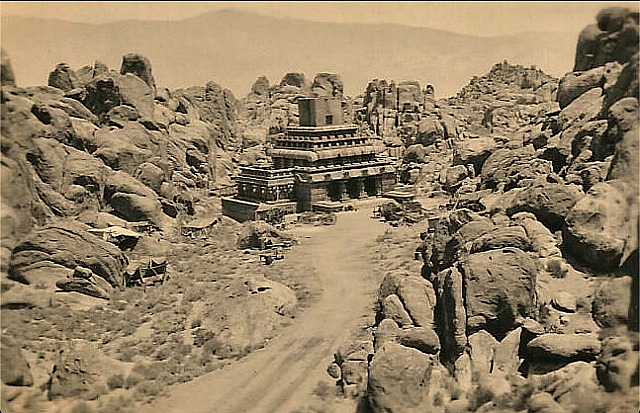
Here’s a piece about Eduardo Cianelli‘s “guru” character, posted almost 11 years ago (2.22.15) and titled “Among Filmdom’s Wisest and Most Elegant Villains“:
“In the legendary Gunga Din, Eduardo Ciannelli‘s fanatical leader of the Thug rebellion is called a ‘tormenting fiend’ by Douglas Fairbanks, Jr. and is made to seem demonic in that famously lighted shot by dp Joseph H. August. But he’s easily the most principled, eloquent and courageous man in the film. Not to mention the most highly educated.
“And yet there’s an unlikely scene inside the temple that hinges on Ciannelli’s guru being unable to read English, despite his Oxford don bearing and his vast knowledge of world history.
“Otis Ferguson‘s review of this 1939 adventure flick called it a racist and arrogant celebration of British colonial rule. And yet I’ve been emotionally touched and roused by this film all my life. The last half-hour of Gunga Din is perfect, but it ends with Sam Jaffe‘s Indian ‘bhisti’ basking in post-mortem nirvana over having been accepted as a British soldier.
“Which raises a question: Which films have you admired or even loved despite knowing they stand for the wrong things and/or tell appalling lies about the way things are or used to be?”