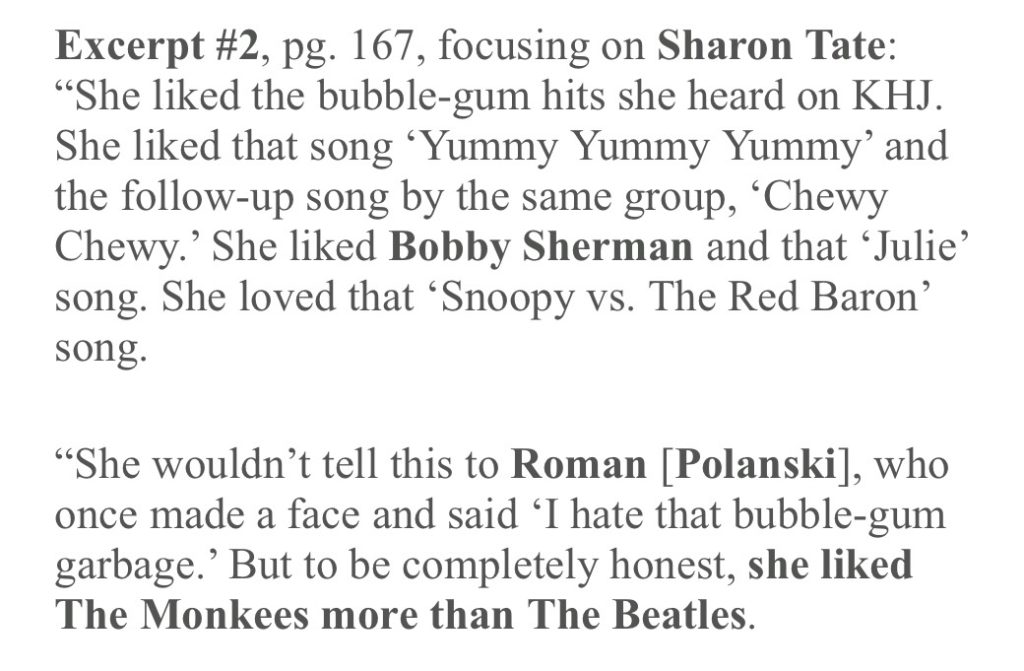
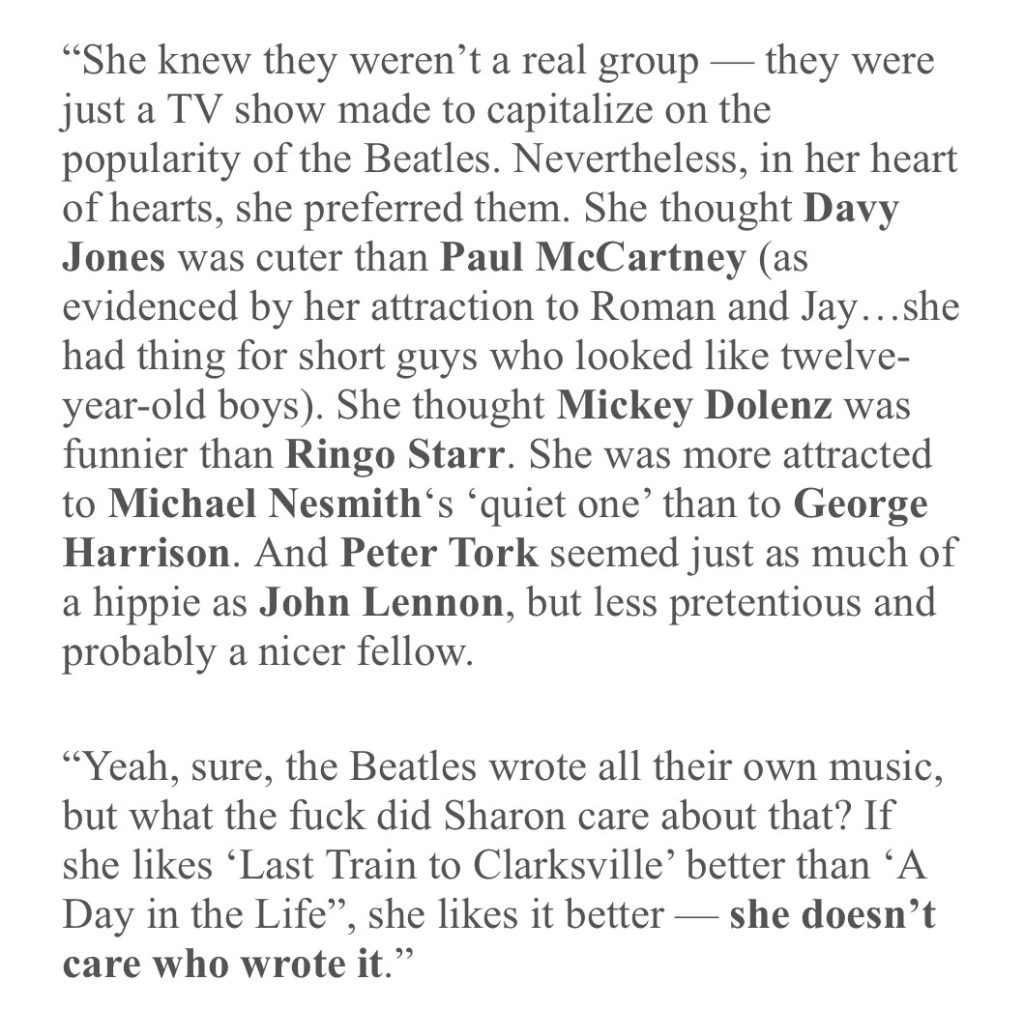
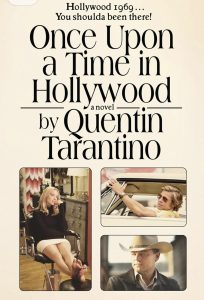
Among the many, many things I love about Quentin Tarantino’s novelization of Once Upon A Time in Hollywood, which is much, much better than the film, his riff about the late Sharon Tate’s musical preferences always makes me chuckle.

 Jeffrey Wells
 Among the many, many things I love about Quentin Tarantino’s novelization of Once Upon A Time in Hollywood, which is much, much better than the film, his riff about the late Sharon Tate’s musical preferences always makes me chuckle.
An overlong, way-too-costly leviathan of a film that (a) nobody wants to re-watch, (b) will go down in history as the only Martin Scorsese movie that represented a total capitulation to woke identity politics (and in so doing jettisoned the legendary vitality of the Scorsese brand) and (c) provided a springboard for an unfortunate identity campaign for Best Actress that we all had to tolerate for months on end, despite the effort being doomed to fail on Oscar night because the performance was obviously supporting. What a drag all around.
Only now can the tragic embarrassment of Killers of the Flower Moon be fully comprehended.
If only Marty and Leonardo DiCaprio hadn’t pussied out and had stayed with Eric Roth’s original take on David Grann’s 2017 novel…alas.


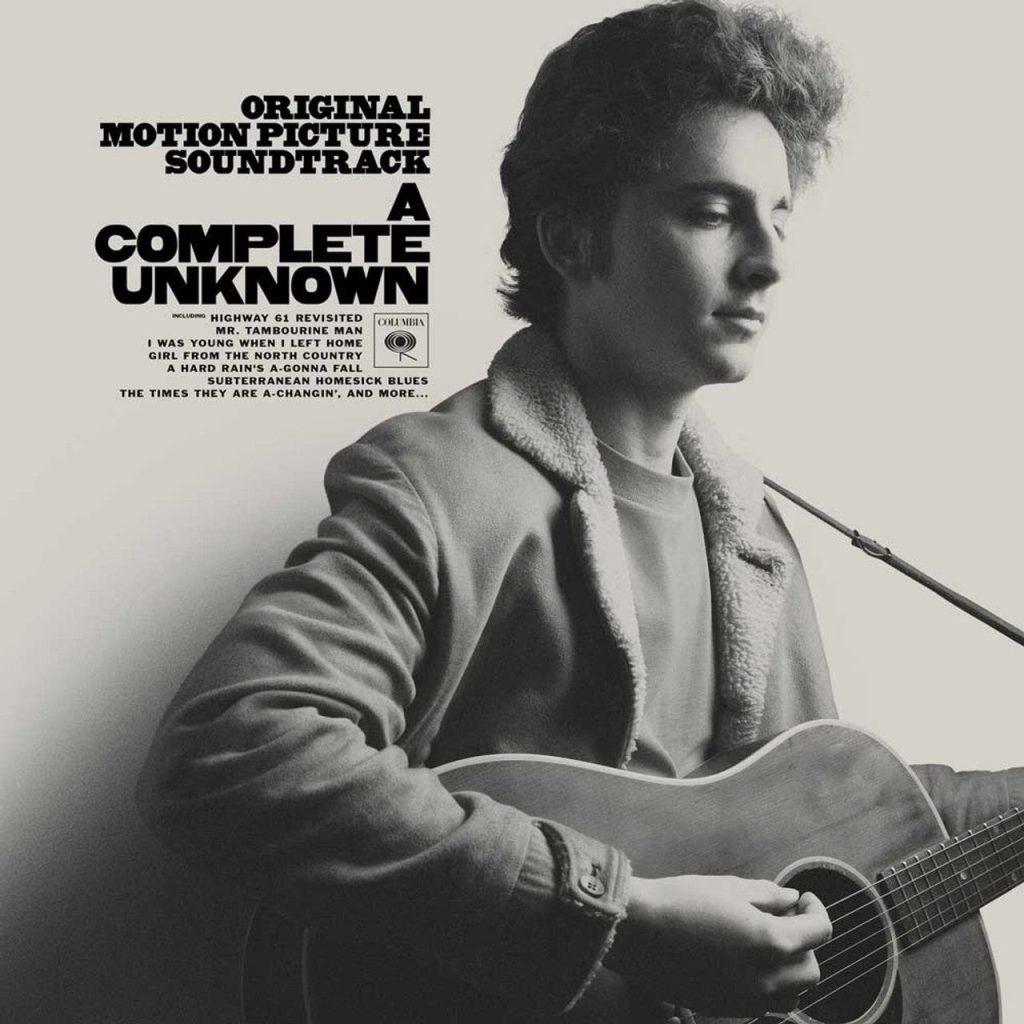
One-third of the way through A Complete Unknown there’s a brief shot of Timothee Chalamet flipping through vinyl albums inside Bleecker Bob’s, and we see glimpses of Dylan’s first album with Chalamet’s photo subbing for the Real McCoy.
We also glimpse one of Joan Baez’s early albums with Monica Barbaro on the cover.
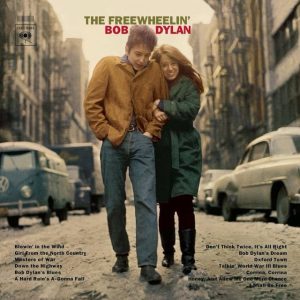
Chalamet and Elle Fanning posed last year for a substitute version of the famous cover shot for The Freewheelin’ Bob Dylan. I’d like to see cover replica keepsakes of all the early to mid ‘60s Dylan albums, right on through to Highway 61 Revisited and Blonde on Blonde.
.

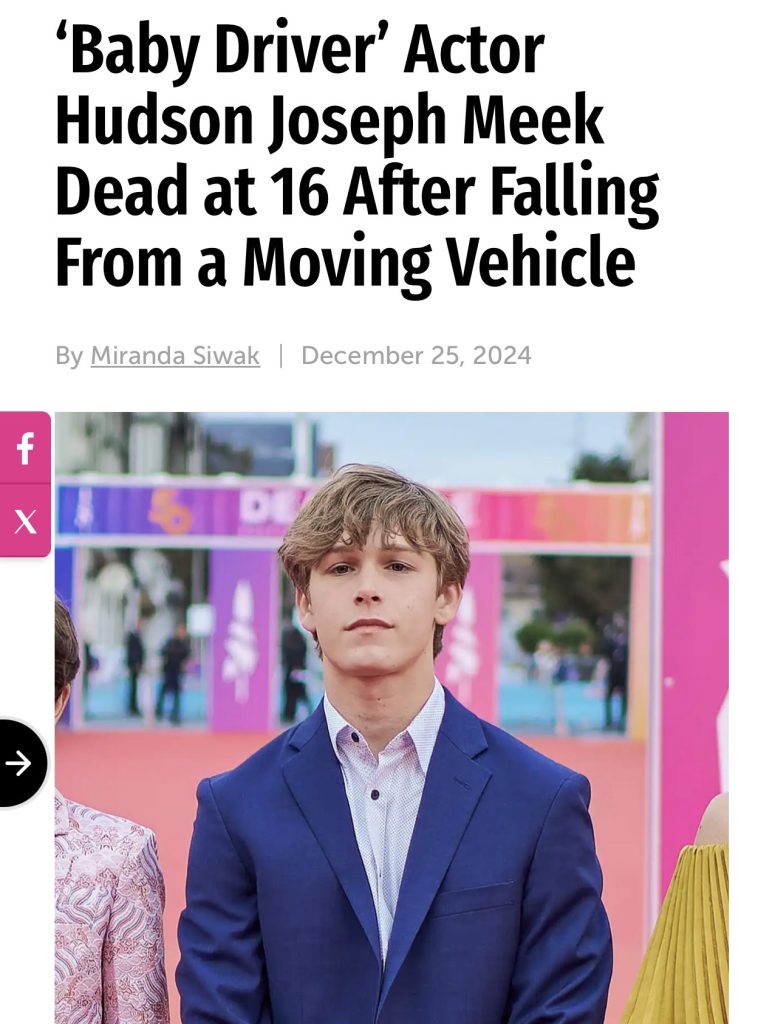
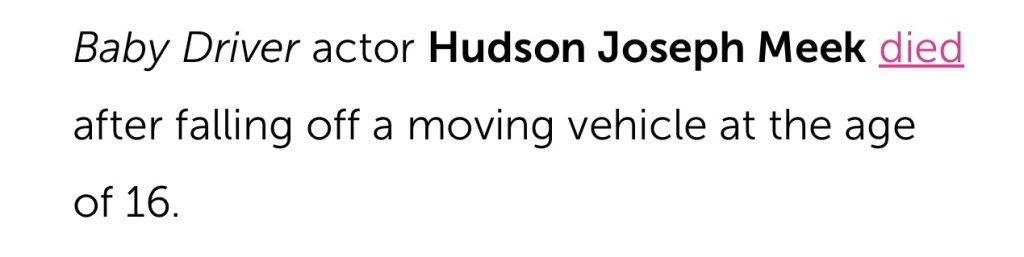
How do you “fall off” a moving vehicle? Even if the vehicle is a motorcycle and you’re a rear passenger who’s had a few, it’s fairly hard to fall the fuck off.
You’d have to be so drunk that your arrogance has over-ruled basic survival instincts, and that’s pretty damn stinko.
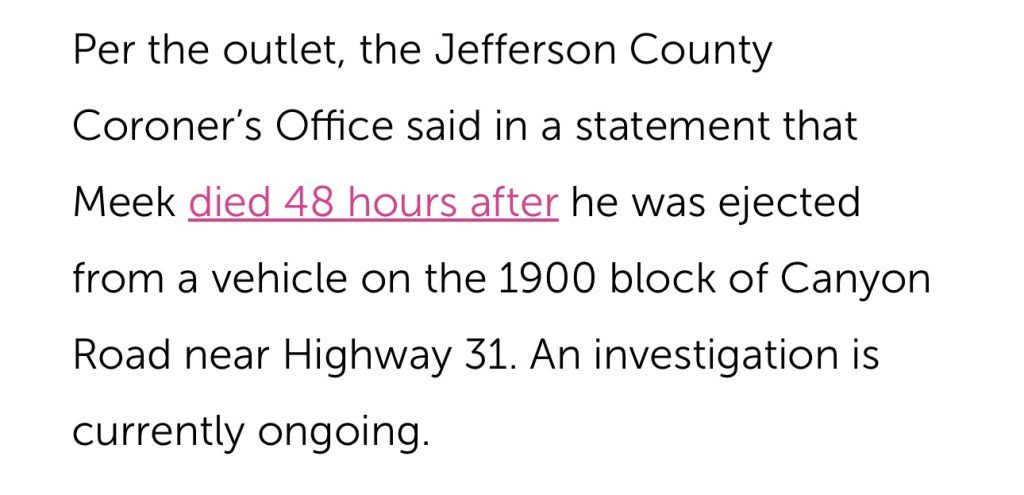
Have the reports about the death of Hudson Joseph Meek mentioned booze? Have they stated whether or not Meek was on a friend’s motorcycle or riding on top of someone’s car or on the bed of a pickup truck? Of course not.
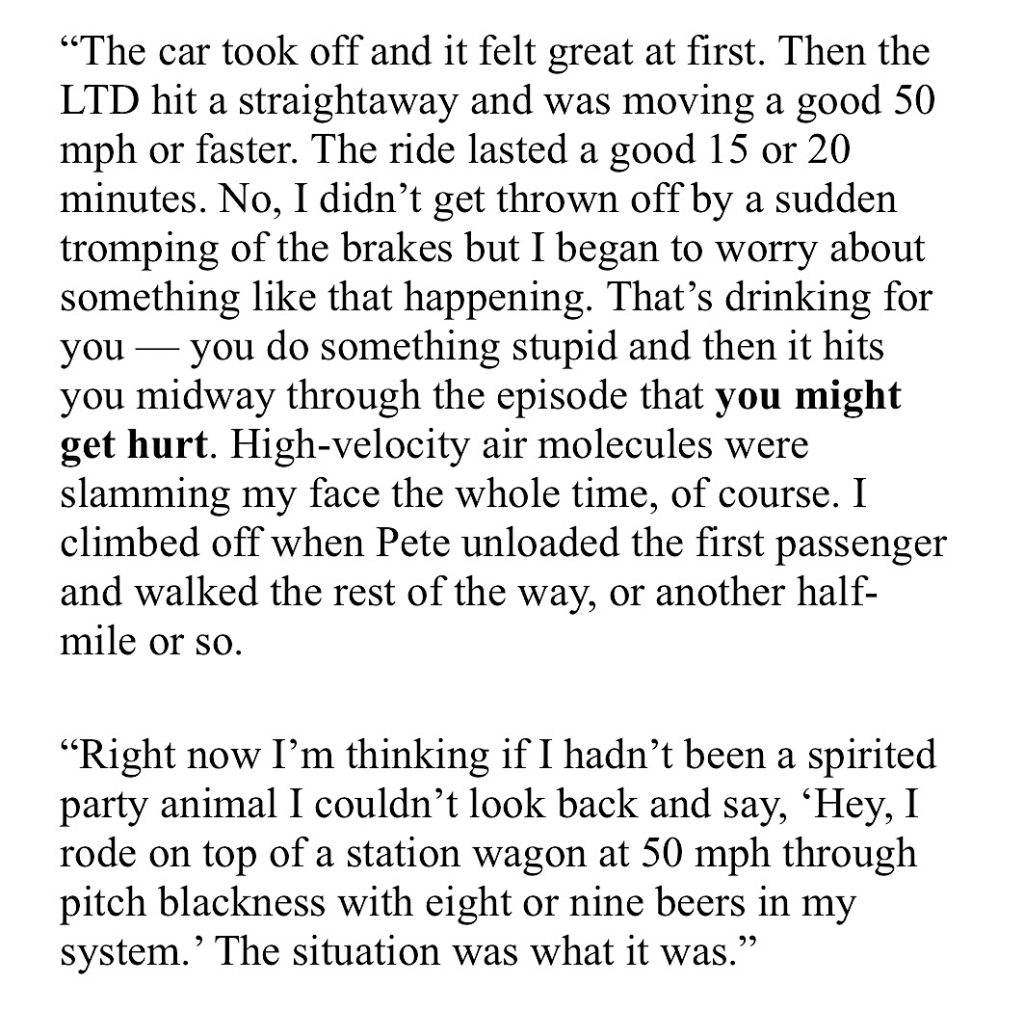
I have a slight insight into this careless tragedy as I once rode spread-eagled atop a Ford LTD station wagon in the dead of night. I was in my late teens and half-bombed, but held on to the chrome luggage rack for dear life. It wasn’t that physically hard but my full attention and concentration were not a subject for debate — they were fully required.
Posted on 4.15.15, starting with paragraph #11:

The Us magazine report about Meek’s death didn’t synch up. Last time I checked “falling off” a vehicle was different than being “ejected” from it:
…on talk shows and inside sound stages and even restaurants and department stores as long as they have truly nice, attractive, well-pedicured feet.
Unfortunately that holds true for only a relatively small percentage of specimens. I’m sorry but I’ve been eyeballing women’s feet for decades and that’s just how it is.
Men are not allowed to stroll around barefoot anywhere except for beaches and pool areas, and sometimes even that’s a really bad idea. It goes without saying that mandals and flip-flops are totally verboten.

I wrote the following a couple of years ago: “Sex positive’ sounds a little too nice…a little too much like a Good Housekeeping Seal of Approval. Tame and tidy, not skanky enough.
“Because the best heteronormative sex is usually untidy and semi-objectionable in some way — rude, hungry, raw, animalistic, runting, howling, a tad pervy.”
There’s an old Woody Allen line (probably from Annie Hall or Manhattan) that answers a question about whether sex is dirty or not. Reply: “It is if you’re doing it right.”
In the mid ’80s I was “seeing” a pretty British woman in her early 30s. She had apparently come from a conservative family, or had gotten the idea from her mother that when it came to sexual congress and the “yes or no” moment…Christian momma told her that behaving in a cautious or conservative or even prudish manner was the only way to go.
But I’m telling you that one of the hottest things I’ve ever heard a woman say at the moment of peak surrender came out of this lovely lady — “oh, God, I love it!”
It wasn’t so much the “I love it” (which was fine) as the “oh, God” part that got me. What this meant, I determined, was that deep down she was apologizing to God the Father for enjoying being harpooned. “Oh, God” meant “dear Lord, I’ve tried so hard to be a more virtuous woman and here I am failing again…I can’t help myself…send me to a convent for I have no self-control!”
And the key strategy after dousing any workplace fire is to make certain that the complaints in question do not re-occur. That means tone it down and leave it there.
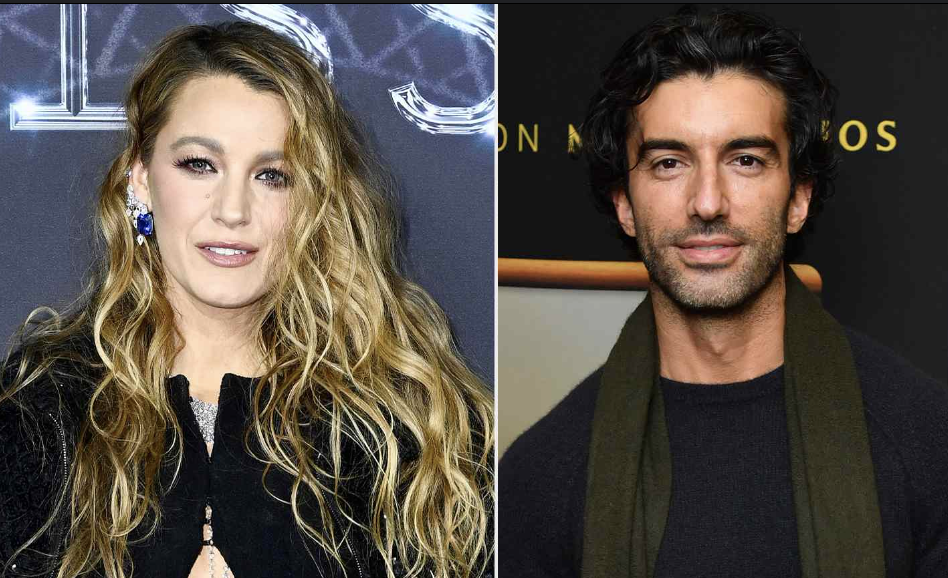
During the 2023 and early ‘24 filming of It Ends With Us, Blake Lively voiced complaints about director and costar Justin Baldoni, who had optioned Colleen Hoover’s source novel for adaptation in 2019, and producer Jamey Heath.
They had behaved in a leering, overly familiar manner, Lively said, which she found sexually intimidating.
But things cooled down after the issues were aired mid-stream and protections were enacted. A 12.21.24 N.Y. Times story about a legal complaint filed by Lively last Friday reports the following:
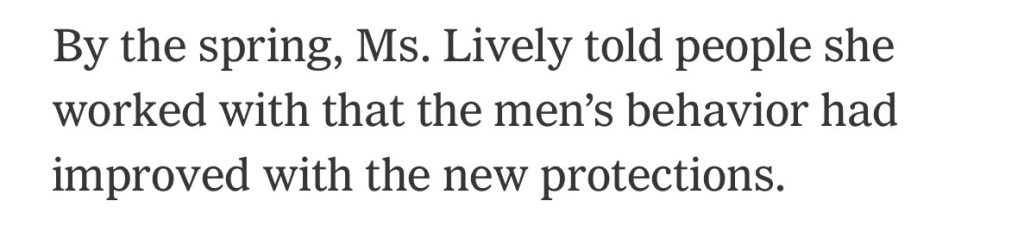
The current question is therefore obvious as well as perplexing.
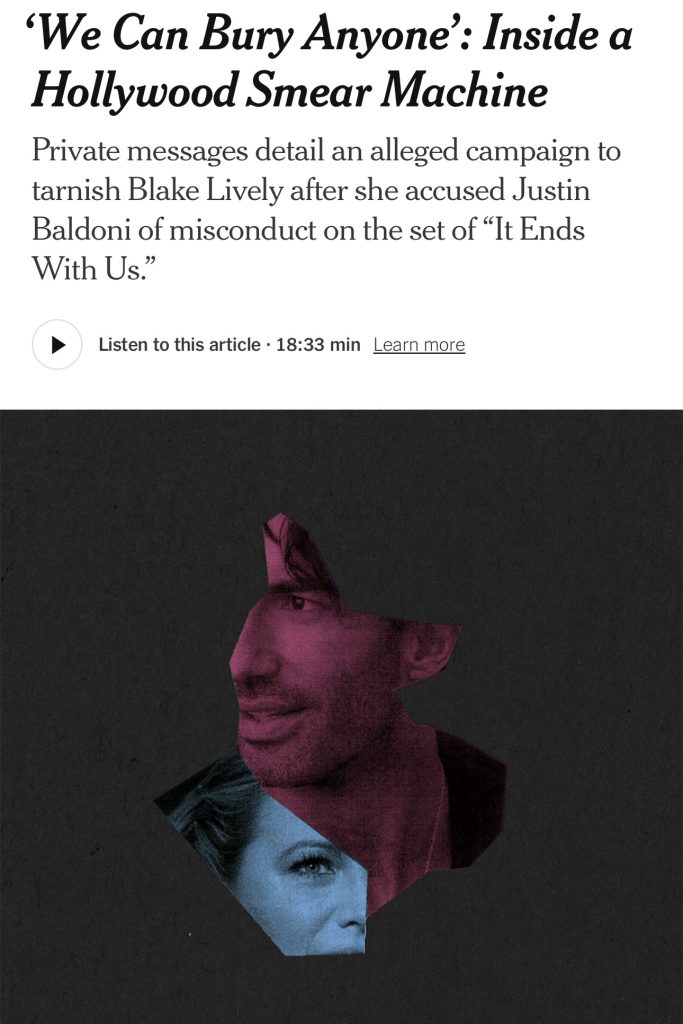
Instead of chilling or at least turning down the gas, Baldoni began acting aggressively last summer as It Ends With Us neared its 8.6.24 release.
Perhaps because Lively had challenged his directorial authority by creating an alternate cut that was approved for release, Baldoni decided to go feral by hiring a p.r. crisis firm in order to diminish her reputation.
Why start another fire? Why not just leave well enough alone and move on to the next project? What a mystifying call. Now Baldoni is re-facing the same bad-behavior complaints, and possibly a Lively lawsuit to come.
What is the lesson here? Sexually icky or insinuating behavior during filming is never cool? Or never fuck with the willful Blake Lively and her aggressively protective husband Ryan Reynolds? Or a combination of the two?
New York City isn’t about beauty. Never has been. Some nabes are aesthetically pleasing, of course, and the echo of history is unmistakable all over but NYC can’t hold a visual candle to Paris, Rome, Bern, Prague, Barcelona, Marrakech, London, Zurich, etc.
NYC is about the power and the glory…it’s about the bolt and the buzz and the very best (okay, hungriest) people clashing and harmonizing…a chorus congregated, the music of activity…the commerce and the juice and lots and lots of mad money, etc.

…I Saw The TV Glow has been strong within me since it opened last May. Egg-crack, transgender, persistence of “Pink Opaque”, bury me alive, Tara and Isabel, Midnight Realm…later.
Friendo: “A middling, awkward, tiresome movie. That anyone could actually think it’s good is a sign of liquified brain matter leaking out of woke people’s ears.”