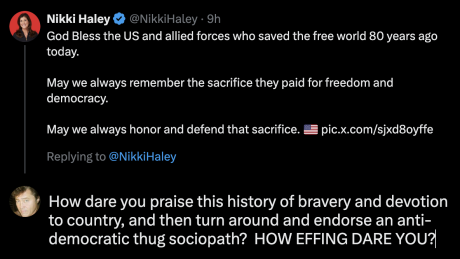
Lex Fridman’s four-day-old interview with Kevin Spacey is magnificent. Completely worth the two-hour-plus investment.
Lex Fridman? It’s spelled Friedman or Freedman.

 Jeff Wells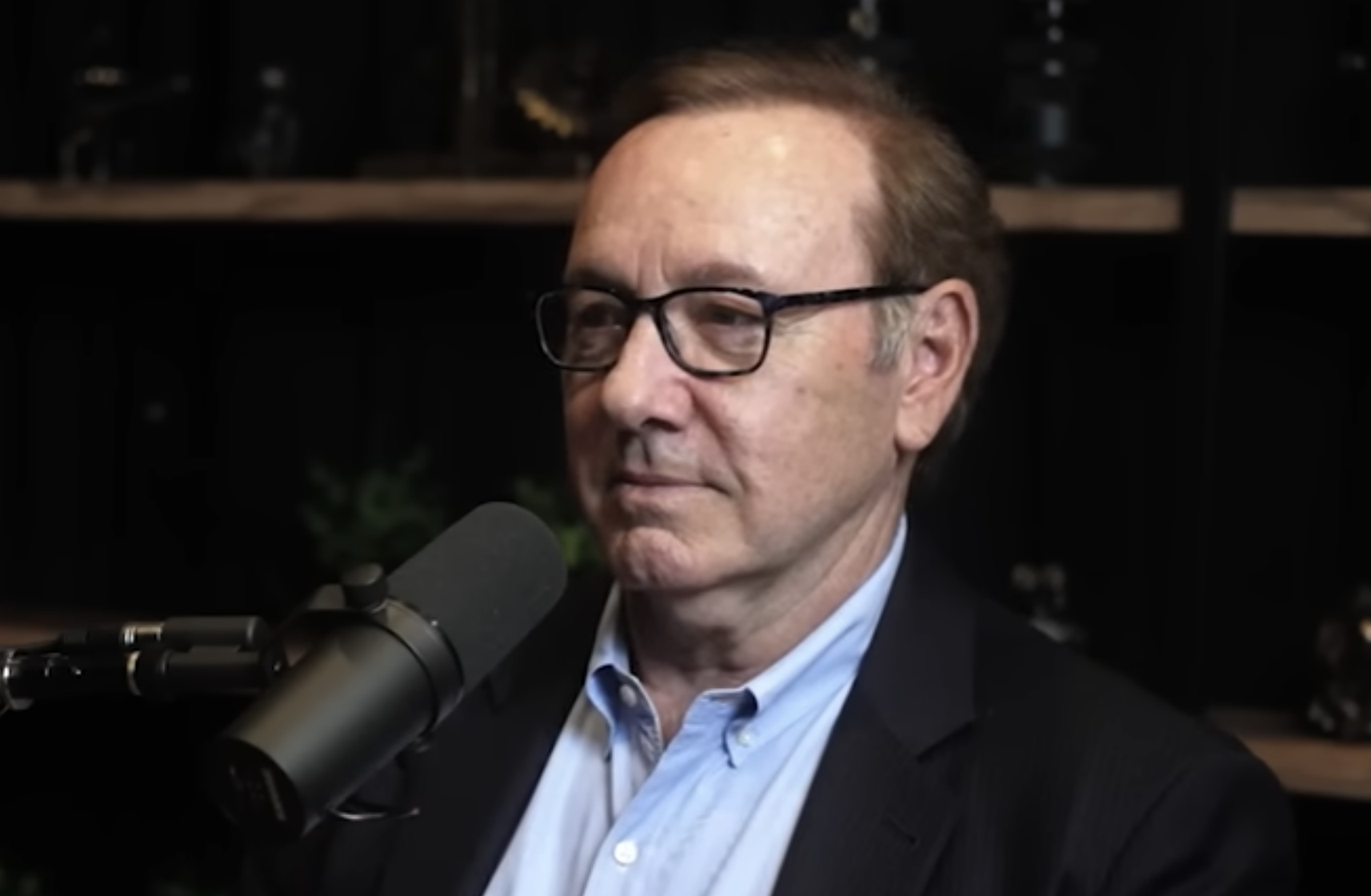
Lex Fridman’s four-day-old interview with Kevin Spacey is magnificent. Completely worth the two-hour-plus investment.
Lex Fridman? It’s spelled Friedman or Freedman.
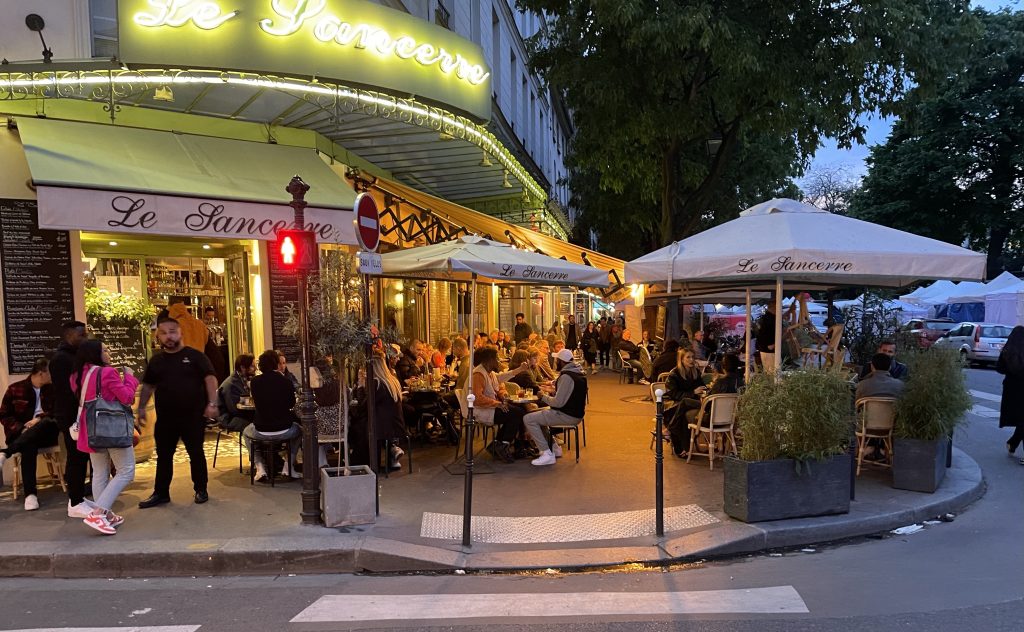
The top photo is Le Sancerre, 87 Rue Des Archives, 75003.
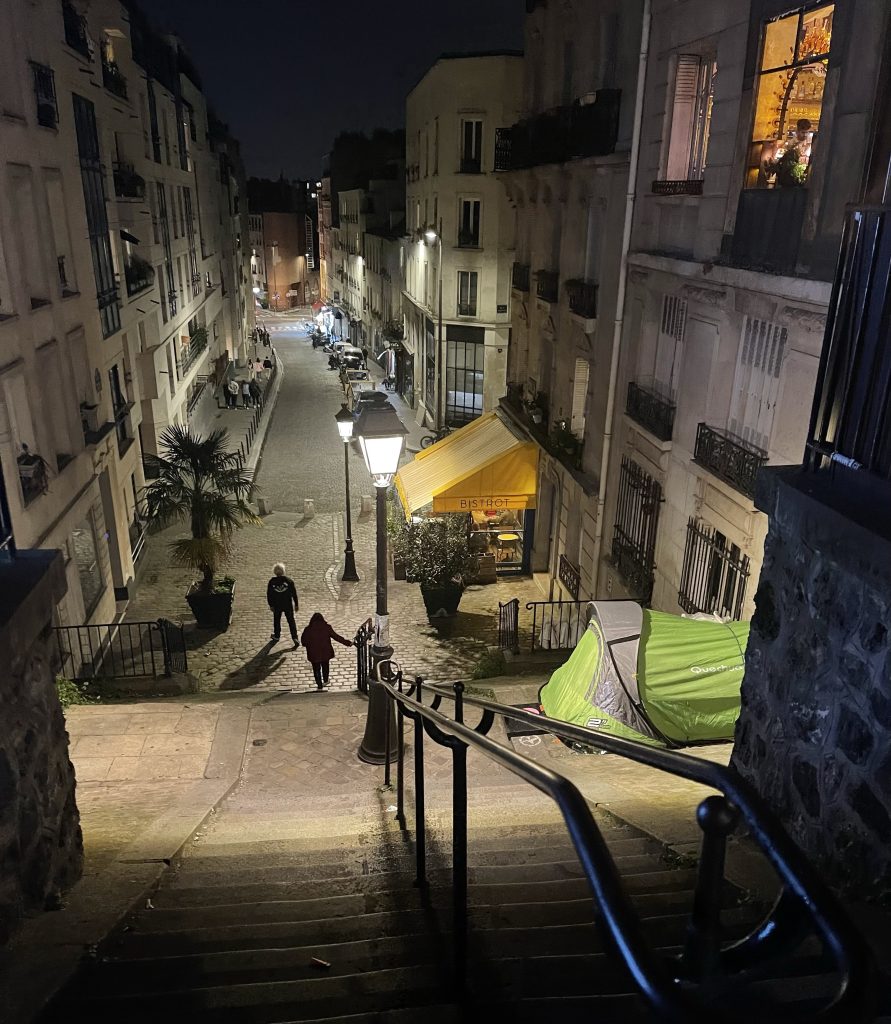
The bottom was snapped on the steps leading down from Place Caulaincourt, just past Chez Ginette. The entrance to the Lamarck metro station is at the bottom of the steps. The yellow awning on the right is L’Escalier Bistro. The sloping street below is rue de la Fontaine-du-But.
Both taken in early May 2023.
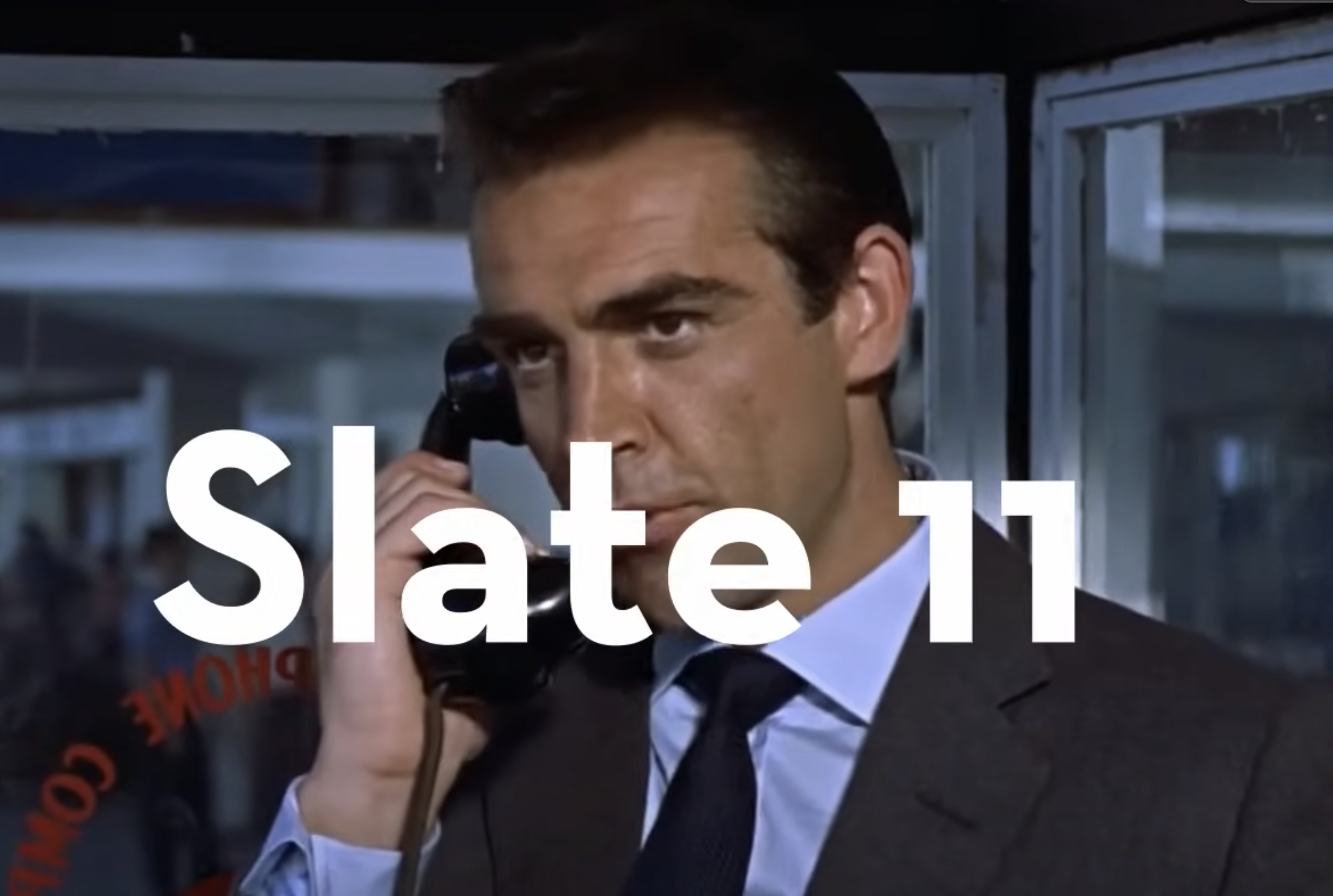
If you’re any kind of Dr. No fanatic, this nearly 19-minute catalogue of shots, set-ups, sunlight challenges and other technical and logistical hurdles during the first day of shooting in Jamaica is fascinating. Really.
Wiki summary: “Filming began on location at Palisadoes Airport in Kingston, Jamaica, on 1.16.62. The primary scenes there were the exterior shots of Crab Key and Kingston. Shooting took place a few yards from Fleming’s Goldeneye estate, and the author regularly visited the filming with friends.[62] Location filming was largely in Oracabessa, with additional scenes on the Palisadoes strip and Port Royal in St Andrew. 2.21.62, production left Jamaica with footage still unfilmed due to a change of weather.”

I somehow hadn’t watched the Sing Sing trailer when I tapped out last Friday’s Best Picture projection piece, but now I’ve seen it and am persuaded…well, certainly that Colman Domingo will be right at the top of the Best Actor nominees list but also that Greg Kwedar and Clint Bentley‘s allegedly spirit-lifting prison drama, about a wrongfully imprisoned guy putting on a play alongside other cons, will probably end up with a Best Picture nom. Maybe.
Based on a true story about the Rehabilitation Through the Arts (RTA) program at New York’s Sing Sing prison, pic follows the friendship of two RTA alumni, John “Divine G” Whitfield (Colman Domingo) and Clarence “Divine Eye” Maclin (Clarence Maclin himself) as they work together to stage an original production. Vulnerability, trust, integrity, pride, etc.
Sing Sing will open limited on 7.12.24. Pic will expand in August.
I speculated on 5.7 that 2025’s strongest Best Picture contenders will probably be those that don’t feel especially woked-up or agenda-driven (i.e., POC narrative, #MeToo-assertive, LGBTQ- or trans-promotional).
That doesn’t mean there won’t be any agenda-driven nominees. Emilia Perez (Netflix) will almost certainly be nominated upon the shoulders of musical fans as well as gay and trans celebrationists.
I’m actually not detecting anything especially wokey about Sing Sing. Okay, it focuses on a mostly black cast with two or three white guys (including Sound of Metal‘s Paul Raci) on the side, and given the setting it has to be a little bit gayish…no? But mostly I’m sensing soulful and heartwarming.
Plus it automatically earns an extra five points for presenting itself within a 1.66:1 aspect ratio.
Over the years Academy and guild members have been trained like dogs to focus only on award-season releases (Labor day to Christmas) for potential Oscar contenders, but exceptions pop up every so often. Sing Sing may be one of them.
I am therefore projecting that the following eight films have the best chances of being nominated for Best Picture:
Todd Phillips‘ Joker: Folie à Deux (Warner Bros., 10.4)
Jacques Audiard‘s Emilia Perez (Netflix)
Steve McQueen‘s Blitz (Apple, undated but surely opening during award seaeon)
Sean Baker‘s Anora (Neon, 10.18)
Greg Kwedar and Clint Bentley‘s Sing Sing
Edward Berger‘s Conclave (Focus Features, 11.15)
Ridley Scott‘s Gladiator II (Paramount, 11.22)
Robert Zemeckis‘ Here
If weather conditions lean the wrong way, the heat will be on and then some during the Paris Olympics (7.24 to 8.11). And in a city that doesn’t believe in air conditioners.
The kids and I endured soaring Parisian temps during the infamous summer of ‘03 so don’t tell me. All we had were three rotating fans.
The Washington Post is reporting that various int’l athletic teams are bringing portable a.c. units with them just in case.
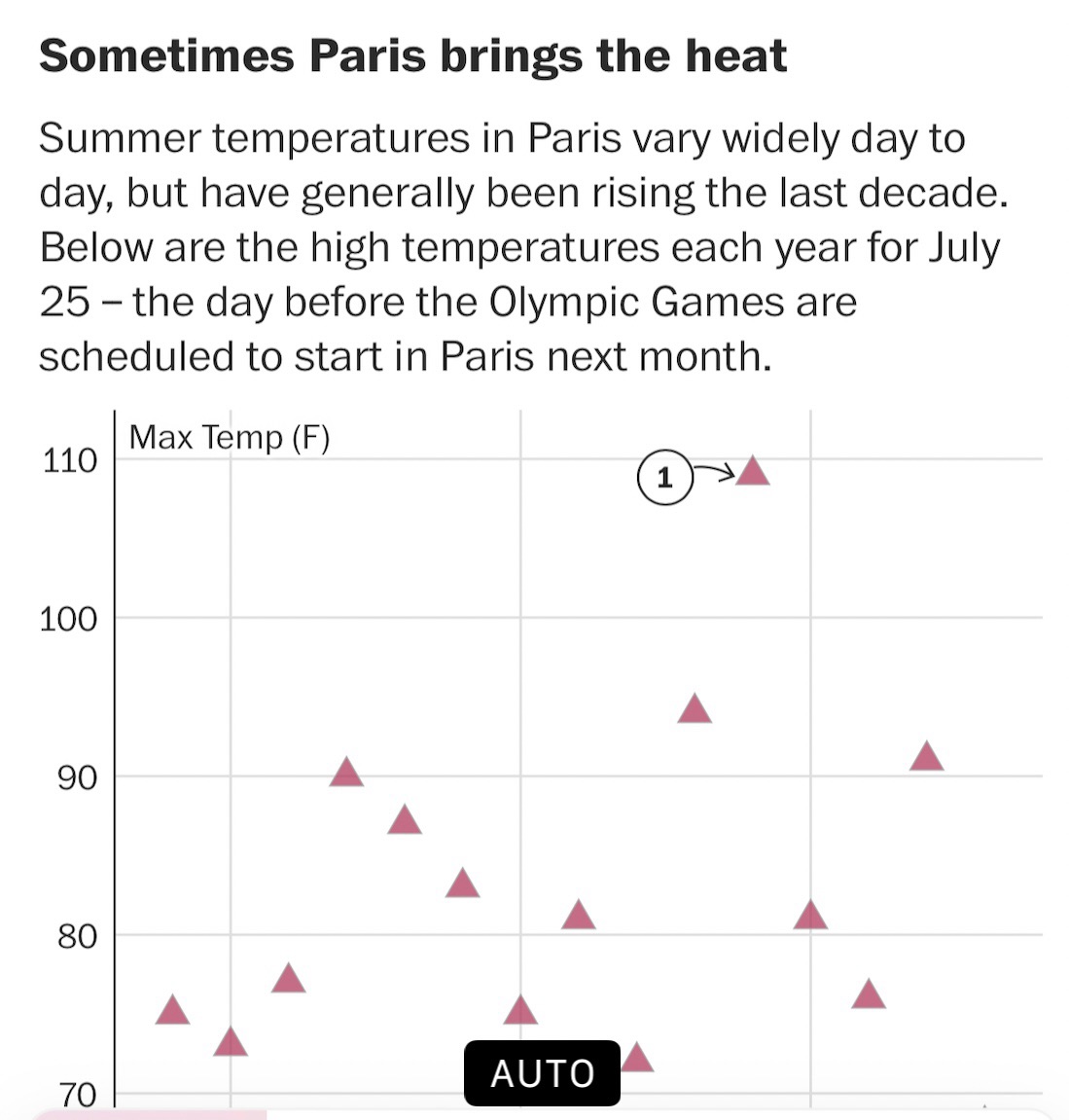
Posted four years ago: Every summer it gets a little hotter. Caused by a little thing called “climate change,” which doesn’t exist in the minds of Trump supporters. Two weeks ago many areas of Europe were besieged by temperatures around 40 centigrade, or just over 100 degrees fahrenheit. Some Parisians are saying it hasn’t been this bad since the heat wave of ’03, which, by the way, the boys and I experienced personally.
Talk about a summer of swelter. Jett had recently turned 15; Dylan was 13 and 1/2. We got through it, but barely. We had a third-floor walkup on rue Tourlaque, a block from the Cimitiere de Montmartre.
A couple of days before the heat began, I slipped into a Castorama near Place de Clichy and bought three sizable fans. They restored our souls. If I hadn’t pounced when I did the fans might’ve been sold out, and we would’ve surely died.
To escape the jungle-like Paris air we decided to attend 2003 Locarno Film Festival. It began on Wednesday, 8.7.03, and closed ten days later. A smart, elegant, sophisticated gathering. Locarno is in southern Switzerland, of course, but it’s northern Italy in almost every tangible sense — culturally, atmospherically, architecturally. The gelato stands were a daily blessing.
I remember Roger Ebert‘s face being all pink and sweat-beady during an outdoor discussion panel. The guys and I were constantly soaked, of course. Every afternoon around 3 or 4 we took an hour-long dip in Lake Maggiore.
Tonight, man…move it or lose it. One day you’ll wake up, and it’ll be your last.

Reliable Oscar handicappers Sasha Stone (Awards Daily) and Eric Anderson (Awards Watch) have spitballed projections for the likeliest 2024 (or 2025 to be specific) Best Picture nominations.
Sasha‘s and Eric‘s lists cover the usual suspects in a general way.
It is HE’s view, however, that the cultural worm has turned, and that Academy and guild voters are more sick of progressive-agenda, woke-identity factors than many handicappers realize (which is one reason why Emma Stone‘s wackazoid, larger-than-life Poor Things performance out-pointed Lily Gladstone‘s “vote for my Native American identity” KOTFM campaign).
This is why the strongest Best Picture contenders, I suspect, will be those that don’t feel especially woked-up or agenda-driven (i.e., POC narrative, #MeToo-assertive, LGBTQ- or trans-promotional). The less woke, the better…enough of that shit!
This is why I believe that the following eight films have the best chances of being nominated:
Todd Phillips‘ Joker: Folie à Deux (Warner Bros., 10.4)
Jacques Audiard‘s Emilia Perez (Netflix)
Steve McQueen‘s Blitz (Apple, undated but surely opening during award seaeon)
Edward Berger‘s Conclave (Focus Features, 11.15)
Sean Baker‘s Anora (Neon, 10.18)
Ridley Scott‘s Gladiator II (Paramount, 11.22)
Robert Zemeckis‘ Here
Greg Kwedar and Clint Bentley‘s Sing Sing
Phillips’ film — a musical madness journey between Joaquin Phoenix‘s imprisoned Arthur Fleck and Lady Gaga‘s Harleen Quinzel — promises to be the most swan-divey…the most imaginative, exorbitant and style-eccentric…which is why a voice is telling me it has the edge…that it may be the big winner because the other six are grounded in this or that reality.
Actually make that five. Because Emlia Perez is fairly nutso also — flamboyant, musical, wildly passionate, crediblity-stretching.
Set mostly in Brooklyn, Anora (winner of the Palme d’Or in Cannes) is an envelope-pushing, extreme-behavior dramedy about a sex worker marrying the ridiculously immature son of a Russian oligarch. It feels marginal at first, but gets crazier and more intense as it goes along.
Here “covers the events of a single spot of land and its inhabitants spanning from the past to well into the future.” Tom Hanks, Robin Wright, Paul Bettany, Kelly Reilly, Michelle Dockery, etc.
Conclave is a Vatican drama about Cardinal Lomeli (Ralph Fiennes) discovering that a recently deceased Pope was up to something gnarly.
Blitz (Saoirse Ronan, Leigh Gill, Harris Dickinson, Erin Kellyman, Stephen Graham, Paul Weller) is about Londoners being bombed by the Germans in the early ’40s.
And Gladiator II, which costars Paul Mescal, Denzel Washington and Pedro Pascal, will proably make the grade because Scott’s Gladiator was Best picture-nominated 24 years ago…maybe.
The trans fervor that greeted Jacques Audiard‘s Emilia Perez in Cannes will probably translate (pun intended) into a Best Picture nomination — a token identity-representation nominee that will undoubtedly make a lot of award-season noise but probably won’t win outside of the acting realm.
Kewdar and Bentley’s Sing Sing (A24, 7.12) is said to be a heartwarming lesson in walled-in humanism. Synopis: “Divine G (Colman Domingo), imprisoned at Sing Sing for a crime he didn’t commit, finds purpose by acting in a theatre group alongside other incarcerated men, including a wary newcomer (Clarence Maclin).”
I’ve seen impressive glimpses of Luca Guadagnino‘s Queer and would like to believe it will turn out well enough to merit a Best Picture nomination, but who knows? I’m fairly certain it will open sometime in the fall, possibly with A24 distributing.
I haven’t seen Jesse Eisenberg‘s A Real Pain (Sundance ’24 debut) so let’s just hold our horses for the time being.
It is HE’s spitball judgment that the following are less-than-assured Best Picture contenders: Wicked Part I, Hard Truths (Mike Leigh doesn’t do Oscar-friendly), The Piano Lesson (a presumably respectable August Wilson adaptation), Juror #2 (Clint!), Horizon (chapters 1 & 2 of Kevin Costner‘s four-part western epic), The Nickel Boys (abusive reform school).
Yorgos Lanthimos‘s Kinds of Kindness hasn’t a snowball’s chance in hell of being nominated for anything.
The bottom line is that 2024 doesn’t feel like a great Oscar year, but then it often seems this way in the early summer. Who knows?
The famously butchered vereion of Orson Welles‘ The Magnificent Ambersons (’42) runs 88 minutes, and that’s the only cut anyone’s ever seen since the film opened on 7.10.42. The legend, of course, is that the fabled longer version (135 minutes) was richer, finer, masterful and certainly more Wellesian.
At least one preview audience in Pomona saw the 135-minute version, and their reaction was mostly thumbs-down. The film was trimmed. re-tested and still didn’t fare well with the plebes. Too gloomy, suffocating, etc. Welles went to Brazil to shoot It’s All True, and in so doing abandoned Ambersons to the wolves. A happier replacement ending was shot, and at the end of the day RKO wound up deleting 47 minutes.
HE-posted on 8.17.18: “The exalted if somewhat tragic reputation of The Magnificent Ambersons (’42) has been so deeply drilled into film-maven culture that even today, no one will admit the plain truth about it.
“I’m referring to the fact that Tim Holt‘s George Amberson Minafer character is such an obnoxious and insufferable asshole that he all but poisons the film.

“I’ve watched Welles’ Citizen Kane 25 or 30 times, but because of Holt I’ve seen The Magnificent Ambersons exactly twice. (And the second viewing was arduous.) Even Anthony Quinn‘s Zampano in Federico Fellini‘s La Strada is more tolerable than Minafer, and Zampano is a bellowing beast.
“Welles admitted decades later that he knew ‘there would be an uproar about a picture which, by any ordinary American standards, was much darker than anybody was making pictures…there was just a built-in dread of the downbeat movie, and I knew I’d have that to face.”
One of those who saw an early two-hour cut was costar Anne Baxter (1923-1985), who was 19 during filming. Yesterday I came upon a Baxter q & a in “Conversations with Classic Film Stars”, a 2016 book by James Bawden and Ron Mille, and came upon the following quote:
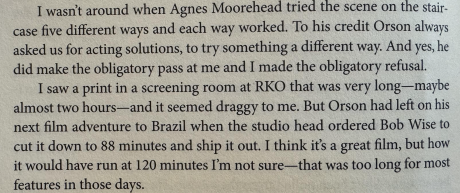
I love Manny Farber’s Ambersons review, and particularly this excerpt: “Theater-like is the inability to get the actors or story moving, which gives you a desire to push with your hands. There is really no living, moving or seeing to the movie; it is a series of static episodes connected by narration, as though someone sat you down and said ‘here!’ and gave you some postcards of the 1890s.”
Third posting of HE’s Anne Baxter West Hollywood encounter: “I was driving along Melrose Ave. near Doheny in late 1983. (Or was it early ’84?) I noticed that a new BMW in front of me had a framed license plate that came from a dealer in Westport, Connecticut, where I had lived only five years earlier and which is next to my home town of Wilton.
“I pulled alongside the Beemer and saw right away that the driver was Anne Baxter, who looked pretty good for being 60 or thereabouts. I rolled down my window and said, ‘Hey, Westport…I’m from Wilton!’ Baxter waved and smiled and cried out ‘Hiiiiii!'”
…and wondering if there’s any consensus of opinion among HE regulars? It’s been streaming for two or three weeks.
Variety‘s Tatiana Siegel is reporting thqt Ashlee Margolis, founder of the Beverly Hills firm The A List, recently wrote “an email to her staff about a new mandate to hit ‘pause on working with any celebrity or influencer or tastemaker posting against Israel.”
I’m just kinda wondering who else has been paused or kibboshed over the years for thie or that political or industry-sensitive offense. It happens — I know that much.