Indian Guy Dies Under Presumed “Avatar” Influence

Lakshmireddy Srinu, a resident of the Kakinada district of India’s southern Andhra Pradesh region, died of cardiac arrest last weekend while watching Avatar: The Way of Water.

It has been theorized (but not proven) that Srinu’s heart couldn’t handle the 3D wowser excitement levels.

A report posted this morning (12.19, 9:37 am) by metro.co.uk’s Alicia Adajobi didn’t mention (a) what day Srinu died on (although it was probably on Friday, 12.16), (b) how old he was or (c) whether or not he was obese.

The original report, posted on Saturday, 12.17, was filed by Parmita Uniyal of New Delhi’s Hindustan Times

Dr. Sanjeev Gera, director of Noida’s Fortis Hospital, told Unival that Serinu may have died “because of stress…increase in blood pressure like what happened in this case, arteries of the heart could have ruptured and that can cause sudden cardiac arrest.’

Aster CMI Hospital’s Dr. Pradeep Kumar added, ‘This may be due to a plaque rupture in the coronaries or triggering of an arrhythmia due to excitement.”

So James Cameron‘s film didn’t actually kill the poor guy. Most likely his heart was in bad shape to begin with, and all he needed was a little push.

You know this story adds to the Avatar want-to-see factor. You know it does.

Smoking Gun Text

The MAGA insurrection against the U.S. Capitol happened on Wednesday, 1.6.21. According to the below text, Former Trump assistant Hope Hicks expressed concerns to President Trump about potential violence during the then-forthcoming 1.6 demonstration on Monday, 1.4.21 and Tuesday, 1.5.21. And that he didn’t share her concerns.

Hick’s 1.6 Committee testimony begins at 4:15. Notice how Hicks speaks with a kind of twangy, vocal-fry sexy baby voice:

Read more

“Dead Reckoning” in Western Norway

Two and one-third years ago**, Tom Cruise performed a wild-ass, death-defying motorcycle jump off an up-sloping ramp in Hellesylt, Norway. It will presumably be the most hair-raising action stunt in Mission: Impossible — Dead Reckoning Part One (Paramount, 7.14.23).

And the featurette is a fascinating proof of two things. One, the 60 year-old Cruise (58 when the stunt was performed) is utterly fearless. And two, the on-camera “Tom is the man!” testimonials by the filmmakers (including director-writer Chris McQuarrie) and stunt coordinators is relentless. Example: “He’s an amazing individual…the most aware person I’ve ever met.” If just one person had shrugged their shoulders and said, “Yeah, the stunt is really hairy but this is what Cruise has always done…it’s his brand and we’ve been watching him do this shit for several years so you can’t say it isn’t, you know, kinda familiar.”

Two questions: (1) The ramp was constructed by the Dead Reckoning engineers, but within the world of the film’s story, what’s it doing there? What’s the actual purpose? Who would build such a thing except to give an adventurous actor an opportunity to perform a terrific motorcycle stunt? (2) Why doesn’t the featurette let us see the motorcycle smashing into the rocky terrain below and exploding into pieces? I love watching vehicles get destroyed.

The sequel, Dead Reckoning Part Two, will be released on 6.28.24.

** Right in the middle of the pandemic, of course, as well as the Biden-Trump presidential campaign.

How “TAR” Came To Piss Me Off

TAR‘s muddy, under-lighted, haunted-house interior visuals were shot on an Arri 765 (film) and an Arri Alex (digital).

HE to Santa Barbara friendo: “My final verdict is that I kinda hate TAR visually, and that the various shadings and ghostings and mysteries are just too tricky by half. It’s too referenced, too smartypants. It drives you nuts.”

Excerpt from 12.9.22 TAR piece by Slate‘s Dan Kois:

HE to Santa Barbara friendo: “Field is deliberately snobbing the audience. Shipobo-Conibo is the straw that broke this camel’s (my) back. On one hand Lydia has been savagely cancel-cultured by robots, and at the same time she’s totally responsible for her fate? Field is all over the map. Truly great art speaks to the none-too-bright, under-educated person as well as the brilliant viewer with an elegant education.”

Santa Barbara friendo to HE: “I’ve had the reverse reaction. On the surface TAR is engaging and it can be enjoyed by everyone. After repeated viewings (like you’ve done) you start to uncover deeper layers.”

HE to Santa Barbara friendo: “Field is only interested in attracting your well-dressed, elegant education, hybrid-driving crowd. I’ve seen the damn thing four times, and it still frustrates me.

Kois’s analysis piece states the following: “In the middle of the night, Lyda gets up to comfort daughtet, Petra. And if you look closely, you’ll see, motionless in the dark corner of Lydia’s bedroom, nearly unnoticable at the back of the frame, a red-haired woman — Krista.

“First, you can’t notice Krista standing in a dark corner of Lydia’s bedroom because Florian Hoffmeister‘s cinematography is so covered in mud and shadow that you can’t see much. That’s intentional. And two, you’re telling me I have to watch this film a fifth time?”

Departed Cruising In Classic Cars

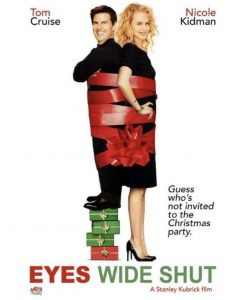
TCM’s death reel errs grievously by calling the late Leon Vitali an “actor”. As Tony Zierra‘s Filmworker makes clear, Vitali only began as an actor. He became a legendary figure by devotionally serving the ultimate sorcerer, Stanley Kubrick, on a 24/7 basis.

From “At Long Last Leon,” posted on 5.12.18:

“Vitali said to himself early on that he’d like to work for Kubrick. What he didn’t expect was that once that work began Kubrick would want Vitali at all hours, all the time…focus and submission without end. If the early sentiment was “I’d give my right arm to work for Stanley Kubrick.” Kubrick’s reply would be “why are you lowballing me? I want both arms, both legs, your trunk, your lungs, your spleen, your ass and of course your head, which includes your brain.”

“Yes, Virginia — Stanley Kubrick was no day at the beach. Then again what highly driven, genius-level artist is?

“But he was also a sweetheart at times, to hear it from Leon. It was just that Kubrick believed in trust and had no time for flakes, fractions or half-measures of any kind. His motto was that if you’re “in”, you should be in all the way. And Vitali was, obviously, and yet during those 21 years he worked on only three Kubrick films — The Shining, Full Metal Jacket and Eyes Wide Shut. But that was Kubrick, a brilliant control freak who wound up eating himself in a certain sense.”

Read more

Who Recognized Winslet?

Did anyone recognize Kate Winslet in Avatar 2? I certainly didn’t. She plays Ronal, a female leader of the water-soaked Metkayina Navi and wife of big kawabunga chief Tonowari, but c’mon…the character could have been played by anyone. Winslet wore mo-cap gear and performed the part vocally, but who can honestly say they went “yeah, I can see Kate’s face blended with the Navi features” or “yeah, that’s Kate’s voice”? Cliff Curtis played Tonowari — another no-recognize.

“Babylon” Meets Poland Curse

“This is a movie that could win Best Picture,” David Poland recently said about Damien Chazellle‘s Babylon (Paramount, 12.23). “It’s about Hollywood, it has two major stars doing major star work, and while it shocks and horrifies in certain ways, it is, more often than not, entertaining as hell.”

I’m a fan of Chazelle’s uncompromised, bold-as-brass approach to making Babylon — you certainly can’t say he holds back or applies half-measures. He really splashes passion paint upon the canvas in a way that Eric von Stroheim would have approved of.

But Babylon, sadly, is not an Academy-friendly film, and Poland knows this. He’s bending over backwards to be as supportive as possible, and I understand the impulse as I feel that bravura filmmaking of this sort, however brash or grotesque or off-putting as it is from time to time, shouldn’t be trashed. Auteurist energy of this sort should be applauded, as least by the standard of “A for effort..”

Poland knows that Babylon hasn’t a prayer of being Best Picture-nominated, much less winning. He knows this, and yet he claims “it could win Best Picture.”

Poland: “When I first saw the film, a few weeks ago, I was overwhelmed by the relentlessness of it, I admit. It felt like being force-fed a 20 course meal… like young geese being stuffed for foie gras.

“I don’t know if it’s Robbie or Pitt’s best work… but you won’t see any work from them that is better than this. Margot Robbie is the Energizer bunny…she will not stop. It’s like watching, in one film, the best and the worst of desperation and manic depression. Stunning performance. Brad Pitt is pretty much the exact opposite, style-wise. His character is already a virtual deity, so the performance is all in his eyes, careful physicality, and in the performance of the script.

“Don’t fear the elephant shit. Honestly, if the MPA would allow it, I’d be doing TV spots with it.”

#MeToo-ers Belitting Masculinity, Take Heed

“White men are being addressed in this feminist environment, [such that] they feel like they can’t be themselves, [due to the prevailing notion of] toxic masculinity.

“We can talk about whether or not that’s true or how big of a problem that is, but what I don’t think is really debatable is that if you look at the net amount of images in the culture, there really aren’t that many portrayals of men right now [in which] men both embody classical masculine traits and they’re also pro-social, like they’re not assholes.

“The only exception is when they’re a superhero with blue lightning coming out of their ass.

“This wasn’t always the case,. If you look back [into film history] you’ll see all kinds of portraits in which men are portrayed in a more nuanced kind of way. And I think there’s an interest in that [right now], a hunger for that.” — Mark Boal, 49-year-old screenwriter of The Hurt Locker and Zero Dark Thirty.

I haven’t seen Mark since the Zero Dark Thirty days, but he looks more bulked up and alpha-male commando-ish these days. Still soft-spoken, but a different look, different vibe.

Read more

Scene That Half-Saves “The Fabelmans”

I’d forgotten that Gabriel LaBelle‘s Sammy Fabelman (aka young Steven Spielberg) conveys a joy face** while twirling around twice.

I’d also forgotten that John Williams‘ score sounds a little too peppy and jaunty — a tad reminiscent of Franz Waxman‘s Rear Window score at the very end.

Honestly? I’m kinda okay with the center-horizon shot. Or at least I didn’t find it “boring as shit.”

** the satisfaction that any fledgling director would feel after meeting and getting instructed by a showbiz legend.

Read more

“Avatar 3” Should Be The End Of It

Speaking as a decades-long admirer of James Cameron gutslammers, I need to honestly say that I really don’t want to see three more Avatar films…truly, no foolin’. I decided this after seeing Avatar 2: The Way of Water late Friday afternoon. A riveting experience, for sure, but I realized midway through that I might not want to see it a second time. Because it left me with a feeling of aural, visual and spiritual exhaustion that I don’t want to re-experience.

And given Cameron’s stated plan to churn out three more Avatar flicks between now and 2028 (for a grand total of five), I really don’t want to return three more times to that aftermath feeling of being rocked and jolted and pulverized with little to show for it emotionally.

Because Avatar 2 isn’t Titanic. The first Avatar wasn’t either, but it told a great story (four-act structure) and felt like such a major visual event that it seemed extra-historic. Avatar 2 is more of a power-punch workout that an emotional massager or meltdown. I realize that Avatar 3 is more or less completed and there’s no ducking it, but three will be enough, fellas. C’mon, Jim, let it go…move on to something else.

From Owen Gleiberman‘s “Is James Cameron’s Vision for the Avatar Franchise a Dream or a Delusion?” (12.18):

Excerpt #1: “After the original Avatar, when Cameron laid out his master plan to make four sequels to it, my honest thought was, ‘Has he lost his mind?’ Not because I thought the plan was commercially unfeasible, but because I couldn’t wrap my own mind around why the director of Titanic — a timeless and awesome film, because it was one of the most moving experiences in the history of popular cinema — could be saying, with the power to do anything he wanted, ‘I’d like to spend the next 20 years making Avatar films.’

Excerpt #2: “We already have a movie culture that’s drowning in imagistic sensation and action overload. Cameron, in movies like The Terminator, Aliens, The Abyss and Terminator 2: Judgment Day, was one of the virtuoso architects of that blockbuster aesthetic. He’s now competing against the very cinema-as-sensation mystique that overpowered the rest of movie culture, even as he raises the ante on it. I felt a note of magic during the middle hour of The Way of Water, which plunges us into the ocean with a kind of virtual-reality immersion. But the film’s extended action climax? That felt like something out of Die Hard VIII: Die Harder on a Boat, only rendered in 3D. At a certain point I thought, ‘So what?'”

Repeating Roger & Gene’s Warning

Posted 2 and 1/2 years ago, way back in July 2020….time flies when you’re absolutely loving your life. Back then there were assholes commenters (like the late “Seasonal Affleck Disorder“) who kept writing “what will it take to get Jeff to stop posting about this crap…everything’s fine…just write about loving movies!”

Political Correctness Is The Fascism of the ’90s“, posted on 7.10.20:

Gene Siskel: “You have to summon the courage to say what you honestly feel [about a film]. And that’s not easy. There’s a whole new world called political correctness going on, and that is death to a critic, to participate in that. Wanting be liked is another…forget even the world of political correctness. Wanting to be liked, wanting to go along with the group [is] death to a critic. [Forget all that and] take your best shot.”

Roger Ebert: “When you said the word ‘political correctness’ it made me think of college students working for the student papers or writing papers that are going to be read out loud in class…political correctness is the fascism of the ’90s. This feeling that you have to keep your ideas and your way of looking at things within very narrow boundaries or you’ll offend someone. Certainly one of the purposes of journalism is to challenge that kind of thinking. And one of the purposes of criticism is to break boundaries. But what politically correct students are training themselves to do today is to lie…to lie.”

HE to Siskel and Ebert in heaven: Those politically correct college students of the late ’90s are now in positions of power and running the show. You wouldn’t believe what’s happening today at the N.Y. Times, for example. And that p.c. culture has become extremely censorious and punitive. They’re meting out punishment to transgressors and contrarians, and the ultimate p.c. punishment is called “cancelling’ — they’ll murder you on a digital platform called Twitter and get you fired if you persist in saying the wrong thing…so in the film realm if you depart from the officially sanctified view of this or that topic according to, say, Guy Lodge or Jessica Kiang, you’ll get beaten up by the mob. You could even be forced to drive for Uber or work in fast food if you’re not careful.

And you know what else? Many of the smartest big-time critics are just going along with this. Because they’re mice…because they’re afraid of standing up. It’s not that different from the Commie witch hunts of early to mid ’50s. [Thanks to Jordan Ruimy for passing along clip.]

Ebert text from heaven, just received: “Let’s say, for example, that you’re not as much of a fan of the great Ennio Morricone as others. That might brand you as being less perceptive than you should be, but you are absolutely entitled to say that without dodging punches.”