“Warfare” Is Vital Viewing, and ONLY In A Theatre With Grade-A Sound

Owen Gleiberman‘s 3.28.25 review of Warfare, co-directed by Alex Garland and former SEAL Ray Mendoza, explained the basic deal — no movie stuff — just raw, assaultive, in-your-face realism within a short time frame.

By “stuff” he meant “no story, no dramatic hooks, no scripted banter, no musical score, no establishment of plot points, no character development, no giving those of us in the audience our bearings”…just a real-time incident that happened to Mendoza and several other SEALS 19 years ago during the Battle of Ramadi. A mere 95 minutes, and all of it inside and just outside a two-story home without plants or shade.

And I knew all that going into last night’s 7 pm IMAX screening. No surprises, locked and loaded…ready.

So here’s what happened…not in the film as I knew that Garland-Mendoza would put me through the ringer and leave me with a temporary case of PTSD. And they do exactly that, in spades. What I mean is, here’s what happened to me:

The screen was fake IMAX (half as large as the one at the AMC Lincoln Square) but the projection quality was aces — immaculate clarity, razor-sharp focus — and the loud battle sounds (dunf-dunf-dunf-DOOF!) were, in a sense, life-giving. They got my pulse going…woke me the fuck UP….I almost forgot about the popcorn.

Nothing happens during the first 25 or 30 minutes, but it holds you tight and firm because you know bad shit is right around the corner. Everything we hear and see is at the very least riveting because you KNOW. And then it starts…okay, I won’t describe it. But it has to be experienced on a big screen with loud, crisp, pumped-out sound. No streaming, no couches, no smart phone distraction…full attention.

A few guys get shot up and shredded, but then you knew that. That’s not to say what happens isn’t horrific. I was flinching and gasping all through it, but as I know a few of the actors I was able to occasonally pull back and disassociate and think about stuff of my own.

One of the SEALS is Joseph Quinn‘s “Sam”, and while I felt terribly for the poor guy (in actuality, back in ’06) and his ghastly leg wounds (he moans and wails a lot and who could blame him?) but to be perfectly honest I was also whispering to Quinn, “I’m sorry for your character’s terrible pain but on another level you, Joseph Quinn, almost deserve it because you’ll be playing George Harrison for Sam Mendes, and you don’t even faintly resemble Harrison…alabaster skin, auburn hair, eyes that couldn’t be more different than Harrison’s deep browns.”

Mendoza is played by the 25 year-old D’Pharaoh Woon-A-Tai, whom I liked right away. He’s good-looking and slender and watchful like a tiger and super-attuned….a guy you feel good about right away. I had looked at current photos of Mendoza, and, as you might expect, he’s put on a fair amount of weight over the last 20 years. You can laugh but the fact that Woon-A-Tai’s Mendoza is a young and lean workout Nazi…you can laugh but I gave thanks to God for this.

On the other hand Michael (son of James) Gandolfini is a bit on the bulky side, and as he’s only 26 he’d better watch himself…if you’re not in reasonably trim physical shape in your mid 20s you’ll be a mess when you hit 40 or even 35.

And yet Charles Melton, who only appears during the last half-hour as Jake, an officer of some kind, delivers great authority and pretty much restores his acting career.

I didn’t mind Melton’s passable performance as Julianne Moore‘s much younger husband in Todd HaynesMay December (’23), but I was really turned off when he started winning Best Supporting Actor awards in late ’23. The wokesters shrieked their usual denials, but it was obvious this was happening because of Melton’s ethnicity (his mother is Korean). But when he took charge and starting barking orders last night, I almost said out loud,”All is forgiven, dude…your mushy husband portrayal from two years ago is gone from my head, and all I can see and feel is Jake’s hardcore commitment…you’ve saved yourself.”

There’s a recurring image — a prop, I should say — in Warfare that I will never forget. Not a dead American body but a portion of one. That’s all I’m going to say.

Too Many Absences: A Semi-Morose Cannes Analysis

10:30 am update: Lynne Ramsay‘s Die My Love, a post-partum depression “comedy” that costars Jennifer “JLaw” Lawrence and Robert “RPatz” Pattinson, will be announced as an additional Cannes title. World of Reel‘s Jordan Ruimy is hearing “as many as SEVEN late additions, including two in competition, will be announced.” Die My Love costars LaKeith Stanfield, Sissy Spacek and the profoundly grizzled Nick Nolte.

Earlier this morning: Many potentially exciting Cannes ’25 films are missing from the just-announced lineup, and despite a general understanding that more titles will be added over the next two or three weeks, I for one am moderately bummed.

After five years of editing The Way of the Wind, the seemingly wispy, undeniably fickle-minded Terrence Malick has once again chickened out.

Amazon has also wimped out, I gather, on approving the showing of Luca Guadagnino‘s reportedly forceful After The Hunt. In the realm of potential award-season contenders, distributors are generally scared shitless of Cannes.

Gregg Araki‘s I Want Your Sex has apparently been given the go-by. Jim Jarmusch‘s Father, Mother, Sister, Brother has been rejected. Kristen Stewart‘s The Chronology of Water either isn’t ready or hasn’t made the cut. And for whatever reasons[s] Laszlo Nemes’ Orphan is, for now, out.

It would’ve been surprising if Paul Thomas Anderson‘s One Battle After Another had been selected (it’s almost certainly going to Venice) but it would’ve been so much fun to catch it early. Warner Bros. is understandably concerned over advance reactions — I would be too.

But hey, at least attendees will have an opportunity to savor Joachim Trier‘s Sentimental Value, “an intimate and moving exploration of family, memories, and the reconciliatory power of art.” HE is earnestly looking forward to this, especially with Renate Reinsve starring.

Not to mention the somber spectacle of Paul Mescal and Josh O’Connor doing each other in early 20th Century New England in Oliver Hermanus‘s The History of Sound…spiritual longings, hard-ons, primitive recording equipment, etc.

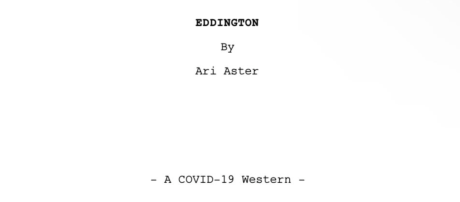
And Ari Aster‘s Eddington…I guess. And Chris McQuarrie and Tom Cruise‘s Mission: Impossible — The Final Reckoning. And, for a change of pace, Andrew Dominik‘s Bono: Stories of Surrender

And Richard Linklater‘s Nouvelle Vague, about the making of Jean-Luc Godard‘s Breathless.

Oh, and Spike Lee‘s Highest 2 Lowest, a remake of Akira kurosawa‘s High and Low (’63), will screen non-competitively.

In Competition:

“Sentimental Value” (dir. Joachim Trier)
“Sound of Falling” (dir. Mascha Schilinski)
“Romeria” (dir. Carla Simon)
“The Mastermind” (dir. Kelly Reichardt)
“Nouvelle Vague” (dir. Richard Linklater)
“The Eagles of the Republic” (dir. Tarik Saleh)
“Dossier 137” (dir. Dominik Moll)
“The Secret Agent” (dir. Kleber Mendonça Filho)
“Fuori” (dir. Mario Martone)
“Two Prosecutors” (dir. Sergei Loznitsa)
“La Petite Dernière” (dir. Hafsia Herzi)
“A Simple Accident” (dir. Jafar Panahi)
“The History of Sound” (dir. Oliver Hermanus)
“Renoir” (dir. Chie Hayakawa)
“Alpha” (dir. Julia Ducournau)
“Sirat” (dir. Oliver Laxe)
“Young Mothers” (dir. Jean-Pierre Dardenne, Luc Dardenne)
“Eddington” (dir. Ari Aster)
“The Phoenician Scheme” (dir. Wes Anderson)

Cannes Premiere:

“Amrum” (dir. Fatih Akin)
“Splitsville” (dir. Michael Angelo Covino)
“Connemara” (dir. Alex Lutz)
“The Disappearance of Josef Mengele” (dir. Kirill Serebrennikov)
“Orwell” (dir. Raoul Peck)
“The Wave” (dir. Sebastián Lelio)

Un Certain Regard:

“The Mysterious Gaze of the Flamingo” (dir. Diego Céspedes)
“My Father’s Shadow” (dir. Akinola Davies)
“Urchin” (dir. Harris Dickinson)
“Meteors” (dir. Hubert Charuel)
“A Pale View of Hills” (dir. Kei Ishikawa)
“Eleanor the Great” (dir. Scarlett Johansson)
“Pillion” (dir. Harry Lighton)
“L’inconnue de la Grande Arche” (dir. Stephane Demoustier)
“Aisha Can’t Fly Away” (dir. Morad Mostafa)
“Once Upon a Time in Gaza” (dir. Arab Nasser, Tarzan Nasser)
“The Plague” (dir. Charlie Polinger)
“Heads or Tails?” (dir. Alessio Rigo de Righi, Matteo Zoppis)
“Homebound” (dir. Neeraj Ghaywan)
“The Last One for the Road” (dir. Francesco Sossai)

Special Screenings:

“Bono: Stories of Surrender” (dir. Andrew Dominik)
“Tell Her That I Love Her” (dir. Claude Miller)
“The Magnificent Life of Marcel Pagnol” (dir. Sylvain Chomet)
“Dalloway” (dir. Yann Gozlan)

Out of Competition:

“Mission: Impossible — The Final Reckoning” (dir. Christopher McQuarrie)
“The Coming of the Future” (dir. Cedric Klapisch)
“Vie Privée” (dir. Rebecca Zlotowski)
“The Richest Woman in the World” (dir. Thierry Klifa)

Dewey Martin Was Going Good For A While

In the early to mid ’50s Dewey Martin was quite the appealing young actor — handsome, well-spoken, disciplined, no-nonsense vibes. He landed strong supporting roles in a quartet of respected and successful films — Howard HawksThe Thing (’51), The Big Sky (’52) and Land of the Pharoahs (’55), and William Wyler‘s The Desperate Hours (’55).

But after costarring with Dean Martin in Ten Thousand Bedrooms (’57), Dewey’s feature career began to go south.

He turned up in several more films, but no good ones. He was in Meet Me in Las Vegas (’56) and The Proud and Profane (’56), but without credit. His supporting role in The Longest Day (1962) was deleted. He became a semi-prominent TV actor (the lead role in a well-remembered Twilight Zone episode that aired in ’60 (“I Shot An Arrow into The Air“) and plugged along throughout the ’60s, but the gas was pretty much gone from the tank by the early to mid ’70s.

Martin married Peggy Lee in ’58, but they divorced in June ’59.

I don’t know what Martin did for a living during his last few decades, but he had a strong constitution and wound up living until age 94. Martin passed seven years ago in San Pedro.

Where would Martin have been without Hawks’ admiration and professional support? The Thing, The Big Sky and Land of the Pharoahs were fairly big deals in their day.

What was the essence of the Hawks-Martin bond? Presumably Hawks saw Martin as the son he never had, but I’ve searched and asked around and know nothing.

The bottom line is that things began to dry up for Martin after Hawks took a hiatus from directing after Land of the Pharoahs and didn’t return until Rio Bravo, which was shot in 58 or thereabouts.

I hate to say this but I suspect the name “Dewey” didn’t work for certain folks — it sounded unmanly or adolescent. It may have reminded some in the audience of Huey, Dewey and Louie.

Read more

Gold Bling

A semblance of class and restraint on the left…not so much on the right.

JFK’s subued Oval Office scheme, circa 1961.

Richard Nixon’s Oval office.

Some Critics Are Just Dicks

The following has happened many, many times in my moviegoing life, and especially before I got into this racket: I’d read a bunch of shitty reviews of a given film, but I saw it anyway and…surprise!…it turned out to be not only half-decent but surprisingly good here and there.

This led me to wonder what kind of stick had been shoved up the asses of the critics who panned it. What was their basic malfunction? It gradually hit me when I became friendly with several critics in the late ’70s and beyond that some are “friendly” or appealing enough on a colorful personality basis (in terms of exuding actual human qualities one of my favorite critics was Andrew Sarris, with whom I spent three or four hours on a road trip in ’77) but some of them are just snippy, snarly pricks. If not overtly then on some kind of buried, deep-down basis. (This is not a psychological examination piece.)

The critical shitstorm that clobbered (but failed to seriously injure) Green Book is one example of this.

My first viewing of Peter Farrelly‘s Oscar-winning film happened at the 2018 Toronto Film Festival, and the crowd didn’t just approve and applaud — they adored it. But along came the prick critics (many of them wokeys) and before you knew it Green Book was a movie that not only needed to be disparaged but killed. I didn’t “think” Green Book was a nice, agreeable, feel-good thing — I knew it was that. I’d felt a rousing connection in the presence of hundreds of Toronto filmgoers.

Nobody ever claimed that Green Book was some kind of historic masterpiece, but it was fine as far as it went, not to mention charming and likable and undeniably well-crafted. But the pterodactyls in the critical community used every weapon in their reptile arsenal to draw blood, which led me to recall a line that I once heard William S. Burroughs say before a microphone: “Some people are shits.”

I came to a similar conclusion two years ago while reviewing Stephen FrearsThe Lost King. “The people who’ve trashed this film are really and truly rancid,” I wrote, as The Lost King “is a good, personable, middle-class British film…not a comedy but amusing here and there…I completely enjoyed its company.” I didn’t care for a couple of aspects (the ghost of Richard appearing to Sally Hawkins) but to use a misstep or two as a reason to completely dismiss it is just vile.

Just An Idea

It’s commonly understood at this point that David Fincher and Quentin Tarantino‘s Once Upon a Time in Hollywood follow-up is (a) not a sequel to Tarantino’s original, (b) about the continuing adventures of Cliff Booth (Brad Pitt) and (c) set in 1977 (cocaine, death to disco). Fincher directing, script by QT, principal photography starting in July.

It’s not my place to suggest any plotlines or casting ideas, but I’m going to anyway. Julia Butters, who played a precocious eight-year-old actress, Trudi Fraser, in Tarantino’s original OUATIH, should be woven in somehow. If only because she made a commendable impression in the 2019 original at age nine or so, and because she’s not only a grade-A actress (she was in Steven Spielberg‘s The Fabelmans plus Leonardo DiCaprio called her “a young Meryl Streep“) but is now 15 and on the verge of you-tell-me.

“Blame It On The Ratliffs”

If HBO creatives aren’t thinking right now about a White Lotus spinoff show called Blame It On The Ratliffs, they should be immediately fired.

An upper-middle-class family suddenly tossed into the horrific animal pit of financial Armageddon and the resultant loss of comfort, elevated status, having to land jobs, sell the house and move to a vaguely crummy neighborhood…pretentious swells forced to adapt to a lesser (dare we say “shitty”?) standard of living and hating every moment of it.

The sure-to-be-psychotic journey of Parker Posey‘s Victoria Ratliff alone…the unmitigated joy of watching Victoria suffer one social-station comedown after another…talk about a bomb cocktail! The Sopranos meets Absolutely Fabulous plus you-name-it. Initial periods of shock, denial and bargaining followed by a brush with catatonic depression. And then she becomes the angriest, most ferocious “Karen” of all time.

Victoria promptly divorces Jason Isaacs‘s Tim Ratliff, of course, as (a) he nearly Jonestowned the entire family with those poisoned pina colada smoothies…okay, four of them including himself…plus (b) she needs to find another sugar daddy pronto, or at least she has that goal in her mind. In reality she’s too old to find a sexually active husband, but she might get lucky with a pot-bellied 70something horndog…who knows?

Tim is looking at government prosecution, of course, plus enormous legal fees (Scott Galloway could play his attorney!) and a country-club jail term of three to five years. Plus, as noted, divorce with Victoria trying to shake him down for every last shekel.

But will his plight be as horrible as he imagined it might be back in Thailand? He’s presumably socked some assets away in anticipation of legal trouble but he might not have been cagey enough to have thought of that. All financially savvy fellows with shady associations know they have to covertly move liquid funds to foreign territories, and perhaps even keep a bag of cash and diamonds in an outdoor shed (maybe in a special below-the-floor safe a la Tony Soprano).

It’s safe to say that in prison Tim will experience a spiritual awakening.

Patrick Schwarzenegger‘s Saxon Ratliff will not handle poverty well. He said that in so many words in episode #7. He runs away at first….maybe a cross-country trip, maybe an escape to a bartending job in Key West, maybe a little drug-dealing, maybe a floor salesman gig at a BMW dealership. Stone-cold miserable at every turn, but then a possible spiritual growth spurt….actually learning to stand on his own two feet and become (we should pardon the expression) a man.

Sarah Catherine Hook‘s Piper Ratliff and Sam Nivola‘s Lochlan Ratliff will be the least affected or at least the most adaptable. Lochlan will be, for sure. Sarah is her mother’s daughter so we might expect a little freaking-out at first.

Get to work on an eight-part miniseries right now. And if they go for this, I want a “based on an idea by” credit.

Wallpaper or Screen Saver?

Snapped in the fall of ’19. Just after a Middleburg Film Festival visit. Wasn’t trying…just happened. Perfect balance and focus, excellent light, a little past magic hour.

A Galaxy Far, Far Away

Michael O’Donoghue‘s Mr. Mike’s Mondo Video, which I saw once back in ’79, is only sporadically funny if that, not to mention technically coarse and splotchy. But the eagerness to offend is damn near breathtaking.

The written prologue or mock warning starts at the :30 second mark — please read it. There were no lefty sensitivity wackos around during the waning days of the Carter administration, of course, but imagining how today’s wokeys might react is, well, pleasurable.

Read more

“That Was Cinema — Now It’s Just Content”

Yesterday director and cinematographer Sareesh Sudhakaran (@wolfcrow) posted a super knowledgable, highly perceptive appreciation of the tech aspects of William Wyler‘s Ben-Hur (59). Lasting 11 minutes and eight seconds, YouTube tutorials don’t get much better than this.

I’m pretty much resigned to the sad fact that Ben-Hur will never again be theatrically screened at the full Camera 65 aspect ratio — 2.76:1.

“I Live for Ben-Hur Disappointments,” posted on 9.9.16: “It’s common knowledge that William Wyler‘s Ben-Hur (’59) was shot in Camera 65, which when correctly projected (as well as scanned for DVD and Bluray) delivered an aspect ratio of 2.76:1. (Same a.r. with Ultra Panavision 70, which The Hateful Eight was shot and projected at.) All my adult life I’ve been looking to see the full-whack, 2.76:1 Ben-Hur in a first-rate theatrical venue.

“My hopes were up when I attended last night’s 7:30 pm screening of Ben-Hur at the American Cinematheque Egyptian. I was encouraged by the fact that the AC was showing a DCP, or the same digitally remastered version that constitutes the current Bluray, which delivers the full 2.76:1. But they blew it all the same. The AC aspect ratio was, at most, 2.55:1, and it was probably closer to 2.4:1. And therefore each shot felt slightly cramped and wrong.

Robert Surtees‘ 2.76:1 images on the Ben-Hur Bluray are immaculate — the framings in each and every scene are exquisitely balanced. But whack those images down to 2.4:1 and everything looks fucked. If Surtees had been with me he would have been hooting and throwing soft-drink containers at the screen.

“The same aspect ratio problems manifested when I caught Ben-Hur at the New York Film Festival in 2011, to wit:

Excerpt: ‘The fabled 2.76 to 1 aspect ratio was not delivered. It looked to me like we were seeing roughly a 2.55 to 1 image, at best. There’s a shot with Hugh Griffith and the four white horses when Heston enters from the left and says ‘What magnificent animals’ or words to that effect. I knew right away what I saw wasn’t right because Heston was slightly cropped off as he said this line — he didn’t have any breathing room — and you NEVER crop a star.'”

Funereal but Tough-Minded…Obstinate, Intractable

Does anyone even remember Robert DeNiro‘s The Good Shepherd (’06), a somber, dialogue-driven spy flick which made decent coin ($100 million) but ran too long (167 minutes) and felt like a downer to pretty much everyone?

Loosely based on the life of legendary cold-war spook James Jesus Angleton, pic was directed by De Niro from a script by Eric Roth.

The vibes between Matt Damon (as Angleton stand-in Edward Wilson) and Angelina Jolie were utterly miserable, and audiences sank into the swamp with them.

The costars included Alec Baldwin, Tammy Blanchard, Billy Crudup, Keir Dullea, Martina Gedeck, William Hurt and Timothy Hutton. Grim stuff, man.

After my second viewing at the Zeigfeld theatre in December ’06, I told a director friend that Shepherd didn’t play any differently — it was still muted, somber and funereal.

He replied as follows: “I liked it, actually. That said, ‘funereal’, although not the word I would personally choose to describe it, is accurate. It has a funereal atmosphere, almost aggressively so.

“What I liked [about it] is that it doesn’t pander in any way. It almost defies you to like it.

“You’re sitting there saying ‘what is this shit?…you haven’t made me interested in the story or care about the characters, and it’s very easy to get out [of the movie] if you want to do that…it doesn’t deploy the strategies that almost all movies do to bring you in and engage your sympathies. And I respected that.”

A film that “almost defies you to like it”….funny but interesting. HE to readership: Please name other films (reasonably good ones, I mean) whose directors didn’t seem to care if audiences found them engrossing or not. You have to respect that kind of ballsiness. Directors to audiences: “You don’t like my movie? Well, I don’t like you either!”

Todd McCarthy’s 12.10.06 review:

“The birth of the CIA and the life journey of one of its founding operatives is a fascinating subject, [but] one that is done only lukewarm justice in The Good Shepherd,” writes Variety‘s Todd McCarthy.

I can guess what the HE readership is thinking as they read this — give us rude, disturbing, irreverent, provocative or even gross….but please, please not lukewarm.

Robert De Niro‘s second film as a director adopts a methodical approach and deliberate pace,” McCarthy continues, “in attempting to grasp an almost forbiddingly intricate subject, with a result that is not boring, exactly, but undeniably tedious.

“The long and short of the problem is that [De Niro] never finds a proper rhythm to allow the viewer to settle comfortably into what turns out to be a very long voyage. Like many films of the moment, this one keeps jumping around in time, not confusingly in the least, but in a way that has no natural flow to it. Tie that to a central character who defiantly offers no glimpse into his inner life and you have a picture that offers scant returns for the investment of time it requests of the viewer.

“Crucially missing is slowly building momentum, a firm hand on pace, a way to convey gradual moral decay and a talent for magisterial storytelling — gifts that are impossible to fake in the long run.

“Seemingly based in great measure on the ever-intriguing James Angleton, Matt Damon‘s Edward Wilson remains an opaque, impenetrable figure throughout, and neither actor nor script provides the subtext to reveal any layers of personality.

God Forbid

The word around the campfire is that Gregg Araki‘s I Want Your Sex, an erotically provocative “thriller” of some sort (although I can pretty much guarantee that “thriller” doesn’t apply…not in the sense that most of us understand the term…not from Araki)…the buzz says that Araki’s film will play in Cannes next month, although not in competition.

Araki has allegedly said that his goal is to “bring back sex to the big screen”, but dear God in heaven, not with the ginger-haired, pig-eyed Cooper Hoffman in the lead male role opposite Olivia Wilde….no!

In the realm of a sexual something-or-other souffle, Wilde, Charli XCX, Daveed Diggs, Mason Gooding, Chase Sui Wonders, Johnny Knoxville, Margaret Cho and Roxane Mesquida are totally fine. Just no pudgebods with alabaster skin. I’m fucking serious.

I am honestly more terrified of Araki’s film than Paul Mescal‘s latest gay film, The History of Sound, which may (emphasis on that word) turn up in Cannes also.

World of Reel‘s Jordan Ruimy is hearing that other sans competition titles may be Richard Linklater’s Nouvelle Vague, Spike Lee’s Highest 2 Lowest (Spike wants to be in competition!), Andrew Dominik’s Bono: Stories of Surrender, Trey Edward ShultsHurry Up Tomorrow.

Despite that 3.31 Parisien report suggestintg that Luca Guadagnino‘s After The Hunt might debut in Cannes, the submission decision is up to Amazon marketing, I’m told, and publicists are generally terrified of Cannes so calculate the probability.

Will Terrence “wackazoid” Malick‘s The Way of the Wind snag a competition slot? Why would Malick break his six-year editing streak?

Safer bets include Ari Aster‘s Eddington, Jim Jarmusch‘s Father Brother Sister Mother, Wes Anderson‘s The Phoenician Scheme and Kelly Reichardt‘s The Mastermind.

Read more