If you know George Orwell’s “NineteenEighty–Four”, you surely know the sinister character of “O’Brien,” a duplicitous double agent who pretends to be Winston Smith’s friend but is actually a member of the Thought Police. OBrien’s goal is to seek out and persecute thought criminals.
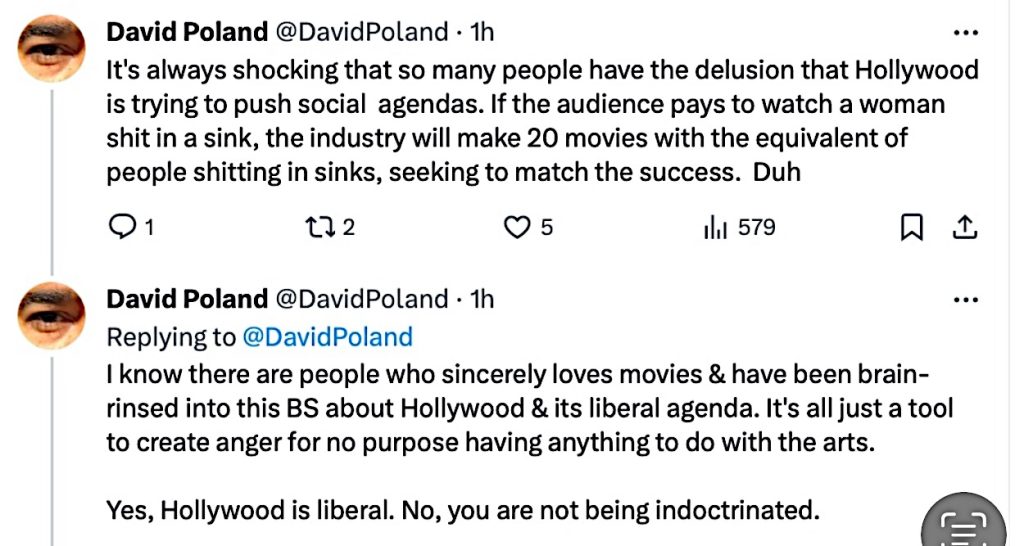
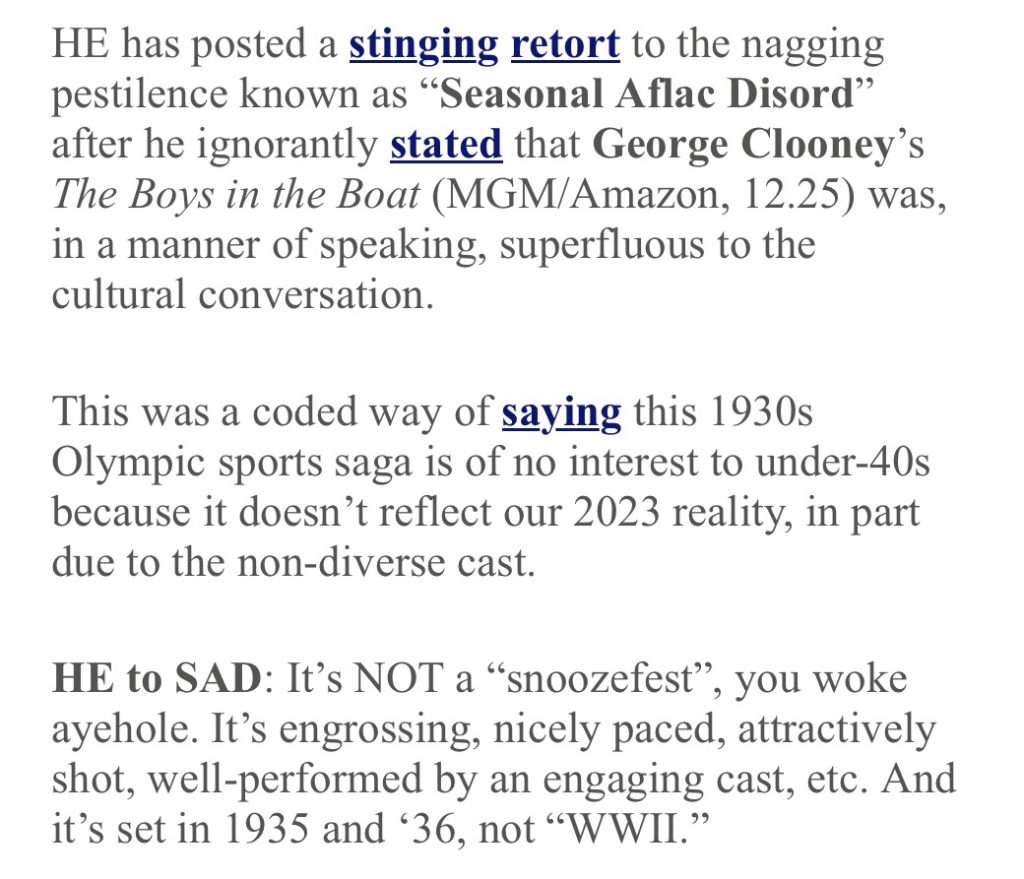
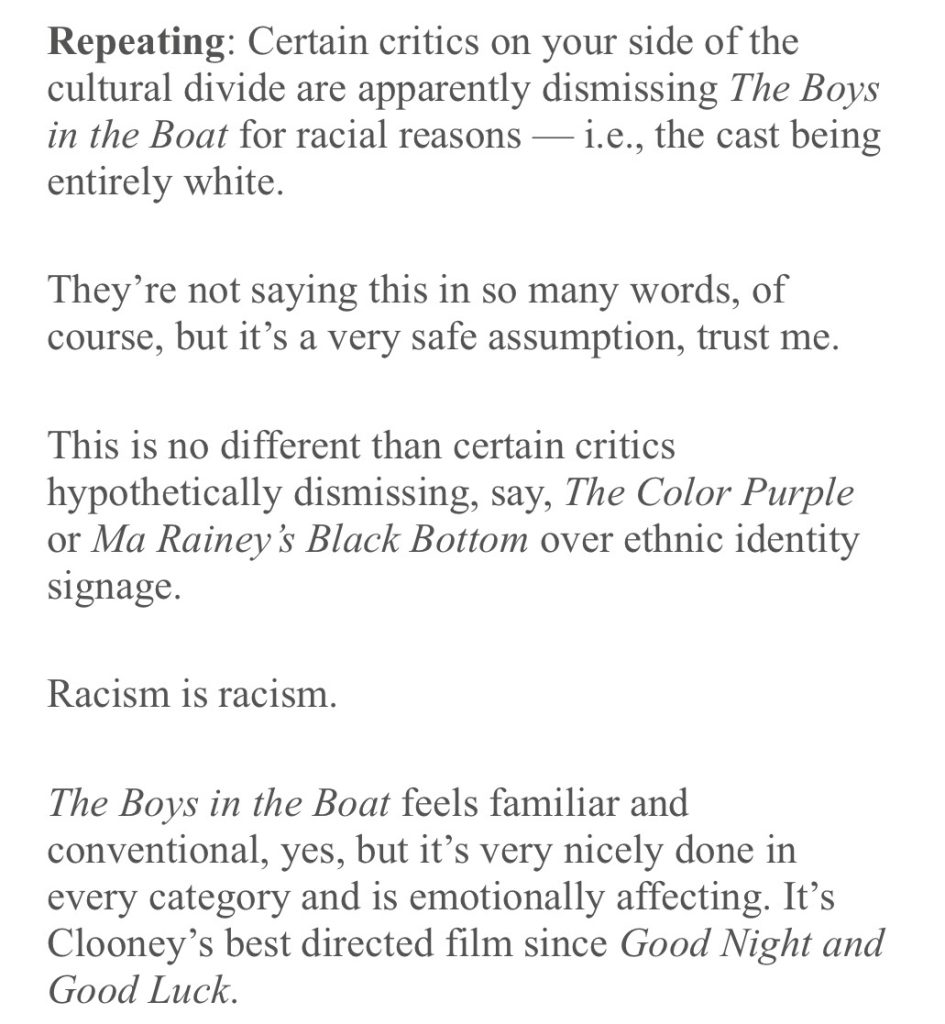
I’m not saying David Poland is a manifestation of a woke O’Brien but he is unmistakably projecting a false flag narrative when he posts bullshit like the tweets below. Poland is either completely self-deluding, which doesn’t square with the fact that he’s very sharp and socially aware, or he is simply an agent of smoke and propaganda who is spewing this crap in order to politically protect himself.
You know what’s a lot better than you might expect? Rollercoaster (’77), a Jennings Lang-produced disaster thriller, made near the end of the big-budget disaster-flick cycle.
Rollercoaster was promoted as a drop-your-socks Sensurround experience, and it was that to a certain extent. But it was mainly an intelligent, low-key, logic-driven chase thriller.
You’d figure with the disaster-flick promotion there would be at least two or three scenes of rollercoaster cars flying off the tracks and people being killed, etc. There’s only one such scene, however, and it happens during the first half-hour and that’s it.
The rest is all cat-and-mouse stuff with amusement park inspector George Segal on the trail of psycho yuppie bomber Timothy Bottoms.
I would’t necessarily call it Hitchcockian but it uses elements of suspense to engaging effect.
Rollercoaster was written by Richard Levinson and William Link, the guys who created Colombo. It’s nicely (as in carefully, patiently) directed by James Goldstone (The Gang That Couldn’t Shoot Straight —-’71); Goldstone’s big-screen career was unfortunately killed when he directed When Time Ran Out… (’80).
A little less than three years ago I posted a roster of HE’s top 20 Henry Fonda films. There was some pushback over my placing Sergio Leone‘s Once Upon A Time In The West, in which Fonda played a blackhearted villain named Frank, in 15th place.
I put it there because it wasn’t a “Henry Fonda” performance, but an aberration in the vein of Fort Apache. And yet even Fonda’s Fort Apache performance as Lieutenant Colonel Owen Thursday, a stiff-necked, emotionally constipated fanatic, represented an aspect of his own nature. (Peter Fonda once said this in an interview.) Frank was a bizarre showhorse role — completely divorced from Fonda the man and Fonda the legend.
In 19 of the 20 performances listed below Fonda was basically playing himself, which is how we’ve always preferred him.
1. 12 Angry Men
2 The Ox-Bow Incident
3. The Grapes of Wrath
4. The Lady Eve
5. The Best Man
6. The Wrong Man
7. Young Mr, Lincoln
8. Drums Along The Mohawk
9. My Darling Clementine
10. You Only Live Once
11. Fort Apache
12. On Golden Pond
13. The Boston Strangler
14. The Fugitive
15. Once Upon a Time in the West
16. Advise and Consent
17. Slim
18. Jezebel
19. The Tin Star
20. Jesse James
Arguably the worst stinkers of Fonda’s career were Mr. Roberts, Fail Safe (a technically good film that I’ve only rewatched once — that means something) and Sex and the Single Girl.
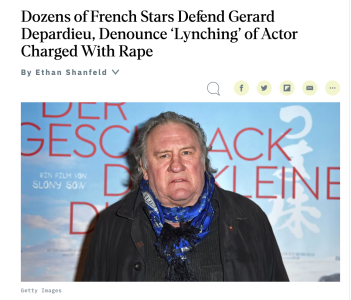
There’s no way such a proclamation would have been published three years ago. People seem to be understanding that #MeToo overplayed its hand and that a somewhat more circumspect, due-process attitude about sexual misbehavior is warranted.
David Rothkopf to Steve Schmidt: “The irrationality of the degree of support for [The Beast]…despite his criminality, his control over the Republican party seems stronger than it’s ever been….even with all these trials, even with all we know about him….rational objections to this anti-democratic authoritarian don’t seem to hold.”
That’s because Trumpism isn’t rational — it’s emotional, primal, boiling in the blood. And Rothkopf doesn’t even allude to this.
Far-right Trump supporters believe that over the last several years U.S. culture has been under assault by the woke scourge (currently manifested by Biden’s kneejerk deference to diverse tribalism, equity favored over meritocracy, scolding white people for being white, trans values in elementary schools, Dylan Mulvaney, hordes of immigrants surging through the Mexican border), and they see him as the only hardcore bully-boy enemy of this scourge…the only guy who is saying “fuck this noise” without qualification.
Is there merit to this general thesis or analysis? To varying degrees, yes. Is it worth electing a fascist dictator in order to put a stop to this scourge, or at least to try and reverse or suppress it? Of course it wouldnt be worth it. Putting Trump back into the White House would be insanity. But like I just said, the Trump bonfire isn’t about rationality.
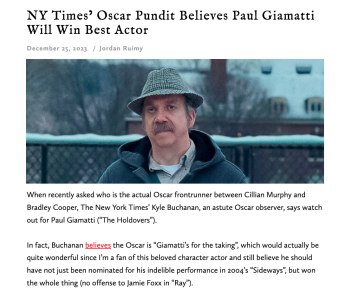
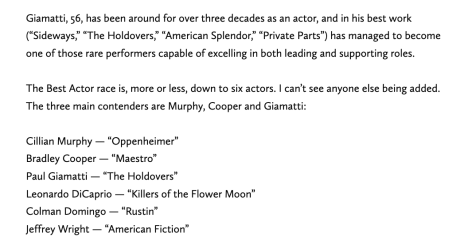
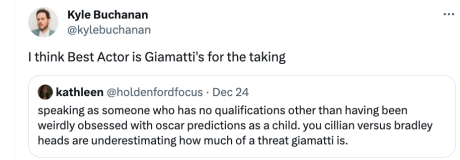
The strongest Best Actor narrative belongs to The Holdovers‘ Paul Giamatti — bringer of a beloved centerpiece performance (Joe and Jane Popcorn have been over the moon for Alexander Payne’s ascerbic holiday film from the get-go) plus Paul’s legendary Sideways performance wasn’t even nominated 19 years ago.
Bradley Cooper’s devotional, emotionally emphatic, technically dazzling performance as Maestro’s Leonard Bernstein is obviously a formidable challenger, but Cooper’s narrative (i.e., he really researched and workedit) doesn’t quite measure up to Giamatti’s.
And forget Oppenheimer’s Cillian Murphy at this stage — the HE narrative (in terms of recognizable human behavior Murphy’s genius physicist is quirky to the point of being inhuman — he’s playing analienfromtheplanetTralfamadore) has settled into the groundwater.
Plus Oppie was a flakey wimp (building an A-bomb to kill tens of thousands of Nazis is okay but not so much a hydrogen bomb, which shouldn’t be built because it’s too big). HE sides with Harry S. Truman (“Don’t let that crybaby back in here”).
Plus no admirer of Oppenheimer believes that Murphy’s Oppie was capable of sexual arousal as aliens don’t enjoy coitus…be honest. There was no believing for a second that Murphy and Florence Pugh actually did the deed.
We all understand how the Oscar game works. If you want your indisputably excellent film to be regarded as a Best Picture contender, you have to release it during award season (late October to Christmas).
Yes, there have been exceptions. Everything Everywhere All At Once was released on 3.25.22, and it wound up winning the Best Picture Oscar on 3.12.23 — nearly a full year later. The Silence of the Lambs opened on 2.14.91, and collected five major category Oscars 13 and 1/2 months later, including Best Picture.
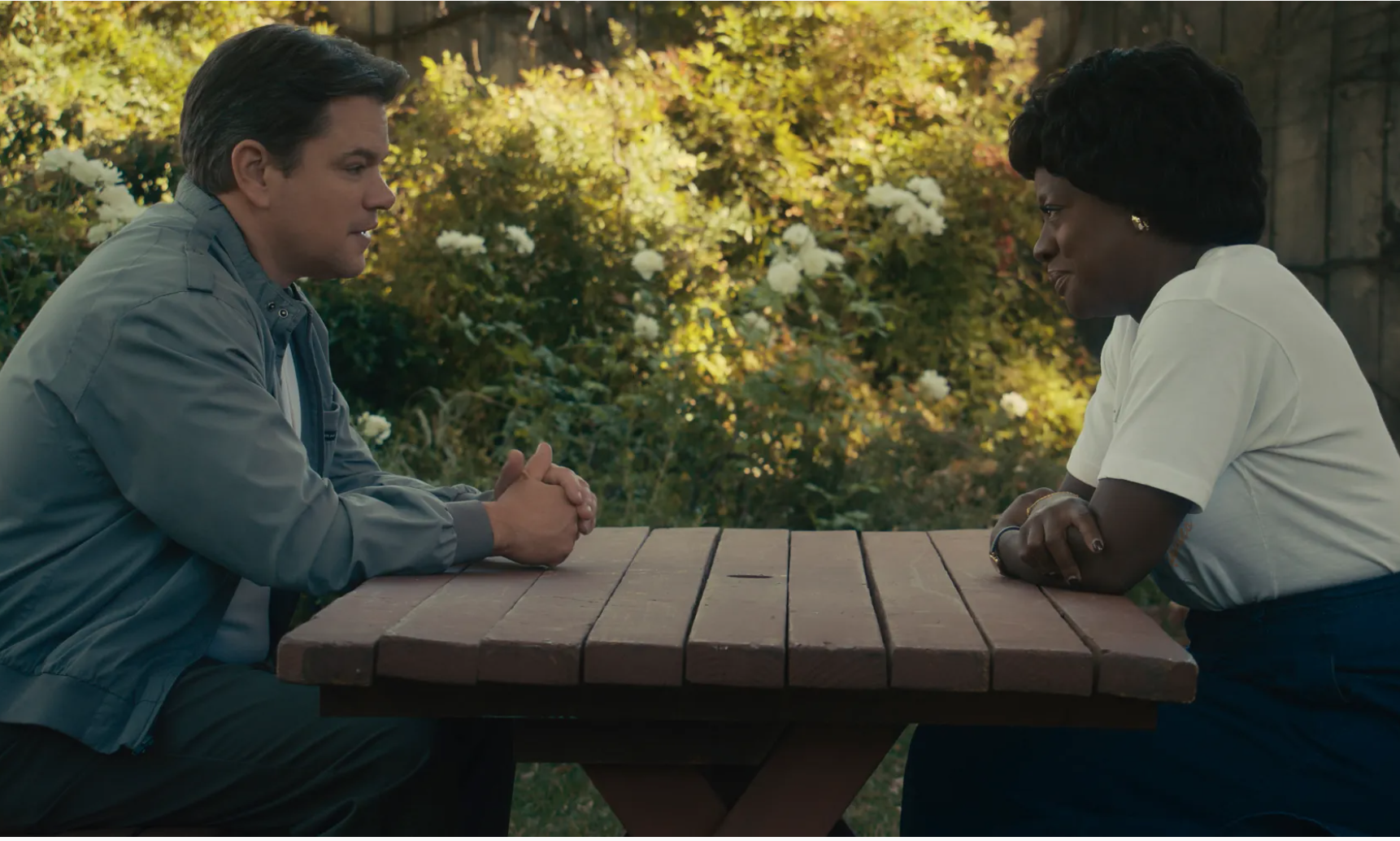
Timing is nonetheless a huge factor (at least in most people’s minds), and so let’s play a game, shall we? Let’s pretend that Ben Affleck and Alex Convery‘s Air, by any yardstick an excellent character-driven sports film with at least two Oscar-calibre performaces (Matt Damon‘s Sonny Vaccaro and Viola Davis‘s Deloris Jordan) and a terrific finale that really sinks in…let’s pretend that Amazon didn’t release it on 4.5.23 but during award-season prime time.
You know it would be sitting on the Gold Derby best-of-the-year rosters and possibly might have prevailed among one or more the critics groups. You know it would have. So let’s cut Air a break and pretend it was released six or seven weeks ago. We’d be looking at a whole different ballgame.
Wiki: “Air was originally slated for a streaming-only release on Amazon Prime Video, but Amazon Studios eventually decided to release it theatrically following strong results from test screenings. It was the first Amazon title since Late Night to be given an exclusive theatrical release, and $40 to $50 million went into promoting the theatrical. It began streaming on Amazon Prime Video on 5.12.23.”
And here we are in late December 2023, and the world has obviously changed since last spring, but Air is still a first-rate, dialogue-driven sports film. As well as being an excellent “dad” film. (No shame in that!) It’s a very human, inside-baseball sports drama that feels honest and relatable every step on the way. Cut from the Moneyball cloth.
For nearly a quarter-century Michael Mann made a series of intensely male-ish, high-stakes grand-slammers — hardcore films about headstrong fellows forging their own paths, sometimes outside the bonds of legality but always single-mindedly. And man, did they hit the spot!
The hot streak began with 1981’s Thief and ended with 2006’s Collateral, and also included Manhunter (’86), The Last of the Monicans (’92), Heat (’95), The Insider (’99) and Ali (’01) — seven films in all.
Then came the “excellent work but not quite a bell-ringer” period…Miami Vice (’06), Public Enemies (’09) and Blackhat (’15)…movies that registered as ground-rule doubles or triples. Which felt disorienting to Mann-heads given his 23-year home run history.
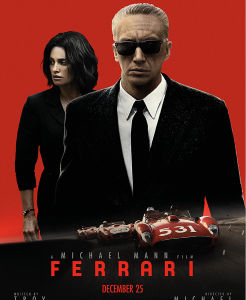
Now comes Ferrari (Neon, 12.25), which is made of authentic, bruising, searing stuff. In my eyes it’s another grand-slammer but what do I know? Obviously the reaction so far has been mixed-positive — many admirers but also a modest-sized crowd of dissenters.
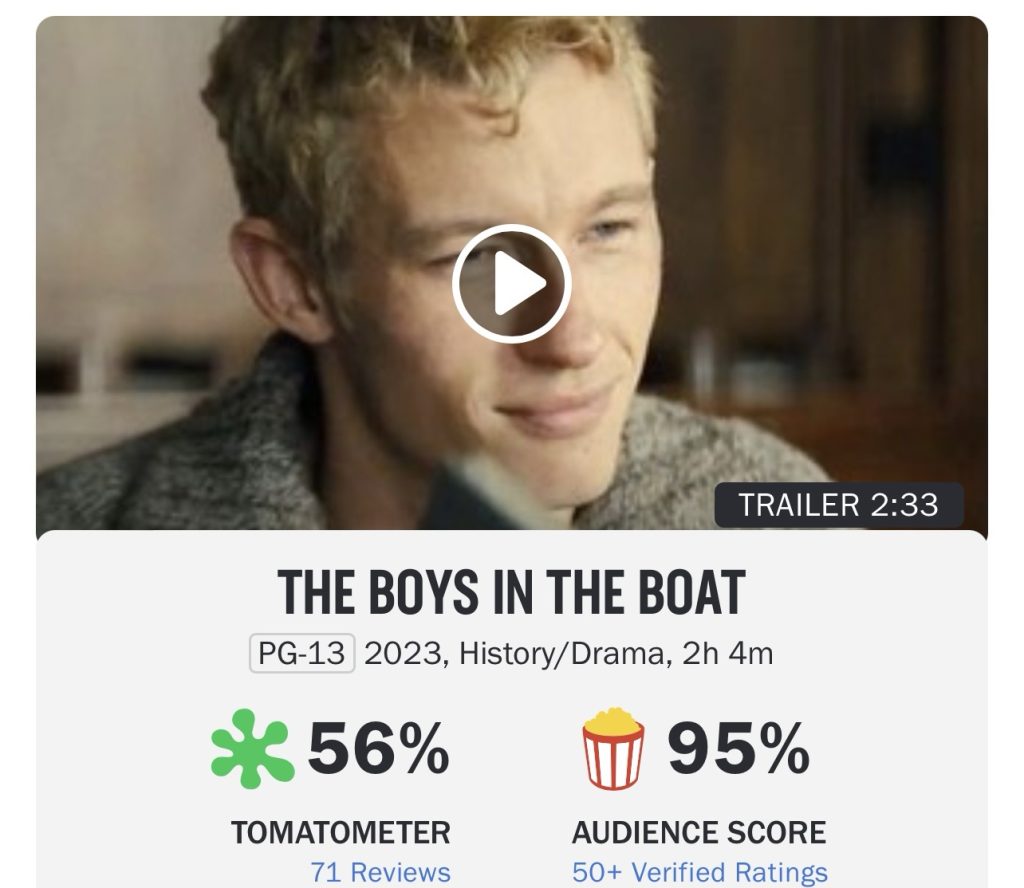
The shithead critics who’ve pissed all over GeorgeClooney‘s TheBoysintheBoat — easily his best directed film since GoodNight andGoodLuck — havebeenthemselvespissedon by Joe and Jane Popcorn.
Good for this — Clooney’s underdog-vs.-overdog Olympic sports film is familiar but elegant — a confident effort that believes in itself and presents grace and simplicity for the virtues they’ve always been.
The difference is that critics are hunguponracialsignage (i.e., the woke comintern has instructed them to regard any all-white, non-diverse movie that isn’t about building the A-bomb…they’ve been ordered to regard such films askance) and Joe and Jane simply aren’t distracted by same…they’re just watching the movie and going “hmm, yeah, pretty good.”
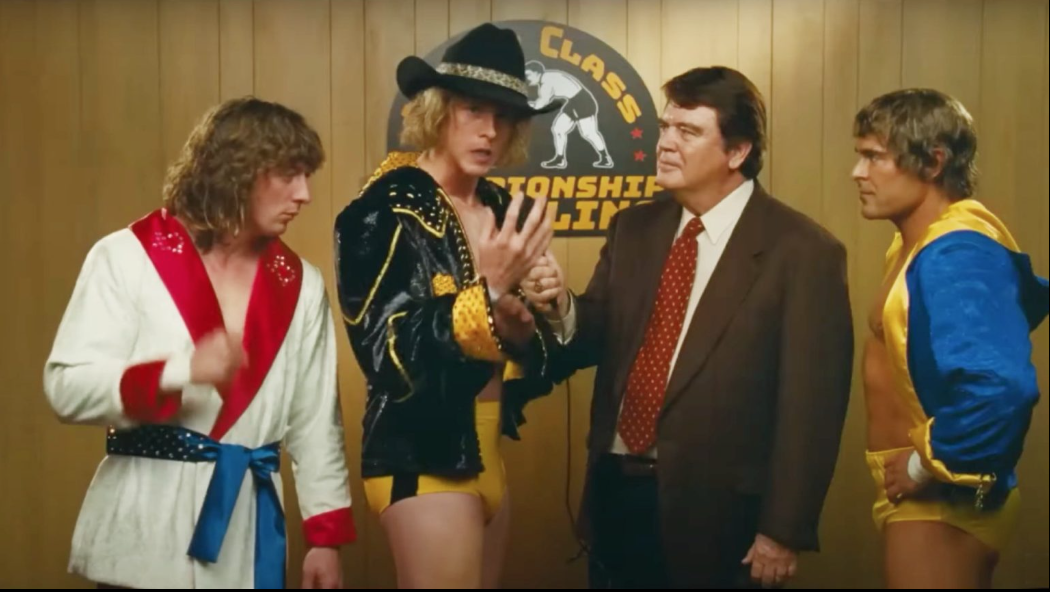
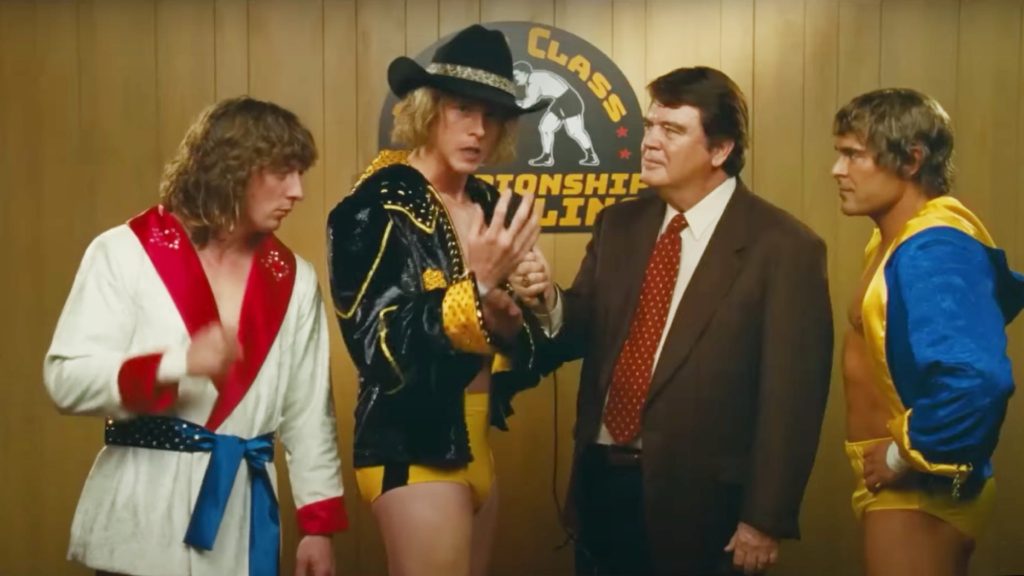
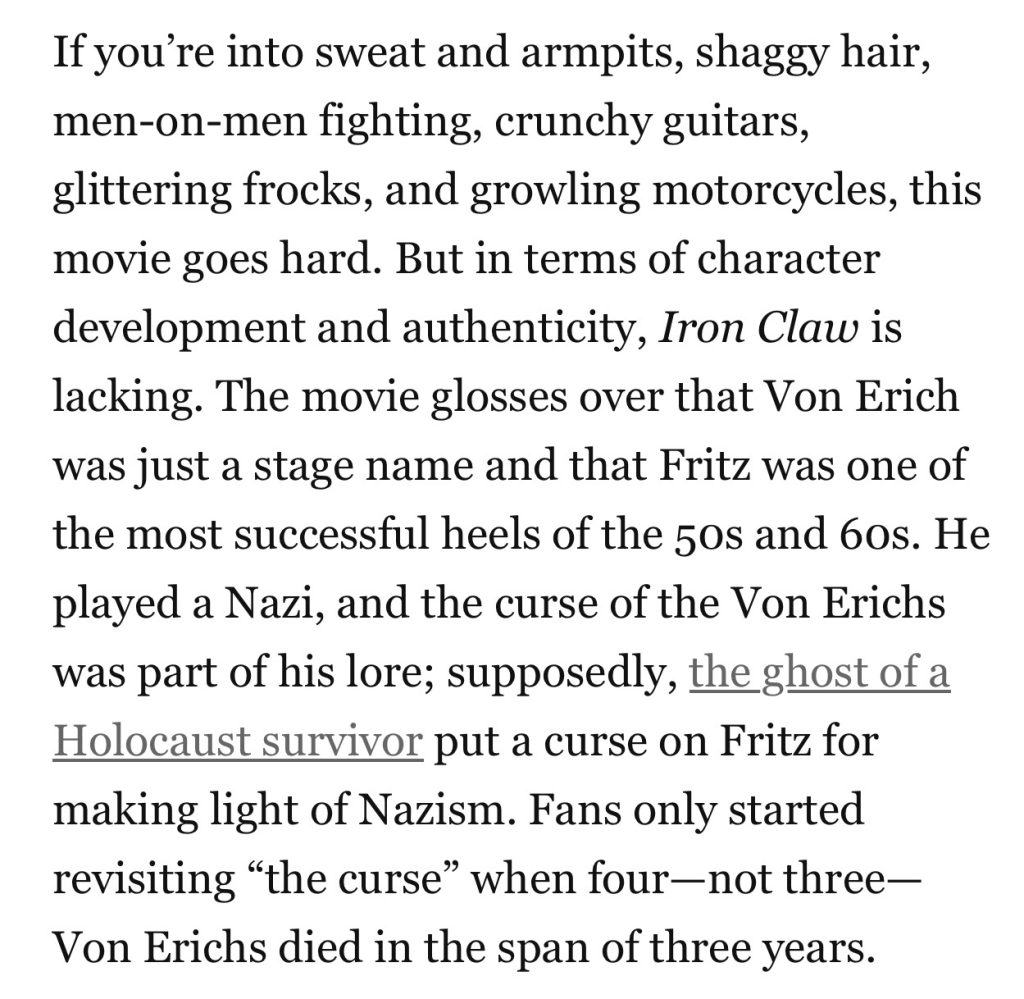
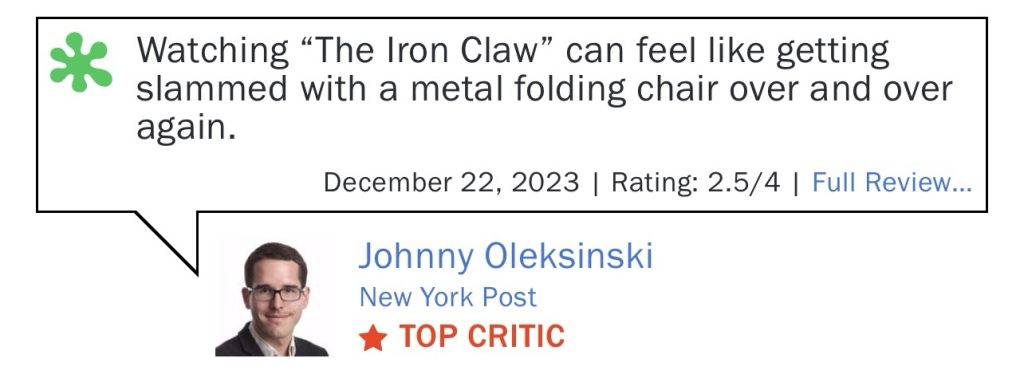
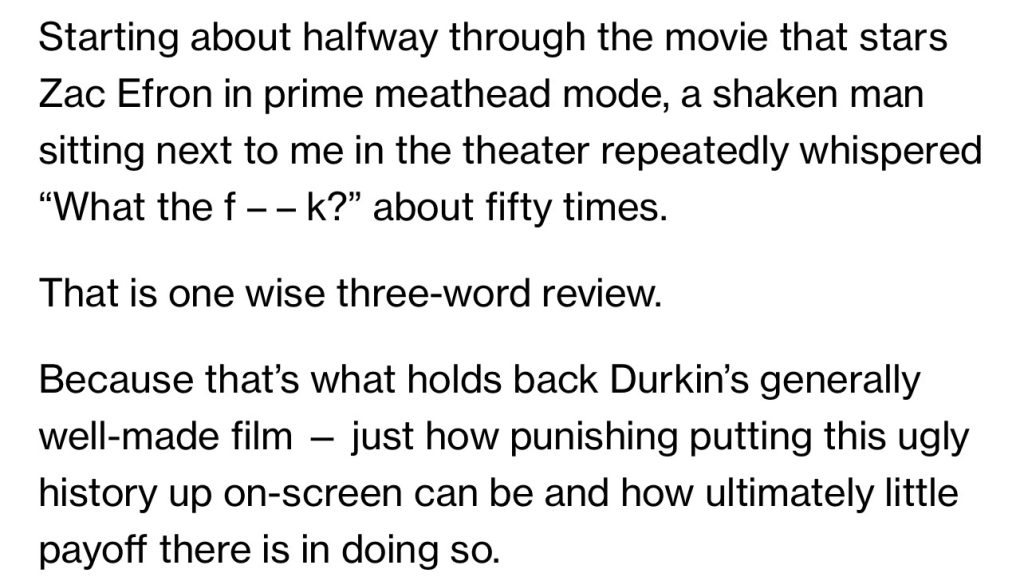
There’s no disputing that TheIronClaw is coarse, bruising and emotionally shameless — a death-trip family flick with an arch-villain of a paterfamilias (Holt McCallany’s Fritz Von Erich) whose malice is barely addressed by his sons and never confronted.
And all of it colored by the fraudulence of the “sport” of wrestling itself — a rancid charade that makes you want to barf or at least turn away.
And the grotesque, eye-rolling spectacle of one son after another almost comically succumbing to the black void like Radio City Rockettes dancers performing choreographed splits…it’s somewhere between nauseating, hilarious and ludicrous.
There’s another thing that’s beyond dispute, and that’s the fact that those who are earnestly praising this beyond-bizarre, blue-collar soap opera should never, everbetrusted.
I’m dead serious — the critics and HE commenters who’ve given Sean Durkin’s film a gold star and a back rub are dishonestpeople, or at the very least completely unmitigated and certainly undisciplined by what most of us would call “taste”.
For the rest of their lives these knaves, these one-eyed jacks, these human-sized hunks of gravel will have to answer for their praise for this garbage dump of a film…it will stalk them in perpetuity.
Incidentally: Before yesterday’s screening of TheIronClaw I hadn’t realized how short TheBear ‘s Jeremy Allen White is. The guy is only 5’ 7”, or seveninchesshorter than the late Kerry Von Erich (whom he plays in the film) and an inch shorter than Humphrey Bogart.