Speaking as an old-time journalist acquaintance of Robert Towne, whom I occasionally visited and spoke to during the early to late ’90s, I felt a bit jarred by a 2.12 N.Y. Times review of Sam Wasson‘s “The Big Goodbye.” Specifically by a statement written by Mark Horowitz, to wit: “No Polanski, no Chinatown.”
The thought is that Towne’s screenplay of Chinatown (of which there were many, many drafts) would have stayed a screenplay without Polanski’s input. He and Towne collaborated for several weeks, during which time Polanski insisted on cutting away much of the sprawl and specificity of Towne’s 1937 detective yarn, as well as using as a dark, downbeat ending.
As Chinatown production designer Richard Sylbert once remarked, “The point is the girl dies…that’s [Roman’s] whole life.” Horowitz writes that Sylbert might have added, “And the monsters win.” In Towne’s original Chinatown drafts Evelyn Mulwray doesn’t die and in fact kills her father, the evil tycoon Noah Cross.
I called Towne a short while ago to ask if he has anything to add or qualify or dispute. He said a few things but under the cloak of privacy. It’s obviously Towne’s call to speak out or be silent, but I were in his shoes I would send a response to the N.Y. Times. I can at least state that from his perspective the “no Polanski, no Chinatown” equation is a less than fully comprehensive summary, but I hope Towne chooses to post his recollections in some specific, chapter-and-verse fashion before too long.
Last night I finally saw Nat Faxon and Jim Rash‘s Downhill (Searchlight, 2.14.20), which is a fairly straightforward remake of Rubin Ostlund‘s Force Majeure (’14). Downhill is almost a half-hour shorter than the ’14 version, but otherwise I found it better than decent — adult, well measured, emotionally frank, well acted and cunningly written. (Faxon and Rash shared screenplay credit with Jesse Armstrong.)
It’s not a burn, it’s not about a “black and white situation” (as one of the less perceptive characters puts it) and it provides ample food for thought and discussion.
Both films conclude that a father running from an impending disaster (i.e., a huge avalanche) without trying to save or protect his wife and kids is a bad look. Which of course it is. Both films condemn the dad in question (Will Ferrell in the newbie, Johannes Bah Kuhnke in Ostlund’s version) and more or less agree with the furious wives (Julia Louis Dreyfus, Lisa Loven Kongsli) that dad should have (a) super-heroically yanked the wife and kids out of their seats and hauled them inside in a blink of an eye or (b) hugged them before the avalanche hit so they could all suffocate together.
Hollywood Elsewhere says “yes, it’s ignoble for a dad to run for cover without thinking of his wife or kids,” but I also believe that instinct takes over when death is suddenly hovering. I also feel that Dreyfus and the two kids acted like toadstools by just sitting there on the outdoor deck and hoping for the best.
Question for Dreyfus and sons: A huge terrifying avalanche is getting closer and closer and you just sit there? You have legs and leg muscles at your disposal, no?. A massive wall of death is about to terminate your future and your reaction is “oh, look at that…nothing to do except watch and wait and hope for the best”?
Both films film basically ask “who are we deep down?” They both suggest that some of the noble qualities we all try to project aren’t necessarily there. But Rash and Faxon’s film also says “hey, we’re all imperfect and yes, some of us will react instinctually when facing possible imminent death. So maybe take a breath and don’t be so viciously judgmental, and maybe consider the fact that tomorrow is promised to no one so just live and let live.”
I was especially taken by Downhill‘s spot-on philosophical ending (i.e., “all we have is today”). Seriously, it really works. I came to scoff at this film (due to the less-than-ecstatic Sundance buzz) but came away converted.
Dense, complex and bursting with stylistic pizazz, the trailer for Wes Anderson‘s The French Dispatch (Searchlight, 7.24) conveys some of what the film is about. What it’s mostly about, basically, are visual compositions of fine flavor and aesthetic precision. In color and black and white, and in aspect ratios of 1.37:1 and 2.39:1 a la The Grand Budapest Hotel.
Also in the vein of Budapest, it’s about a distinctive institution that peaked in the mid 20th Century and then fell into ruin or hard times. To quote my own Budapest Hotel review, it’s “a valentine to old-world European atmosphere and ways and cultural climes that began to breath their last about…what, a half-century ago if not earlier.”
Story-wise, Dispatch is an American journalism film, oddly set in a second-tier French city of the ’50s and ’60s, except nobody seems to speak much French. It’s an homage to a New Yorker-ish publication, but with a Midwestern heart-of-America mindset. It tells three stories of headstrong American journalists reporting and writing about three big stories, one of them having to do with the French New Left uprising of May ’68. Otherwise the historical context…well, I’m working on that. Timothy Chalamet‘s Phil Spector hair is a stand-out.
Wiki boilerplate: “The film has been described as “a love letter to journalists set at an outpost of an American newspaper in a fictional 20th-century French city”, centering on three storylines. It brings to life a collection of tales published in the eponymous The French Dispatch. The film is inspired by Anderson’s love of The New Yorker, and some characters and events in the film are based on real-life equivalents from the magazine. One of the three storylines centers on the May ’68 student occupation protests, with Timothee Chalamet and Lyna Khoudri‘s characters being two of the student protesters.
Speaking in April 2019, Anderson said, “The story is not easy to explain, [It’s about an] American journalist based in France” — Bill Murray‘s Arthur Howitzer Jr., the editor of The French Dispatch, based on Harold Ross, the co-founder of The New Yorker — “who creates his magazine. It is more a portrait of this man, of this journalist who fights to write what he wants to write. It’s not a movie about freedom of the press, but when you talk about reporters you also talk about what’s going on in the real world.”
Obviously locked for the 2020 Cannes Film Festival.
With a new 2K restoration you’d also presume that a Criterion Bluray would be in the pipeline, but I can’t find hide nor hair. I’ve done some basic searches…zip. A publicist friend says it’s viewable via TCM On Demand — haven’t been able to find it there either. I’m sure this is all my fault, and not that of distributor Janus Films.
All I know is that I’ve been repeatedly admonished by Tatyana for not seeing it, and the reprimands aren’t going to stop until I do.
If Bernie Sanders wins the Democratic nomination, our deranged and grotesque authoritarian crime-boss president will almost certainly be re-elected, and this country will be saddled with a political and cultural tragedy of increasing proportions.
This is not theory, not maybe — it’s real. How can Democrats be so rock stupid as to not see the tragedy that’s currently unfolding and taking shape? The republic is splitting, cracking apart. The end of civic sanity and reason is nigh. And it’s like we’re all covered in a kind of slow-motion glue.
The untested Sanders (a virtual babe in the woods on the national stage) is electoral death. He won’t just get knifed and bloodied by the Trump smear machine — he’ll probably get creamed a la Jeremy Corbyn and George McGovern.
Can anything prevent this nightmare? Not if African-American voters have anything to say about it, and of course they will starting with the South Carolina primary.
Pete Buttigieg recently connected with moderate suburban Iowans, and could theoretically do the same countrywide in the general. But AAs (particularly your older-demo homophobes) are apparently determined to sit on their hands rather than support him. (One more time — thanks, guys!) And of course Bernie bruhs and other progressives hate Pete’s guts. Except Pete or someone like him — a sensible, practical-minded, non-scary moderate liberal or left-centrist — represents the only shot at beating Trump. Who else could become the prime banner-carrier for this kind of approach at this point? Biden, Warren and Klobuchar are too low in the polls — they have no serious heat. Ditto Bloomberg and Steyer. It’s down to Pete v. Bernie, except Bernie is more or less Corbyn.
Filed on Sunday, 2.9 by London Times correspondent Josh Glancy: “At a ‘politics and eggs’ event on Friday morning in Manchester, New Hampshire, Bernie Sanders faced a friendly crowd, who applauded his familiar spiel about the ills of Wall Street, Donald Trump and big pharma. But one voter, Lenny Glynn, had a question.
“’There’s a lot of people in this room that share your anger, your anxiety and your rage,’ Glynn said. ‘But there’s a question in a lot of our minds. Jeremy Corbyn, the leader of the British Labour Party, who is very similar ideologically and politically to you, just took them to the worst defeat they’ve had in half a century. How can you assure us that you would not face the same onslaught?”
N.Y. Times columnist Frank Bruni, filed on 2.8: “You can analyze Sanders and assess his prospects in terms of how liberal many of his positions are: the end of private health insurance, the dismantling of the Immigration and Customs Enforcement agency, free tuition at public colleges regardless of a student’s economic circumstances. By that yardstick he’s Corbyn, and, in my view, a hell of a general-election risk.”
Tip of the hat to Collider‘s Scott Mantz for being 91.67% correct in his Gold Derby balliot, and particularly for having won a $40 bet from Collider‘s Jeff Sneider over last night’s Parasite triumph. Below is a 1.29 Collider chit-chat between Mantz, Sneider and Perri Nemiroff. Start at 6:15.
Perri Nemiroff: “I do think that the top two on many of the ballots are going to be 1917 and Parasite. There’s little to no criticism on those compared to some of the others…” Jeff Sneider: “You’ve gotta be crazy! ‘Little to no criticism about Parasite‘? You’re wrong. That’s a fact — you’re wrong.” Nemiroff “In the voting community. I know you didn’t like it as much as most.” Scott Mantz: “But most did.” Nemiroff “Especially when you compare the critics of Parasite to the criticism we’ve seen about some of the other films. They’re much more divisive and..” Jeff Sneider: “What film had the most criticism last year? What film?” Scott Mantz: “Green Book.” Sneider: “Did it win Best Picture?” Mantz: “Yes.”
Sneider: “Scott, you just said you think Bong’s gonna win Best Director?” Mantz: “Yes.” Sneider: “And you think Parasite‘s gonna win Best Picture? Mantz: “Yes.” Sneider: “And you think it’s gonna win Best International Feature?” Mantz: “Of course! Sneider: “So you’re just going all in on Parasite? Mantz: “I’m all in.” Nemiroff: “That’s a dangerous guesstimate.” Sneider: “I would bet you any amount of money it’s not gonna win all three of these awards.”
[$20 is wagered; later on it’s doubled to $40]
Nemiroff: “You’re in so much trouble now. Sneider: “A bad bet.” Nemiroff: “Parasite could be Best Picture or Best Director in addition to Best Int’l Features, but it’s not gonna win all three.”
I was understandably wary of Birds of Prey the other day. I was influenced by the trailer and Variety‘s Owen Gleibermandeclaring that it “isn’t pretending, for a single moment, to cast a spell of poetic awe” but is nonetheless “a compellingly novel popcorn jamboree.” I deduced that Cathy Yan‘s film would be about “enraged fuck-all nihilism and, in a certain social-undercurrent way, anti-brute-male revenge porn…savage winks and ten times the necessary emphasis!”
So much for imprecise, second-hand observations. Last night I caught Birds of Prey at the Grove, and it ain’t half bad for what it is.
It’s not my cup but any fair-minderd cineaste would have to agree that it’s a bracingly vigorous, high-style, toxic-male-busting romp.
Here’s how I put it this morning to a critic friend (but understand that the following contains a mild spoiler about the ending, which, trust me, is no big deal in the greater scheme):
HE to critic pally: “I wasn’t caught up or deeply moved or anything, but Yan shows real vigor and pizazz as far as this kind of cartwheeling, slam-bam, extended-DC-universe material allows. Very nimble and enterprising choreography and camera work. Lots of visual invention and verve.
“It’s basically formulaic junk, of course, but I dearly loved that each and every male bad-guy character is dispatched with a few savage blows. Whomped and whoofed and slammed on the pavement. Or thrown from a car. Or shot. Or kicked in the face.
“Does Margot Robbie‘s Harley Quinn appear to be big or swift or musclebound enough to knock these guys over like so many bowling pins? Of course not! Do her fighting sisters — Mary Elizabeth Winstead‘s Huntress, Jurnee Smollett-Bell‘s Black Canary, Rosie Perez‘s Renee Montoya (a cop) and Ella Jay Basco‘s Cassandra Cain — possess some kind of special superhero combat aptitude a la Bruce Lee on steroids? Well, yeah, sort of…if you wanna believe that. But I love the bullshit!
Important point: Birds of Preylies, of course, by declaring that it’s about “The Fantabulous Emancipation of One Harley Quinn.” Because it’s really about the bonding of five tough-chick desperadoes into a kind of D.C. Amazon Justice League. Or, in Quentin Tarantino-ese, “Fox Force Five.”
This teamwork aesthetic finally manifests at the 90-minute mark when Harley says to the other four “we’ll be better off facing this situation together.” Whoo-hoo! Social metaphor!
But then (an∂ here comes the spoiler) the movie completely reverses itself in the last four or five minutes by having Harley and Cassandra Cain (short, round-faced, maybe 12 or 13 years old) abandon their sisters and rumble off in their yellow Jaguar. Meaning that the D.C. Amazon Justice League of five (which was a thing for maybe 12 or 13 minutes) has been reduced to Fox Force Three.
What a betrayal of feminist “stand tall together and watch each other’s back”! It takes 90 minutes for these five desperadoes to join forces, and then Harley flips the bird and goes off on her own 13 minutes later. C’mon!
WATCH: As tensions rise in the 2020 race, @SRuhle sat down w/ @PeteButtigieg who says “the bulk of credit for the achievements of the Obama administration belong with President Obama” in an interview that airs tomorrow at 9am ET on MSNBC. pic.twitter.com/N5OyLHYblz
This was my idea (and probably a lot of other people’s idea) of an elegant acceptance speech. I love everything Jack did that night — the little dance on the way to the podium, thanking all those friends and collaborators, the conveying of genuine humility, not getting overly emotional. And God, I really miss that deep, crackly cigarette voice.
Last night I watched Alexandre O. Philippe‘s Leap of Faith, a 105-minute doc about William Friedkin and the making of The Exorcist. Assembled from a marathon six-day Friedkin interview, the 84 year-old director passes along fascinating story after story about the development, casting, filming and editing of his 1973 classic.
The film premiered at last September’s Venice Film Festival, and it just played at Sundance ’20. I was interested because I was a huge admirer or Philippe’s Memory, a saga of the making of Ridley Scott‘s Alien, which I saw during Sundance ’19.
Leap of Faith (which will probably get some kind of minimal theatrical play before going to streaming) is very good stuff. It held me tight and firm — I relaxed and felt great start to finish. As a longtime Exorcist fan (I’ve seen it 10 or 12 times, the last two or three on Bluray), I eat this shit right up.
Friedkin (known in his heyday as “Hurricane Billy”) is a first-rate raconteur — always has been. He tells it and sells it. And man, what a story. He was between 37 and 38 during the shooting of The Exorcist in ’72 and early ’73, and it was the greatest time in the history of Hollywood to be a hotshot whirlwind helmer. All the signs were favoring.
I loved all the stories in which Friedkin told this and that Exorcist collaborator that their ideas or acting weren’t good enough. Saying “no” over and over again to this or that possibility is partly what strong directing is about. There are always hundreds of mediocre or underwhelming ideas thrown at a director, and he/she has a duty to say “no” to roughly 98% of them.
I especially loved Friedkin’s riff on a certain “grace note” portion in the film (the non-essential but haunting passage in which Ellen Burstyn walks through Georgetown on a crisp fall day as “Tubular Bells” plays on the soundtrack). And I was intrigued by Friedkin’s concluding thought, which keys off footage of Kyoto’s gardens, about the essential solitude and loneliness that we all have within.
But since Philippe is encouraging this kind of thing, I was amazed that Friedkin never even mentions, much less explores, the central social metaphor of The Exorcist.
The story is about the young daughter of a famous and wealthy movie actress succumbing to demonic possession — some adjunct of the devil literally occupying and ravaging her body and soul. But in a broader social upheaval sense this kind of thing was happening a lot in the mid to late ’60s. Middle-aged parents of that era were contemplating the anti-traditional, in some cases shocking behavior of their teenage or college-age kids (longer hair, frank sexuality, pot and hallucinogens, anti-government protests) and wondering what had happened to them. Who is this person? What dark social forces have turned my son/daughter into someone I barely recognize, much less feel any rapport with?
William Peter Blatty’s 1971 novel came out of this social earthquake, and anyone who says that late ’60s cultural convulsions weren’t a seminal influence in the creation of this horrific tale is either brain-cell deficient or lying. How could Friedkin not even mention this?
And as long as he’s telling fascinating tales, why not mention the Ted Ashley-Ellen Burstyn story that he passed along in his 2013 book “The Friedkin Connection“?
Issur Danielovitch, otherwise known as Kirk Douglas, passed today age 103. Cheers, salutes and celebrations for a truly legendary fellow — an ego-driven, headstrong, no-nonsense hardhead, thinker and studly swaggerer during his day. A real pusher, doer, striver. It’s funny but all of that hard-nosed stuff has fallen away now that he’s left the earth, and all I’m hearing in my head right now is Alex North‘s Spartacus overture.
Douglas was one of the first male superstars to adopt a persona that was about more than just gleaming white teeth and manly heroism, although he played that kind of thing about half the time. But Douglas also dipped into the dark side, portraying guys who were earnest and open but hungry, and who sometimes grappled with setbacks and self-doubt and hard-fought battles of the spirit.
Douglas’s peak years as a reigning superstar and a producer-actor known for quality-level films ended 56 years ago with his last steady-as-she-goes lead in a fully respected film — John Frankenheimer‘s Seven Days In May (’64).
Douglas kept working and writing and flooring the gas as best he could, but out of his 103 years only 15 were spent at the very top.
He broke through at age 33 as a selfish go-getter in Champion (’49) and then fed the engine with 19 or 20 high-calibre films — Young Man with a Horn (’50), The Glass Menagerie (’50), Ace in the Hole (’51), Detective Story (’51), The Big Sky (’52), The Bad and the Beautiful (’52), 20,000 Leagues Under the Sea (’54), The Indian Fighter (’55), Lust for Life (’56), Gunfight at the O.K. Corral (’57), the masterful Paths of Glory (’57), The Vikings (’58), The Devil’s Disciple (’59), Strangers When We Meet (’60), Spartacus (’60), Town Without Pity (’61), Lonely Are the Brave (’62), Two Weeks in Another Town (’62) and finally the Frankenheimer film.
Big stars will sometimes flirt with journalists from time to time. They’ll turn on the charm for a week or two and then “bye.” I was one of Douglas’s flirtations back in ’82, for roughly a month-long period between an Elaine’s luncheon thrown by Bobby Zarem on behalf of the yet-to-shoot Eddie Macon’s Run, and then the filing of my New York Post piece about visiting the set of that Jeff Kanew-directed film in Laredo, Texas.
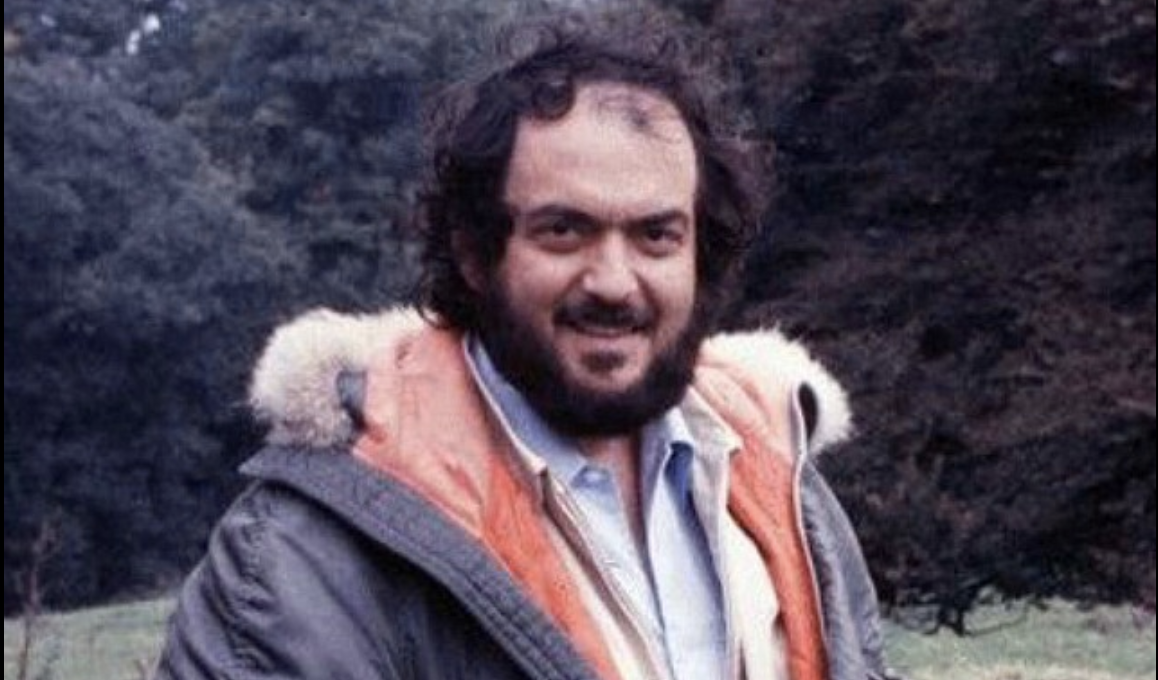
I hit it off pretty well with Douglas during the luncheon, in part because I talked about how much I admired Lonely Are The Brave and how Eddie Macon seemed to be roughly similar to that 1962 classic (i.e., a tough lawman pursuing a sympathetic, good-guy outlaw). Douglas talked about anything and everything at the luncheon, and I remember his being fairly wide-open with his impressions about Stanley Kubrick (i.e., “Stanley the prick”), with whom he’d famously partnered on Paths of Glory and Spartacus.
Our Laredo interview happened between takes. Neither of us regarded Eddie Macon’s Run as anything more than a servicable B-level programmer so we mostly discussed Douglas’s career hallmarks, and to my satisfaction he realized early on that I knew all about his good films. All those years and years of watching Douglas’s older films, and now all that TV time was paying off like a slot machine.
I told him I half-loved the foyer freakout scene with Lana Turner in The Bad and the Beautiful. And much of The Devil’s Disciple. And almost all of Champion. And every frame of Paths of Glory and Lust for Life and Lonely Are The Brave. And then I made an attempt at quoting his “eight spindly trees in Rockefeller Center” speech from Ace in the Hole. Douglas was drinking a bourbon (or something fairly stiff), and I remember his leaning forward at this point and saying, “You’ve really done your homework.”
What does this clip tell you about the intelligence and awareness levels of average voters out there?
Iowa primitive (female, 70something): “How come [the fact that Mayor Pete is gay] has never been brought out before?” Iowa precinct captain: “It’s common knowledge.” Iowa primitive: “I’ve never heard it!” HE observer (standing nearby): “It’s the content of a candidate’s character, yokel granny, and not his/her domestic predilection.”
Too many people don’t listen, don’t read, don’t scan the headlines, don’t watch newscasts and don’t want to know from nothin’, and yet they still make decisions. That’s why we are where we are right now. Uninformed voters have harmed this country before, and they will harm it again.