Dhont’s WWI Queer Romance Reps A Massive Miscalculation

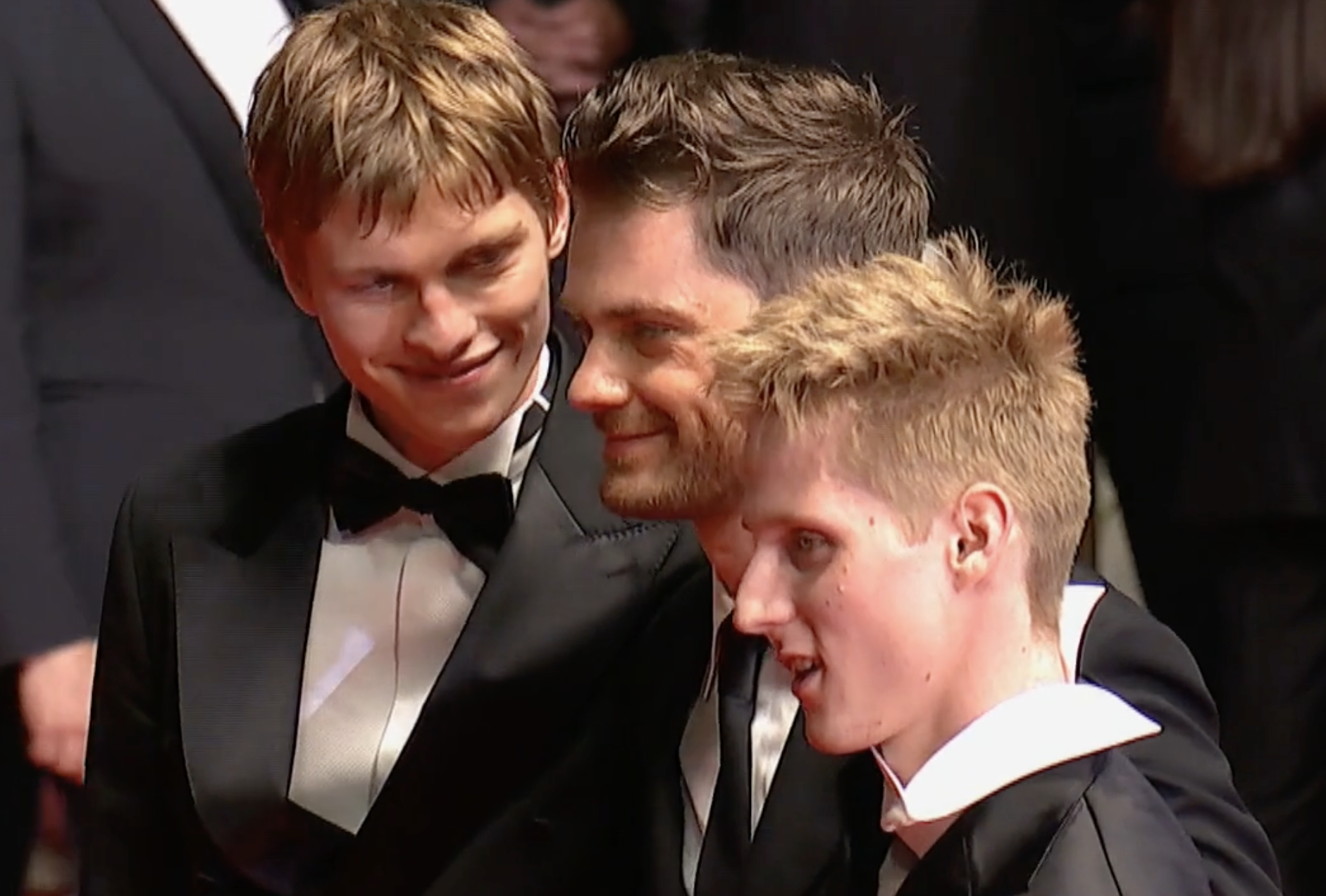
It breaks my heart to confess that Lukas Dhont‘s emotionally flamboyant Coward, set primarily in the horrific slaughterhouse of World War I trench warfare, has struck me as highly disturbing, disorienting and saddening.

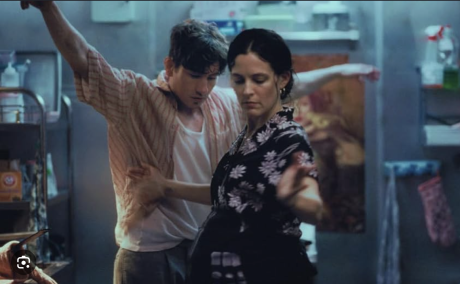
A queer romance set amidst the musical drag performances that took place behind the Belgian lines during the war, and more particularly about a profound attraction between closeted farm boy Pierre (Emmanuel Macchia) and son-of-a-tailor Francis (Valentin Campagne), a brazenly effeminate performer who leads the popular troupe of drag entertainers, whom Francis addresses as “ladies”…hold on, losing the thread.

For their spirit-lifting funhouse antics, offering a much-needed respite from the blood, mud and death of the front lines, Francis and his fellow performers are celebrated by the troops (only one or two convey homophobic spite) and, a bit curiously, by their uniformed Belgian commanders.

In his 5.21 review, Screen Daily‘s Tim Grierson, a Coward fan, admits that this reaction “probably runs counter to most viewers’ assumption about how such outrageousness would have been perceived during that era.” Do ya think so, Tim?

For as well crafted and sumptuously mounted as Coward obviously is, it’s a florid swing away from the understated poignance and powerful, less-is-more restraint that characterized Dhont’s first two queer love stories, Girl (’18) and Close (’22), both of which I was deeply moved by, especially by the latter.

After catching Girl at a Manhattan screening in December 2018, I described it as “the most assured, immersive and delicately effective drama about a transgender person that I’ve ever seen in my life, or am likely to see in the future”. Three and a half years later I became an even bigger fan of Dhont’s sophomore effort, a tragic teenaged love story that I called “a devastating grand slam” after seeing it in Cannes in May 2022.

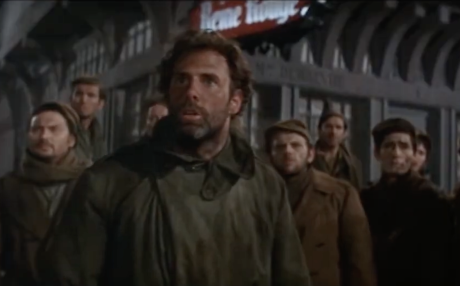
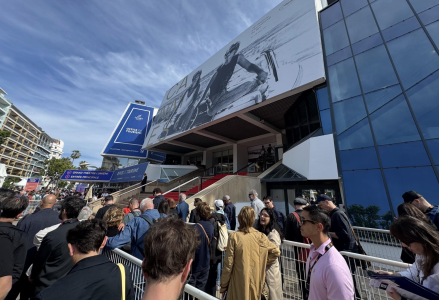
Cut to last night’s 10:15 press screening of Coward in the Salle Debussy, and my agonized, seat-shifting, watch-checking response. For Coward is basically a gay fantasia by way of (in my head at least) Stanley Kubrick‘s Paths of Glory — it’s Ralph Meeker‘s Corporal Philippe Paris meets Ryan Murphy‘s Glee meets Ru Paul’s Drag Race meets Ken Russell‘s The Boyfriend meets Mel Brooks’ “The French Mistake”.

Hollywood Reporter‘s David Rooney: “What really sinks Coward is the self-conscious grandiosity with which the director strains for lofty emotional peaks in moments that instead come off as hollow and artificial.”

Even from my limited fourth-row perspective, I noticed three or four walk-outs during the film’s final third. If you had told me before Coward began that seasoned journos would bail on a film by the obviously gifted Lukas Dhont, I would have been repulsed. But when I saw this with my own two eyes, I half-sympathized.

I was very upset (i.e., expressing myself in a less measured way) when I texted the following just after the screening:

“The Lukas Dhont [film] is a massive, appalling miscalculation — an embarrassing (to me) fiasco in which the bloody horror of World War I trench warfare is subsumed to what amounts to an opulent gay fantasia — a heartfelt, openly sexual love story that not only feels forced and fanciful, but one that dishonors the slaughterhouse realm of that awful war.”

Yes, this sounds like an old-fogeyish response but c’mon, man — I was there, taking it all in, and going “no, no, no” and asking myself “good God, what is this?”

Yes, there was that musical drag show that the Bridge of the River Kwai POWs put on for the troops as William Holden and Geoffrey Horne laid mines around the base of the Kwai bridge, but this? Harumphy patriarchal attitudes about flamboyant queerness surely ruled the roost 110 years ago, and I simply don’t believe that cheers and laughter among all (or even a significant majority) of the Belgian soldiers would have prevailed. Woke presentism has once again reared its head.

Imagine if Pierre and Francis had to submerge their feelings out of the usual old-school concerns. That would have been much more effective. Imagine if Francis didn’t behave like one of Ru Paul’s guests in each and every scene. “Over the top” doesn’t begin to describe his behavior. I felt heartened by a battlefield scene that shows Francis wounded and bloody and crying out “all is lost!” Thank God, I excitedly said to myself — at least this little creep is out of the film. But he’s back in the pink a few minutes later. My heart sank.

In the third act Francis confides to Pierre that he’s actually happy to be in the war realm because at least they can be together when none of their fellow soldiers is looking. Back in the normal civilized world they couldn’t be this expressive, he reasons. Fair enough, but I didn’t believe in their time-off, stolen-kisses moments for a second.

Coward not only condones Pierre’s cowardice (he stabs himself in the hand in order to avoid front-line duty) but cuts him a break when he deserts. None of those Matt Damon-ish feelings of fraternity with his fellow grunts for him! And then Dhont goes the extra mile by granting Pierre and Francis a happy epilogue finale.

Continuing text: “As someone who’s met and personally likes and admires Dhont and who respects the exquisitely refined Girl and Close, I’m in shock that he decided against applying his usual restraint by going with a campy, over-baked Ken Russell aesthetic (one particular Coward performance sequence reminded me of portions of Lisztomania and the grotesque birth-of-Venus opening of The Devils).

Coward is one of the most absurd, wildly miscalculated misfires of all time. Poor Lukas, who remains a gifted filmaker and who will move on to another project and then another and another, has grotesquely overplayed his hand. It’s not the end of the world and the sun will come up tomorrow, but as far as this grumpy horse is concerned, ‘welcome to the WWI gay follies!’ didn’t settle in with any degree of acceptance or comfort.”
Remember The Keepers

Over the last nine or ten days (5.12 to 5.21) I’ve seen more Cannes ’26 films than the ones I’ve written about. On paper HE’s policy has mostly been to hit the keyboard only about films that I’ve had strongly positive or negative reactions to, but I haven’t followed this regimen strictly.

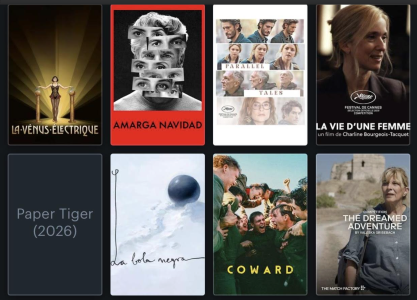
But the biggies so far are, in this order, Fjord, Fatherland, The Man I Love, Paper Tiger, The Beloved, The Match and (in my estimation at least) Parallel Tales. Seven in all. Plus one high-expectation effort I’ll be seeing tonight, Coward, from Lukas Dhont.

There was one film — Pierre Salavdori‘s The Electric Kiss, which I caught on opening night (5.12) — that I wrote about without any special ardor or disfavor.

I felt generally positive about Kantemir Balagov‘s Butterfly Jam, and said as much.

I adored Juan Cabral and Santiago Franco‘s The Match. I comme ci comme ca‘ed about Charline Bourgeois-Tacquet‘s A Woman’s Life so I wrote nothing. I hated Jane Schoenbrun‘s Teenage Sex and Death at Camp Miasma, and said as much. I saw Diego Luna‘s Ashes and felt next to nothing…couldn’t get it up so I let it go.

And then, two days after the festival began or on Thursday, 5.14, I saw the first masterpiece — Pawel Pawlikowski‘s Fatherland, I filed a rave review, and liked it so much that I caught a repeat showing the following morning (Friday, 5.15).

My approving response to Asghar Farhadi‘s Parallel Tales was a minority opinion, but I found it genuinely clever and intriguing and said so.

Radu Jude‘s The Diary of a Chambermaid wasn’t a negative, but for filing purposes a no-go. Somewhere between flat and unexceptional.

On Friday (5.15) I described Ryusuke Hamaguchi‘s All Of a Sudden (Soudain) as “a 196-minute film that is basically a slow-moving, didactic conversational instructional — a 21st Century counterpart to Jean-Luc Godard‘s Marxist instructional films (1967 to 1974).”

Later that day I endured Marie Kreutzer‘s Gentle Monster, but it seemed like another generically feminist “awful men” flick, this one concerned with a husband who’s been secretly earning extra income by sharing child-porn material. This comes to his wife’s attention via police investigation, but I didn’t find it dramatically persuasive, much less compelling.

The festival’s second big knockout, Rodrigo Sorogoyen‘s The Beloved, arrived on Saturday, 5.16. Javier Bardem‘s performance as a vaguely testy, emotionally simmering film director coping with a difficult if unacknowledged relationship with his 30something actress daughter (the excellent Victoria Luengo) struck me as brilliant. The film was my idea of a solid triple.

Later that evening the third serious triumph screened — James Gray‘s Paper Tiger. I filed a seriously ardent rave with an idea that it might win the Palme d’Or, or at least the Grand Prix award.

Later that evening I composed a generally pleasured response to Barnaby Thompson‘s Maverick: The Epic Adventures of David Lean….”wowed, massaged, comforted, reminded, elevated, amused…a career-profile doc that does everything you want it to do.”

And then came the festival’s fourth heavy hitter as well as the first (and so far only) grand slam — Cristian Mungiu‘s Fjord, which I called “a fascinating assault on socially progressive totalitarianism.” This has to be a major award winner, in my view a Palme d’Or slam dunk. Then again the denial-beset reactions from certain critics indicated that the jury might take a similar view so who knows?

The dual disappointments of Andrey Zvyagintsev‘s Minotaur and Pedro Almodovar‘s Bitter Christmas arrived on Tuesday, 5.19. I was more impressed by the moaning man incident than the Almodovar…sorry.

I was fairly astounded by the flat tedium of Emmanuel Marre‘s Notre Salut, which certain French critics have been praising among themselves.

Yesterday (Wednesday, 5.20) ushered in Mike Mendez‘s entirely pleasant and nourishing Dernsie along with Ira Sach‘s The Man I Love, in my book the festival’s fifth knockout and another possible Palme d’Or winner…maybe.

The curtain goes up on Lukas Dhont‘s Coward this evening at 10:15 pm…great expectations.

That’s 18 or 19 films so far (I haven’t mentioned Garance and one other) with another three or four to go. These include Hope, Machine Gun Kelly, La Biola Negra and The Birthday Party.

Once again, the keepers are Fjord, Fatherland, The Man I Love, Paper Tiger, The Beloved, The Match and Parallel Tales.

HE’s Nice-to-Oslo flight leaves late Saturday afternoon. The Oslo-to-JFK departs just after noon on Sunday.

“Dernsie” Does The Necessary Job

Three hours before Wednesday night’s The Man I Love screening, I caught a grade-A Bruce Dern tribute doc — Dernsie: The Amazing Life of Bruce Dern — at the Salle Bunuel.

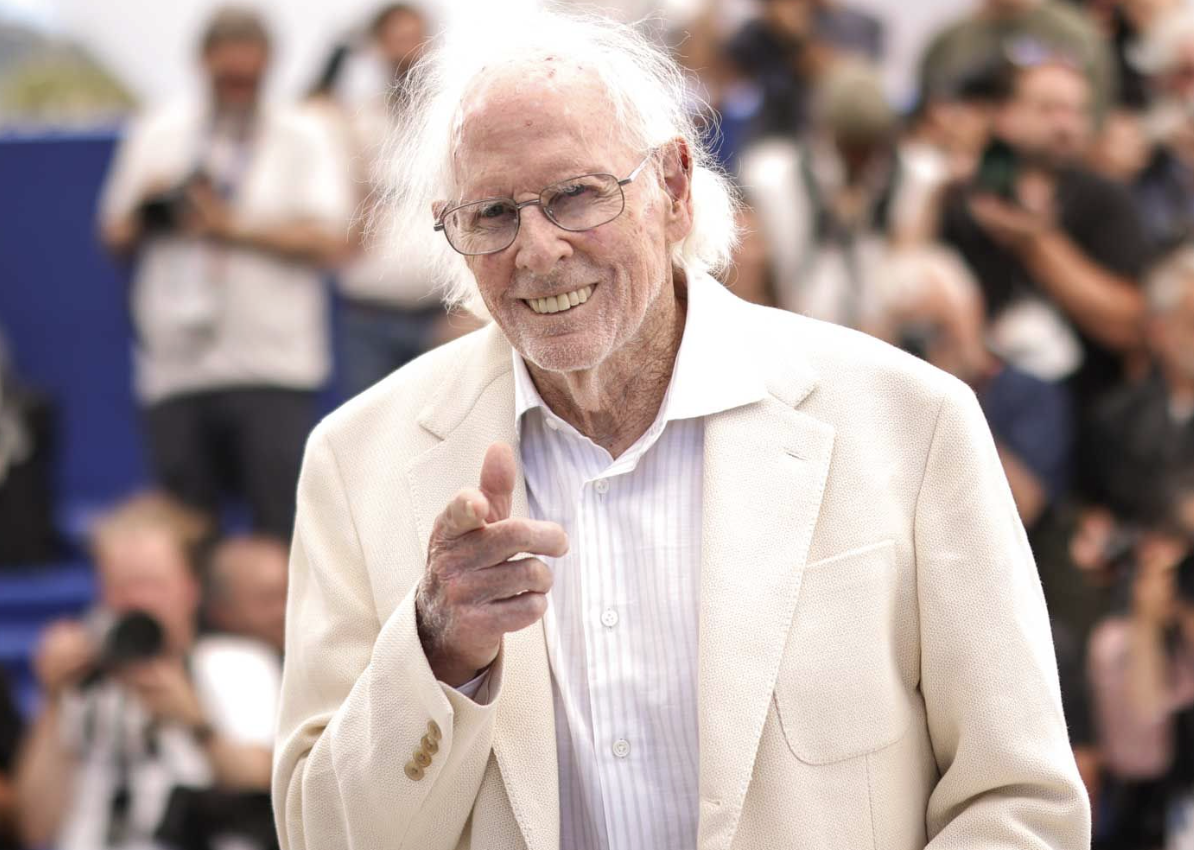
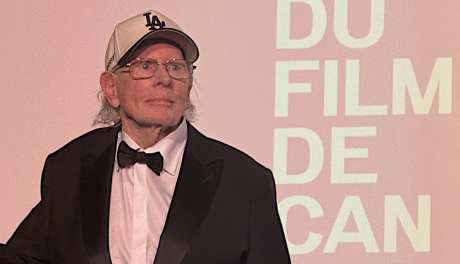
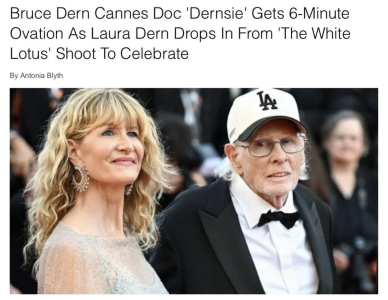
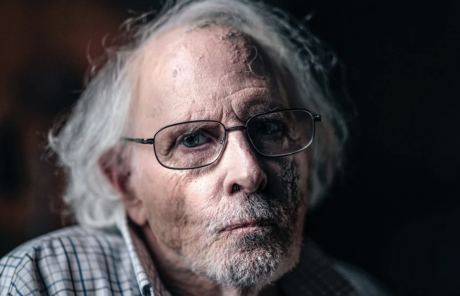
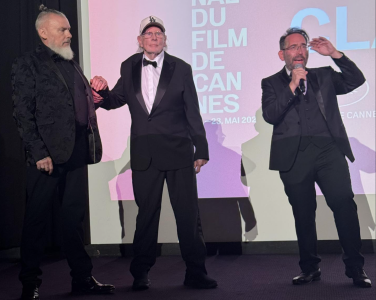
Dernsie is no one’s idea of a mindblowing film but is certainly a highly enjoyable stroll through a good man’s life. Plus the 89-year-old Bruce, whose legs are gone (two guys were holding him up as he walked to the small stage), took a bow and shared a few thoughts before the film began, and that was cool.

I’ve enjoyably chatted with Dern on two occasions (a 2004 press schmooze dinner at the Sundance Film Festival, a 2013 Cannes press junket for Nebraska). He’s a legendary raconteur, of course, and something told me during our Cannes chat that we could’ve continued for hours and hours.

I snapped Bruce when he took the Salle Bunuel stage, and I thought I saw a glint of recognition. Bruce has a kind, proud face.

Directed by Mike Mendez and lasting 111 minutes, Dernsie is one of those generally lively, colorful, “dutifully admiring portrait of a legendary fellow” films…beginning with an obligatory kiss-ass montage, moving into the historical-biographical section (90 or 95 minutes) and finishing up with another kiss-ass montage.

Dern played exactly one semi-lead in his life — the ornery, white-haired codger in Alexander Payne‘s Nebraska (2013). Except it wasn’t a semi-lead, not really — Dern’s codger was a strong character part, and he knew it. But the 2013 Cannes Film Festival jury gave him a Best Actor award, and that set Dern’s mind in stone. If Dern had chosen to campaign stateside for Best Supporting Actor, he would have easily won.

HE’s favorite Dernsie (i.e., seemingly improvised): During a sidewalk scene in The Laughing Policeman, an angry dude of color is staring hard and long at Dern’s racist detective. Dern reply: “What are you gonna do, eyeball me to death?”

Kicker Dern quote on abandoning his early theatre career in favor of Hollywood feature-film gigs: “The reason I never went back to the theater is because what we’re doing here” — capturing special dramatic moments on film or digital bits — “is forever.”

I arrived a bit earlier than necessary and the Salle Bunuel ushers, it seemed, made the earlybirds wait on their feet much longer than necessary….a good 45 or 50 minutes. They derive a certain kind of pleasure from dragging it out as long as possible. They glance at you from the sides of their eyes, silently asking “are you enjoying this endless standing?…heh-heh-heh.”

Dernsie costars many narrators and interpreters — daughter Laura Dern (who’s now acting in Mike White‘s currently-lensing fourth season of The White Lotus, which will use the Cannes Film Festival as a backdrop), directors Quentin Tarantino and Alexander Payne, fellow actor Walton Goggins, etc.

Almost every significant chapter in Dern’s career is covered by Mendez’s film, and it’s all flavored with Dern talk-throughs and interpretations, of course. A whole lot of fun.

Mendez misses one important footnote — Dern’s darkly comedic performance as Lt. Billy Byron Bix in Sydney Pollack‘s Castle Keep (’69). Bix is the leader of a small group of conscientious objectors, and during a conversation with Peter Falk, a soldier who puts on a white apron and becomes a baker for a short time, they all hum a kind of religious hymn. Dern, I realized, was clearly aware of the absurd, dryly comic nature of Castle Keep, and for me his performance was the first conveyance that he was a wise hipster type.

Four years later Dern finally broke out of playing generically intense, crazy-eyed villains. It happened when old pal Jack Nicholson got him a costarring role in Bob Rafelson‘s The King of Marvin Gardens (’73).

HE’s roster of films containing the best Dern performances: The Trip, Castle Keep, Will Penny, They Shoot Horses, Don’t They?, Drive He Said, The Cowboys (drilled John Wayne!), Silent Running, The Laughing Policeman, The Great Gatsby, Family Plot, Black Sunday, Coming Home, That Championship Season, Nebraska.

Deepest Cavern of Hell

Jane Schoenbrun‘s Teenage Sex and Death at Camp Miasma is an ironically conceived, self-referencing, garbage-level “slasher film” in quotes.

It was shot by Eric Yue with the intention of looking low-rent and generally shitty. It constantly, relentlessly praises the joys and comforts of junk food. I was in hell. I sat there muttering “go fug yahselves, stab yahselves, obliterate yahselves.”

The irony element doesn’t excuse the fact that Teenage Sex and Death at Camp Miasma is essentially a flat, empty, boring serving of spiritually-barren, freeze-dried slasher crap.

It was made to not only tickle and engage the fans (largely the under-45 queer-trans community) but to alienate and anger people like me, and in this respect has clearly succeeded.

I am very, very sorry that I spent 112 minutes in the presence of this hellish creation this morning. Any film from Un Certain Regard is presumed to be challenging or alienating in certain ways, but this…holy effing moley.

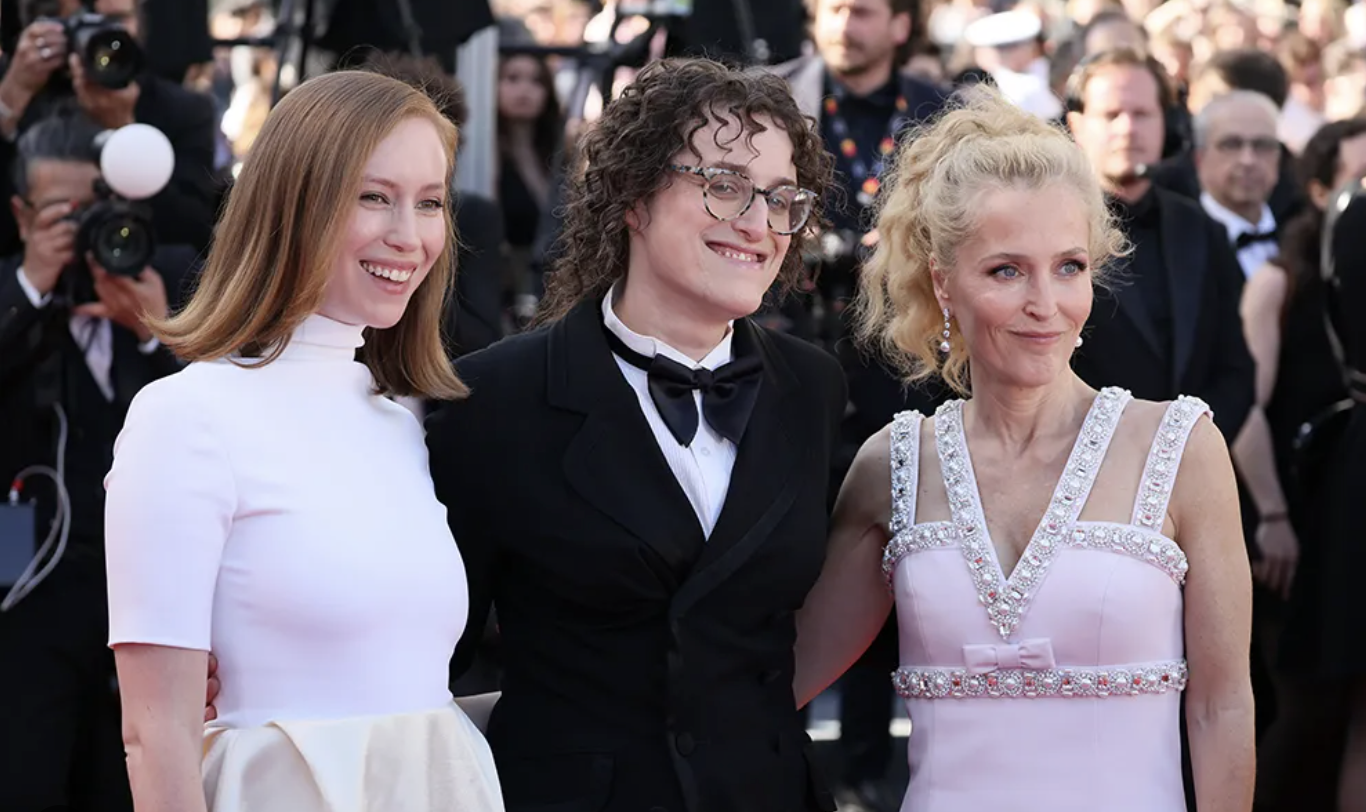
It’s essentially a two-hander between Hannah Einbinder (Hacks) as “a young queer filmmaker hired to direct a reboot of the Camp Miasma franchise” blah blah, and poor Gillian Anderson as 50something Billy, a glammy blonde who not only starred in a previous Camp Miasma film but was consumed by the bullshit lore and theology blah blah.

The fact that Eva Victor, whose Sorry Baby I quite admired when I saw it here last year, decided to costar in this thing…it just sends me into a depression pit. Ditto poor Dylan Baker…what are you doing, man?

One idea of a truly agonizing nightmare, I’ve imagined, would be to suddenly find myself in Schoenbrun’s 39-year-old head and body. This would mean, obviously, that I would no longer be an individual, stand-alone dude in a conventional biological or spiritual sense but (gasp!) a “they”. Which, of course, would make me trans and non-binary or, in HE shorthand terminology, a transie.

This might also mean estrangement from the chilly, judgmental straights in my immediate circle, which I don’t believe in — live and let live, I say, It might also mean being “polyamorous with three or more partners”, to quote from Schoenbrun’s Wiki bio. It would also mean being “anti-capitalist” and “an enemy of Zionism and the Israeli genocide of Palestinians,” etc.

Imagine The Enveloping Pleasure

…of opening your kitchen window, pushing back the wooden French shutters and looking out at all this effing “waaaahhh“. The apartment is sound-insulated, of course, but just knowing this crap is out there…it’s a bit like living next door to Jurassic Park.

Ballad of a Pink Pelican

Against all odds, the Cannes Film Festival’s press ticketing system gave me a break this morning, abandoning its curious posture of blocking me from reserving a ticket to Kantemir Balagov‘s Butterfly Jam. I was suddenly allowed to attend this morning’s 10 am screening inside the Theatre Croisette (i.e., the basement forum beneath the JW Marriott)…great. Appreciate the largesse!

But no sooner did this happen when the system changed its mind and screwed HE over in a different way, denying me access to Sunday evening’s screening of Maverick, the David Lean documentary. And this was between 7:02 and 7:03 am this morning…thanks so much! I really hate this festival for pulling this shit.

I was surprised that I liked Butterly Jam as much as I did. That’s because it’s a kind of surreal ethnic fable…an oddly poetic, magical-realism thing about Circassian culture and cuisine…the general Circassian diaspora of northern New Jersey. (The 34 year-old Balagov is himself Circassian.) The film is set in and around Newark, New Jersey and Bergen County…God, what a miserable, environment…coarse, gunky, lower-depth vibes.

The central protagonist is Temir (Talha Akdogan), a 16 year-old wrestler with a heavy-set, bordering-on-fat physique, and who bears not the slightest resemblance to his father, Azik (the 33 year-old, warlock-eyed Barry Keohgan). They certainly don’t have the same kind of nose, and Akdogan’s eyes are dark and totally lacking that warlock quality.

Azik’s culinary specialty is “delens,” a traditional meat-and-cheese pie from Russia’s Kabardino-Balkaria region.

Azik’s pet name for his teenaged son is Pyteh, which means “little one.” Azik is a chef working in a struggling Circassian diner in Newark. 36 year-old Riley Keough plays his sister Zalya, the pregnant owner (co-owner?) of the diner.

The inciting incident is Azik being offered a job as top chef at a swanky new restaurant. Better pay, onward and upward, etc. But Azik, being an impulsive ethnic who’s unable to think and act in sensible, practical terms, manages to complicate this situation.

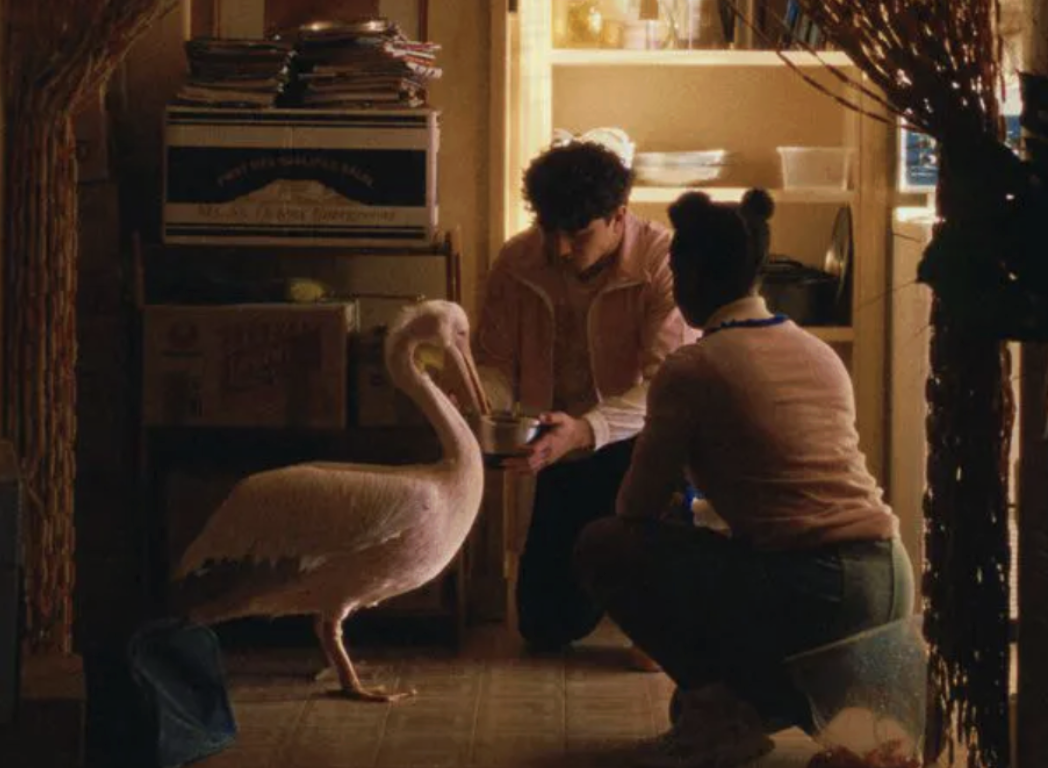
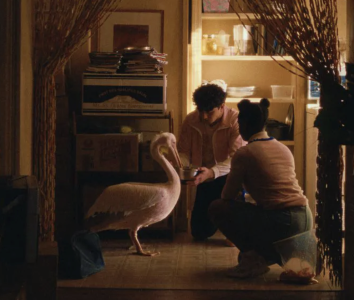
But smart career strategy isn’t the focus here — Jam is a film about all sorts of magical oddball elements by way of Circassian this and that…acne, wrestling, a pink pelican, the lore of Monica Bellucci, etc. Presuming that Butterfly Jam will play commercially in the U.S., I doubt if Joe and Jane Popcorn even know who Bellucci is, much less know her face, especially since she now looks 60ish.

I loved the pink pelican metaphor**, as well as the real bird itself. I didn’t get the acne-healing thing between Temir and real-life wrestler Jaliyah Richards. Keogh, for the first time, looks older than her years — she could easily be 40 or older. Keohgan is playing Temir’s father, as noted, although he looks several years older than 33 with those deeply etched eyebags resting upon his cheekbones. And yet in Sam Mendes‘ currently filming Beatle quartet Keoghan is playing Ringo Starr in his early to mid 20s. Go figure.

** I’m actually not sure what the metaphor actually amounts or alludes to.

The East Wing Ballroom Must Be Wrecking-Balled

But all the people cheering this coming scenario (myself included) must understand that as of 1.21.29 transies must leave minors alone, now and forever…and no more anti-white-male racism or feminist anti-male hostility (i.e., especially belittling young struggling, screen-obsessed males living in their parents’ basements), and no more accusing this or that person of racism in a screechy, hair-trigger manner, and no more ignoring the basic binary nature of gender and sexuality, and no more refusing to arrest hoodie-wearing shoplifters, and no more anti-common-sense woke crap in general…all of that excessive horseshit must come to an end.

Offer respect and you will get respect, and the nation may have a shot at decency and civility.

True Confession

Before today I’d never once seen even a portion of Elaine May‘s A New Leaf (Paramount, 3.11.71). But now I have. Two clips, to be exact.

It seems obvious that May’s deadpan black comedy was (and is) very well written as well as steadily, confidently paced (no hurry or worry), and that May and Walter Matthau had great, low-key fun as the two leads, and that Gayne Rescher‘s cinematography is most agreeably pro-level.

A 55th anniversary 4K restoration of A New Leaf will open at Manhattan’s IFC Center on Friday, 5.15.

It was well reviewed by all the top-dog critics (“The picture as it now stands is very funny indeed, but more charming than uproarious, and quite surprisingly romantic” — Molly Haskell), but Joe and Jane Popcorn weren’t in the mood or something.

Wiki excerpt:

“In what would become a hallmark for Elaine May, the film’s original $1.8 million budget shot up to over $4 million by the time it was completed. Shooting went 40 days over schedule, and editing took over ten months. Similar problems dogged her subsequent projects, Mikey and Nicky and Ishtar.

“During shooting, producer Howard W. Koch tried to have May replaced, but she had put a $200,000 (equivalent to $1.6 million in 2025) penalty clause into her contract, and he was persuaded to keep her.

Alternate versions:

“After May would not show Paramount Pictures a rough cut of the film ten months into editing, Robert Evans took away the film from her and recut it, although she had the right to approve the final cut in her contract. May’s version was rumored to run 180 minutes; Evans shortened it to 102 minutes. Angered by the alterations, May tried to take her name off the film, and unsuccessfully sued Paramount to keep it from being released.

“The original story included a subplot in which Henry discovers from the household accounts that Henrietta is being blackmailed on dubious grounds by lawyer Andy McPherson (Jack Weston), and another character played by William Hickey. Henry poisons both of them. This darkly casts Henry’s eventual acceptance of a conventional life with Henrietta as his ‘sentence.'”

Sight Unseen, I’ve Already Seen It

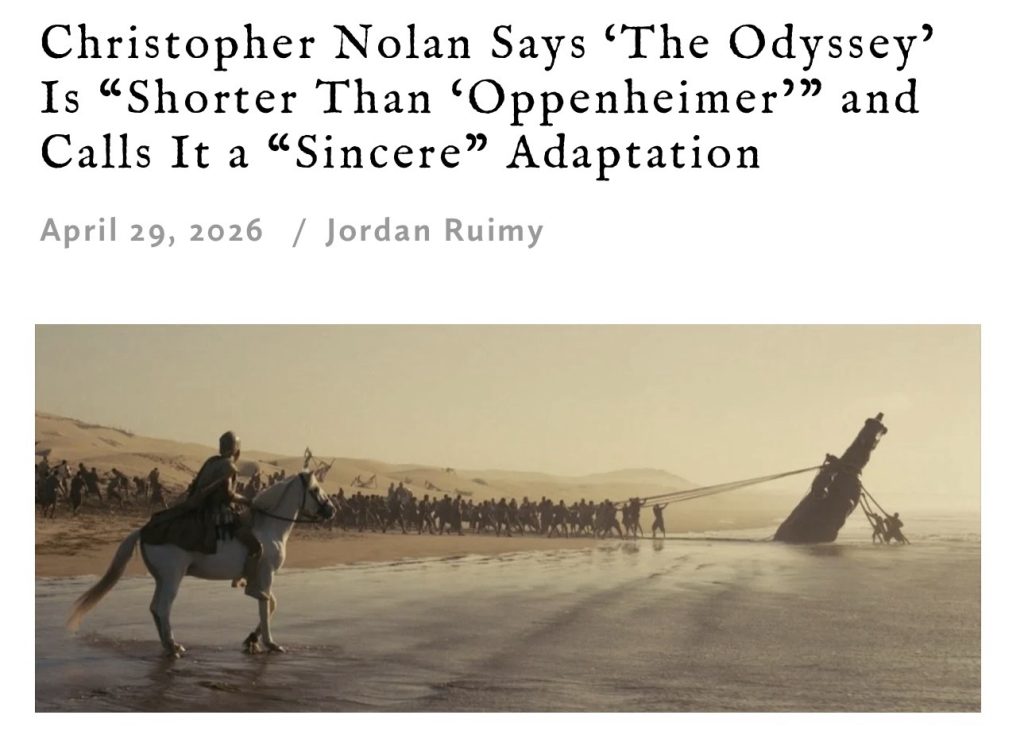
Or, as Luis Guzman said in The Limey, “You could see the sea out there if you could see it.”

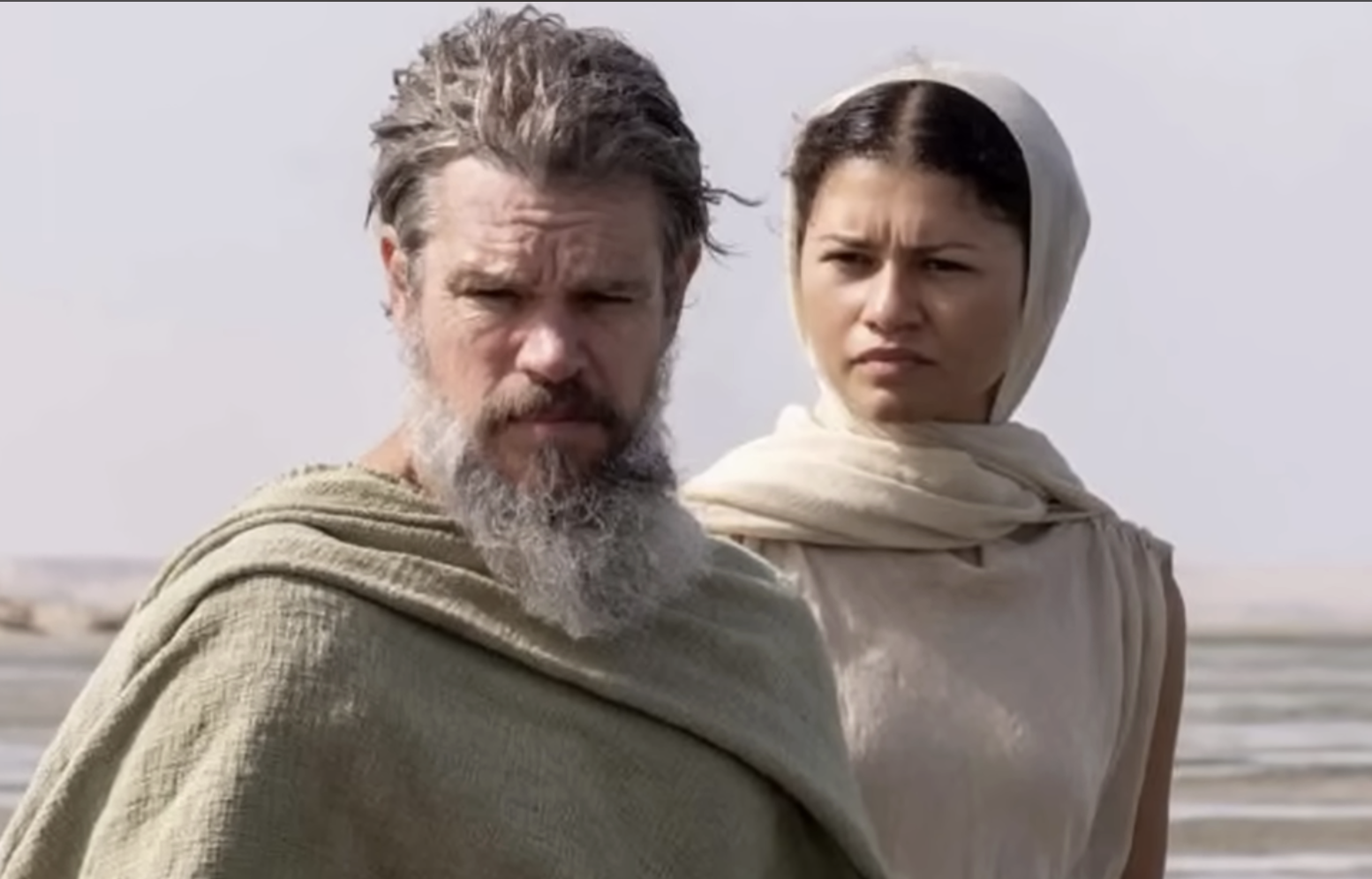
Matt Damon rules, and Anne Hathaway and Charlize Theron sound like cool topliners, but what exactly is historically “sincere” about the casting of Jon Bernthal, Benny Safdie, RPatz, Zendaya, Lupita Nyong’o, Tom “Spider Man” Holland, John Leguizamo, etc.?

Jerry Orbach Didn’t Play A “Murderer”

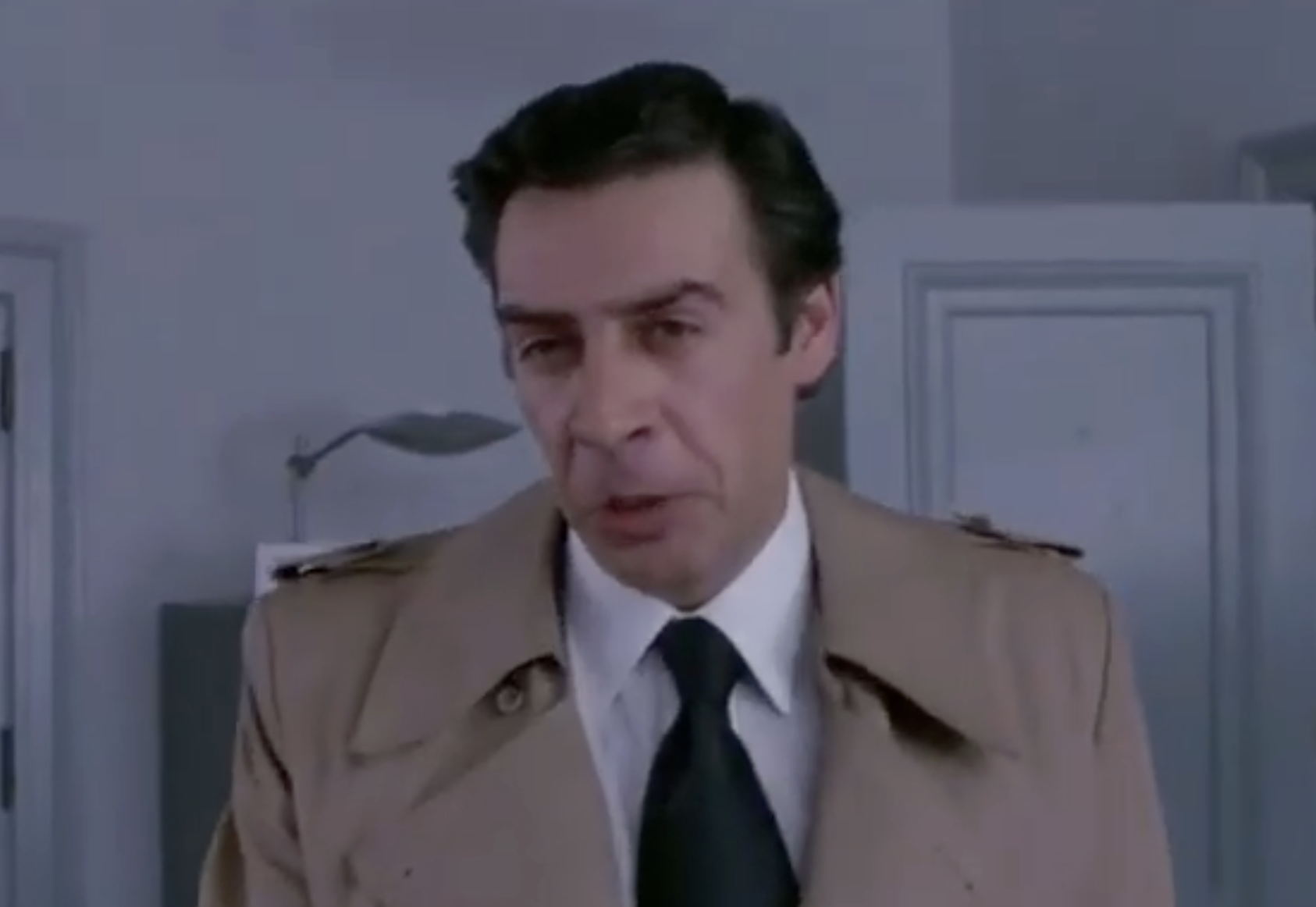
HE: I have trouble thinking of Jerry Orbach as a musical performer. To me he’s narco detective Gus Levy in Prince of the City and Lenny Briscoe in Law And Order.

Friendo: Orbach starred in The Fantasticks, and was the original singer of this classic tune. There’s a soundtrack album. It’s interesting because we don’t usually think of him as a musical artist but he was. This clip is from a 1982 special, “Night of 100 Stars.”

HE: I think of him as Levy.

Friendo: I think of him as Lenny in Law And Order. And a murderer in Crimes And Misdemeanors.

HE: Orbach didn’t play a “murderer” in Allen’s film. I mean, he did but he wasn’t the actual killer. He played a brother who did an ugly favor for an older brother. He didn’t kill Anjelica Huston — he pushed a button on her. There’s a difference.

Friendo: AI begs to differ on whether Jerry Orbach played a murderer. Check your email.

HE: Obviously he facilitates the killing of his older brother’s ex-girlfriend, but he’s removed from the actual act of murder. Pushing a button isn’t the same as wielding an ice pick. Did Vito Corleone actually cut off the head of Khartoum, the Hollywood horse? No. Orbach made the murder happen…yes. This isn’t an exact analogy, but he pushed the button in roughly….okay, this is a stretch….but almost in the same way that Lyndon Johnson pushed several successive buttons that brought about the deaths of tens of thousands of U.S. soldiers. Was Johnson an actual murderer? No.

Friendo: Vito killed Khartoum, period. I don’t think horse lover Tony Soprano would have appreciated Vito’s role. Obviously there’s a legal distinction between a President’s actions and facilitating a common murder.

HE: Kennedy probably would not have facilitated the deaths of tens of thousands of soldiers. That was a difference netween him and Johnson.

Kate Erbland Has A Blockage

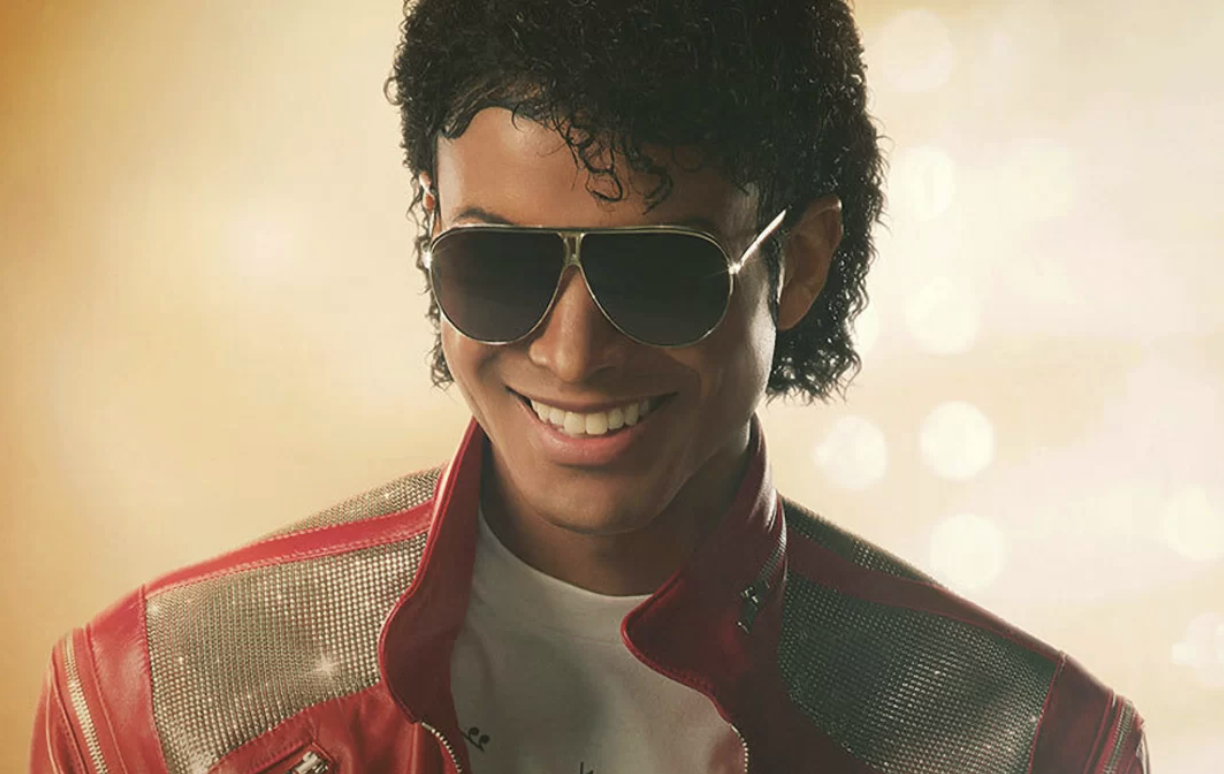
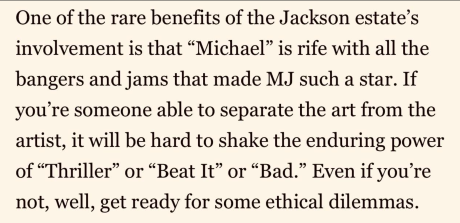
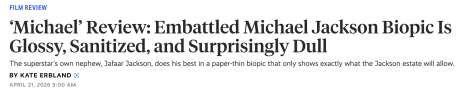
IndieWire’s Kate Erbland has said something astonishing in her 4.21 Michael review.

IF you’re someone who’s ABLE to separate the art from the artist”???

Art and artists have always been separate entities or propositions. Artists, being human and therefore flawed or worse, are never as noble and beautiful and radiant as their art.

Artists inevitably draw from their own trials and tribulations in the creation of this or that song or sculpture or poem or performance, but at the end of the day they’re basically conduits — great art comes from some mystical truth galaxy but it only becomes “art” by passing through them like lightning.

Polanski’s art has always been greater than Polanski the man. Obviously. And — hello? — they’re not the same.

Erbland seems to regard this understanding with suspicion. She seems to be saying that anyone who can separate art from the artist — to basically see them as separate and unequal — is some kind of uncaring sociopath.

I love the current and the spunk and the edgy technique that Jackson used to create those songs and bust out those brilliant dance moves. I can compartmentalize. I can put the child molesting in a steel suitcase and leave it in the trunk of the car while watching Michael in a theatre.

@marvengabriel Moonwalking at the @michaelthemovie Premier🕺🏽✨ @Universal Pictures De @Lionsgate #michaeljackson #michaelmovie #michaelbiopic #moonwalk #dance ♬ origineel geluid – StarRewind

@etalkctv From Colman Domingo finally responding to Paris Jackson’s critiques of the ‘Michael’ biopic to Janet Jackson reportedly fighting with Jermaine Jackson, here’s everything we know about the drama surrounding the Michael Jackson biopic. 👀 #ParisJackson #ColmanDomingo #JanetJackson #JermaineJackson #MichaelJackson ♬ original sound – etalk

@bendunningtattoo This is 20 minutes immediately after the Michael Jackson Movie ended….people did NOT want to leave!!! 🐐👑 I was lucky enough to see the Biopic 2 weeks early at the Global Fan Event in Berlin at the weekend! It’s amazing! You’ll laugh, you’ll cry and for for you won’t stop moving!!!! You need to watch it when it releases on the 24th April!!! #mj #michaelmovie #biopic #michaeljackson #thriller @michaelthemovie @Universal Pictures @Lionsgate UK @Lionsgate @Uber Platz ♬ original sound – Ben Dunning

@russellhustleinc @michaelthemovie is INCREDIBLE🔥 Had to keep the party going to the parking lot!! @Lionsgate Did you guys get tickets yet???@Demetre @Furillo. @A.R. @Brittany Perry-Russell @IsaiahRussellBailey #RussellHustle #Dance #MichaelJackson @IMAX #imax ♬ You Rock My World – Michael Jackson