Brad Pitt has been sober for nearly eight years, but because he lost his alcoholic temper during that infamouscharteredflight (on 9.14.16) and was physically abusive to Maddox, one of the six Jolie-Pitt kids…because he was a belligerent drunken dick that one time, at least two of his daughters, Shiloh Jolie-Pitt, 18, and Vivienne Jolie-Pitt, 15, are convinced that he’s a living embodiment of Satan and want the Pitt struck from their last names.
Shiloh has in fact filedlegalpapers to change her name to a Pitt-less Shiloh Jolie. Perhaps Vivienne will follow suit when she turns 18.
We all understand teens who feel estranged from their parents (I was one), but who goes into court and says in effect “strike my father’s last name from my legal history!…he doesn’t exist, his name is anathema!…I judge him damned with the devil and condemn him to molten-lava hell with all the other fallen angels, where he will writhe in terrible pain for all eternity.”
What kind of nutbag daughter thinks this way?
Why is the divorce initiated by Angelina Jolie againstWilliam Bradley Pitt still ongoing and unresolved eightyearslater? Sane exes don’t behave this way as a rule.
Trust me — I’m not the first person on planet earth to rhetorically ask “what exactly is Angelina’s basic psychological malfunction?”
Then again I may be thinking too narrowly. Perhaps Pitt is the devil incarnate, and therefore deserves to be hunted down with clubs and spears and burned like Joan of Arc or Oliver Reed’s Father Grandier from Ken Russell’s TheDevils?
In general terms, Richard Linklater‘s Hit Man (Netflix, 6.7) is about Gary (Glenn Powell), a 30something guy who works for a big-city police department (New Orleans) in an undercover capacity.
The story kicks in when Gary falls in love with Maddy (Adria Arjona), a beautiful Latina woman who’s been involved with a not-so-nice guy named Ray (Evan Holtzman) and is also kind of a target of the police, except Gary can’t tell Maddy for procedural and security reasons that he’s with the fuzz.
The story tension is about when and how Gary will come clean with Maddy, and how her troubled relationship with Ray will be resolved (i.e., come to an end) so that she and Gary will have some kind of chance together.
Without divulging what I felt about Hit Man, I need to mention how much it reminded me, in certain ways, of John Badham‘s Stakeout (’87), which was a kind of cop sitcom thriller with a strong emotional pull.
The lead character was Chris (Richard Dreyfuss), a 30something detective who works for a big city police department (Seattle). He and partner Bill (Emilio Estevez) are assigned to spy on Maria (Madeleine Stowe), a beautiful Latina woman who’s been involved with a not-so-nice guy named Stick (Aidan Quinn). Stick has recently escaped from prison and, cops suspect, may be visiting Maria soon.
The story kicks in when Chris falls in love with Maria, but can’t tell her for procedural and security reasons that he’s with the cops. Plus he’s doubly deceived her by pretending to be a phone company technician so he can plant a bug in her phone.
The story tension is about when and how Chris will come clean with Maria, and how her troubled relationship with Stick will be resolved (i.e., come to an end) so that she and Chris will have some kind of chance together.
The storylines of Hit Man and Stakeout don’t line up precisely and diverge in significant ways, but the above described similarities are legit.
Again without tipping my hand about Hit Man, which I caught yesterday afternoon, I have to say that I liked Stakeout a lot more when I saw it…Jesus, 37 years ago? Yeah, it was. Reagan times, Iran-Contra, etc.
Paolo Sorrentino makes eye-bath films. His lustrous visual swooning began to intensify, I feel, with 2013’s The Great Beauty, and was fully maintained in Youth, Loro and The Hand of God.
But there’s a limit to this kind of spell-weaving, and Sorrentino’s Parthenope, which I saw late last night, is exhibit #1.
Two actresses portray the title role, young Celeste Dalla Porta and the considerably older Stefania Sandrelli. But it’s mainly Della Porta’s show as the film is mostly about a series of guys (Italians of all ages plus Gary Oldman‘s John Cheever) staring longingly and hungrily at her.
I was feeling profoundly bored within 30 minutes, and had decided to bail by the one-hour mark if things didn’t improve. I wound up lasting 90 minutes.
If you’ve ever felt humbled or blown away by a woman’s beauty (we’ve all been there), the way to play it is to not stare at her like she’s a bright red apple and you haven’t eaten in three days. The way to play it is the young Warren Beatty way — one, express more interest in her personality and especially her mind than her looks, and two, behave as if you’re the beautiful one.
In the wake of David Fincher‘s Mank, why did Sorrentino want Oldman to play another soused writer whose literary prowess is quite formidable? After watching Mank I resolved to never again watch Oldman playing a chronic drunk, and now I’ve been through the same damn experience. In my mind there isn’t a dime’s worth of difference between Oldman’s Cheever and his Herman J. Mankiewicz.
While watching I was thinking of two older films that were about the same kind of thing (i.e., a series of guys worshipping a young irresistible woman and wanting desperately to “lay lady lay” her) — John Schlesinger‘s Darling (’65) and Bernardo Bertolucci‘s Stealing Beauty (’96). Both had underlying currents that were at least moderately interesting, Darling in particular. If there’s any kind of subtextual intrigue in Parthenope, I missed it.
It also struck me that Dalla Porta, who’s around 26, resembles the young Mia Sara (Legend, Ferris Bueller’s Day Off).
Before last night’s 10:30 pm screening of The Girl With The Needle I slipped into an 8:15 showing of Laurent Bouzereau‘s Faye, an engagingly straightforward life-and-career retrospective about the great Faye Dunaway.
It supplies everything about her career that you’d want to see, everything you’d expect. All the biographical anecdotes, all the required clips, full of respect and appreciation plus healthy servings of Dunaway letting it all hang out (or at least as much as she’s able to do within this format).
It reminded me first and foremost what a great majesterial actress she’s always been. Charisma, timing, energy, just the right amount of push and hesitancy…the whole package.
It barely gets into the strident Faye stories that we’ve all been hearing for decades, but Dunaway’s confession that she was bipolar and occasionally alcoholic helps to explain at least some of her extreme behavior.
The doc offers an amusing retelling of the Roman Polanski-hair-yanking-episode-during-the-shooting-of-Chinatown story, mostly courtesy of producer Hawk Koch.
Dunaway honestly recounts her mad two-year affair with a married Marcello Mastroianni (’68 to ’70). There’s often something reckless and illogical about heated extra-marital romances, and the Dunaway-Mastroianni thing was no exception.
Plus it includes a brief interview with Mommie Dearest director Frank Perry saying that 1981 audiences responding with hoot and howls was fine with him. (Hollywood Elsewhere has always loved this film.)
The doc shows many snaps of young Faye during her youth (she was born in January ’41), and I was surprised to discover that when Dunaway was a teenaged brunette she closely resembled young Barry Gibb of the BeeGees. This resemblance was out the widow, of course, once she turned blonde and glammy in the mid ’60s.
I had to duck out at 9:50 pm so I wound up missing the home stretch and wrap-up, but it’ll be on Max before long.
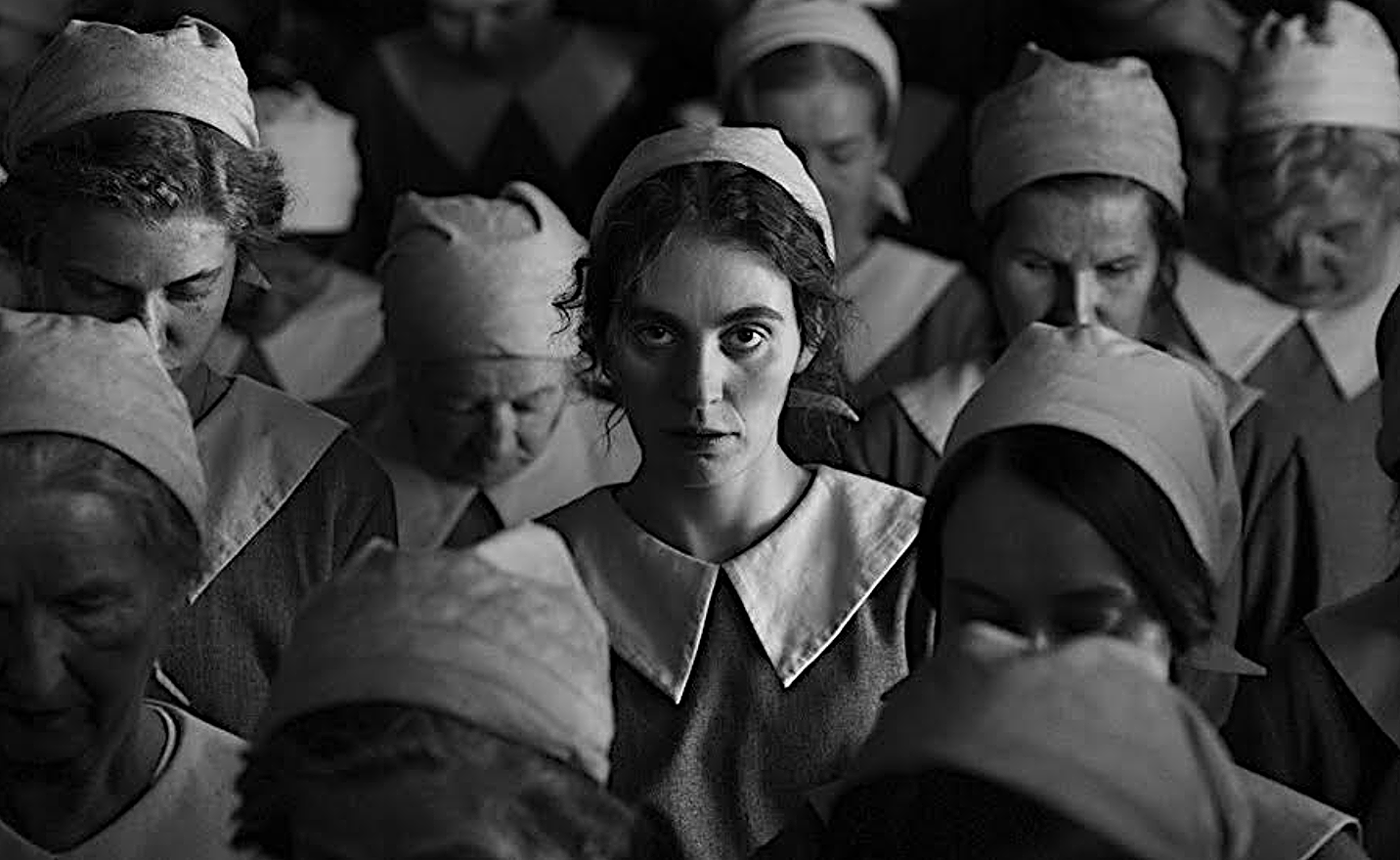
And that’s that this grim, fact-inspired tale about the cold, brutal conditions of women on the bottom of the social order in post-World War I-era Copenhagen has not been directed by a woman.
If it had been, Team Gerwig would be short-listing it for a major festival award. They might still hand acting trophies to Victoria Carmen Sonne or costar Trine Dyrholm. =
It has to win something, I’m telling myself. As relentlessly downish, oppressive social-malaise art films go, this is one of the best I’ve seen in many years. Hats off, full respect.
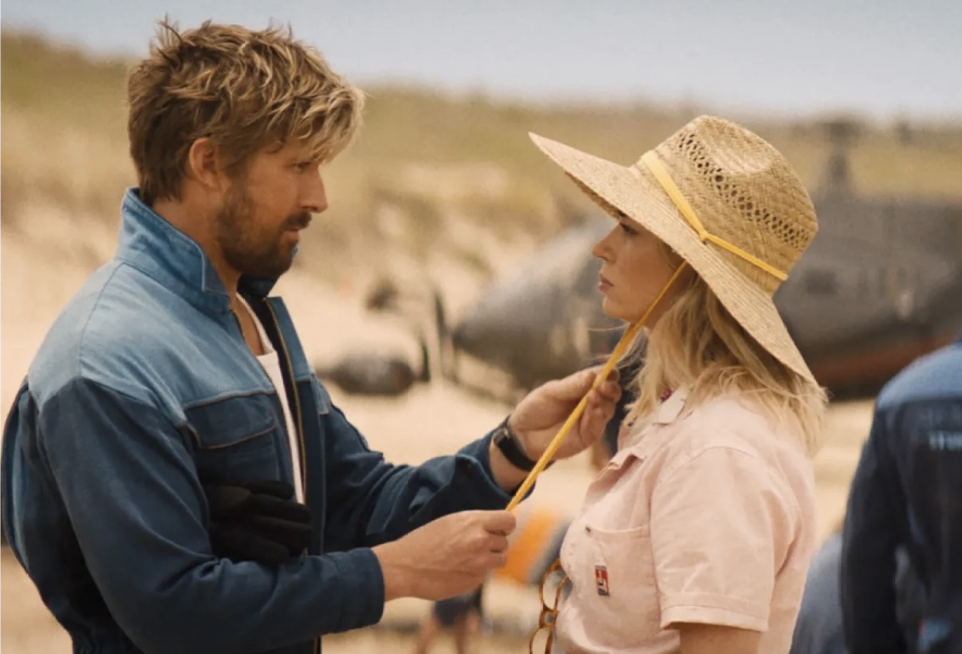
The entire Fall Guy team and especially Ryan Gosling, Emily Blunt and director David Leitch…they’re all in the dumps right now, chins on the pavement, hiding their faces or at least wearing sunglasses and thinking about escaping to Palm Springs for a week or two.
The Fall Guy hasn’t exactly been rejected en masse but it’s certainly been “meh”-ed or half-waved off by Joe and Jane Popcorn.
The whole Gosling balloon is sinking into the wetlands, the swamp. Imagine being Gosling right now and thinking back to your “I’m Just Ken” Oscar moment, which was only a few weeks ago…life can switch around like that.
Fascinating reversal of fortune…tipping over, about to tumble and die, and then saved by some spooky force…James Mason‘s “Mr. Jordan”?
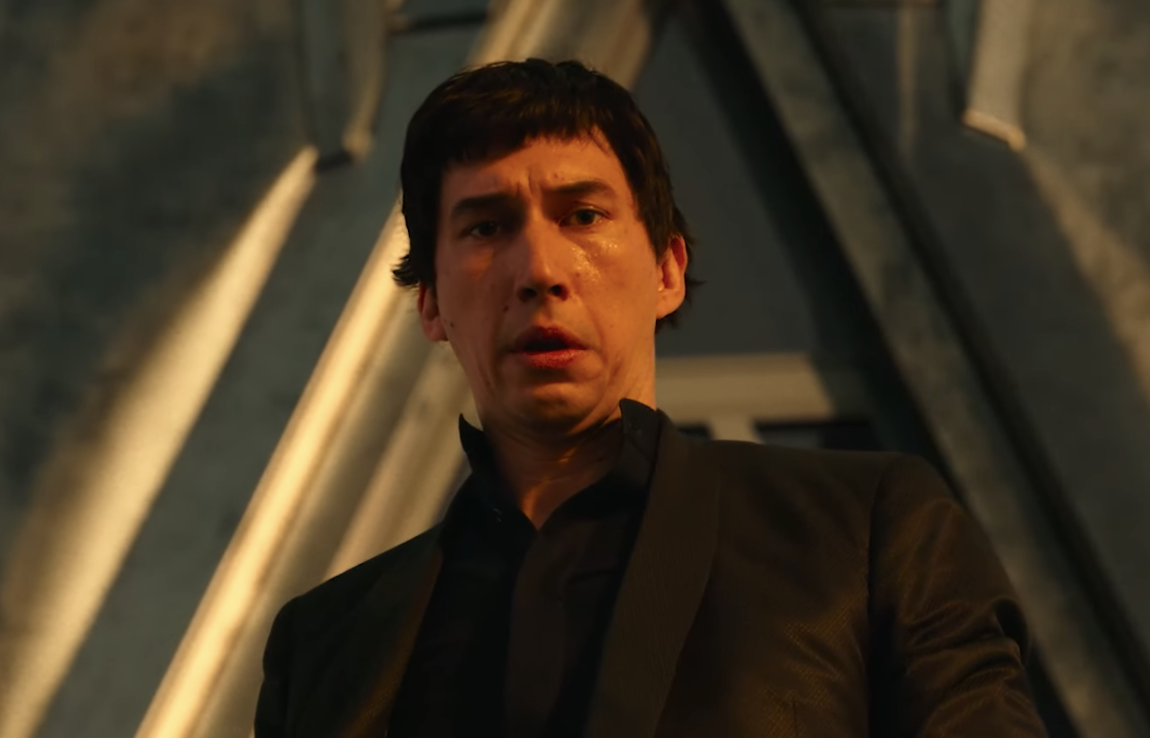
The Megalopolis teaser doesn’t work because (a) I’m unfamiliar with whatever factors have led Adam Driver‘s “Caesar” to contemplate a splattery suicide, (b) having no knowledge of or investment in his situation, I feel nothing, (c) the only thought that came to mind was “he’s obviously spooked but on the other hand he’s shuffling out on the Chrysler building in leather-soled, slippery-ass street shoes?”, and (d) I really hate that James Mason-in-Julius Caesar haircut.
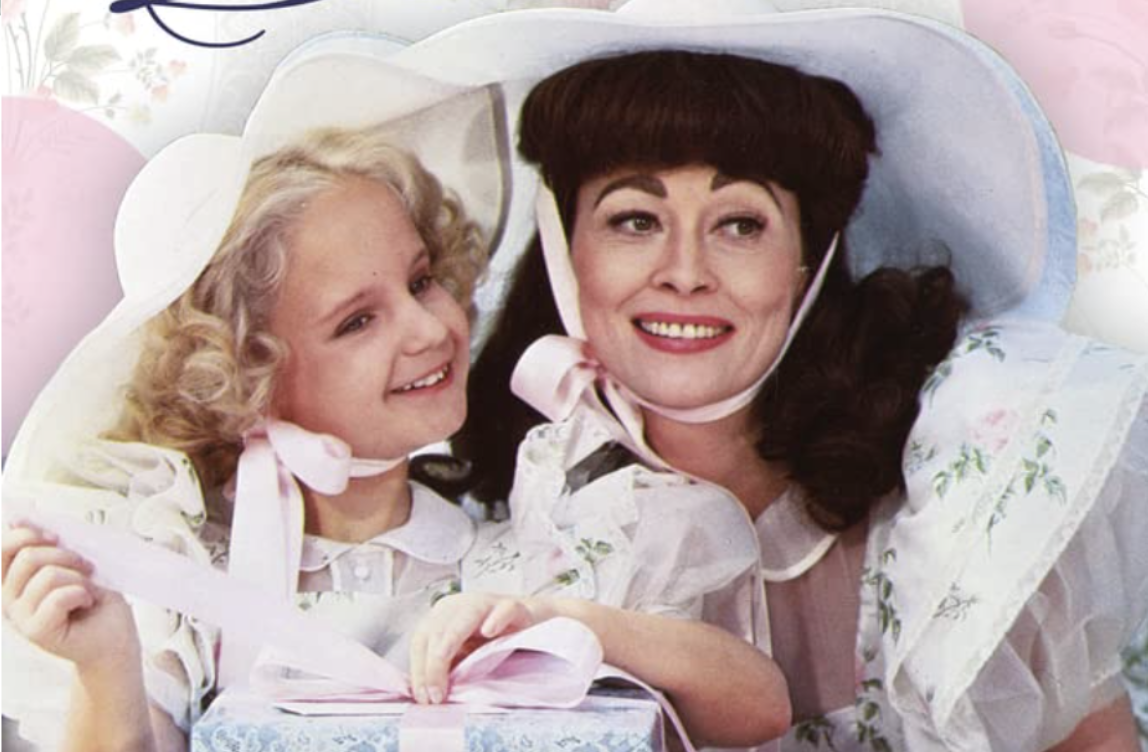
HE comment #1: Dunaway’s career hit a kind of pothole when Mommie Dearest came out, agreed, but I just re-watched it a couple of weeks ago and certain portions are still a hoot. For my money the film is a hugely pleasurable serving of classic Hollywood Kabuki theatre.
I saw it with several gay guys at the old Columbus Circle Paramount screening room in late August of ’81, and on the down elevator they were all shrieking with laughter, and I don’t mean the derisive kind. They were in heaven…delighted.
Alas, Mommie Dearest has been called an “unintentional comedy” by none-too-brights for so long that it looks like up to me, and I’m sorry but that judgment is just as wrong today as it ever was.
The Mommie Dearest “comedy” is not unintentional. The film basically serves a form of hyper-realism with a campy edge. It’s extreme soap opera, at times overbaked but winkingly so with everyone in on the joke.
If director Frank Perry had modulated Dunaway’s performance, some of the great lines — ‘No wire hangers EVER!,’ ‘Don’t fuck with me, fellas!’ — wouldn’t have worked so well. Those lines are the stuff of Hollywood legend, right up there with Bette Davis saying “what a dump!” and Vivien Leigh saying “I’ll never be hungry again.”
HE comment #2: Dunaway has been a first-rate actress since the early ’60s, and at age 83 is still at it, of course. But her peak years were close to 15 — Bonnie and Clyde (’67) to Mommie Dearest (’81). Her other highlights include The Thomas Crown Affair (fellatio simulation with a chess piece), The Arrangement, Little Big Man, Puzzle of a Downfall Child, The Three Musketeers, Chinatown, The Towering Inferno (the second best ’70s disaster flick, right after Juggernaut), The Four Musketeers, Three Days of the Condor and Network (Best Actress Oscar…the absolute peak).
Please understand that while some superstars have enjoyed 20-year peaks (Cary Grant, James Stewart, George Clooney), 15 is far more common so there’s certainly nothing tragic or mortifying about Dunaway’s career cooling down in the early Reagan era. Remember also that she rebounded with her Barfly performance in ’87, and that she landed three Golden Globes in the ’80s and an Emmy in ’94.
Clark Gable’s hottest years numbered 13 — between ItHappenedOneNight (‘34) and The Hucksters (‘47). Humphrey Bogart happened between TheMalteseFalcon (‘41) and TheHarderTheyFall (‘56) — a 15-year run. Robert Redford peaked between Butch Cassidy (‘69) and Brubaker and OrdinaryPeople (‘80) — 11 to 12 years. Tony Curtis‘s hot streak was relatively brief — 1957 (Sweet Smell of Success) to 1968 (The Boston Strangler). Kirk Douglas also had about 15 years — Champion (’49) to Seven Days in May (’64).
Elizabeth Taylor had 15 years — 1950 (Father of the Bride) to 1966 (Who’s Afraid of Virginia Woolf). Jean Arthur — mid ’30s to early ’50s (Shane) — call it 15 years. Katharine Hepburn — early ’30s to early ’80s (On Golden Pond). Meryl Streep — 1979 (The Seduction of Joe Tynan) to today…over 40 years and counting.
It’s a basic creative and biological law that only about 10% to 15% of your films are going to be regarded as serious cremedelacreme…if that. Most big stars (the smart ones) are given a window of a solid dozenyearsorso in which they have the power, agency and wherewithal to bring their game and show what they’re worth creatively. Dunaway certainly managed that and then some.
I’m sorry but my all-time favorite flamethrower scene is still the one in William Friedkin‘s Deal of the Century (’83)…the one in which Gregory Hines torches the enraged Latino guy’s car. Because it’s easily the most pleasurable.
HE’s #2 is the Once Upon A Time in Hollywood poolside scene in which Rick Dalton immolates Manson Family psychopath Susan “Sadie Glutz” Atkins. #3 is Sigourney Weaver torching Mama Alien and all of her eggs in James Cameron‘s Aliens (’86). #4 is vAl Pacino using the “flame” word during his Scent of a Woman third-act rant. #5 is Mel Gibson flamethrowing the bad guys in The Road Warrior. #6 is the singed hair-and-wardrobe scene in John Carpenter‘s The Thing (’82).
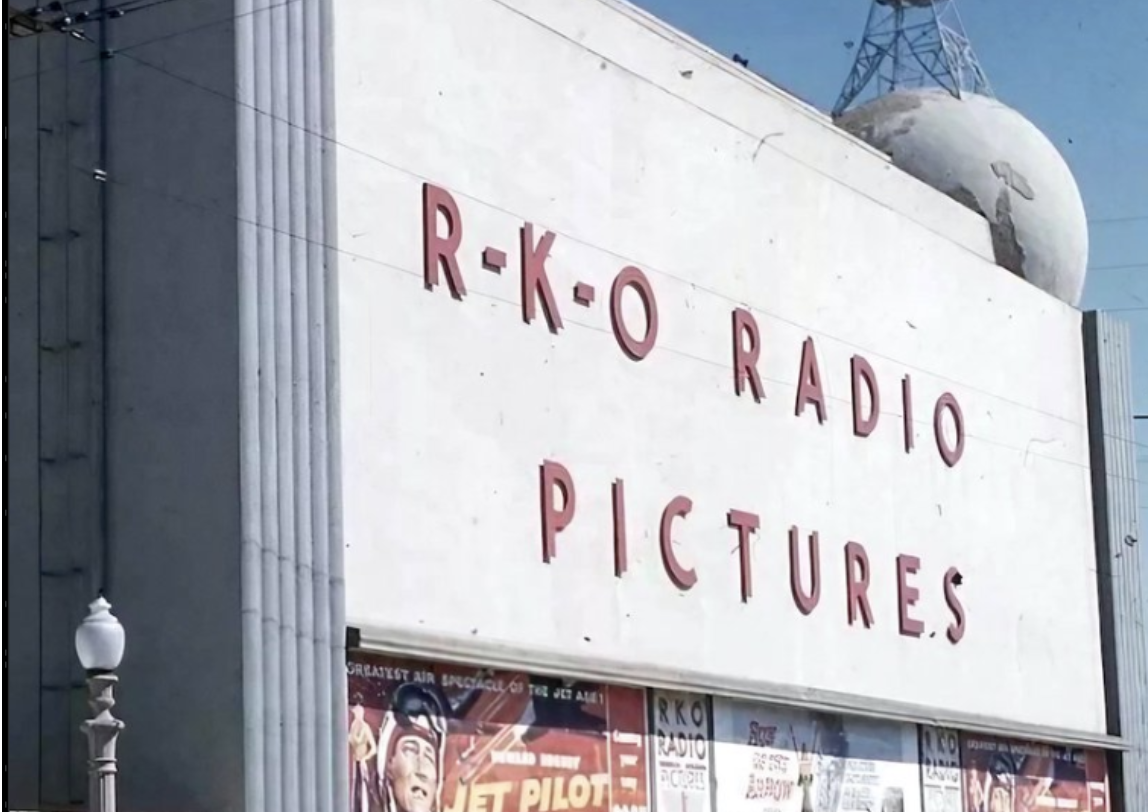
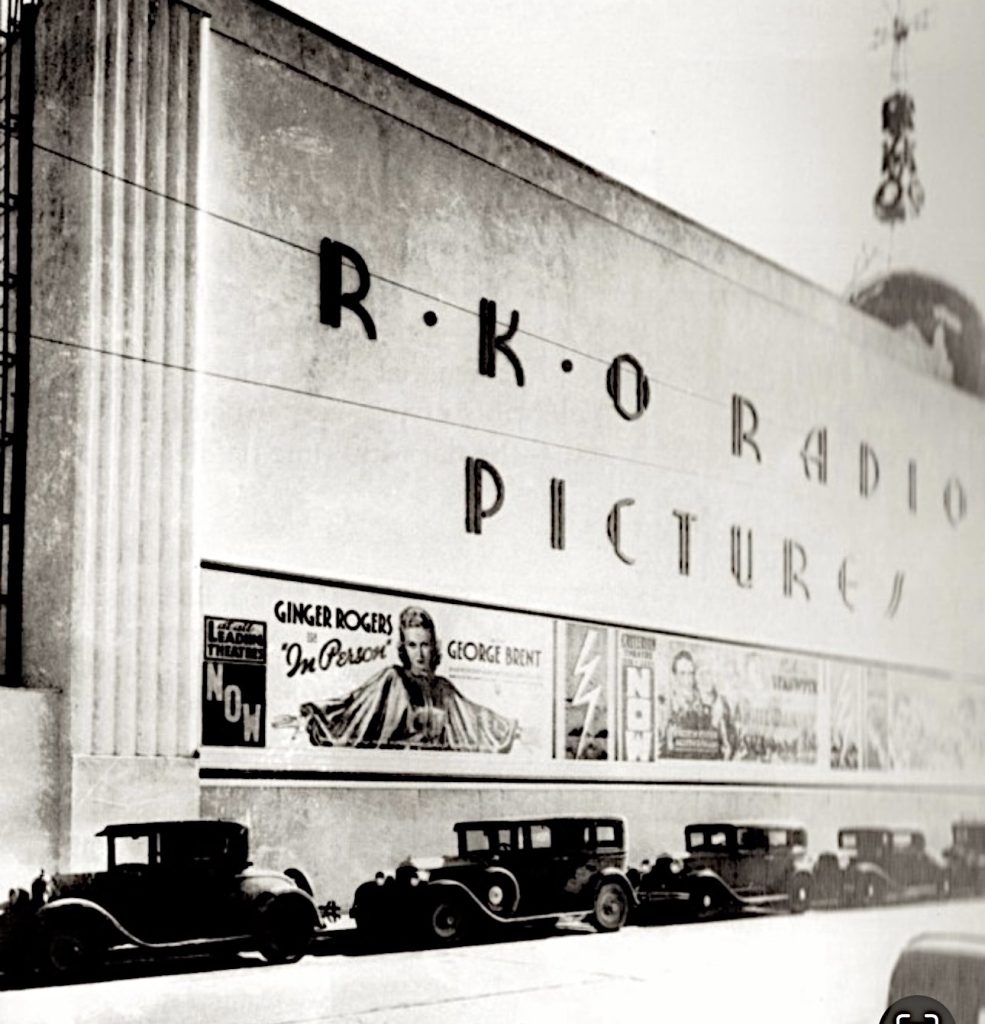
I came along way too late in the 20th Century to savor the storied, once-glorious atmosphere of the RKO Radio Pictures lot (Melrose and Gower), which was right next door to the still-standing Paramount lot.
My only physical, professional association with the former RKO operation (the studio having peaked between the early 1930s and late ‘50s) was my horrific three-month stint as an EntertainmentTonight employee. E.T.’s offices were located near the Gower gate, and I worked there for twoorthreemonthsinthespringof ‘98.
It was absolutely the most hellish job I’ve ever had in my life, in part because I had to be at work at 5 am and in part because of the acutely political vibe under exec producer Linda Bell Blue. Everyone who worked there was “schemin’ schemin’ like a demon,” and after a while I began to daydream about shooting heroin into my veins.
HE to self during E.T. employment: “Will they fire me next month, next week…tomorrow?
“Why are people always speaking in hushed tones behind closed doors? Is the work I’m doing of any value to anyone? Will I always have to wake up at 3:45 am? Is it too late to learn a new trade?
The daily salt-mine vibe at Entertainment Tonight was the most horrifically political and terrifying I’ve ever known in my life, bar none. It was all about petty office power games and anxiety and who’s up and who’s down.
Nothing in that environment was the least bit calm or serene. Nothing was devotional. It was all about fake–performing in front of your co-workers in order to convince them that you wouldn’t say anything bad about them when they weren’t around.
Women were always conferring and plotting in their offices with the doors closed, and the subject was always other women who were huddling and plotting in their offices, etc.
I naturally wanted to keep getting paid, but half the time I wanted to stick my head in a gas oven. I was 40% upset when I was canned but 60% relieved.
…that whatBill MaherwastalkingaboutlastFridaynight is happening in schools? That it’s real? And that shaping the soft-clay minds of young kids on trans issues has become a mainstream public-school thing…stamped, signed and endorsed by the Democratic Party?
He really thinks all is well, and that my seconding whatMahersaidthenightbeforelast is…what, some kind of obsessive, fear-driven thing on my part?