Will Ferrell’s Best Offbeat Film?

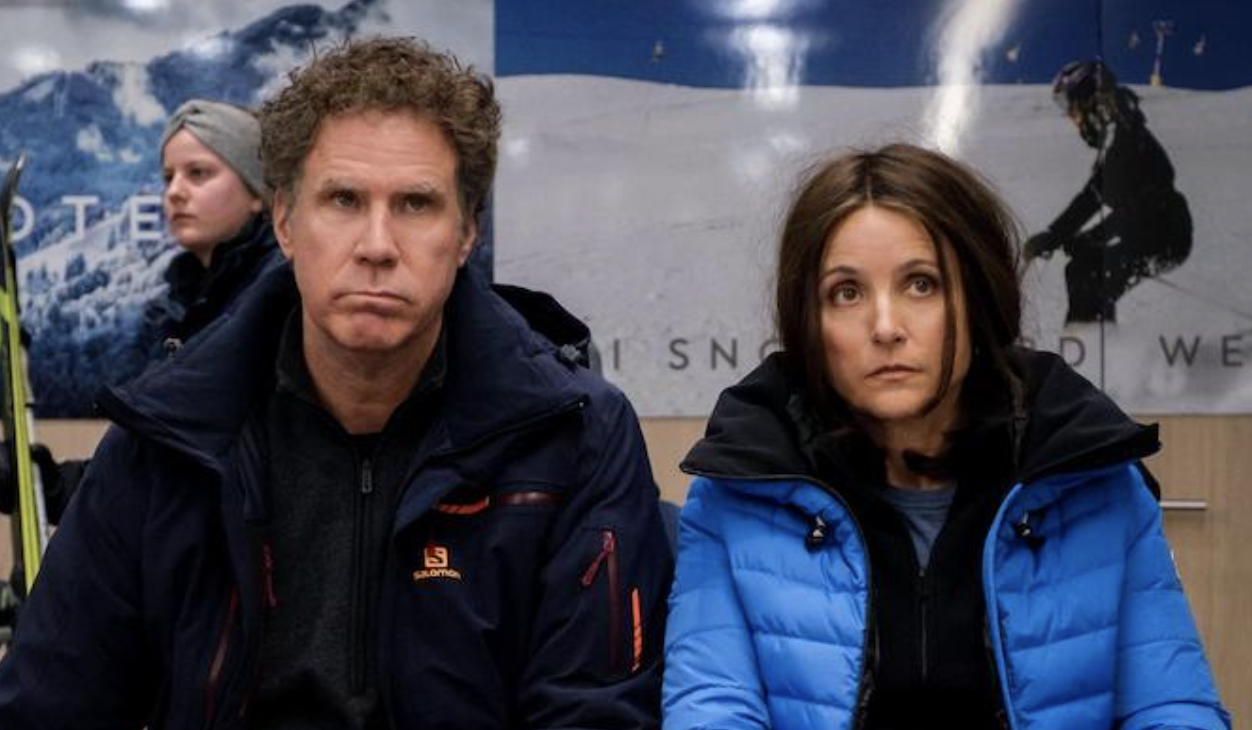
Ruben Ostlund‘s Force Majeure (’14) is a better film than Nat Faxon and Jim Rash‘s remake titled Downhill (1.20). But the latter isn’t half bad, and it’s a half-hour shorter, and it ends well. And so I’ve decided to re-watch Downhill this evening rather than Ostlund’s original.

Downhill, which opened almost exactly four years ago, struck me as better than decent — adult, well measured, emotionally frank, well acted and cunningly written. (Faxon and Rash shared screenplay credit with Jesse Armstrong.)

It’s not a burn, it’s not about a “black and white situation” (as one of the less perceptive characters puts it) and it provides ample food for thought and discussion.

Both films conclude that a father running from an impending disaster (i.e., a huge avalanche) without trying to save or protect his wife and kids is a bad look. Which of course it is. Obviously.

Both films condemn the dad in question (Will Ferrell in the American version, Johannes Bah Kuhnke in Ostlund’s version) and more or less agree with the furious wives (Julia Louis Dreyfus, Lisa Loven Kongsli) that dad should have (a) super-heroically yanked the wife and kids out of their seats and hauled them inside in a blink of an eye or (b) hugged them before the avalanche hit so they could all suffocate together.

Hollywood Elsewhere says “yes, it’s ignoble for a dad to run for cover without thinking of his wife or kids,” but I also believe that instinct takes over when death is suddenly hovering. I also feel that Dreyfus and the two kids acted like toadstools by just sitting there on the outdoor deck and hoping for the best.

Question for Dreyfus and sons: A huge terrifying avalanche is getting closer and closer and you just sit there? I mean, you do have legs and leg muscles at your disposal. A massive wall of death is about to terminate your future and your reaction is “oh, look at that…nothing to do except watch and wait and hope for the best”?

Both films film basically ask “who are we deep down?” They both suggest that some of the noble qualities we all try to project aren’t necessarily there. But Rash and Faxon’s film also says “hey, we’re all imperfect and yes, some of us will react instinctually when facing possible imminent death. So maybe take a breath and don’t be so viciously judgmental, and maybe consider the fact that tomorrow is promised to no one so just live and let live.”

I was especially taken by Downhill‘s spot-on philosophical ending (i.e., “all we have is today”). Seriously, it really works. I came to scoff at this film (due to the less-than-ecstatic Sundance buzz) but came away converted.

Read more

Barbara Rush

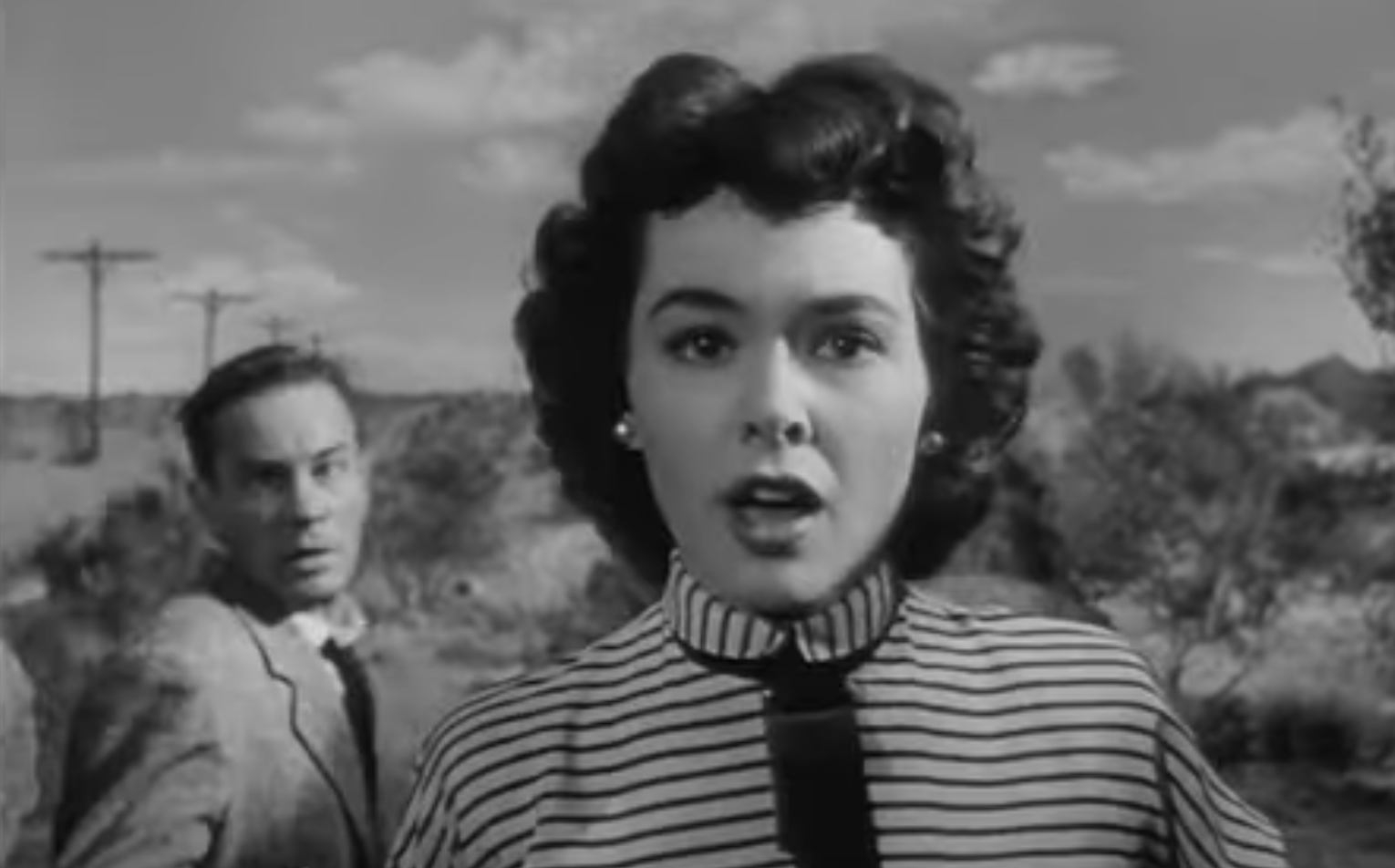
Last night I re-watched George Pal and Rudolph Mate’s When Worlds Collide (‘51), an ambitious if under-budgeted sci-fi disaster flick. Early on I was intrigued by (i.e., fantasizing about) 23 year-old costar Barbara Rush, whom I’d never paid much attention to (and who is still with us, by the way, at age 97).

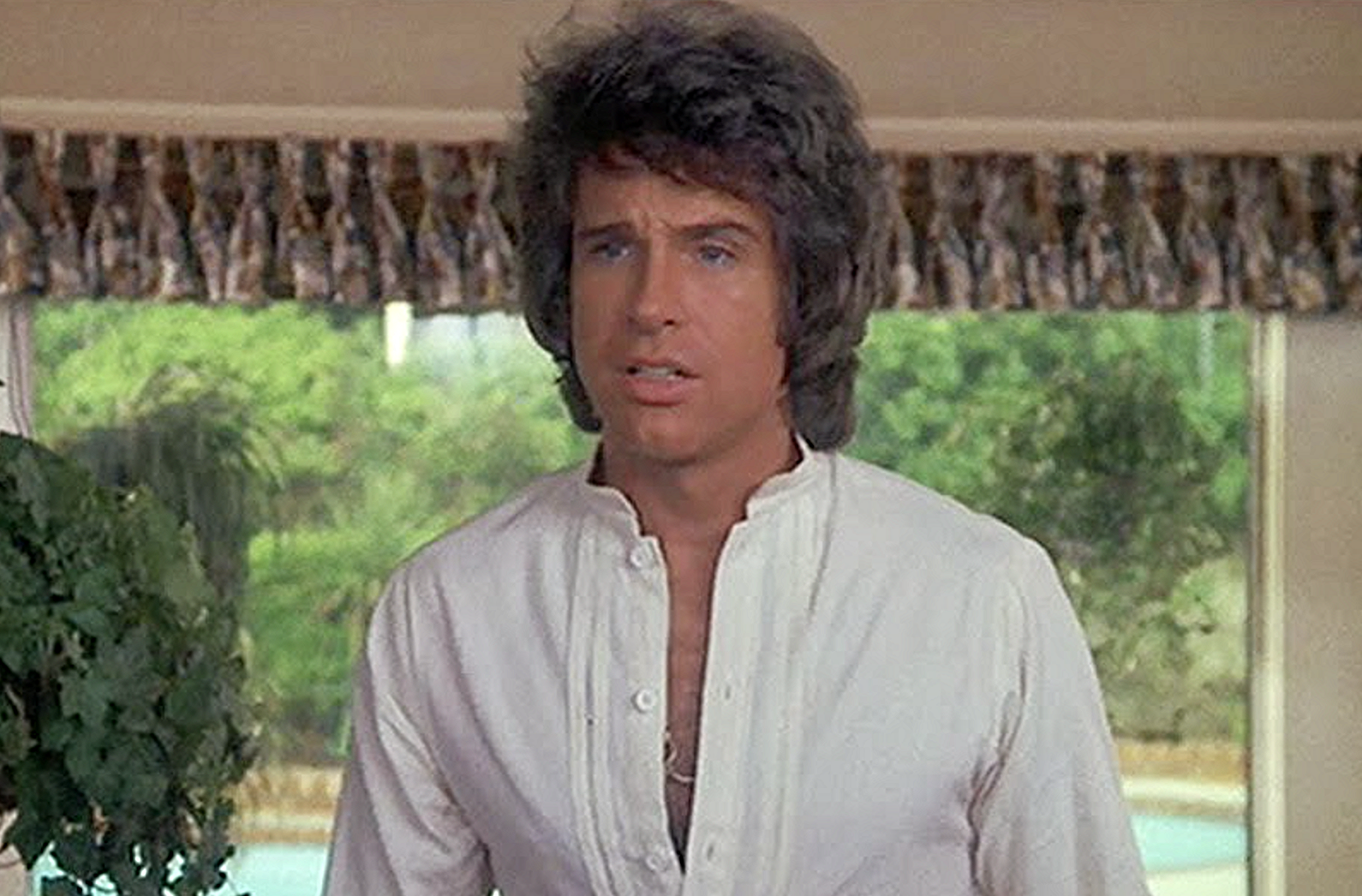
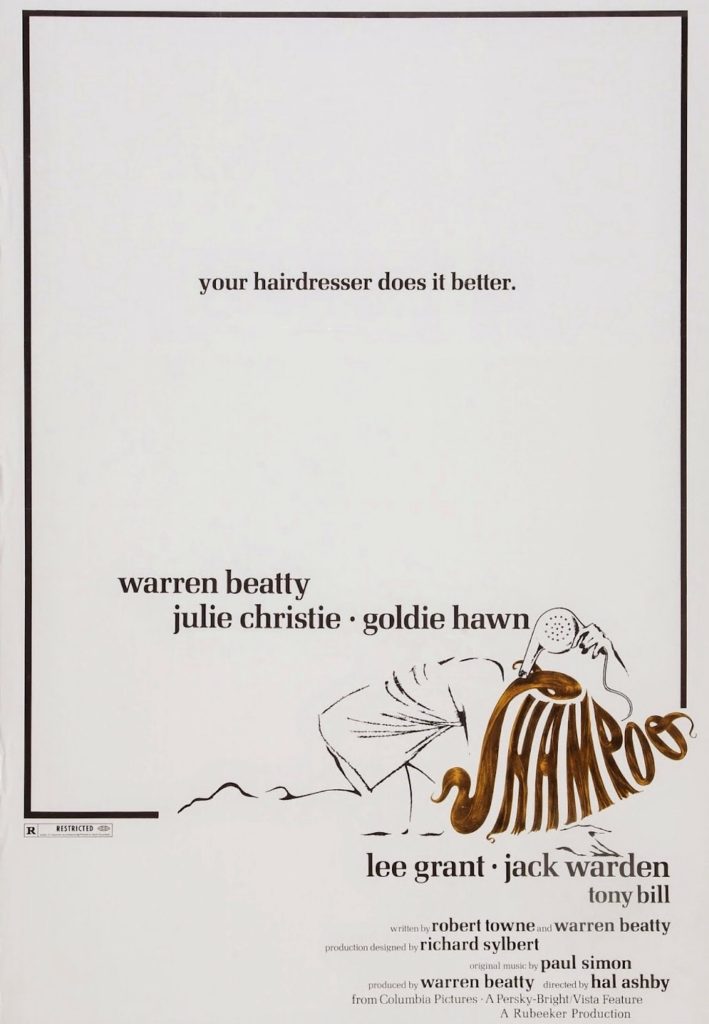
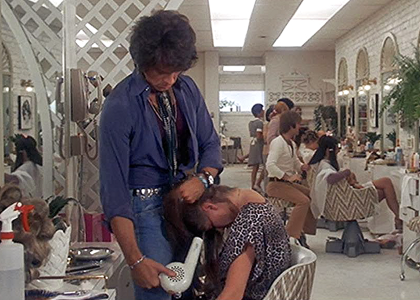
She was unquestionably front and center during the ‘50s, but my most vivid memory of Rush is from Warren Beatty and Hal Ashby’s Shampoo (‘75).

There’s a scene in which Beatty’s Beverly Hills hairdresser (i.e., George Roundy) is trying to persuade a bank officer (George Furth) to give him a loan to start his own hair salon with. When asked about collateral, Roundy tries to explain that his business value is largely based upon celebrity client loyalty. “I have the heads…I do Barbara Rush,” he states. Alas, this isn’t enough for the bank officer.

Married to Jeffrey Hunter from ‘50 to ‘55, Rush was very fetching in her 20s, but augmented this with a certain interior, deep-drill quality that seemed rooted in good character and basic values. Call her the trustworthy, on-the-conservative-side, guilt-trippy type. This was especially evident in 1958’s The Young Lions and ‘59’s The Young Philadelphians.

It was this sense of duty and restraint plus a corresponding low-flame quality when it came to hints of sultry sensuousness that probably limited Rush’s appeal as she got into her 30s. Wikipage: “She was often cast as a willful woman of means or a polished, high-society doyenne.”

Read more

Will Most 50-Plus Academy Members Vote For Bening?

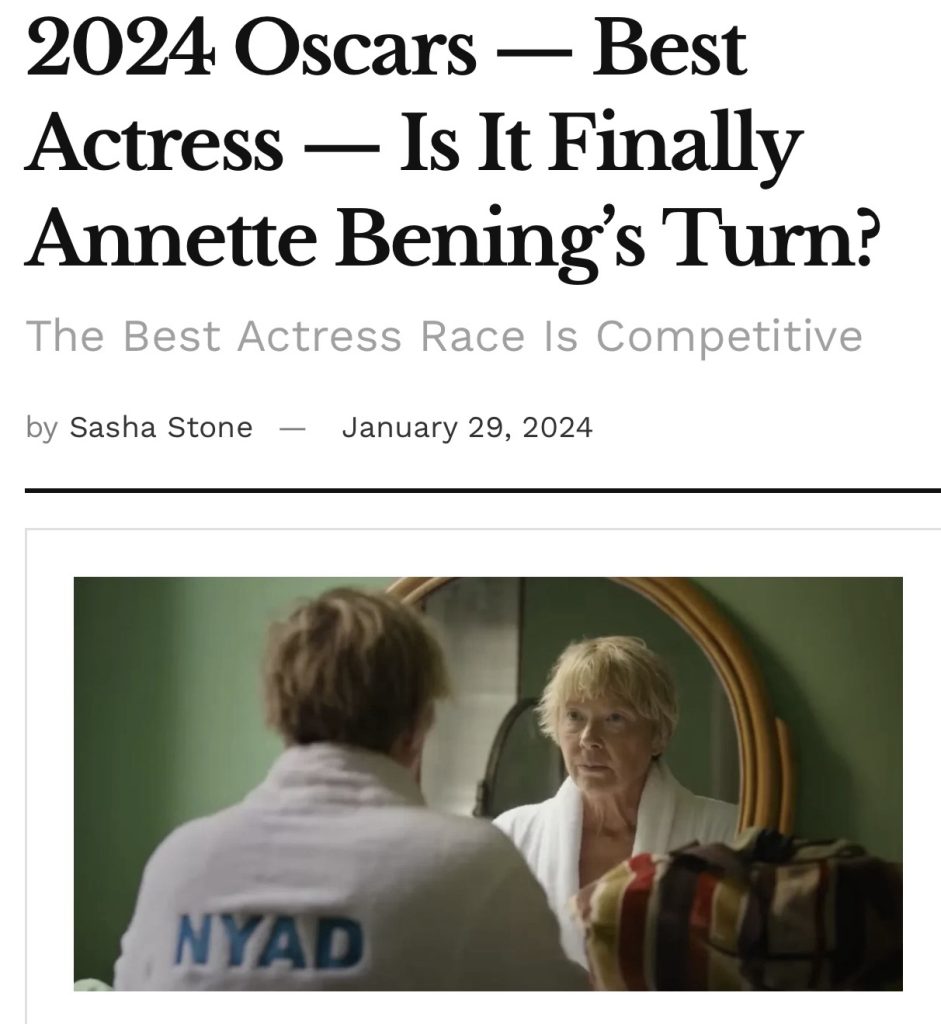
Within the Best Actress race, Awards Daily’s Sasha Stone is flirting with the idea of a surprise win for Nyad’s Annette Bening.

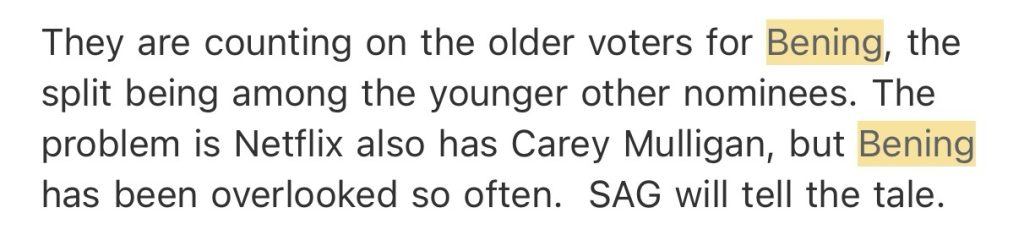
NYC gabbermouth Bill McCuddy: “Most younger members will vote for Gladstone and Stone, and this could cancel them out. The Old Guard will ALL vote for oft-nominated Bening.”

Suggested Jimmy Kimmel joke, written by McCuddy: “It’s ironic now that both Bening and Beatty are known for their breast strokes.”

Deadline’s Pete Hammond:

HE just wants the Best Actress Oscar to go to an actress who delivered a performance of serious merit — Stone, Bening, Huller or Mulligan. I’m fine with any of these guys winning.

“Cinema Fist”

We’re all familiar with the cinematic simulation of a punch by having an actor pretend to punch the camera lens. The best-known examples of this technique are in Alfred Hitchcock‘s North by Northwest (’59), first when a South Dakota state trooper decks Cary Grant at the end of Act Two, and then 15 minutes later when James Mason does the same to Martin Landau.

It’s been asserted, however, that Samuel Fuller trail-blazed this effect in I Shot Jesse James (’49). It happens when a barroom brawler delivers a right cross at the camera. Jean-Luc Godard reportedly once referred to this visual device as “cinema-fist.”

The problem is that I’ve never seen I Shot Jesse Jamesall the way through. I tried watching the first 10 minutes and gave up. I tried a few years later…ditto. Has anyone?

Read more

Gut Emotional Messages & Motives

The 2024 Oscar nominations will be announced on Tuesday morning. But instead of predicting which films and performances will be included or snubbed, let’s try a different angle of approach. Best Picture-wise most Academy members vote for the usual political or social-pressure motives (DEI and merit being the top two) but the bottom line is that movies are voted for or approved of for deep-down emotional reasons.

Mainly because these movies have said something truthful and fundamental about life as we know it. Assessments which many of us have recognized or agreed with, and which have dramatized certain human behaviors which some of us may not approve of but are reluctantly acknowledged to be pervasive and on a certain level profound.

Here’s what the major Best Picture contenders are saying, more or less…

1. Oppenheimer — It’s magnificent to be a super-brainy genius and to apply your gift to the creation of something important or earth-changing, but don’t get so stuck on your particular vision of things that you wind up ignoring basic political realities and thereby self-destructing. And for God’s sake don’t behave like a crybaby when you’re in the Oval Office with the President of the United States.

Basic message: Once the genie is out of the bottle, you can’t put it back in. Take responsibility for your actions, be a man, play your cards carefully, no whining.

2. Poor ThingsBella Baxter calls ’em like she sees ’em, but there has to be more to life than just furious jumping, unless of course you disagree. Don’t take Yorgos Lanthimos‘s weird imaginings too literally. There aren’t enough films that really invest in wackazoid fantasies. Enjoy them when they happen, and please ignore the last 15 minutes.

Basic message: Weirdness can be wonderful.

3. The Holdovers — Life has always been difficult and occasionally punishing, but at least there weren’t any woke fascists or social-media guillotines back in 1970. It takes a lot of work and energy to be a haughty and dismissive scold all the time, and sooner or later you’ll have to give that shit up. Listen to your heart from time to time and maybe things will open up for you…maybe.

Basic message: Don’t be a crabby asshole.

4. Killers of the Flower Moon — 100 years ago Oklahoma white men were very greedy and very foul, and we need to learn from the example of their century-old evil so we can be better people today. In line with this, it would have been very bad to tell a story of Oklahoma genocide with a white FBI agent in the lead role. To have done so would have been obviously wrong and racist. Plus it doesn’t matter if Eric Roth‘s original 153-page script was far superior to the film that Martin Scorsese ultimately made (“who didn’t do it?”). What matters is that Leonardo DiCaprio wanted to play an idiot, and he did that.

Basic message: Don’t be a greedy, homicidal Midwestern white guy.

5. Barbie — Pink is beautiful, misandrist social satire is delicious and all men are pathetic and boastful infants who can be easily manipulated if women are smart about it. Plus (a) it was glorious to wear pink to Barbie screenings last summer, and (b) hooray for Margot Robbie and Greta Gerwig making all that dough.

Basic message: Is there one?

6. Past Lives — If a Korean-born woman has been in love with a very special Korean-born man since childhood, it makes perfect sense to try and bring it all together when the guy flies all the way from Seoul to pay her a visit in New York City. And it doesn’t matter (or shouldn’t matter) if the woman speaks Korean to the boyfriend in the presence of her American husband. And a movie about this odd triangle doesn’t have to wrap things up or provide any emotional closure. It just has to speak softly.

Basic message: Don’t marry for friendship, convenience and comfort — you’ll be sorry down the road.

7. American Fiction — White upscale book readers are suckers for street cred and Black authenticity. If you’re a smart writer of color you’ll exploit the shit out of this market, and you won’t sweat the particulars. Unless you’re a man of conscience, in which case you will sweat them.

Basic message: Don’t worry about dumb white consumers.

8. Anatomy of a Fall — Brilliant female writers living in Grenoble need to watch themselves. Because if a certain hetero husband dies from a fall, the legal esablishment will automatically assume that the wife (Sandra Huller) pushed him and try to convict her of this, especially if she’s had a few same-sex affairs on the side.

Basic message: Beware of local male prosecutors with tennis-ball haircuts and cruel faces.

9. The Zone of Interest — The furtherance of evil has always seemed banal on this or that level, and the Nazis were no exception in this regard and especially in the ghastly matter of concentration camps.

Basic message: Read the writings of Hannah Arendt.

10. MaestroLeonard Bernstein was a gay man who needed a beard marriage to prosper, and yet he cared deeply for his wife of many years, Felicia Montealegre. His intense devotion to music (conducting, composing) resulted in fame, adoration and great fulfillment all around, but what occupied his life and certainly affected his marriage were his relationships with young fellas.

Basic message: Don’t hurt your loved ones by “getting sloppy.”

“Thelma” Isn’t Half Bad

Josh Margolin‘s Thelma, a Sundance headliner that I saw last night, is a mostly mild situation dramedy about the pitfalls, sadnesses and surprising turn-arounds of a chubby old biddy (the 94 year-old June Squibb, in her first starring role) when the going gets tough.

It makes for a reasonably decent sit, although I didn’t like it at first because of the hugely annoying Fred Hechinger (The White Lotus), who plays Squibb’s flaky-loser grandson.

Squibbs’ titular character is also 90something and, as you might presume, suffering from the usual intellectual and physical diminishments. Sissies need not apply.

Thelma is about the white-haired Squibb getting scammed out of $10K (which actually happened to Margolin’s real-life grandmother), and how she refuses to take this humiliation lying down and soon after becomes a dogged investigator and push-backer on her own steam and tenacity.

The reason I didn’t like Hechinger, whose dipshit Zoomer character has been told by his mom and dad (Parker Posey and Clark Gregg) to look after Squibb and keep her out of trouble, is because his performance had me half-convinced that he was in on the scam. (I hate guys like Hechinger…I really do.)

After going to the cops and getting no help, Squibb locates the post office box address that she sent the $10K to by envelope. (A voice on the phone told her to do so or Hechinger would be in deep shit, and she bought it.)

She makes her way to a nearby assisted living facility to seek the assistance of old buddy Ben (Richard Roundtree), which boils down to Thelma borrowing his mobility scooter, except Ben won’t let her drive alone.

They visit the home of an old out-to-lunch friend, and during this stopover Thelma discovers and pockets a loaded pistol. (Not worth explaining.) They get back on the scooter and wind up at a gas station, but then Thelma forgets to engage the parking brake…

With Posey, Gregg and Hechinger in hot pursuit…Jesus, I can’t do this. What am I gonna do, spill the whole story?

Eventually Thelma and Ben get to the bottom of things, and I was quite amused to discover that the principal scammer is none other than the white-haired 70something Alexander DeLarge.

The situation is resolved a little too easily but by that time I had decided that Thelma is an above-average thing, not quite on the level of Little Miss Sunshine but occasionally so.

Thelma is not a comedy — it’s a half-and-halfer. It certainly declines to go goofy or silly. There are elements of real pain and stress and sadness woven in. Now and then it’s actually touching, which surprised me. I’m giving it a B-plus.

Sundance Refrain For Last Six Years

On 1.15.24 Variety‘s Owen Gleiberman politely inquired about whether the Sundance Film Festival has surrendered the danger factor in its film selections. (Answer: Of course it has.)

Today (1.16.24) World of Reel‘s Jordan Ruimy, in a piece linking to Gleiberman’s column, observed the same thing.

A year ago (1.29.23) former IndieWire editor/columnist Eric Kohn sniffed around and reported the same shit.

Boiled down, they all concluded that potential threats of wokester condemnation had so terrorized filmmakers that they don’t want to take chances. They wouldn’t dare.

And yes, HE said the same thing in a two-year-old HE piece titled “Yes, Virginia…Sensitive Gargoyles Have Ruined Sundance” (12.27.21).