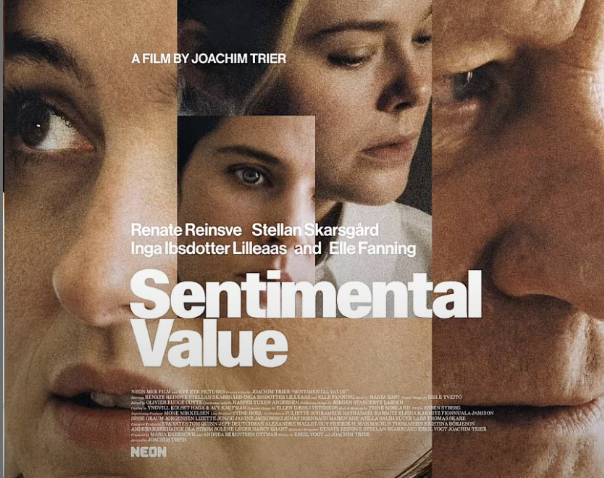
News bulletin: HE’s Bobby Peru was wrong when, based on research, he stated on 5.24.25 that the Sentimental value house is known as Villa Filipstad, “a notable building in the neighborhood Filipstad in Oslo, Norway…located at Munkedamsveien 62”) …brrraaannnggg!
In fact the home is located at Thomas Heftyes gate 25 in Oslo’s hilly Frogner neighborhood. Western region, blue chip, nice view of the city.
“If you walk through the elegant neighborhood of Frogner, in Oslo, you may notice a house that doesn’t fit in with the understated apartment buildings and embassies nearby. It’s not that the house is ugly or run-down. Rather, it evokes a cottage from a fairy tale. Clad in dark wood with a steeply gabled roof, it has squiggles of cherry-red trim, like decorations on a birthday cake. Norwegians call such architecture dragestil, or ‘dragon style,’ a late-nineteenth-century aesthetic recalling Viking ships and wooden-stave churches.
“To Joachim Trier, the Norwegian director whose new film, Sentimental Value, is partially set at this address, the house is ‘a bit like Pippi Longstocking’s. There’s a feeling of something wild and soulful in the middle of something more mannered and polite.'”
Crowe’s initial theatrical version ran 122 minutes, in part because Dreamworks producer Walter Parkes kept insisting on “shorter, shorter, shorter.” It felt a bit constricted, didn’t really breathe. The 162-minute Bluray is the definitive version.
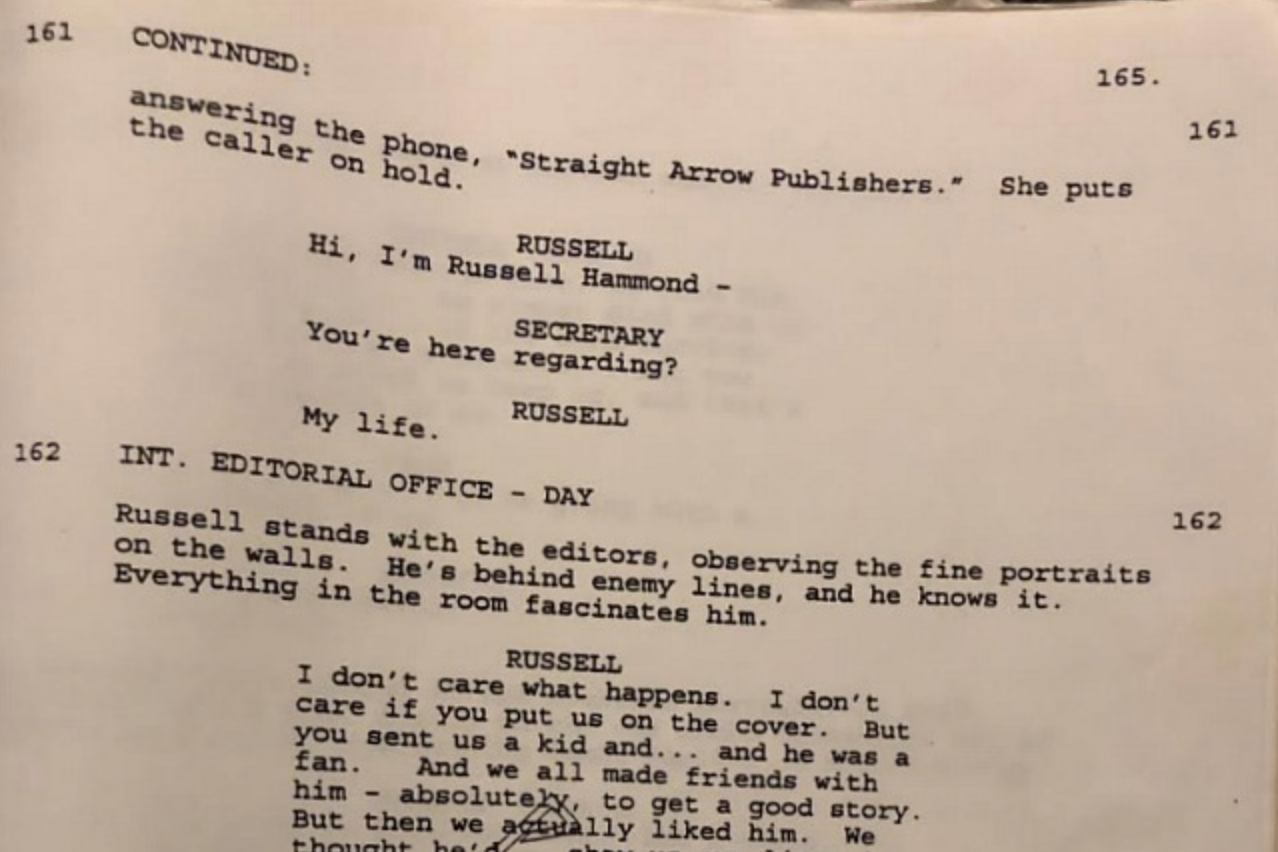
During production I got hold of a 1998 copy of Crowe’s script. It was 168 pages long, and I fell in love with it straight off. Almost all of it was shot and most of it became part of the final cut. Unfortunately my favorite scene (which is posted after the jump) wasn’t shot or was shot and never used.
Almost Famous is a largely autobiographical saga about a teenaged, San Diego-residing Crowe stand-in (called William Miller in the script and played by Patrick Fugit) landing a Rolling Stone assignment to profile an up-and-coming band called Stillwater, which had a star performer called Russell Hammond (Billy Crudup).
William hangs out with the band, gets into all kinds of wild-ass adventures, gets to know the Stillwater groupies and so on. After a false start he eventually turns in an honestly written article to Rolling Stone.
Russell and the band members are alarmed when the fact-checker calls. Fearful of being portrayed as insecure dipshits, they lie by insisting that Miller’s account is fiction. The article is killed, and William returns home in a state of defeat and total exhaustion.
The final graph of the Wiki synopsis: “Russell feels guilty for betraying William. He calls Penny Lane (Kate Hudson) and wants to meet with her, but she tricks him by giving him William’s address. He arrives and finds himself face-to-face with William’s mother (Frances McDormand), who scolds him for his behavior. Russell apologizes to William and finally gives him an interview.
Russell, we learn, has verified William’s article to Rolling Stone, which runs it as a cover feature. Penny fulfills her long-standing fantasy to go to Morocco. Stillwater again tours only by bus.”
The scene that I loved so much shows a guilt-stricken Russell visiting the offices of Rolling Stone and admitting to Jann Wenner, Ben Fong Torres and David Felton that William’s article is an honest account. I’ve had this script in a file cabinet for 20 years, and this is the first time I’ve posted these now-yellowed pages:
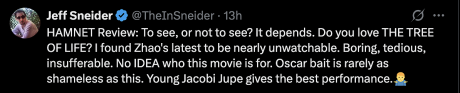
I’ve been waiting for a Hamnet takedown campaign to be launched, and now we’ve got the beginnings of one!
I’m not invested in any sort of negativity toward Chloe Zhao’s film, which I haven’t seen. The Best Picture race is simply more interesting when a strongly favored contender acquires a few influential haters.
Has anyone reported that the 12-year-old kid who plays the doomed Hamnet Shakespeare (Jacobi Jupe) is the younger brother of the 20-year-old Noah Jupe, who plays Hamlet in the Globe Theatre production of the famous tragedy? Obviously Zhao wants the audience to see and feel a physical similarity between the deceased son of William and Agnes Shakespeare (Jessie Buckley, Paul Mescal) and the actor playing Prince Hamlet at the finale.
Ask any Shakespeare authority, and they’ll tell you Noah Jupe is too young for the role. A friend who’s seen Hamnet feels that Zhao’s strategy is cloying, manipulative, contrived.
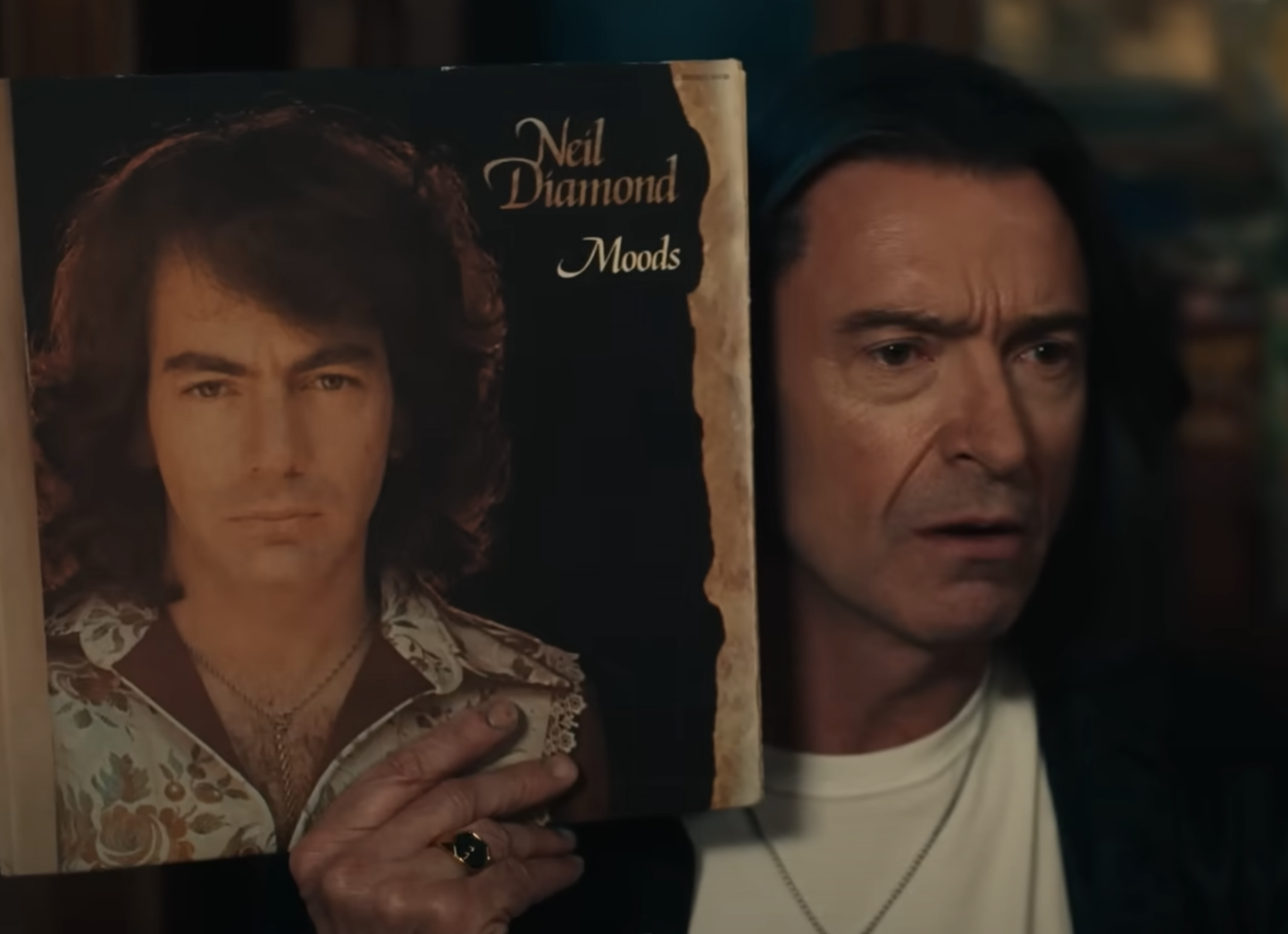
An industry friendo saw Song Song Blue (Focus, 12.25) the other night. He conveyed this by forwarding a photo of a post-screening q & a, but without an opinion. “I’ve been told it’s a fairly good film,” I wrote, “but it’s aimed at commoners.” Industry friendo: “Si, senor.”
“As Song Sung Blue recognizes, there are two kinds of Neil Diamond fans: those who, like Mike, hear the beautiful depths in dozens of his songs (‘Cherry, Cherry’, ‘Brother Love’s Travelling Salvation Show’, ‘Cracklin’ Rosie’), and the bom-bom-bom people — the ones Mike can’t stand, who at a Diamond concert experience an epiphany when they pump their fists in the air and sing-shout ‘bom! bom! bom!’ in the middle of the chorus of ‘Sweet Caroline’, even though it’s not even a lyric. They’re singing along with the trumpet.
“Song Sung Blue is certainly a movie for the bom-bom-bom crowd. Mostly, though, it’s for the Neil Diamond fans who will listen to Mike and Claire, in their solo show at the Ritz Theater in Milwaukee, in a state of slow-burn bliss.”
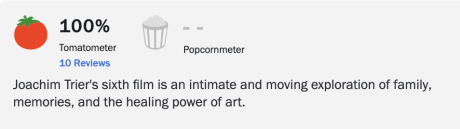
Value screened last weekend to an adoring crowd at the Hamptons Film Festival, and is currently press-screening in Manhattan prior to the early November debut, which is only 24 days off.
It’s a guaranteed Best Picture Oscar nominee; ditto Renate Reinsve and Skellan Skarsgard for Best Actress and Best Supporting Actor, respectively. We all understand that Hamnet is the Oscar frontrunner as we speak, but don’t sell Value short.
Posted on 5.21.25: I saw Joachim Trier’s SentimentalValue last night at 10:30 pm, exiting around 12:40 am. I was afraid it might not live up to expectations, but no worries — I began to feel not only stirred and satisfied but deeply moved and delighted by the half-hour mark, and then it just got better and better.
For my money this is surely the Palme d’Or winner. I wanted to see it again this morning at 8:30 am. Yes, it’s that good, that affecting, that headstrong and explorational. A 15-minute-long standing ovation at the Grand Lumiere, and all the snippy, snooty Cannes critics are jumping onboard.
But what matters, finally, is what HE thinks and feel deep down, and that, basically, is “yes, yes…this is what excellent, emotionally riveting family dramas do…especially with brilliant actors like Renata Reinsve (truly amazing…she really kills) and Stellan Skarsgård, Inga Ibsdotter Lilleaas and Elle Fanning topping the ensemble cast.”
But I was really too whipped to tap anything out when I returned to the pad at 1:15 am. I managed a grand total of 4.5 hours of sleep, and am now at a Salles Bunuel screening of Eugene Jarecki‘s The Six Billion Dollar Man…beginning in a few.
Sentimental Value (why do I keep calling it Sentimental Gesture in my head?) is a complex, expertly jiggered, beautifully acted Ingmar Bergman-esque family drama that feels at times like Woody Allen‘s Hannah and Her Sisters but with less comic snap…it’s more of a fundamentally anxious, sad, sometimes very dark but humanist dramedy (a flicking comic edge, a Netflix putdown or two).
It’s a film that’s completely receptive and open to all the unsettled cross-current stuff that defines any shattered, high-achieving family, and this one in particular.
Emotional uncertainty and relationship upheavals are in plentiful supply.
Set in Oslo, it’s basically about an estranged relationship between Skarsgard’s Gustav Berg, a blunt-spoken, film-director father who hates watching plays, and his two adult daughters — Reinsve’s Nora Berg, a prominent stage and TV actress who’s a bundle of nerves, anxiety and looming depression, and Lilleaas’s Agnes, Nora’s younger sister who’s not in “the business.”
Gustav’s career has been slumping but now he’s returning to filmmaking with a purportedly excellent script that’s partly based on his mother’s life (although he denies this), and he wants Nora to star in it. She refuses over communication and trust issues, and so Gustav hires Fanning’s Rachel Kemp, a big-time American actress, to play Nora’s role.
I could sense right away that Kemp would eventually drop out and that Nora would overcome her anger and step into the role at the last minute. And I knew the film would explore every angle and crevasse before this happens.
‘ Value really digs down and goes to town within a super-attuned family dynamic…steadfast love, familial warmth, sudden tears, extra-marital intrigue, stage fright, film industry satire, thoughts of suicide…nothing in the way of soothing or settled-down comfort until the very end, and even then…but it’s wonderful.
…when whalebods were seen as sexy, healthy, and life-affirming in the most wonderful way imaginable? Ozempic and other crash-diet drugs put an end to that, thank God, and now it’s even okay for a semblance of the male gaze to make a slight comeback. Because a vibe shift (lo and behold) has happened, and the once-bullying woke Stalinists have fled into the forest.
Triggered by a recent CNN article about the return of the male gaze, “After Party”‘s Emily Jashinsky and Spencer Klavan, Associate editor for Claremont Review of Books and Author of “Light of the Mind, Light of the World”, on a recent CNN article on the “male gaze” and how mainstream outlets frame timeless human desires as outdated or problematic, contrasting the body-positivity era of 2020 with today’s renewed focus on fitness.
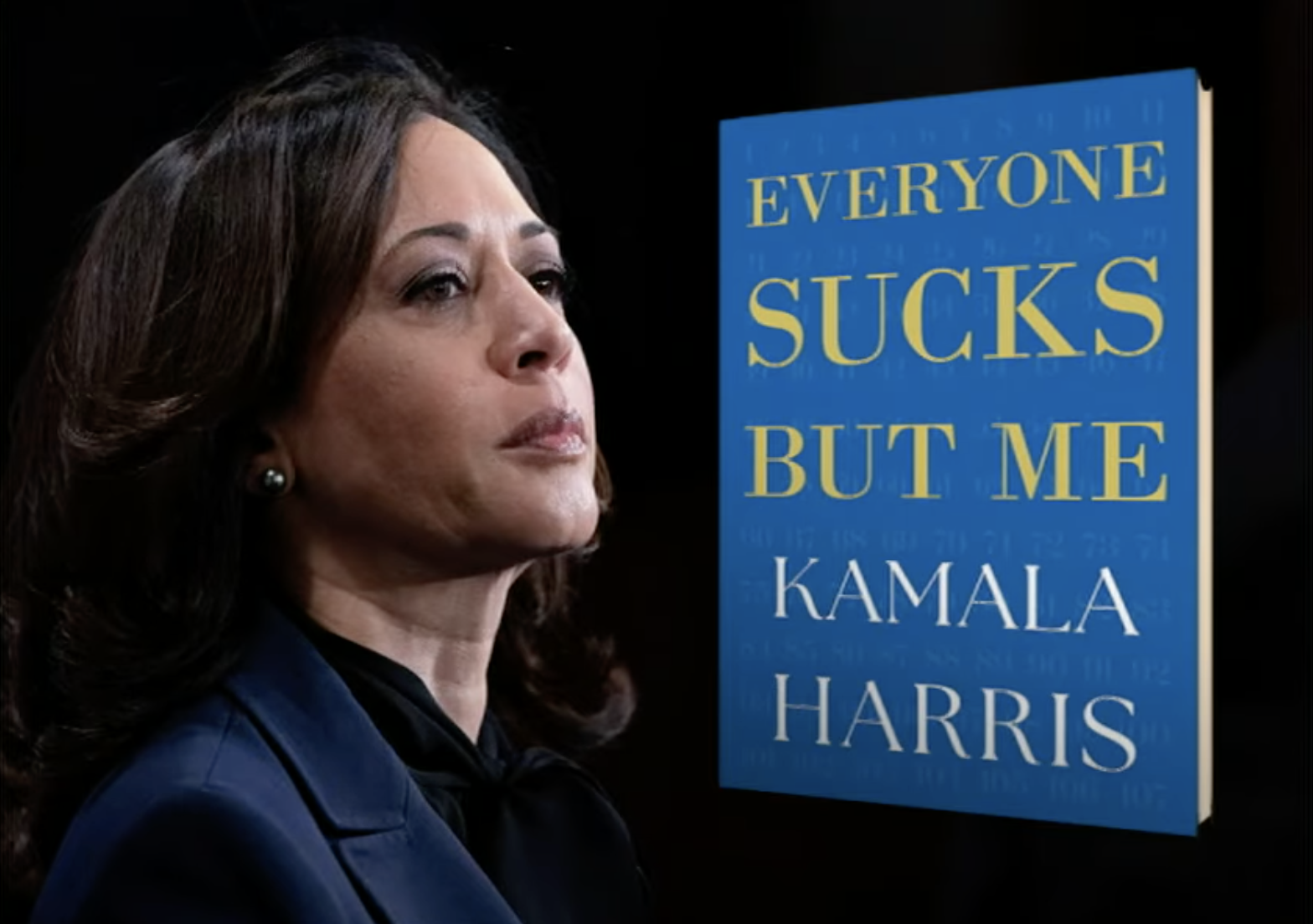
“Yeah, and a billion and a half dollars. And a built-in army of about 75 million people who’d vote for any human-adjacent life form that wasn’t Trump. But in ‘107 Days,’ nothing is ever Kamala’s fault.”
The Ankler‘s Richard Rushfield (10.1.): “This morning Jane Fonda — legendary actress, producer, activist and Oscar-winner — announced the re-launch of The Committee for the First Amendment, a group once led by her father, Henry Fonda, among other A-list Golden Age stars, including Humphrey Bogart and Lauren Bacall.”
“The Committee’s reformation was announced with the release of a statement signed by over 550 artists” — Bill Maher included! — “and members of the Hollywood community.”
The reformed Committee is, of course, a pushback against Donald Trump‘s autocratic bully-boy regime, and especially, one presumes, his recent quashing (through surrogates) of his late-night talk-show critics, Stephen Colbert and (for a few days) Jimmy Kimmel. Who’s next?
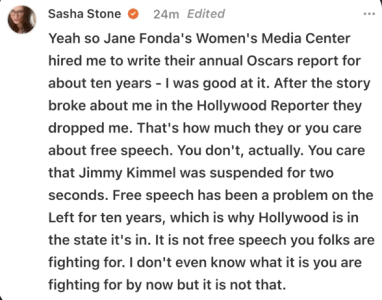
And yet Fonda’s committee did a little quashing of its own last year when THR‘s Rebecca Keegan posted that Sasha Stone hit piece — an article that seemed to pretty much torpedo Stone’s award-season ad income, although she’s since bounced back to some extent.
Here’s what Stone posted this morning in response to Rushfield’s piece:
It probaby wasn’t Fonda herself who said “get rid of Sasha Stone!” But it might have been Robin Morgan, co-founder of the Women’s Media Center.
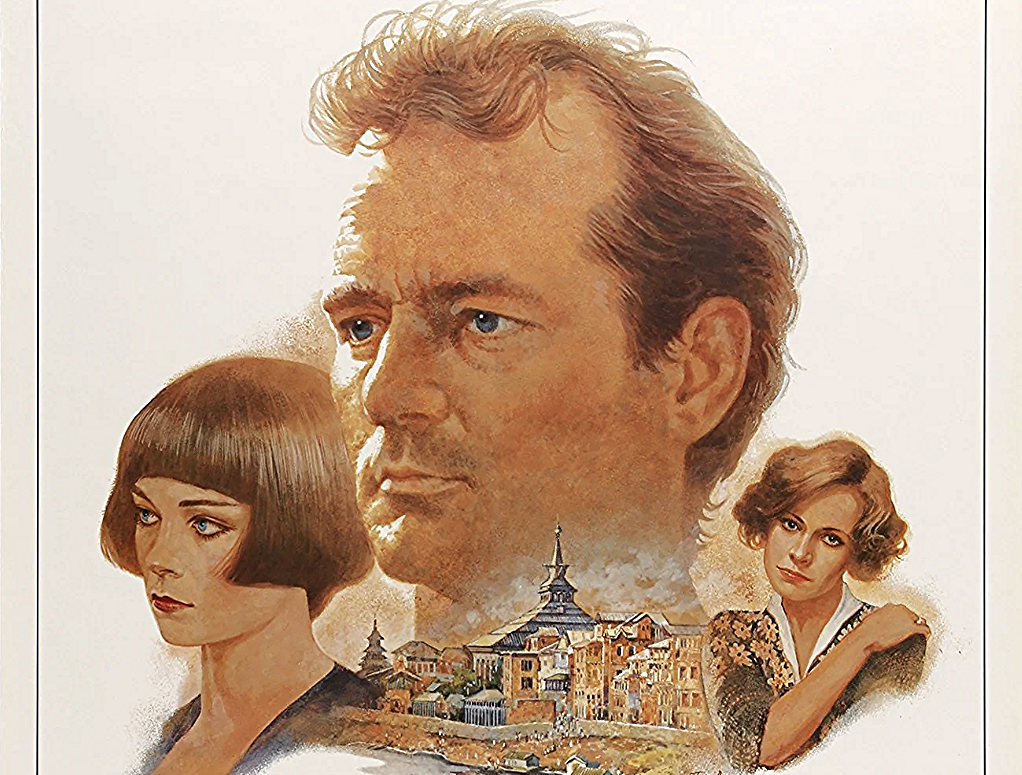
41 years have passed since my first and only viewing. Directed and co-written by John Byrum, this Columbia release is probably the worst Bill Murray movie ever made, and was certainly the most ill-conceived.
From Janet Maslin’s 10.19.84 review: “As he prepares to tell his fiancee that he wants to postpone their wedding and is not yet ready to settle down, Bill Murray’s Larry Darrell says ‘let’s talk.’ Murray then adds ‘seal talk’ as he’s playing the scene in a swimming pool. And then he begins to arf.
“If The Razor’s Edge is Mr. Murray’s first ‘serious’ movie, he can hardly be accused of bringing an excess of seriousness to its central role.
“Nor does he exactly play Larry Darrell, the Chicagoan ‘dreamer of a beautiful dream’ who journeys to Paris and the Far East in search of enlightenment, for the laughs that are his trademark. Certainly Mr. Murray brings his familiar off-handed, wise-guy manner to the tale, as well as a complete indifference to the post-World War I time frame; his performance is both jokey and anachronistic, and the Parisian setting is little more than an excuse for him to show up in a beret.
“These touches might seem more jarring in a consistent and convincing version of Maugham’s novel. As it is, this Razor’s Edge is itself so disjointed that Mr. Murray, for all his wisecracking inappropriateness, is all that holds it together.”
I’ve chosen the voice of a male Englishman, but it’s just a placeholder. I’m not especially happy with this guy because he’s just a genteel robotic voice — he doesn’t seem to understand what he’s saying or, for that matter, the English language itself.
So I’m currently searching around for a TTS software platform that can deliver voices that do seem to understand the import of what they’re reading, and which know a little something about when to pause and which words to emphasize and what parentheses mean, etc. (Hume is one option — Revoicer is another.) My ideal voices would be (a) mid ’60s Lee Marvin, (b) early ’60s Richard Burton or (c) my own.
So let’s go back to July 2007…George Bush is president, Iraq is a mess, the arrival of woke terror is at least a decade away, the pandemic won’t begin for another 13 years, the greatest movie year of the 21st century is half over, and people are beginning to talk seriously about a certain Illinois senator with a funny-sounding name who’s running for president.
___________________________________
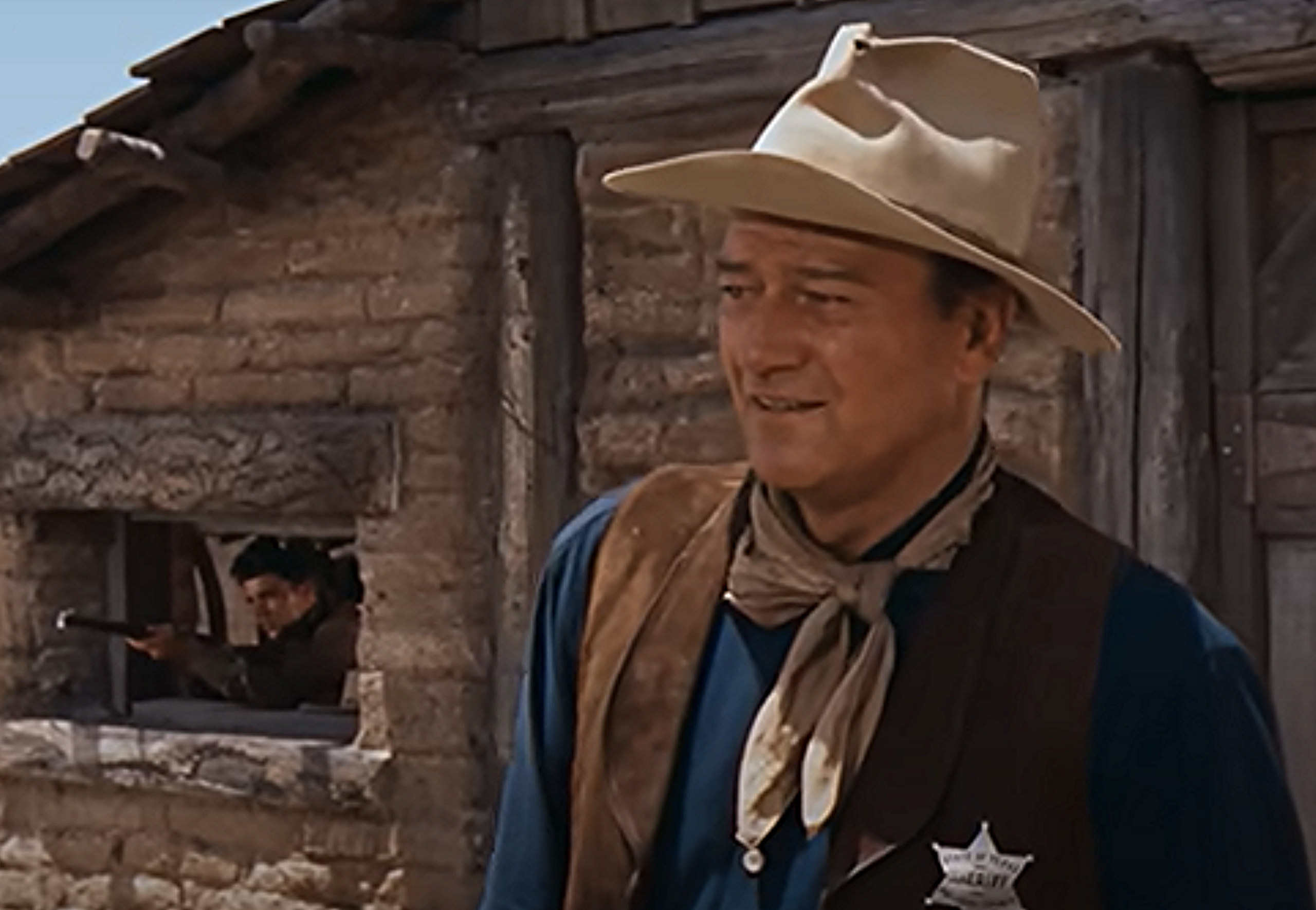
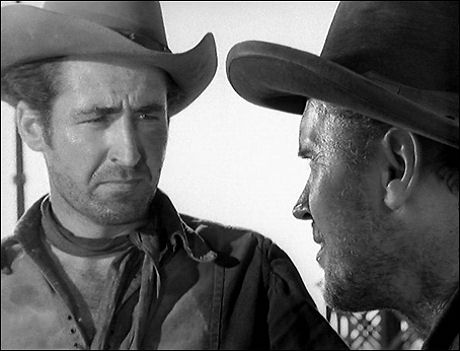
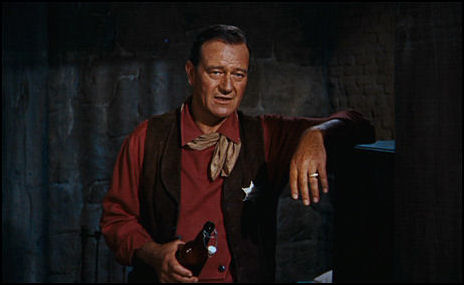
Talk to any impassioned, ahead-of-the-curve film snob about classic westerns, and he/she will probably tell you that Howard Hawks‘ Rio Bravo (1959) is a much better, more substantial film than Fred Zinneman‘s High Noon (1952). More deeply felt, they’ll say. Better shoot-em-up swagger, tastier performances, more likable, more old-west iconic.
Many people I know feel this way. And now director Peter Bogdanovich is saying it again in a New York Observer piece — Rio Bravo is even better than you thought, High Noon doesn’t hold up as well, etc.
Something snapped when I read Peter’s article this afternoon. Goddamn it, the Rio Bravo cult has gone on long enough! Bogdanovich calls it “a life-affirming, raucous, profound masterpiece”…okay. But I’m going to respond politely and call that a reach. I’ve long admired admire Hawks’ movies and the whole Hawks ethos as much as the next guy, but it’s time to curtail this here and now.
High Noon may seem a bit stodgy or conventional to some and perhaps not as excitingly cinematic to the elites, but by any semblance of a classic understanding of what constitues high-quality cinema, it’s a far greater film than Rio Bravo.
It’s not about the Old West, obviously — it’s a metaphor movie about the Hollywood climate in the early ’50s — but it walks and talks like a western, and is angry, blunt, honed and unequivocal to that end. It’s about the very worst in people, and the best in a single, anxious, far-from-perfect man.
I’m not speaking so much about Gary Cooper‘s Will Kane as High Noon‘s screenwriter-producer Carl Foreman, who was being eyeballed by the Hollywood right for alleged Communist ties when he wrote it, and receiving a very tough lesson in human nature in the process. He wound up writing a crap-free movie that talks tough, cuts no slack and speaks with a single voice.
You know from the get-go that High Noon is going to say something hard and fundamental about who and what we are. It’s not going to poke along some dusty trail and go yippie-ki-yay and twirl a six-gun. It’s going to look you in the eye and say what’s what, and not just about the political and moral climate in some small western town that Gary Cooper‘s Willl Kane is the sheriff of.
Rio Bravo and High Noon are both about a lawman facing up to bad guys who will kill him if he doesn’t arrest or kill them first. The similarities pretty much end there.
High Noon is about facing very tough odds alone, and how you can’t finally trust anyone but yourself because most of your “friends” and neighbors will equivocate or desert you when the going gets tough.
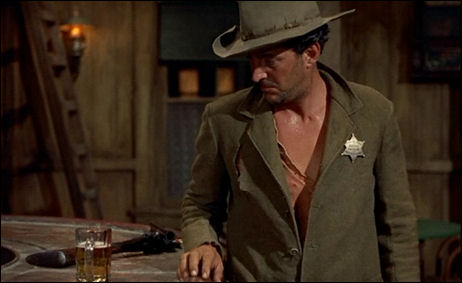
Rio Bravo is about standing up to evil with your flawed but loyal pallies and nourishing their souls in the bargain — about doing what you can to help them become better men. This basically translates into everyone pitching in to help an alcoholic (Dean Martin) get straight and reclaim his self-respect.
High Noon doesn’t need help. It’s about solitude, values…four o’clock in the morning courage.
We’d all like to have loyal supportive friends by our side, but honestly, which represents the more realistic view of human nature? The more admirable?
The first 10 or 12 minutes of Rio Bravo, I freely admit, are terrific in the way Hawks introduces character and mood and a complex situation without dialogue. Let it be clearly understood there is nothing quite like this in all of High Noon. I also love the way John Wayne rifle-butts a guy early on and then goes, “Aww, I didn’t hurt him.”
But once the Duke and Walter Brennan, Martin, Ricky Nelson and Angie Dickinson settle into their routines and the easy-going pace of the thing, Rio Bravo becomes, at best, a somewhat entertaining sit-around-and-talk-and-occasionally-shoot-a-bad-guy movie.
More than anything else, Rio Bravo just ambles along. Wayne and the guys hang out in the jailhouse and talk things over. Wayne walks up to the hotel to bark at (i.e., hit on) Dickinson. It tries to sell you on the idea of the big, hulking, 51 year-old Wayne being a suitable romantic match for Dickinson, who was willow slender and maybe 27 at the time but looking more like 22 or 23.
Plus the villains have no bite or flavor — they’re shooting gallery ducks played by run-of-the-mill TV actors. Most of Rio Bravo is lit too brightly. And it seems too colorfully decorated, like some old west tourist town. It has a dippy “downtime” singing sequence that was thrown in to give Nelson and Martin, big singers at the time, a chance to show their stuff. Then comes the big shootout at the end, which is certainly okay but nothing legendary.
Does Rio Bravo have a sequence that equals the gripping metronomic ticking-clock montage near the end of High Noon? No. Is the dialogue in Rio Bravo up to the better passages in Zinneman’s film? No. (There’s nothing close to the scene between Cooper and Lon Chaney, Jr., or the brief one between Cooper and Katy Jurado.) Is there a moment in Rio Bravo that comes close to Cooper throwing his tin star into the dust at the end? No. Is there a “yes!” payoff moment in Rio Bravo that’s as good as the one in High Noon when Grace Kelly, playing a Quaker who abhors violence, drills one of the bad guys in the back? No.
Floyd Crosby‘s High Noon photography is choice and precise and gets the job done. It doesn’t exactly call attention to itself, but it’s continually striking and well-framed. To me, the black-and-white images have always seemed grittier and less Hollywood “pretty” than Russell Harlan‘s lensing in Rio Bravo, which I would file under “pleasing and acceptable but no great shakes.”
Dimitri Tomkin wrote the scores for both High Noon and Rio Bravo, but they don’t exist in the same realm. The Bravo score is settled and kindly, a sleepy, end-of-the-day campfire score. High Noon‘s is strong, pronounced, “dramatic” — so clear and unified it’s like a character in itself. And I’ve never gotten over the way the rhythm in that Tex Ritter song, “Do Not Forsake Me O My Darling,” sounds like a heartbeat.
Bogdanovich writes that Rio Bravo didn’t win any Oscars or get much critical respect, but “it was far more popular with audiences than High Noon.” He’s right about this. The IMDB says Rio Bravo earned $5,750,000 in the U.S. when it came out in ’59, and that High Noon brought in $3,750,000 in 1952 dollars. Big effin’ deal. High Noon whipsRio Bravo‘s ass in every other respect.
That said, there’s an intriguing Hawks assessment by French director Jean-Luc Godard in the Bogdanovich piece. Godard doesn’t argue that Rio Bravo is pretty much what I’ve described above, but says it’s still a better film than High Noon because — I love Jean-Luc Godard — the exceptionally good things in Rio Bravo can be ignored, and therefore may be unnoticable to a good-sized portion of the audience.
“The great filmmakers always tie themselves down by complying with the rules of the game,” Godard states. “Take, for example, the films of Howard Hawks, and in particular Rio Bravo. That is a work of extraordinary psychological insight and aesthetic perception, but Hawks has made his film so that the insight can pass unnoticed without disturbing the audience that has come to see a Western like all others. Hawks is the greater because he has succeeded in fitting all he holds most dear into a well-worn subject.”