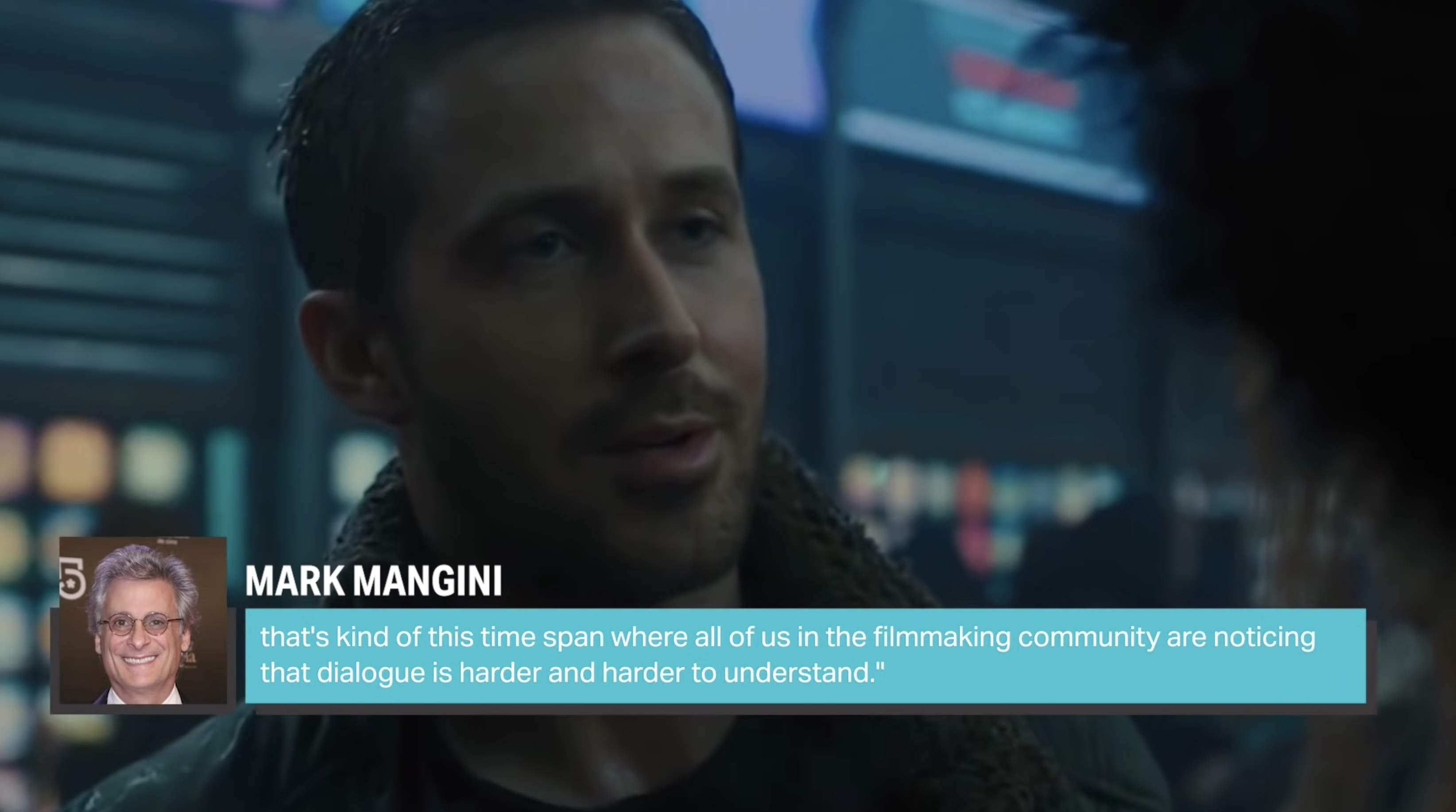
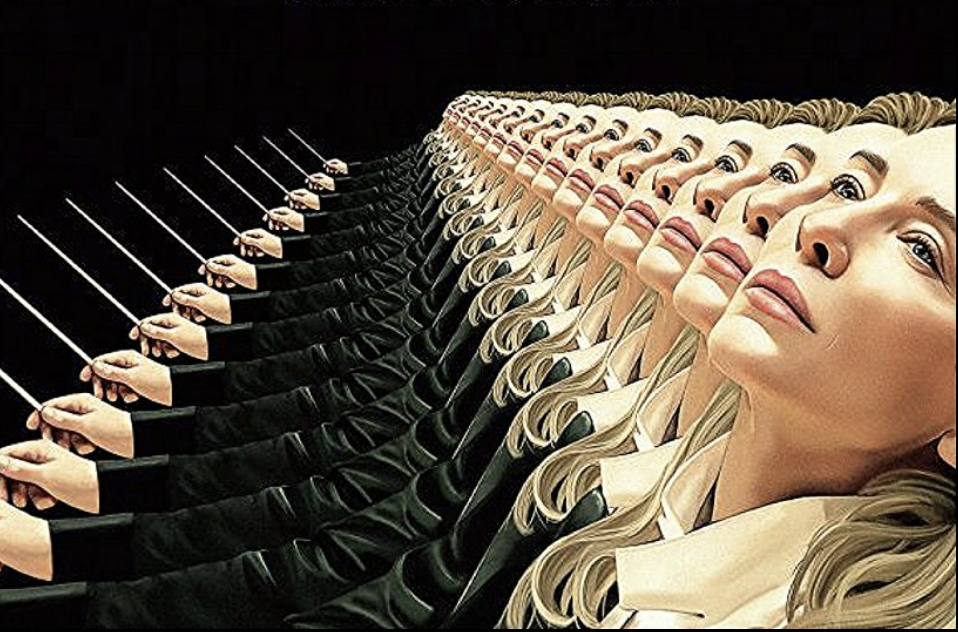
My fourth viewing of Tar will be with subtitles (Bluray or streaming), which will probably help enormously.

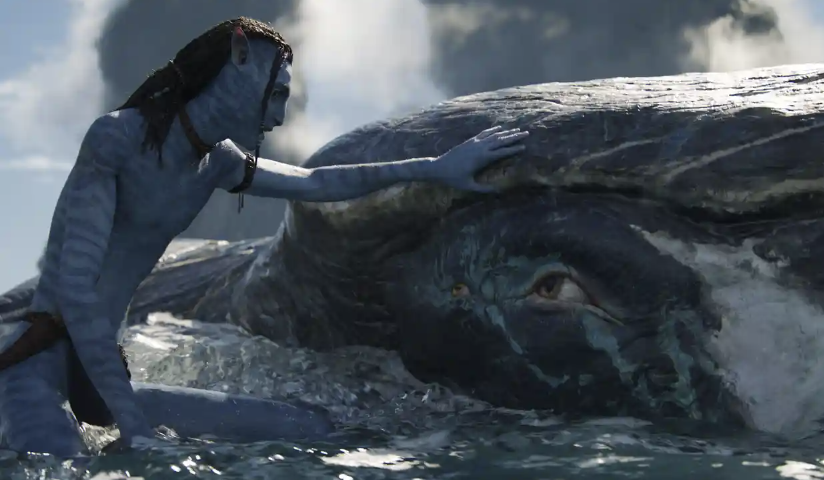
Thought #1: Since Avatar opened in late ’09 or 13 years ago, I’ve regarded it as a very filling, four-course meal — a complete, nourishing and fulfilling grand slam in all respects. And so I’ve never understood the need or the hunger, even, for any Avatar sequels. Other than the fact that they would make money, of course, but shouldn’t films of any kind (sequels or stand-alones) be willed into existence for reasons other than the mere earning of shekels?
Thought #2: I’m not all that enthused, frankly, about a film in which significant portions take place under waiter, given my own personal inability to breathe in that environment. I’m not a fish and I don’t have gills and the Navi aren’t wearing air tanks or mouthpieces so…
Thought #3: My understanding is that the Navi are, like humans, oxygen-breathing beings with lungs. So how do they manage to stay underwater for long periods of time with relative ease, as if they’re naturally aquatic? Director-writer James Cameron has an answer, of course, but right I’m scratching my head.
[Originally posted on 2.17.15.]
There was a period between my 20th and 21st birthday when I had no job or goals or academic engagement…nothing. I was in my Bhagavad Gita mystical phase, no fooling, except the constant urge to party and frolic and basically pursue the spiritual pretty much dominated everything. Partying and then recovering the next day so I could party again the next night…well, there was actually more to it than just that.
It’s not that I didn’t try to have a kind of “life.” I would land a job I hated and then lose that job. I read the New York Times every day but I ingested a lot of substances and did a lot of sleeping and day-dreaming. I dabbled as a dealer of pot and hallucinogens. Occasional tripping, hitchhiking, chasing girls, wherever the day took me…bars, parties, music and especially (this was huge) lying totally ripped on a floor with two smallish Marantz speakers on either side of my head.
At some point my parents decided to strongly communicate their disfavor. They wanted me to understand that this lifestyle had nowhere to go but down so they kicked me out of their comfortable Cape Cod-style home in Wilton, Connecticut. I would crash here and there but occasionally I’d have nowhere to go.
So I’d show up at the Cape Cod around midnight or 1 am and throw pebbles at my sister Laura’s window. To keep me out every night my father would lock the garage basement door plus the dining-room door that led to the basement stairs, so I needed Laura to let me in. After a couple of taps she’d come to the window and then meet me downstairs. I remember I had to raise the sliding garage doors one inch at a time so as to not make any noise.
Laura and I would tiptoe upstairs in pitch black and I’d sleep inside the closet in my room. My parents both worked during the day and were gone by 9 am, so I’d come down around 10 am or so and get some breakfast, etc.
I forget how many times this happened but I’d say at least 15 or 20. Laura was there for me every time. I’m not saying she acted in some extraordinary fashion but she did the good, kind thing.
Laura’s schizophrenia became pretty aggravated around then, and the truth is that we didn’t have very much to say to each other through the ’70s, ’80s and ’90s. She had a much higher IQ than I (or so I was told) but she was pretty much off the rails. Laura had a hard life. I took her to Italy (San Donato, Rome) with me in ’03 — that was pretty much the summit of our adult bonding.
Laura died of cancer in April of 2008, and it just hit me this morning that I never told her how extra double thankful I was for all those times she gave me the gift of a warm, snug sleep on the floor of my bedroom closet. If she could read this or perhaps hear me on some level…



There are three kinds of excellent horror film endings, but they all put the chill in and stay there after the closing credits.
One, those that add something totally unexpected at the very end, a la Carrie White‘s bloody hand poking through the burnt embers and grabbing Amy Irving in Carrie.
Two, those that double down by adding a dash of surreal, rule-breaking creepitude a la Anthony Perkins‘ demonic grin blending with his mother’s rotted skull in Psycho.
And three, those that allude to real-world concerns or social tremors, as in The Thing From Another World when a news reporter warns the world to “watch the skies…keep looking, keep watching the skies“, the notion being that James Arness‘s Mr. Clean is actually out there in some form.
What late 20th Century or 21st Century horror films deliver one of these variations?


What is actually being said here? Ask yourselves that.
The message seems to be “unless you’re a person of color and even if you’re Robin D’Angelo, stay away from Wakanda Forever on its opening weekend. Seriously. If you know what’s good for you. Because any whiteys who show up regardless…well, you’ll be branding yourself as anti-black, in a sense.”
I’m not saying this would happen, but imagine if some deranged cracker were to tweet that Black people need to avoid opening-weekend screenings of some all-white movie…The Fablemans, say, or next summer’s Oppenheimer. Imagine if the corresponding slogan was “Black people need to stay away from The Fablemans so white people can enjoy that movie in peace.”
If you go to see Wakanda Forever on opening weekend, you are anti-black.
White people need to stay away so that black people can “enjoy that movie in peace”. pic.twitter.com/QTieYLjfwA
— iamyesyouareno (@iamyesyouareno) October 30, 2022
After debuting last May in Cannes and hitting several film festivals and opening worldwide over the last three or four months, Marie Kreutzer‘s Corsage (IFC Films) will open stateside on 12.23 — one of the last significant commercial bookings.
Third to last actually. The historical drama opens in England on 12.30.22, and in France on 1.25.23.
“Royally Uninterested,” posted on 5.20.l22: “I regret reporting that Corsage, which screened at 11 am this morning, didn’t sit well. I found it flat, boring, listless.
“The Austrian empress Elizabeth (Vicky Krieps) is bored with her royal life, and the director spares no effort in persuading the audience to feel the same way.
“Krieps plays up the indifference, irreverence and existential who-gives-a-shit?.
“Somewhere during Act Two a royal physician recommends heroin as a remedy for her spiritual troubles, and of course she develops a habit. I was immediately thinking what a pleasure it would be to snort horse along with her, or at least during the screening.
“Corsage is unfortunately akin to Pablo Larrain‘s Spencer and Sofia Coppola’s Marie Antoinette — stories of women of title and privilege who feel alienated and unhappy and at a general loss. I’m sorry but this movie suffocates the soul.
“In actuality Empress Elizabeth was assassinated in 1898, at age 51. For some reason Kreutzer has chosen to end the life of Krieps’ Elizabeth at a younger point in her life, and due to a different misfortune.
“This is one of the most deflating and depressing films I’ve ever seen.”

Everything’s cool now (I think), but for three or four days a close friend was giving me the cold-shoulder treatment because I’m not a fan of Martin McDonagh‘s The Banshees of Inisherin.
The truth is that I am a fan of some of it but I couldn’t abide the idea of a significant fiddle-playing character mutilating himself in order to emphasize to a former friend (a non-musician) that he really, really doesn’t want to chit-chat anymore.
I’m sorry but I found this behavior to be incomprehensible, not to mention repugnant.
HE to friendo: “Banshees obviously has its virtues and charms and its pictorial beauty and whatnot, but the [afore-mentioned nihilism] is ridiculous. THR‘s Scott Feinberg isn’t demonic for sharing my reaction or vice versa. There are many sane people out there who’ve found this film mystifying. I really don’t think I deserve to be shunned or banished for feeling this way. I respect many things about it. It’s not ‘bad’ as much as infuriating.”
Observational friendo #2: “[Sometimes movie lovers] will invest the year-end movie contest with an unreasonable ideological fervor. And thus Banshees, like Belfast, is somehow praised as a great film with traditional, classic, old-fashioned and in some ways masculine virtues…a film that that all good people must rally behind. In disliking Banshees you were pissing on The Cause.
“We’re all looking for an Oscar movie to keep The Dream alive. But once a special film is discovered and praised in certain quarters, people who don’t like it are somehow annihilating the dream.”
HE regulars are asked to recount stories about friendships and relationships that went through a bad patch or were even torn asunder due to a major disagreement over a film.
Early next year, Roger Durling‘s Santa Barbara Film Festival will present the 2023 Maltin Modern Master award to Jamie Lee Curtis. Not because of her legendary scream queen rep (recently underlined by her starring role in Halloween Kills) but because of her broad performance as a wackjobby IRS agent in A24’s Everything Everywhere All At Once**.
We all respect the endurance (persistence?) of Curtis’s career, but the truth is that Everything Everywhere aside she hasn’t been in any reasonably good films in over 20 years. I’m not being mean — that’s just factual.
Curtis’s peak years were from the late ’70s to mid ’90s, and principally in the ’80s. Her three finest films, in this order, are Charles Crichton and John Cleese‘s A Fish Called Wanda (’88), John Landis‘s Trading Places (’83) and James Cameron‘s True Lies (’94).
Other noteworthy JLC vehicles, listed sequentially, are Halloween (’78), The Fog (’80), Love Letters (’83), James Bridges‘ Perfect (’85), Diane Kurys‘ A Man in Love (’85), Kathryn Bigelow‘s Blue Steel (’90), John Boorman‘s The Tailor of Panama (’01) and Rian Johnson‘s Knives Out (’19).
HE to Durling: The perfect presenter of the actual award would be John Carpenter, to whom Curtis owes her entire breadwinning career.
** The perfect ending aside, I mostly loathed this curiously successful film. but that’s water under the bridge.
Patti Lupone recently said that B’way ticket prices are “insane.” I knew they were painful but it’s been a few years since I actually pondered (i.e., fantasized about) a purchase. I also presumed Lupone had turned on the hyperbole spigot. Then I looked at prices for Tom Stoppard’s Leopoldstadt. Okay, Telecharge isn’t as punishing.
.


I’d just like to explain once and for all that Don Siegel‘s original Invasion of the Body Snatchers (’56) was always intended as a metaphor about the blanding and uniformity of American culture in the mid ’50s. That’s the only interpretation that really works, and I really don’t want to hear any argument.
Siegel originally shot Body Snatchers within a 1.85:1 aspect ratio. (Which meant of course that once upon a time there was a 1.37 open-matte “boxy” version.) The low-budget creeper (final budget was $382,190) was shot by cinematographer Ellsworth Fredericks between 3.23.55 and 4.27.55 — 23 days. The cast and crew worked a six-day week with Sundays off.
The production went over schedule by three days “because of the night-for-night shooting that Siegel wanted.” Additional photography took place in September 1955, filming a framing story that Allied Artists had insisted upon (i.e., Kevin McCarthy warning Whit Bissell about the seed pods and insisting he’s “not crazy!”).
Producer Walter Wanger protested the use of the Superscope aspect ratio (2.00:1). Its use had been included in early plans for the film, but the first print wasn’t made until December ’55. Wanger felt that the SuperScope cropping caused the film to lose sharpness and detail. I for one would love to see the 1.85 version — probably doesn’t exist. That said, I’m more or less okay with my Bluray version.
In Maria Schrader‘s She Said, the performances of Zoe Kazan and Carey Mulligan as N.Y. Times reporters Jodi Kantor and Megan Twohey, respectively, “seem” to be even-steven in terms of screen time.
They’re not actually — Kazan has about 20 minutes more screen time that Mulligan does. And yes, Kantor is working on the Hollywood sexual harassment story a little before she and Twohey join forces. And Kazan comes close to choking up in a couple of scenes in which she interviews victims of Harvey Weinstein.
But the film doesn’t play like a senior-junior partnership thing. The Kantor-Twohey dynamic is roughly the same as Robert Redford and Dustin Hoffman‘s Woodward and Bernstein in All The President’s Men — and so it doesn’t really add up that Kazan will be pushed for Best Actress and Mulligan for Best Supporting Actress, as Gold Derby‘s Daniel Montgomery and Chris Beachum reported earlier today.
It’s not a problem, mind, that Universal has decided to play it this way. Kazan and Mulligan are both excellent, however you want to slice it.
And poor Chadwick Boseman, rest his soul, is no more. And that means there’s a hole in this sequel that can’t be filled.
Black Panther: Wakanda Forever is basically a film about women warriors with Marvel bling. I challenge anyone watching the trailers to tell me who the lead is, or what the story’s about.
You might presume that the most prominent character is Angela Bassett‘s Ramonda, the grieving Queen Mother of Wakanda, but Letitia Wright‘s Shuri is apparently the one carrying the ball…the quarterback, if you will.
The trailers don’t suggest this, of course. The trailers are saying, in fact, that this film has no center, no gravity.
Honestly? I don’t even want to see it. It looks like a headache, a slog.