George Clooney‘s Leatherheads (opening Friday) is tracking well at 73, 40 and 18 — it should do close to $20 million, maybe a bit more. Nim’s Island, a kid’s picture with Jodie Foster, is running at 59, 27 and 7. The Ruins is at 44, 22 and 6…doesn’t look like much. Among next weekend’s (4.11) openings, Prom Night is at 59, 28 and 5; Smart People is running at 39, 22 and 2, and Street Kings (Fox Searchlight) is at 47, 35 and 3. 4.18 openings: 88 Minutes at 42, 33 and 4, Fobidden Kingdom is at 59, 39 and 6, and Forgetting Sarah Marshall is running 47, 28 and 3.
Jules Dassin has passed
As it must to all men, death came today to the great Jules Dassin at age 96. A Greek-descended, Hollywood-employed, highly-rated noir director, Dassin was blacklisted in 1949 only to bounce back with Rififi (’55), the greatest heist film ever made. (Rififi was actually released in France in ’54.)
The Paris-based melodrama re-ignited Dassin’s career and led to subsequent hits such as He Who Must Die (’57), the lightly comedic heist film Topkapi (’64), Phaedra (’62),and the legendary Never on Sunday (’60). He also directed Uptight (’68 — a Harlem-based remake of John Ford‘s The Informer), Promise at Dawn (’70), The Rehearsal (’74) and Circle of Two (’80).
Dassin’s noteworthy Hollywood-era films include Brute Force (’47), The Naked City (’48) and Night and the City (’50). Forget noteworthy — these three are essential if you haven’t yet seen them.
I’ll forever be grateful for having attended Dassin’s special visit to the L.A. County Museum of Art in 2004, during which he spoke on-stage for about 90 minutes before a screening of Rififi. A 40-minute video of that visit can be found on the Criterion Collection’s 2007 DVD of The Naked City.
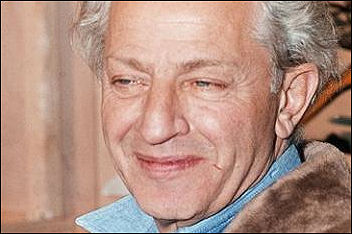
Jules Dassin
One of Dassin’s more ardent admirers was Alexander Payne, who felt a kinship based on their common Greek heritage. Payne told me this afternoon that he recently lobbied for Dassin to be given a special honorary Oscar from the Academy, but it was no-go.
In view of the Academy having given a politically controversial honorary Oscar to Elia Kazan, who was despised in some corners for having named (or confirmed) names to HUAC, Payne feels “it would have been nice for the Academy to have acknowledged both sides of that very difficult coin — a director who stayed, and another who was forced to leave.”
Dassin was married to Greek actress Melina Mercouri until her death in 1994. He was a very wise, charming and elegant man, to judge from his comments during the LACMA interview. He deserves some kind of special posthumous tribute on next year’s Oscar show, considering how the Hollywood community came close to ruining Dassin’s life during his creative prime.
Dith Pran + Haing S. Ngor
Dith Pran, the real-life Cambodian-born photographer whose story of capture, enslavement and eventual escape from the hands of the psychopathic Khmer Rouge was dramatized in Roland Joffe‘s The Killing Fields, died yesterday of pancreatic cancer.
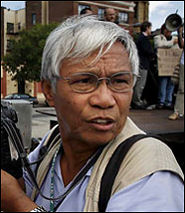
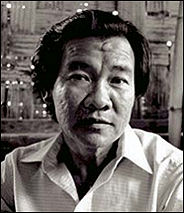
Dith Pran (l.), Haing S. Ngor (r.)
I never met him, but I interviewed Haing S. Ngor, who not only played Dith in the film but knew him as a close friend, for an Us magazine piece in ’84.
A lovely hard-core guy who wore his memories and emotions on his sleeve, Ngor had gone through the same kind of Khymer Rouge horrors as Dith, and later wrote a book about this called “Haing Ngor: A Cambodian Odyssey.” It was ironic as well as extremely tragic that Ngor survived his ghastly Cambodian ordeal only to be killed by Los Angeles gang-bangers during a robbery assault in 1996. Dith said upon his death, “He is like a twin with me…He is like a co-messenger and right now I am alone.”
Now with the 65 year-old Dith gone, it’s as if some kind of circle has been sealed with twin souls laid to rest, paired for eternity.
Scorsese Space
A little Martin Scorsese My Space action, heavy with Shine a Light ads and photos. The guy has 11,315 friends.
Slight Burden
It may as well be acknowledged that Hillary Clinton has a brief appearance in Shine a Light (Paramount, 4.4), Martin Scorsese/Rolling Stones documentary that I reviewed on 3.26. (She and Bill have a handshake moment with Mick Jagger and Keith Richard on the Beacon theatre stage before the show begins.) She’s also told reporters she’s a big Stones fan, and admires Jagger’s “incredible presence…he’s very disciplined, he works out, and he’s incredibly devoted to what he does.”

Nothing wrong with this and nothing to fret about, except that it sours my feelings about the film. It really does. It makes it seem, almost, as if Scorsese, Mick and/or Keith are Hillary backers on some level. Which may not be the case at all. They may not give a damn one way or the other. I don’t want to be petty or presumptive about this, but since I plan on seeing Shine a Light in IMAX again this weekend, I’ll have to work at flushing out the Hillary associations. Her presence mucks things up only a bit, but imagine the tainted atmosphere if, say, Eliot Spitzer or Karl Rove had dropped by for a handshake.
Texas Delegate Flip
HE’s Moises Chiullan participated in one of the many mismanaged and frustrating Texas county delegate conventions two days ago (i.e., Saturday), and has promised to provide an account of how it all went down. Here‘s a site that’s keeping tabs with the latest Texas delegate tallies, but the long and the short is that despite his narrow loss in the Texas primary popular vote, Barack Obama has scored a clear delegate victory over Hillary Clinton so far, making it more
than likely that when the process is finally completed in June, Obama will have more Texas delegates going to the August Denver convention than Clinton.
Necessary
I have another 45 pages of Stanley Weiser‘s W to read, and I don’t finish it soon…
What It Takes
“Look at Yahoo or Google or CNN, [and] take away the branding and just look at the headlines, and they’re very similar. But if you take away the branding of The Huffington Post and the signage, you’d probably still recognize us.” — Huffington Post editor Roy Sekoff says in a 3.31 N.Y. Times profile of the site and its co-founder Arianna Huffington, by Brian Stelter. “We’ve always wanted to be part of the national conversation,” Sekoff also says.
This is pretty much what every successful site does — provide a distinctive attitude-personality and a community vibe, offer a scan of the daily happenings, and start and fuel a conversation about the topics that matter (or about angles on topics that are unique to the site).
Surf and Turf
Given a theoretical choice between a sublime dinner of Herb-Roasted Amish Chicken with White Wine Jus, Sauteed Wild Mushrooms, Green Market Arugula and Parmigiano Bread Pudding at Manhattan’s Union Square Cafe and a steak and lobster meal at any evening-trade restaurant in the country, most Americans would choose the latter. Not because they have peon-level taste buds (although this could be argued) but because known quantities trump surprises every time.

By the same token, Fandango’s list of Most Anticipated Summer 2008 Movies (conducted on Fandango.com from 3.13 to 3.30) is made up of nothing but brand-name lazy-boy movies, 60% or 70% of which are almost sure to let moviegoers down in a big way, as in “back to the salt mines,” “I’ve seen this before,” “why do I subject myself to crap like this?,” “how far is the nearest tall building?,” etc. The news came in a press release e-mail without a link to a feature story on the Fandango website.
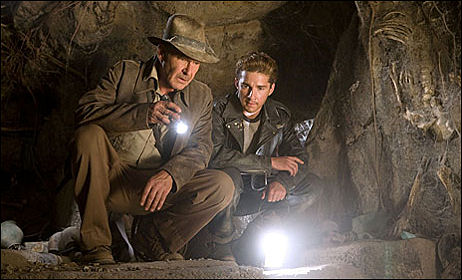
82% of respondents picked Indiana Jones and the Kingdom of the Crystal Skull — the summer’s most anticipated film. No surprise there. Honestly? This seems like the summer’s safest bet to me also, but with the timid hacksmanship and increasing predictability of director Steven Spielberg and those Hollywood-style cobwebs in that ancient-tomb-scene still, you can’t predict a moon landing with this one. It looks more like a moon orbit to me, and it could even be an Apollo 13 mission (turn around and head for home at mid-point due to lack of oxygen).
The Dark Knight was a somewhat distant second with 42% rating, followed by Iron Man (38%) and The Chronicles of Narnia: Prince Caspian (37%). Of these three, I’m guessing/presuming that Chris Nolan‘s Knight will be a high-quality wow, and that Iron Man (Jon Favreau directing, Robert Downey starring) is a reasonably safe bet. But I don’t know about another Narnia, frankly, especially with the word “Prince” in the title.
The fifth most anticipated film, The Mummy: Tomb of the Dragon Emperor, which got a 30% rating, will almost certainly smell. The sixth-place Get Smart (29%) might be okay, although the scripts haven’t indicated this. The seventh-place Incredible Hulk (22%) is certain to play better with the fans than the deeply despised Ang Lee version. The untitled X-Files sequel (20%), Speed Racer (19%) and Sex and the City (19%) came in eighth, ninth and tenth.
Not surprisingly, Sex and the City ranked highly on the women’s list but didn’t make the men’s list at all.
Smart Dumb
Joel and Ethan Coen have called George Clooney‘s characters in O Brother, Where Art Thou?, Intolerable Cruelty and Burn After Reading “my trilogy of idiots,” Clooney said in a 3.28 Screen Daily interview. “The only thing that made me feel better [about Burn] was that Brad Pitt is as stupid as I am in this one. I get to play Tilda Swinton‘s lover who hates me and is rotten to me throughout the whole thing. It’s a flat-out comedy. There’s not a message in it.”
Denby’s Stop-Loss Praise
In a 4.7.08 review, New Yorker critic David Denby is playing my Stop-Loss song, or vice versa or something in between. But Kimberly Peirce‘s film opened two days ago and didn’t exactly rewrite box-office history, so Denby’s support has come late in the game. Perhaps too late.
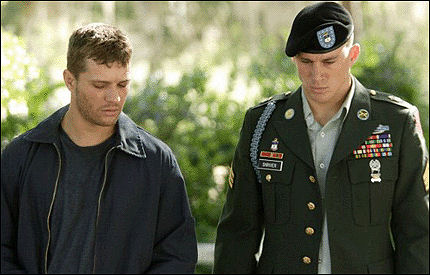
Stop-Loss “is not a great movie,” Denby says, “but it’s forceful, effective, and alive, with the raw, mixed-up emotions produced by an endless war — a time when the patriotism of military families is in danger of being exploited beyond endurance.
“This movie may become the central coming-home-from-the-war story of this period, just as The Best Years of Our Lives, made in 1946, became central to the period after the Second World War. Like that extraordinary work, Stop-Loss is devoted to the men’s hidden wounds — the wired-up tensions and nightmares that lead to drunkenness, fights, smashed love affairs and marriages.
“Throughout the Second World War, Hollywood made dozens of patriotic combat films, as well as occasional home-front movies (like Tender Comrade with Ginger Rogers) about gallant wives. The Korean War, except for B-movies by Samuel Fuller and Joseph H. Lewis, went undramatized until it was over, and this was largely true of the Vietnam War, too. During all these wars, none of the discomforts of the returning soldier, or the dismay of his friends and family, were shown on the screen.
Most of the recent feature films about Iraq (Rendition, Lions for Lambs, Redacted) have not been very good, and the public has stayed away from them. But audiences ignored Paul Haggis‘s sternly beautiful and moving In the Valley of Elah, too. Something more than the usual resistance to ‘tough’ subjects may be hurting these movies. The Bush Administration told us that we were waging a war for our survival, but it also suggested that most of us needn’t make sacrifices or even learn much about the conflict. Then again, some people may be so angered by the war that they don’t want to be confronted by it as entertainment.
“But Kimberly Peirce, whose younger brother has served in Iraq, has conceived her picture in popular terms that won’t be easy to ignore. Except for a few enraged sentiments that Brandon unloads on his commanding officer, Stop-Loss is not overtly critical of the war, but the way it uses the soldiers’ experience is inherently political. Peirce plays the antiwar game fairly. Indeed, she plays it as if she were a soldier herself.
“It’s hard to find the right tone for these movies, because even in victory there is loss. And the second Iraq war hasn’t yielded victory, nor is it likely to. For all the shoving and cursing and jangled videos, Stop-Loss has its own kind of tentativeness. Ryan Phillipe‘s Brandon King, who is both violent and highly moral (a classic American combination), struggles to understand what’s right, yet the movie doesn’t hold much hope that things are going to work out for him.
“At this moment, and maybe in the future, too, the resolution of an American warrior’s doubts is impossible to imagine. The soldiers are held together by their love for one another, and that element of Army life may make Stop-Loss popular with both liberals and conservatives, but no one, I think, will be happy about what the movie suggests is happening to some of the best young people in the country.”
Black and white
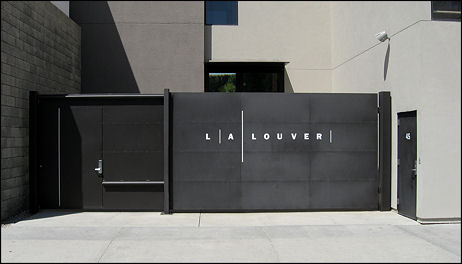
L.A. Louver, an art gallery located at 45 North Venice Blvd., Venice — Sunday, 3.30.08, 1:10 pm