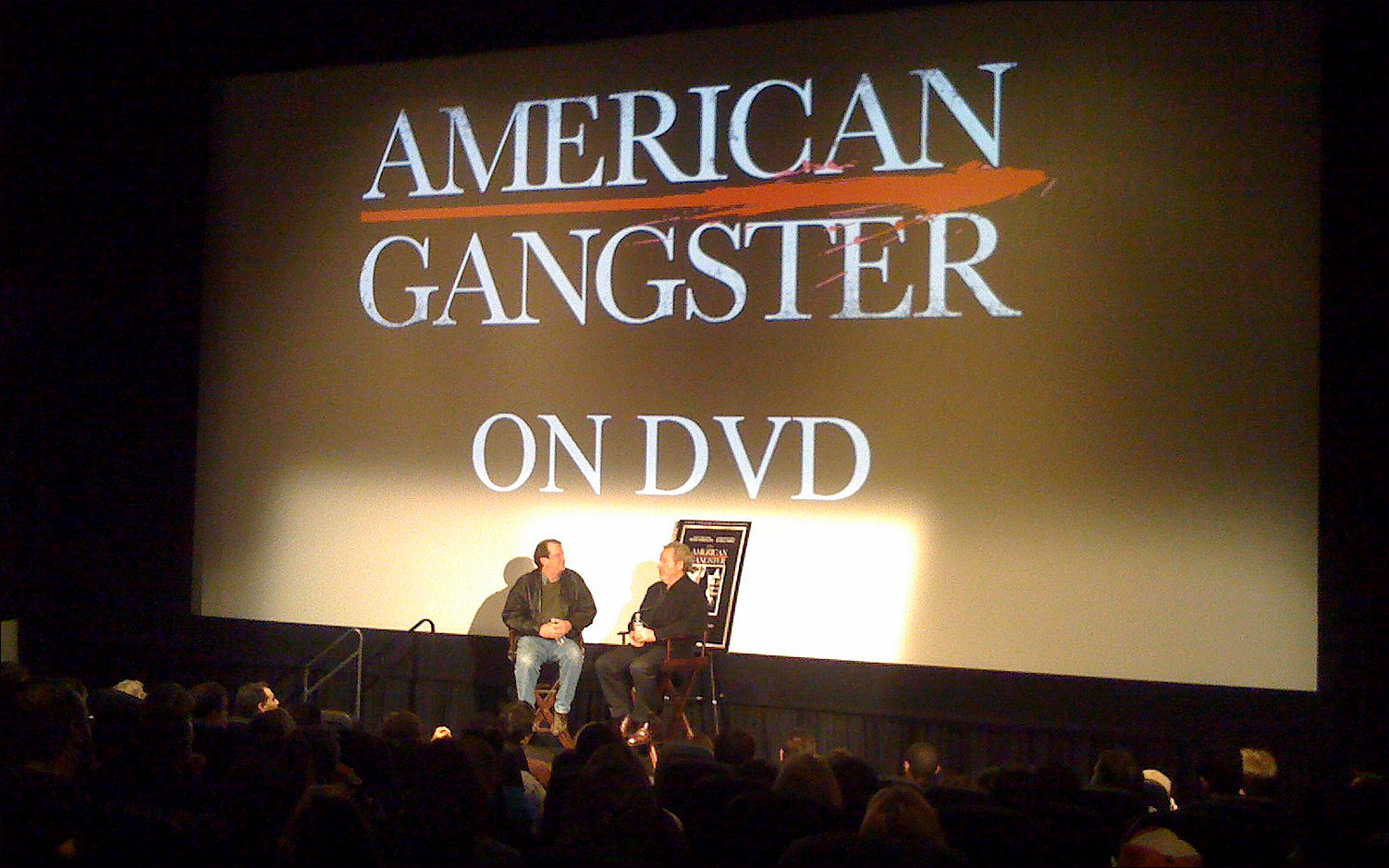
Q & A between Pete Hammond, American Gangster director Ridley Scott following last night’s screening of the extended director’s cut at West L.A.’s Landmark plex — Tuesday, 2.19.08, 10:25 pm

One look at this N.Y. Times story, which I just noticed on the newspaper stand at a Starbucks just south of Beverly Blvd. on La Cienega, and I immediately thought of M. Night Shyamalan‘s The Happening (20th Century Fox, 6.13.08), a spooker about a rash of inexplicable suicides caused by a natural disaster. Is Hillary losing in Wisconsin? Please, God…don’t. Update: Whew….no, it’s fine.

First Feinberg, now Edelstein! Another flying- fuck-at-a-rolling-donut scenario, I mean, in which the likable-but-equally- dreaded Juno may win the Best Picture Oscar.
“This is a year in which so much has gone to shit,” Edelstein writes in New York magazine. “There is a sense among the enlightened that our way of life is about to change radically, that our economic system will collapse, our suburbs will fall, our environment will exact its revenge. With all the downbeat Iraq movies DOA at the box office (what a lesson was there!), No Country for Old Men might be the best way for Academy voters to signal that it’s not show business as usual.
“Unless…unless…No Country and There Will Be Blood split the nihilist-horror vote and little old edgy feel-good smash hit Juno sneaks in. As one of the few critics to dislike Juno, I would be devastated — but weirder things have happened in these silly awards. Or is the Juno backlash too strong? Or is there, as my New York colleagues have suggested, a backlash against the backlash?”
Never much for European tradition (let alone San Francisco’s), Los Angeles is known for its commercial establishments disappearing or at least getting radically face-lifted every 15 or 20 years. Except for the old-codger music joints like the Roxy, the Troubadour and the Whisky a Go-Go. They alone seem to be the great buckers of the tide.
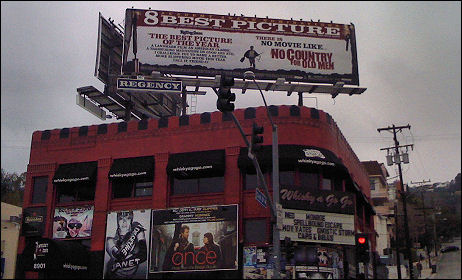
Imagine the steady pressure over the years to drop the “a Go-Go” part of the name. They could’ve just called it “the Whisky” and nobody would’ve noticed, but some old-school stalwart said no — we have to cling to the spirit of Shindig, the Doors, Buffalo Springfield, Hullabaloo, Frank Zappa and the Sunset Strip riots of ’66. Very odd for a town that has almost made a religion out of burying the past.
A Survey USA poll of Ohio voters (conducted 2.17 and 2.18) is reporting that Barack Obama has nearly cut Hillary Clinton‘s lead by 50% over the past seven days. Clinton led by 17 a week ago; today, she leads by 9 points (52-43). Obama led by 1 point among men 7 days ago; today, he leads by 16.”
And we already know about the dead heat in Texas and the majority of Wisconsin polls saying that Obama has a slight or better-than-slight edge. I just wish there was more reason to trust pollsters. However rigorous or exacting their methodologies may be, they’ve come to be known as the slobbering alcoholics of the political area.
And The Winner Is prognosticator Scott Feinberg is predicting a Juno win for Best Picture. Nobody likes or gets the No Country ending, he says, so they’ve lunged over to Juno because it’s accessible. If this happens, it will certainly be as big of an upset as Shakespeare in Love edging out Saving Private Ryan or Crash stealing the Best Picture Oscar from Brokeback Mountain. It’s a dream, of course. A Feinberg dream emanating from the forests of Connecticut…a doodle. But I like the headline: “A Pregnant Teen Can Stop What’s Coming…Friendo!”
Less than two months hence (on April 8th), Paramount Home Video will release There Will Be Blood on DVD (in single and double-disc versions). Paul Thomas Anderson‘s film will also go out on the throughly dead HD-DVD format. PHV will almost certainly put it out on Blu-ray as well, although that’s speculative. The DVD will include (a) additional Scenes, (b) “The Story of Petroleum” featurette, (c) “Dailies Gone Wild” featurette, and (d) trailers. (Thanks to Rope of Silicon for the tipoff.)

“No chick flick worth its collagen treatments is complete without (a) a yoga-class scene (possible alternative: the jogging-in- the-park meet-cute); (b) the triumphant sing-along where a row of white chicks lip-synch to a Motown song ; (c) the pre-wedding-jitters weepy meltdown, sometimes accompanied by a throw-up; (d) a scene set at a catering service or floral shop; (e) a snowball fight; (f) a cathartic having-it-out-with-Mom grievance-shoveling showdown (“It was always about you, it was never about me!”); (g) a Thanksgiving turkey that ends up on the floor, squirting around like a loose football; and, (h) most emblematically, the slapstick pratfall that sends the heroine splaying.”
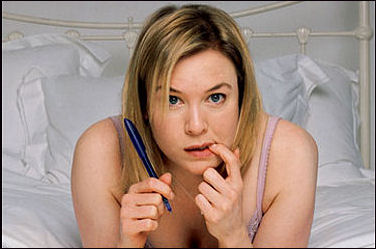
— from James Wolcott‘s “The Right Fluff: A Guy’s Guide To Chick Flicks” in the March issue of Vanity Fair.
Before I respond to Stu Van Airsdale‘s Vanity Fair “In Memoriam” questionaire (who will be emphasized, omitted, specially honored with audio or video clips?), let’s take a moment to remember once more the revolting failure three years ago of Oscar show producers Gil Cates and Lou Horvitz to offer a special tribute to the great Marlon Brando, going instead with a special trumpet blast for the departed Johnny Carson. This was the single most shameful oversight in Oscar telecast history.

Will They Make It? (Choose One): Norman Mailer (+5)…of course Mailer wiil make it! He directed several movies, anticipated the flip sardonic trash-talk of the Tarantino crime film with ’87’s Tough Guys Don’t Dance, and his books were adapted into bad films (The Naked and the Dead, An American Dream). Merv Griffin is doubtful, ditto Charles Nelson Reilly, forget Anna Nicole Smith.
Will Open the Montage: No opinion about whether the late Delbert Mann (+10), Jane Wyman (+10), Suzanne Pleshette (+15) or Michel Serrault (+20) will lead off.
Will End the Montage: Heath Ledger is my guess — the most recent, saddest & most tragic. Also-rans: Jack Valenti (+10). Roy Scheider (+15), Deborah Kerr (+20)
Will Get Montage’s First Video Clip: Ledger again. Also-rans: Deborah Kerr (+5), Laszlo Kovacs (+10), Peter Zinner (+15), Jack Valenti (+20)
Will Get Montage’s First Sound Clip: Roy Scheider (“You’re gonna need a bigger boat”). Also-rans: Betty Hutton (+5), Deborah Kerr (+10), Brad Renfro (+15) Roy Scheider (+20).
First Actor/Actress Named: The great Lives of Others star Ulrich Muhe (+10) should be the first one out of the gate, but who knows? Also-rans: Michel Serrault (+10), Jane Wyman (+15), Brad Renfro (+20)
First American Director Named: Delbert Mann (+15) because he was local. Also-rans: Stuart Rosenberg (+5), Norman Mailer (+10).
First International Auteur Named: Ingmar Bergman first, I suspect, then Michelangelo Antonioni — really a toss-up. Also-rans: Ousmane Sembene (+5), Kon Ichikawa (+10)
Oldest Selection: William J. Tuttle, age 95 (+10). Also-Rans: Michelangelo Antonioni, age 94 (+15), Jane Wyman, age 90 (+20)
Will Get His Own Montage Elsewhere in Oscarcast: Both Ingmar Bergman and Michelangelo Antonioni should share this honor. Heath Ledger (+20) may prevail as a sop to the under-30 audience, but let’s remember again that a tree didn’t fall on him and that actions have consequences.
Here, by the way, is a mock memoriam tribute video put together by Vanity Fair contributor Nell Scovell, film editor Stuart Bass and composer Gary Stockdale.
“With No Country, the moral underpinning of the story spoke to me in a big way, yet you could also see it as an exciting chase movie. The underpinning was always there, but I hate movies that speak about their morals. It works better when you have a piece of material where the moral questions are buried — otherwise the film feels too medicinal. I look for a voice.
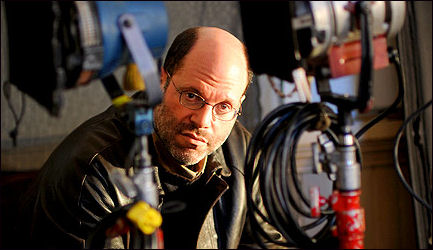
The Coen brothers “have an enormous moral force in their movies, but they also have the kind of bravura razzle-dazzle that worked for this story. A lot of people see their films as naturalistic, but to me, it’s high style. They’re very showman-like filmmakers.” — No Country producer (and There Will be Blood exec producer Scott Rudin to L.A. Times columnist Patrick Goldstein in a 2.19 piece called “For Scott Rudin, There Will Be Quality.”
“As you drill backward into Oscar history you keep finding things — Hollywood classics, in some cases — that could only be made now as independent films. I’m pretty confident that nobody in Hollywood would see much sex or sizzle potential in Hope and Glory(a 1987 Best Picture nominee) or Gandhi (1982) or Deliverance(1972). And they’d be right — none of those movies made much money.
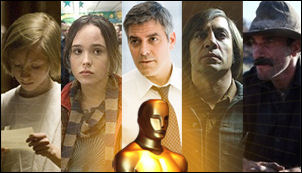
“For that matter, try to imagine pitching such vintage Oscar fodder as Annie Hall or The Graduate or To Kill a Mockingbird to a contemporary Hollywood executive. Well, okay, maybe The Graduate — if you made it wackier and made Mrs. Robinson, like, 29 and insanely hot.” — from Andrew O’Hehir‘s 2.18 Salon piece about how the Academy “has turned its back on the multiplex moneymakers and wrapped smaller indie films in its warm, glittery embrace,” etc.