“Beowulf” snubbed by Annies

The 13 Annie Award nominations gathered by Ratatouille have made it a favorite to take the Best Feature Animation Oscar. And the one nomination given to Beowulf (for production design) is obviously a fairly significant diss. Unquestionably, the animators who voted this way did so for small reasons. No film this year delivered quite like Beowulf. Its crime (and that seems an appropriate term now, given the Annie snub) was having used live actors as a mere starting point, in much the same way that portions of Snow White and the Seven Dwarfs were built upon live acting. I only know that the result fit my idea of a wondrous fantasy through and through. If Beowulf isn’t animated, I’d like to know what term I’m supposed to use.

Heigl disses “Knocked Up”

Judd Apatow‘s benevolent hand hasn’t exactly been bitten by Knocked Up costar Katherine Heigl, but it’s certainly been nipped. In an interview in January’s Vanity Fair, Heigl says “it was hard for me to love [Apatow’s] movie” because it’s “a little sexist…it paints the women as shrews, as humorless and uptight, and it paints the men as goofy, fun-loving guys.”

No one would argue that Knocked Up‘s attitude isn’t on the guy-skewing side, and yes, Heigl and female costar Leslie Mann, who plays Paul Rudd‘s unsatisfied wife, do come off as a little scolding. But every comedy needs “straight men” to bounce the humor off of, and that’s their function — to ask for a little maturity and sensitivity from men who are reluctant, to say the least, to provide this. At first, anyway.

This is an old gripe, but given Seth Rogen‘s slacker-stoner constitution the issue isn’t so much Heigl’s character being uptight and humorless as much as her credibility-straining decision, no matter how many shots of tequila she’s downed, to go horizontal with Rogen in the first place. There were 12 year-old kids watching Knocked Up in Kabul who found this incomprehensible.

As a result of Knocked Up‘s success, Heighl’s asking price reportedly went from $300,000 to $6 million, so I guess she can stomach her aesthetic disappointment.

NBR Awards predix

The only way that the National Board of Review awards, to be decided upon and then announced on Wednesday, would have any effect on award-season thinking would be if they made some kind of radical Best Picture choice…which isn’t likely. The NBR did the right thing last year in giving Letters From Iwo Jima their Best Picture prize, but their generally conservative tendencies indicates a vote for one of the comfort-blanket films over the less-soothing darkhearts — Sweeney Todd, No Country for Old Men, There Will be Blood, etc. A big surprise would obviously be welcome.


NBR president Annie Schulhof, Volver star Penelope Cruz at last year’s NBR award presentation ceremony at Manhattan’s Cipriani

I was hoping that Fox 411’s Roger Friedman, who’s passed along some tough judgments about the inside doings of the NBR over the years, would have posted predictions today, but nope. He says he may have something along these lines up tomorrow, including his own calls.

Red Carpet District‘s Kris Tapley has posted a link to some In Contenton predictions by the Klaus Kinski-admiring “Aguirre” that went up yesterday. Marc Forster‘s The Kite Runner for Best Picture, he says. That sounds about right for the NBR. It’s an intelligent, well made heart-tugger about an adult looking for healing and redemption for a bad thing that happened in childhood. It’s also struck chords with over-40 audiences. But a voice is telling me that Joe Wright‘s Atonement, which has a somewhat similar story and theme, will take it.

Aguirre, the Wrath of God says the NPR’s Best Documentary will either be Phil Donahue and Ellen Spiro‘s Body of War or Charles Ferguson‘s No End in Sight.

And La Vie en Rose‘s Marion Cotilliard is said to be a locked call for Best Actress.

Iraq War Fatalities

A must-view site called Iraq War Coalition Fatalities offers a rapid-fire pinpoint visualization of all the coalition combat deaths in Iraq since March 2003. Using figures from icasualties.org, it was thrown together by a guy named Tim (tim@obleek.com) who doesn’t give his last name. The animation runs at ten frames a second — one frame per day — with a single black dot indicating the geographical location of each death. Each dot starts as a white flash and then a larger red flash, which then turns to black for 30 days before fading into gray. It’s apparently working from a tally of 3882 coalition deaths (the vast majority being U.S. soldiers), although the chart stops in early October 2007.

Rich on Obama

In his 12.2 op-ed piece called “Who’s Afraid of Barack Obama?,” N.Y. Times columnist Frank Rich suggests that “the standard narrative of Campaign 2008” is being turned “on its head” by Obama’s surge in recent weeks, and from that hypothesizes that if Obama “were to best [Hillary] Clinton for the Democratic nomination, he may prove harder for the Republicans to rally against and defeat than the all-powerful, battle-tested Clinton machine.

“The unspoken truth is that the Clinton machine is not being battle-tested at all by the Democratic primary process. When Mrs. Clinton accused John Edwards of ‘throwing mud’ and ‘personally’ attacking her in a sharp policy exchange in one debate, the press didn’t challenge the absurd hyperbole of her claim.

“In reality, neither Mr. Edwards nor any other Democratic competitor will ever hit her with the real, personal mud being stockpiled by the right. But if she’s getting a bye now, she will not from the Republican standard-bearer, whoever he may be. Clinton-bashing is the last shared article of faith (and last area of indisputable G.O.P. competence) that could yet unite the fractured and dispirited conservative electorate.

“The Republicans know this and are so psychologically invested in refighting the Clinton wars that they’re giddy. Karl Rove’s first column for Newsweek last week, ‘How to Beat Hillary (Next) November,’ proceeded from the premise that her nomination was a done deal. In the G.O.P. debates through last Thursday, the candidates mentioned the Clintons some 65 times. Barack Obama’s name has not been said once.

“But much like the Clinton campaign itself, the Republicans have fallen into a trap by continuing to cling to the Hillary-is-inevitable trope. They have not allowed themselves to think the unthinkable — that they might need a Plan B to go up against a candidate who is not she. It’s far from clear that they would remotely know how to construct a Plan B to counter Mr. Obama.”

Best Picture situation as it now stands

People can’t get a fix on the ’07 Best Picture race because they can’t reconcile the two camps — i.e., those who want to nominate reassuring, light-quaalude- high, comfort-blanket movies and those pushing the high-end, full-throttle, not-as- comforting art films (which actually are comforters if you accept the notion that great or intensely stimulating art is the most profoundly serene drug of all).

The blistering tough-nut contenders are No Country for Old Men, Sweeney Todd, Zodiac, Before The Devil Knows You’re Dead, There Will Be Blood, I’m Not There, Control and (if you want to be generous and and/or respectful of a very touching and well-made fathers-and-sons drama) In The Valley of Elah.

The comfort-blanket contenders are Atonement, Juno, The Kite Runner, Charlie Wilson’s War, The Great Debaters and, in a certain way, Michael Clayton. (I’m starting to believe that Tony Gilroy‘s film may become a Best Picture nominee for its smoothly applied craft. As much as I admired and enjoyed it, Clayton is basically an upscale John Grisham film with a redemption theme and a little Howard Beale thrown in. It’s very well made and yet familiar — it’s a first-rate Sydney Pollack film from the early ’90s — and therefore a comforter.)

There are some out there who are actually talking about Enchanted being a possible Best Picture contender. No comment necessary.

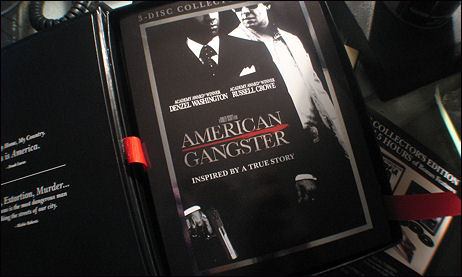
By my standards, the only two films that straddle the two categories are American Gangster — a sprawling, satisfying ’70s crime film — and The Diving Bell and the Butterfly, a movie not just about solitary confinement but enslavement by a debilitating affliction, and yet so beautifully made that it has persuaded thousands not to mind being confined inside the body of a man who can do nothing but blink his left eye. (I knew I was seeing something exceptional, and at the same instant that I didn’t want to watch it for two hours because of the climate of terrible confinement.)

Knowing the Academy as I do, it’ll probably work out to three comforters vs. two tough-nut, high-art entries. Or it could break down to a four-to-one ratio favoring the softies. Like the Envelope Buzzmeter chart is predicting right now, for instance — Atonement, American Gangster, No Country for Old Men, Juno and The Kite Runner. It would be a perversion of Movie God justice for this to happen, but a hard-bitten realist needs to prepare for the inevitable downers-around-the-corner.

If Once had any Best Picture heat it would be called a soother also, but it’s the kind of comfort-blanket flick that has immense integrity and deserves everyone’s allegiance.

The only favored non-comforter right now is No Country for Old Men — I know it, HE readers know it, David Carr knows it. I am respectful of Atonement and wouldn’t flinch too badly if it won. The other three contenders besides this and Atonement should be Sweeney Todd, Zodiac and Before The Devil Knows You’re Dead, but this won’t happen because of the softie mentality.

If I were Benito Mussolini I would round up the softies in minivans in the middle of the night and send them off to reeducation camps in the Mojave Desert, and it would honestly be for their own good. I would drill them in the morning with calisthenics, subject them to film and film-debate classes and serve them hot healthy meals. And after their release from Movie Reducation Stalag 17 they’d never again consider certain far-from-masterful films like Juno or Enchanted or Charlie Wilson’s War for Best Picture.

Sunday numbers

I usually run box-office figures on Saturday morning, but I was out of business with my cell phone yesterday due to my street-level Boston apartment being in a perfectly infuriating AT&T “dead zone.”

Weekend business was off more than usual this weekend due to last weekend being a Thanksgiving holiday “double Saturday” situation. Enchanted, off 61%, will have earned $16,822,000 as of this evening. Up to $70 million at this tonight, certain to top $100 million within 10 to 14 days. This Christmas will make $8119,000, off 59%. Beowulf was off 62% for $7,993,000 and $2400 a print. Now at a $68.7 million cume, it’s unlikely to hit $100 million — somewhere in the middle 80s, more likely.

Awake opened and closed with a $5,996,000 take…$3900 a print, nothing. Hitman earned $5923,000 for the weekend, off 69%. Dead Claus, $5,318,000. August Rush, $5,082,000… smallest % drop of them all.

No Country for Old Men added theatres, took in 4,468,000…$4000 a print. Joel and Ehtan Coen’s film is looking at a $40 milllion tally during its initial run & another $10 million or so once the awards and nominations start coming in. My numbers guy says “it’s basically an urban uptown picture that will do very little business in the boonies.”

Why is that, I asked? People in Redville aren’t smart enough to appreciate a first-rate arthouse thriller? “Hinterland audiences don’t want to know from arthouse,” he said. “Arthouse shmarthouse…they just want to be entertained.” If by clapping my hands I could permanently vacuum this attitude out of humans and send it into the hottest caverns of hell and keep it there, I would clap my hands.

Bee Movie, $4,410,000. American Gangster, $4,278,000. The Savages…$163,000 in 4 runs, almost $39 thousand a print Diving Bell and the Butterfly, $73,000 total….$24 thousand a print in 3 theatres.

Scorsese’s Hitchcock Reserva short

Strictly on a hired-gun basis, Martin Scorsese has directed a nine-minute Hitchcock homage-cum-wine advertisement called The Key to Reserva. It stars Simon Baker (The Devil Wears Prada) and is somewhere between not half bad and fairly good — witty, amusing, well-shot. Then again, Brian DePalma used to make entire films in this vein in the ’70s and ’80s.

With Bernard Herrmann‘s North by Northwest music playing throughout, it uses classic bits from The 39 Steps, the 1955 version of The Man Who Knew Too Much, Rear Window, North by Northwest and, at the very end, The Birds.

The funniest part is a preface in which Scorsese explains to an interviewer (who strongly resembles Ted Griffin, the Ocean’s 11 and Matchstick Men screenwriter) that the short is based upon three pages of a script for a Hitchcock film that was never shot. The hyper, over-caffeinated Scorsese is half natural-Marty and half-“character.” Scorsese could play this guy in a weekly reality series about a hyper, over-caffeinated filmmaker going through various creative adventures, and I wouldn’t miss a segment.

A reader has compared The Key to Reserva to Wes Anderson‘s American Express commercial from a couple of years back. I prefer Anderson’s because it’s about its own here-and-now (i.e., here-and-then) thing. Then again, I love the mania that led to Scorsese dressing an Eva Marie Saint-like actress in the exact same evening dress that Saint wears in North by Northwest.

Reserva is a Spanish wine produced by the Friexenet company, one of the giant Cava houses in Catalonia, Spain, that produces natural sparkling wine.

“Zodiac” and Fincher

The Zodiac “director’s cut” (out on DVD on 1.8.08) screened the night before last at the Variety screening series at the Arclight. I drove over right after the Sweeney Todd screening and caught the last 45 minutes. I’d seen this cut on a screener sent over a month ago, and yet I felt curiously riveted, glued. I was saying “wow” all over again. This is what great movies do — they refresh their game and deepen and spread out a bit more every time.


David Fincher at the Arclight — Thursday, 11.29, 10:55 pm

The percentage of Oscar handicappers and Academy apparatchiks who truly get this — who understand that Zodiac is the ultimate Shelby Mustang of ’07, a film so unique and special and unified that even half of the supposed cine-sophisticates don’t quite get the full splendor of it — amounts to a slender slice of the pie. But what a feeling it is to know. I’ve never been so certain of the right-on rootedness of any film in my life. The people who scratch it off their Best Picture lists shall think themselves accurs’d they were not here, and hold their manhoods cheap whiles any speaks that fought with us upon Saint Crispin’s day.

Zodiac director David Fincher, producer Brad Fischer and screenwriter James Vanderbilt sat for a q & a with Variety critic Todd McCarthy after the screening. Fischer had a good quote that I didn’t write down — “This is a newspaper film, not a serial killer film…more in the realm of All The President’s Men” — but no one felt inclined to say what it really is. Maybe it hasn’t struck a deep enough chord because most viewers haven’t been down the road that Jake Gyllenhaal‘s cartoonist character goes down. The quiet madness of an all-consuming obsession. Or maybe a lot of people have and it makes them uncomfortable.

Europeans honors “4 Months”

There is lingering irony in Cristian Mungiu‘s 4 Months, 3 Weeks and 2 Days having today won the Best Picture and Best Director trophy at the 20th annual European Film Awards. I’m referring, of course, to the reported “definitely mixed” reactions to the film among an Academy foreign film screening committee that happened a month ago.

A journalist-critic friend told me a little more than two weeks ago that the Roumanian film “may not even make the short list,” that some committee folk had complained it’s “too slow” and that others “didn’t like the fetus on the floor shot” and so on. Some felt otherwise, but there was generally a strongly split reaction.

It’ll almost be thrilling if the naysayers manage to block Mungiu’s Palme d’Or winner from becoming one of the five nominees for Best Foreign-Language Film. They have a reputation to uphold, after all. So what if there’s a slight difference of opinion from other parties, other countries? Isn’t it better to be “full of passionate intensity” (in the William Butler Yeats sense of the term) than to reconsider a position or give ground?

Excellent film preservation piece

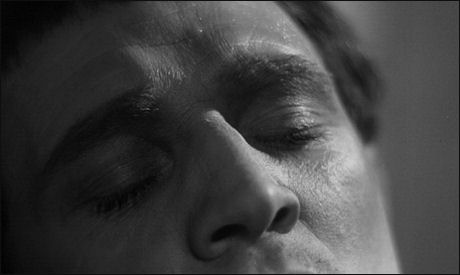
This 11.30 Variety article by Tatiana Siegel (with reporting by Anne Thompson) about the continuing insufficiency on the part of major distributors to adequately preserve their film libraries — including, surprisingly, relatively recent gems like Martin Scorsese‘s Taxi Driver — is one of the most soundly written and reported pieces on this subject ever posted by either Siegel or Thompson or anyone.

“With an eye on the bottom line, studios are reluctant to preserve or restore films for which they have no foreseeable distribution plans,” the article reads. “[And] preservation execs are facing impossible odds. Even though Columbia’s Taxi Driver is stored in Sony’s climate-controlled vault, it’s losing its color (though some critics have placed the blame on the restoration work Scorsese performed in 1996).

“Other vulnerable pics from the era include the seminal dark comedy Harold and Maude, which is in grave condition. Even The Godfather was recently in need of triage. Paramount sent the original camera negative to Warner Bros.’ facilities for color correction and sound remixing, among other restorations. The Francis Ford Coppola movie has been a consistent money-maker since its 1972 bow, on vidcassette, DVD and homevideo. If that movie is in need of repair, what hope is there for lesser-grossing films?

“Many 1970s films are suffering because they were preserved on a form of film called CRI (Color Reversal Intermediate), instead of a negative. ‘That particular form of negative turned out to be unstable and not good enough. A lot of the films had to be redone,” says Roger Mayer, a former MGM honcho who’s now chairman of the National Film Preservation Foundation.”