Rock & Rohmer

Chris Rock‘s I Think I Love My Wife (Fox Searchlight, 3.16) isn’t over-the-moon great, but it isn’t half bad. The one-sheet tells you it’s a generic marital infidelity comedy and it certainly has the lightness of tone that goes with the form, but it also has some mildly surprising grace notes and side-intrigues that you don’t usually get with this sort of thing.
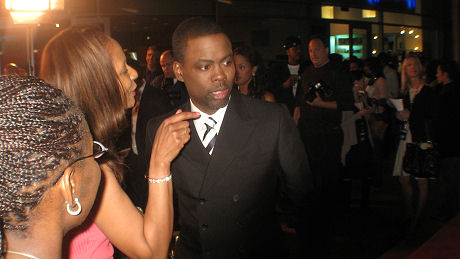

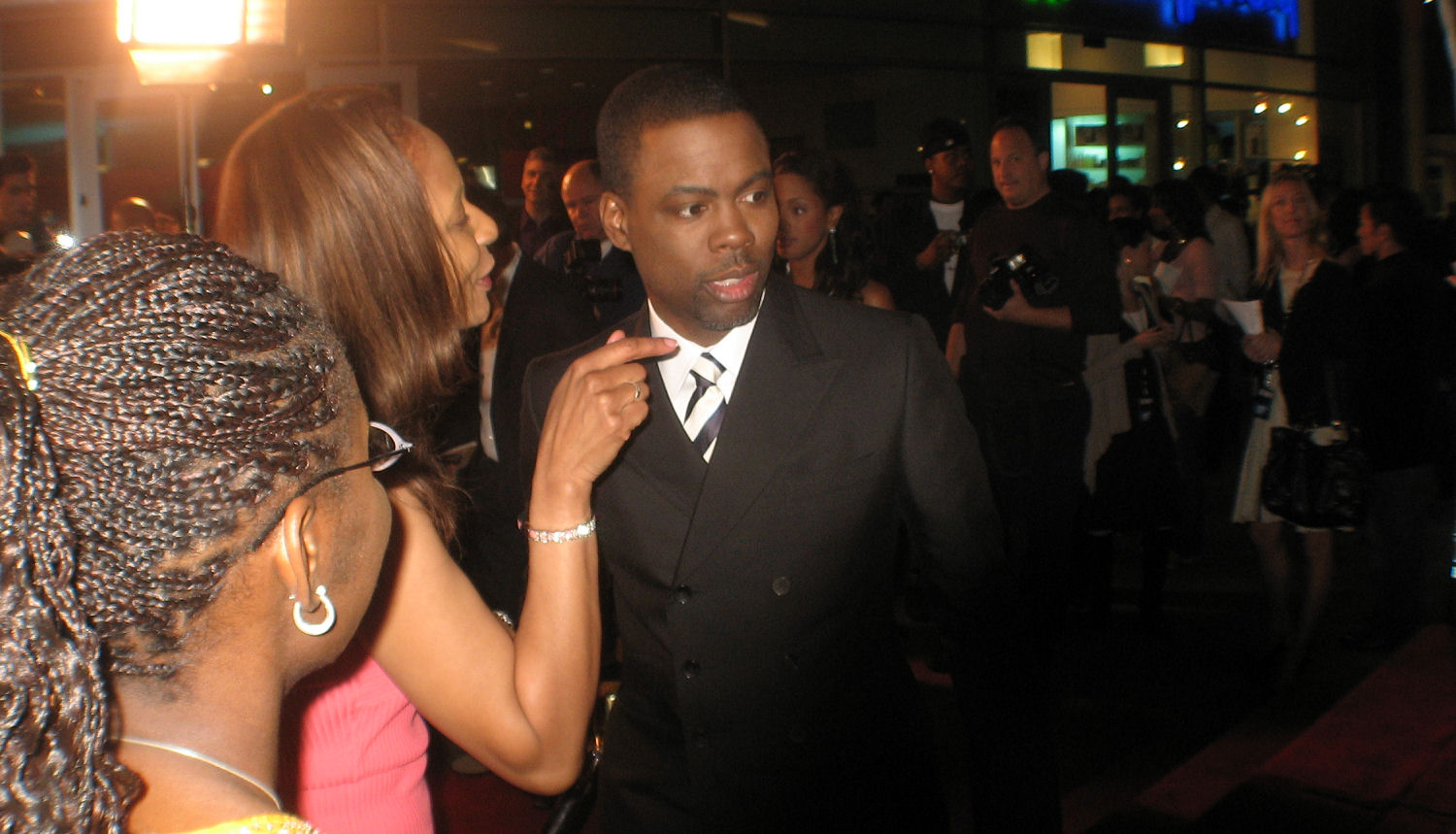
I could write a 1500-word piece, easy, about the indications in Chris Rock’s expression and body posture in this shot, which was taken last night outside the Arclight, prior to the premiere screening of Rock’s I Think I Love My Wife — Wednesday, 3.7.07, 7:25 pm

One of the interesting side notes is that the film seems to be saying that wealthy, upscale African-Americans are living lives in their toney suburban homes that are just as bland and conservative and spiritually enervated as the regimented, martini-supplanted lives that suburban white-breads have been accused of living for decades, going back to the days of John Cheever‘s “Bullet Park” and Sloan Wilson‘s “The Man in the Grey Flannel Suit.”

I Think I Love My Wife is about a well-employed commuter husband (Rock) who’s bored and frustrated because his wife (Gina Torres) is never in the mood, so he starts sniffing around (and I mean just that — sniffing, not tom-catting) and pretty soon into the film a very sexy lady he used to know in his youth (Kerry Washington) is visiting him at the office and showing all kinds of interest, etc. The light is green, the door is open — all he has to do is walk through.

But Rock (who directed and co-wrote) is not exactly a fire-in-the-loins type, and so nothing really happens in the way of libidinal incrimination. But oh, boy…does it almost!

The “almost” and “nothing really happens” aspects are actually what make Rock’s film feel agreeably different. Obviously Rock made it in order to share some personal impressions of married life and his deep-down feelings about catting around, but the moderate, meditative tone (and perhaps the lack of overt crassness — there’s only one dick joke in the entire thing) is probably due to some extent to the surprising fact that it’s based on Eric Rohmer‘s Chloe in the Afternoon (1972).

Yes, that’s what I’m saying — I Think I Love My Wife is essentially Eric Rohmer channelled through Chris Rock. (The Chloe acknowledgment is right there in the opening credits.)
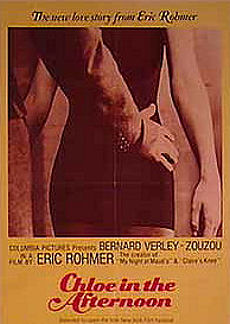
The Rock and Rohmer films are different in numerous ways, of course. Maye dozens of ways. The Rohmer is…well, Rohmer resplendent. Chloe is one of his “Six Moral Tales,” and this one , at least, is about much more than watching paint dry. Rock’s film, however, is basically about resignation, subjugation, regimentation. Nothing that wild or perverse happens, but the restraint that he shows — the Rohmer-esque mood and attitude that he tries to re-express — is at the very least distinctive and intriguingly un-American (i.e., faux-French).

Okay, there’s one half-perverse moment when Steve Buscemi, as Rock’s co-worker who constantly cheats on his wife, says, “I may not look like Brad Pitt, but I can fuck like him.”

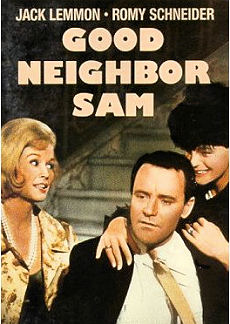
Rock’s film is actually a hybrd of itself, the Rohmer film and David Swift‘s Good Neighbor Sam ()1964, a Jack Lemmon comedy about a married advertising guy (Dorothy Provine plays his wife) with dreams of having an affair with a visiting French lady (Romy Schneider). It’s funny (or not so funny) how the sexual frustrations of Lemmon’s character and the general idyllic/antiseptic vibe of the home and neighborhood in which he and his life live are almost exactly the same as the ones in Rock’s film.

If you want a positive slant, Rock’s film is about being happy with the good serene stuff you have in your life rather than bitching about the exciting, hot-blooded stuff you’re missing.

Winterstern and Siegel

Sharon Waxman‘s 3.8.07 N.Y. Times piece says First Look honcho Henry Winterstern was deep-sixed last Friday (Winterstern tells Waxman he resigned because the board didn’t want to buy Nu Image/Millennium Films) because of “a disastrous 2006 at the box office and a taste for spending, with little cash flow to show for it.”


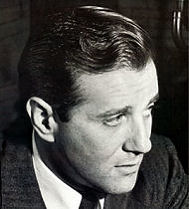
(l.) deposed First Look chief Henry Winterstern; Benjamin Siegel

My impression from the Waxman article is that Winterstern is kind of a Bugsy Siegel character, and that he was whacked for the same reasons Siegel was shot to death, because he was too much about swagger and slick moves, too full of himself…too much of a big dreamer who lacked a balancing sense of financial prudence.

The clear impression from the Waxman story is that the First Look board members concluded last week that Winterstern “doesn’t respect money,” which, to go by Warren Beatty, James Toback and Barry Levinson‘s Bugsy, was Meyer Lansky‘s assessment of Siegel.

Waxman says Winterstern has a gangsterish look about him — i.e., “the craggy looks and hunched-over affect of a street fighter.” Oh, and one other analogy: Winterstern’s presumably a law-abiding sort, but to judge from the Waxman piece he spent gobs of money on a glistening showplace — moving the bulked-up First Look staff into the former CAA headquarters — in the same way Siegel spent gobs on the Flamingo in Las Vegas.

If Winterstern was going to spend big, he had to also bring in the bucks — and you sure as shit aren’t going to do that with movies like The Dead Girl, despite its fine reviews and powerhouse performances. First Look execs probably should have beat the bushes in search of the latest, cutting-edge slasher filmmakers (there’s a 22 year-old kid out there right now who knows exactly what the next wave of slasher/horror is all about) and released a couple of those to build up the bank account, and move on from there.

Doings at the Reporter

Deadline Hollywood Daily‘s Nikki Finke is reporting that (a) “the mood at the Hollywood Reporter” in the wake of the announced departure of editor Cynthia Littleton and columnist Anne Thompson is “horrible” right now, that “the last vestige of humanity [at the Reporter] leaves with [Littleton].” and that “everybody feels like the sky is falling.” Finke is also passing along speculation that Littleton’s replacement might be Billboard editor Tamara Conniff, “but she’s not popular with THR staff, and Hollywood types are telling me it would be a poor choice.”

Loss and tears

Another piece about movies that make guys cry, this one by MSNBC’s Ian Hodder. Hasn’t this subject been covered ad infinitum? I explained several years ago that the one big thing guys cry about is loss — the son or daughter they didn’t love enough, the childhood dog that died, the woman that got away, the loss of a friend, the loss of a wallet with lots of cash in it. Fill in the blanks but that’s the trigger mechanism.

M. Night’s new film

I guess this Fox deal to make The Happening is an M. Night Shyamalan bounce-back. After the debacle of Lady in the Water, I mean. Hearing that nobody wanted to buy The Green Effect I figured he’d be in movie jail for at least a year and a half to two years, or perhaps longer. But no — Night is resilient, relentless, exacting, tenacious. That said, The Happening plot sounds like a big gulp: “a paranoid thriller about a family running from a natural crisis that presents a large-scale threat to humanity.”

Joel Stein vs,. Leonardo DiCaprio

A month ago Time writer/columnist Joel Stein told a Palo Alto audience about an interview he did with Leonardo DiCaprio in early 2000 (the idea was to talk The Beach). DiCaprio wouldn’t agree to experience anything with Stein, so it became a shopping-at-Ralph’s piece because Stein (a) noticed a Ralph’s card peeking out of Leo’s wallet and figured he was a penny-pincher and (b) offered to buy Leo’s groceries. Leo agreed, they went to the Ralph’s in West Hollywood (at the corner of Beverly Blvd. and Doheny) and here’s the piece that resulted. DiCaprio was furious about it. He decided that Stein was a betraying, must-to-avoid prick. Here, again, is Stein’s story about how it all went down. And here‘s the Time piece.

Radcliffe in “Equus”

Reactions to 17 year-old Daniel Radcliffe‘s lead performance in a just-opened West End revival of Peter Shaffer‘s Equus have been respectful and admiring. Daily Telegraph critic Charles Spencer said that he “brilliantly succeeds in throwing off the mantle of Harry Potter, announcing himself as a thrilling stage actor of unexpected depth and range.” Good for that — throwing off mantles can be a tricky thing at times.


Joanna Christie, Daniel Radcliffe

Radcliffe plays an extremely hung-up, possibly insane English kid who’s blinded six horses, but the more startling aspect is that he plays a big scene in the altogether. “We’re all kind of freaked out about seeing his — well, him naked,” 20 year-old Erin Tobin tells N.Y. Times reporter Sarah Lyall. “I still think of him as an 11-year-old boy.”

It will be hard for Radcliffe to shake the boyish thing for the next few years because of one biological fact — he’s fairly short. The shortest big-name actor of all time, I believe, is/was Mickey Rooney, who was 5’3″ in his prime. Almost as pint-sized was Alan Ladd at 5’5″. Dustin Hoffman is 5′ 6 and 3/4″. Radcliffe is taller than all three at 5′ 7″, but he still seems a runt.

Nobody trusts their eyes

“Directors have started to manipulate actors’ performances in post-production,” wrote Times Online Arts Reporter Ben Hoyle about two weeks ago. “Modern visual effects technology allows them to go beyond traditional cosmetic changes, such as removing wrinkles and unsightly hairs, and adjust actors facial expressions and subtly alter the mood of a scene.

Case in point: Ed Zwick‘s decision to add a teardrop to Jennifer Connolly‘s cheek as she’s speaking — SPOILER! SPOILER ALERT! — to the dying Leonardo DiCaprio at the end of Blood Diamond. At a Visual Effects Society conference in Los Angeles in early January, says Hoyle, chairman Jeff Okun showed before and after versions of the scene in question.

“In the ‘before’ shot Connolly was shown talking on her mobile phone. The digitally manipulated ‘after’ shot showed her talking on her mobile phone with a tear rolling down her cheek. Such alterations are becoming increasingly common, but practitioners are discouraged from discussing this work.

“Acting is all about honesty, but something like this makes what you see on screen a dishonest moment,” said a leading technician. “Everyone feels a bit dirty about it.”

As Werner Herzog has proclaimed over and over, nobody trusts their eyes when they go to a film any more. Adding tears and whatnot — and particularly people knowing that this is happening more and more — is only going to intensify this feeling. It’s the dramatic-emotional equivalent to the practice 50-plus years of adding laugh tracks to TV sitcoms.

“Visual effects experts privately admit to changing actors’ expressions: opening or closing eyes; making a limp more convincing; removing breathing signs; eradicating blinking eyelids from a lingering gaze; or splicing together different takes of an unsuccessful love scene to produce one in which both parties look like they are enjoying themselves.”

Glen and Garry and Glen and Ross

The best trailer mash I’ve seen in monthsGlen and Garry and Glen and Ross. Four sad, desperate men with Tourette’s Syndrome — Al Pacino, Alan Arkin, Ed Harris, Jack Lemmon — who receive a spirit-lifting Stand and Deliver wake-up from a gifted visitor, played by Alec Baldwin, who cuts right to the chase and doesn’t mince words. Such as: “Only one thing counts is this life…are you hearing me, you fucking faggots?”


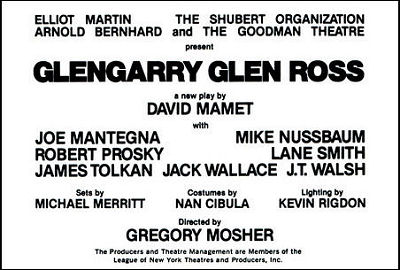
No offense to the guys in the film or its director, James Foley, but I saw these actors perform Glengarry Glen Ross on the B’way stage in ’84, and nobody could have ever been better. Particularly Mantegna as Rick Roma — he owned that role the way Marlon Brando owned Stanley Kowalski and Humphrey Bogart owned Duke Mantee.

It’s hilarious to me, but you need to have seen the film and know the kind of guy Baldwin played in it or it won’t work. Hearty congrats to narrator David Bret Egen, co-creator, producer and editor Mike Dow, and co-creators Ari Eisner.

“Mimzy” is dead

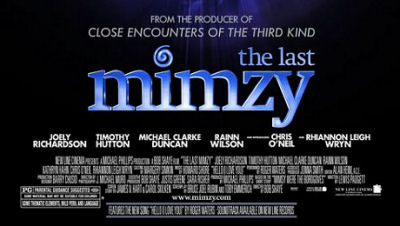
My tracking sources are AWOL this week, but Nikki Finke reported yesterday that Bob Shaye‘s The Last Mimzy (New Line, 3.23) isn’t tracking. She said it has/had a “zero” rating, referring, I presume, to the % of those who called it their first choice. That’s pretty gruesome for a film slated to open a little more than two weeks away, but it’s hardly a mystery why no one wants to see it. The title is atrocious.

The use of the word “Last” is bad enough — declaring that anyone or anything is the “last” of anything is recognized worldwide as (a) an unhip screenwriter’s lunge at some kind of half-assed cover-page significance, and/or (b) an old-shoe marketing ploy that lost its snap-crackle in the ’80s. My view is that “Last” was killed off for good with the debacle that was Last Action Hero. The IMDB estimates that 500 movies have used “Last” in their titles, and more than half of them as an adjective. Even New Guinea cannibals and eight year-old kids in Afghanistan are sick of it.

“Last” is half-tenable only if it’s attached to an unusual irony or semi-intriguing condition, such as The Last King of Scotland since the film is not “about” Scottish royalty or castles or kilts but a malevolent Ugandan dictator. But otherwise forget it…”last” equals hackneyed.

Adding the word “Mimzy’ sends the title over the falls and crashing onto the rocks. Who knows or cares what a Mimzy is? Adding “Last” as a modifier only increases the indifference and mystification. I saw Shaye’s film (a not-half-bad thing for kids, but not original enough alongside Spielberg’s E.T.) at Sundance, and I can’t remember the Mimzy particulars, much less what it means to be first or last or in the middle of the line. On top of which Mimzy is a name for a doll or a kitten or a puppy…gimme a break.

Kids under 10 are said to be into Henry Kuttner‘s collection of short stories that being sold under the same title, but are they? (The screenplay is said to be based on a 1943 short story called “Mimsy Were the Borogoves.” Yes — the spelling doesn’t agree with Mimzy…go figure.)

Another Ono blocking move

Yoko Ono has triumphed again in her ongoing Chinese Commmunist censor campaign to keep the late John Lennon‘s reputation as hallowed, pixie-dusted and Ono-sanctified as possible. Truly, this woman’s avarice and manifest control-freak compulsions are a spiritual canker sore on the Lennon legend.

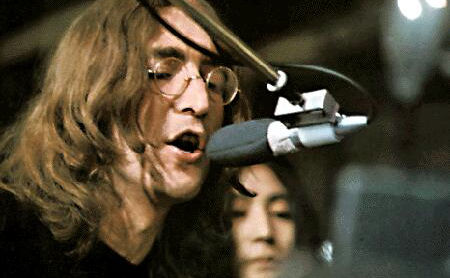
A little more than two weeks after she withdrew music-rights permission for a 90-minute documentary called John Lennon: Working-Class Hero (possibly because it contained a reported interview with Lennon’s first wife Cynthia, who “allegedly complains on-camera that drugs and Ono were responsible for the break-up of their marriage”), Ono has reportedly blocked a small-time, backwoods world premiere of Three Days in the Life, a Lennon documentary shot in 1970 by Ono’s ex-husband Tony Cox.

The doc was to have been screened last night (i.e., Tuesday) at the Berwick Academy, a private school in southern Maine.

An AP story posted yesterday said that Ray Thomas, the doc’s exec producer, “culled raw footage that was shot inside Lennon’s apartment down to a two-hour film covering a pivotal time in Lennon’s career. The footage was shot by Cox over a three-day period in February 1970, two months before the breakup of the Beatles. Lennon is seen composing songs, touring his 100-acre estate and rehearsing for a BBC show in which he performed ‘Instant Karma’ for the first time publicly.

“Thomas and his partner, John Fallon, were unable to get an artist release from Ono, whose lawyers contend has a copyright interest in the film. That’s why they chose to do free screenings at high schools and colleges, starting with Berwick Academy. Thomas and his partner, John Fallon, were unable to get an artist release from Ono, whose lawyers contend has a copyright interest in the film. Ono’s lawyers said even a nickel-and-dime showing at Berwick was forbidden, which led the cancellation.