Online Ad Spending Too Low?

According to Advertising Age reporter T.L. Stanley, a research report titled “Hollywood Online: Ad Innovators Play Spending Catch-Up” is saying that “studios have made a misstep by not increasing their online spending sooner in order to reach the coveted young consumer who spends significant amounts of time on the web.”
“Studios spend about 3% of their marketing budgets on online ads, which is below the 5.7% that the average U.S. industry spends, according to the eMarketer study. Hollywood is expected to make up some ground, though, spending 8% of ad budgets online by the year 2010. That translates to $526 million and 17% of studios total ad spending. Other marketers will spend about 8.9% of their budgets on the web by that time, the study found.”
The study said that “a number of movie marketers surveyed put that figure considerably higher, or more in the vicinity of 6%.

Patterson trashes “Departed”

A nicely put David Poland/MCN copy link — “a Bosley Crowther moment?” — went up a while ago regarding this John Patterson Guardian piece about Martin Scorsese and The Departed . Patterson trashes the film and harumphs that “after an enormously fulfilling relationship of nearly 30 years, it may be all over for me and Scorsese [since] I cannot decently call The Departed ‘a return to form’, which seems to be the prevailing opinion.” It’s perfectly fine to roll with your own opinion in whatever direction, but that’s what Crowther was doing when he (a) praised Cleopatra, (b) questioned the appropriateness of mocking the defense estab- lishment in Dr. Strangelove and then (c) trashed Bonnie and Clyde.

“Catch a Fire” party


Catch a Fire star and Best Actor contender Derek Luke, admirer Ellen Stone at Wednesday night’s post-premiere party at the Cabana Club. Not to be a spoil-sport, but it’s not the smile of a pretty girl at a big glitzy party that matters, but whether or not the same pretty girl smiles or even greets you when you happen to run into her at Amoeba Records three months later. General George S. Patton said it: “All glory is fleeting.” I tried every so often to find Catch a Fire director Phillip Noyce, but no luck.

Tower Bust


This is the end of an entire Sunset Strip mecca experience, a place that always felt like the epicenter of of L.A.’s music industry…until things changed.

It all started when greedy retailers started charging those ridiculous sky-high prices for CDs in the late ’80s and ’90s, which caused many of us to laugh with pleasure when people began to illegally download songs online. This is largely why Tower bit the dust — not enough kids are buying CDs because of the whole digital revolution. But if there was ever a case of justified commercial payback, it was the music industry gorging on CD profits in the ’80s and ’90s and then suffering from the rise of Napster and Limewire in the late ’90s and early 00’s…eat shit! Tower has been a mainstay since…what, the late ’60s? We’d all love to see Amoeba take over this space, but they’d have to jettison the store they have now adjacent to the Arclight to make it work. Wouldn’t they?

Innaritu to Pearson

“Narrative has been a big poison of cinema. The narrative is not a good thing just to be attached to. It doesn’t free us to explore more images, metaphors, poetry. When you’re dealing with different subject matters that you want to address, it’s better to expand the possibilities. I have been fascinated always that the character is defined not only because of what he does but [how] the others around him affect him. We are defined by the others. In Latin American literature this kind of structure is a natural way to tell a story, so I’ve been influenced by that.” — Babel‘s Alejandro Gonzalez Innaritu speaking to AP’s Ryan Pearson.

Epagogix

There will always be outfits offering formulas and stratagems that will cut down on the risk factors in movie-making. A New Yorker article by Malcolm Gladwell is focusing on a a new permutation of this — a British- based company called Epagogix. If every producer and creative executive in this town were to embrace Epagogix, the effects upon the withered soul of Hollywood would be nothing short of demonic. And yet, to be perfectly honest, if I were running a studio I would probably take a look at it.
The principals are Dick Copaken, Nick Meaney and Sean Verity. They’re basically offering a “neural network” program that, in a Hollywood sense, counts cards at the casino. Their site says that Epagogix “works confidentially with senior management of major film studios to assist in identifying and developing scripts, and in transforming scripts with low box-office revenue potential into properties that can be profitably produced and distributed.”
“If you were developing a $75-million buddy picture for Bruce Willis and Colin Farrell, Epagogix says, it can tell you, based on past experience, what that script’s particular combination of narrative elements can be expected to make at the box office,” writes Gladwell. “If the formula says it’s a $50-million script, you pull the plug.”
The neural network, says Meaney, “can sometimes go on for hours. If you look at the computer, you see lots of flashing numbers in a gigantic grid. It’s like ‘The Matrix.’ There are a lot of computations. The guy is there, the whole time, looking at it. It eventually stops flashing, and it tells us what it thinks the American box-office will be. A number comes out.”
“The way the neural network thinks is not that different from the way a Hollywood executive thinks: if you pitch a movie to a studio, the executive uses an ad-hoc algorithm–perfected through years of trial and error–to put a value on all the components in the story. Neural networks, though, can handle problems that have a great many variables, and they never play favorites — which means (at least in theory) that as long as you can give the neural network the same range of information that a human decision-maker has, it ought to come out ahead.”

Innarritu vs. Ariagga

A couple of good hombres hook up, throw ideas around, it feels mostly right and things jell really nicely and three excellent films result. Then the usual headstrong egoistic stuff happens (harmony between willful types never, ever lasts) and things devolve and the guys eventually say to each other, “This isn’t working like it used to…time to move on” and they both do this and whatever happens on their separate journeys, happens. What…a… shocker!

Levine on “Babel”

“The title may throw some moviegoers, but it’s really quite profound. According to Webster’s, Babel is a confusion of voices or sounds. There are many different languages spoken here, lots of translation needed from one character to another. What unites them is a unifying voice, however. One which speaks universal truths in understanding the harsh realism of humanity.” — senior Variety editor Stuart Levine, writing on msnbc.com.

Written by hand

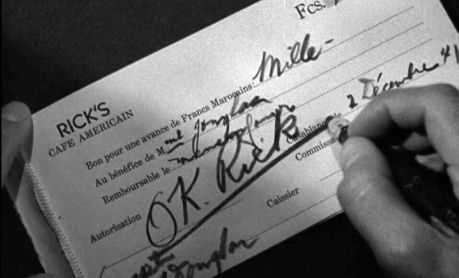
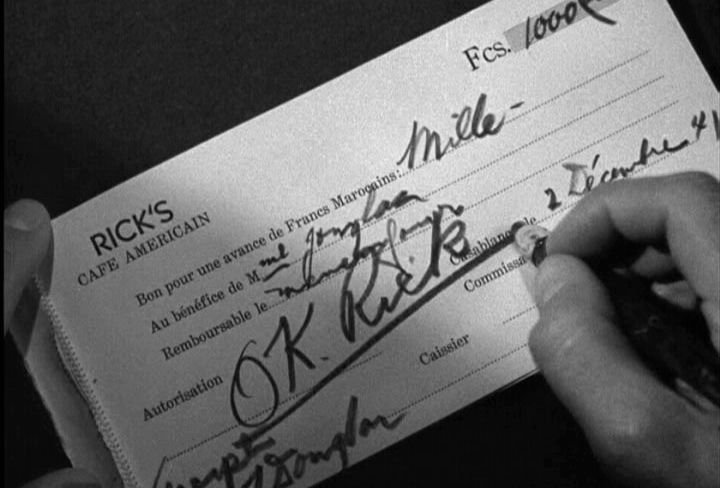
I was looking at an autobiographical piece I wrote when I was ten or eleven, and apart from the appalling prose style it struck me how clear and legible my handwriting was. My handwriting is pathetic these days. That’s what being on a keyboard all this time will do. I presume this is the case all around.

In the bottom of the photo, by the way, there’s a brief description of the death of a black cocker spaniel puppy in my neighborhood, when I was three years old. A moving truck backed up and flattened the little guy. I mentioned this event about five years ago in my Reel.com column, and wrote, “I can still see that little black pancake on the pavement with the tongue sticking out.” These words were subsequently used as part of an online objet d’art that appeared a year or so later.

O’Toole in the Sunday Times

“You learn very early, or you learn never, if you’re an actor. You sit in front of that mirror at the Theatre Royal, Bristol, in 1958 and learn that that is the meat. You can’t be self-conscious about [your face]. If you are, you’re dead.
“The rest is self-consciousness and nightmare. I’ve watched actors I know — who are not really actors, but they get away with it in the movies — and they spend their life not being able to bear their profile, poor sods. It’s the vain who get fucked up. I’ve never thought about it.” — Venus star Peter O’Toole speaking to interviewer Jasper Reeds in last Sunday’s London Times.
Rees mentions toward the end of the piece that O’Toole “is not an easy man to talk to, at least about himself and his work. He is not prone to self-analysis.” My feelings exactly as I tried to make the most of my O’Toole interview for GQ maga- zine some 26 years ago, which occured in the downstairs den of his home near Hampstead Heath and lasted for about 40 minutes.

BIFA noms

There’s some significance, I think, in Nicholas Hytner ‘s The History Boys getting only four nominations for the British Independent Film Awards noms. Stephen FrearsThe Queen took seven, Kevin Macdonald‘s The Last King of Scotland and Shane MeadowsThis Is England got six each, and Andrea Arnold‘s Red Road and Roger Michell‘s Venus got five each. Katja Hoffman‘s Variety announcement story didn’t mention if Boys star Richard Griffiths landed an acting nomination. The BIFAs will happen 11.29 at the West London’s Hammersmith Palais.

Black Jesus

I’ve always been of the opinion that Yeshua of Nazareth was, of course, an Anglo-Saxoner who more or less resembled Jeffrey Hunter in King of Kings. A nice-looking guy with faintly wavy, medium-brown, nearly shoulder-length hair with blondish highlights, almost always dressed in a white robe with Biblical briefs underneath, his eyes a penetrating bright blue and his toenails always pedicured. I realize what this sounds like, but the idea of an African-American Yeshua with black kinky hair has always sounded like a stretch.