“Guillermo Del Toro was a man on a mission. He’d been sent a tape of Amores Perros by a mutual friend, another up-and-coming Mexican auteur, Alfonso Cuaron, who [like Del Toro] thought the movie was an overlong chef d’oeuvre.
“Though Del Toro was ‘very broke’ at the time — he’d recently paid a hefty ransom to rescue his father from a kidnapping — he caught one of the first available flights to Mexico from Austin, Texas, where he was living then.
“‘Next day, or two days after, I opened the door and I see a fat man with the face of a kid, and with very intelligent blue eyes,’ Inarritu, 43, recalls. ‘And in the next three days he ate all the food in my refrigerator but he made me laugh like nobody, he made my life so happy. And he helped me, really toughly, to get those seven, eight minutes out of it.’
“For the record, Del Toro insists it was 20 minutes, and he swears that every time Inarritu tells the story the tally gets shorter. ‘Alejandro, come on!’ he says, laughing as he relates the anecdote. ‘Next time you’re going to say we took out four minutes!’ — from Reed Johnson‘s nicely detailed L.A. Times piece about Inarritu, Del Toro and Cuaron, obviously in the same vein of Anne Thompson’s 9.8 “Three Amigos” piece in the Hollywood Reporter, only longer and more lusciously written.
German Shepherd
Sometime around ’82 or ’83 there were two plays playing next to each other on 45th Street — one was called “Good” (written by C.P. Taylor, about an ordinary guy who becomes a Nazi) and the other was called “Plenty” (by David Hare). It was silly — bizarre, really — but those titles being proclaimed from their respective marquees looked like some kind of put-on. I remember standing nearby after the two were up and flashing and saying to myself, “This is a joke, right?”
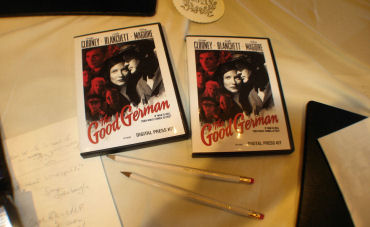
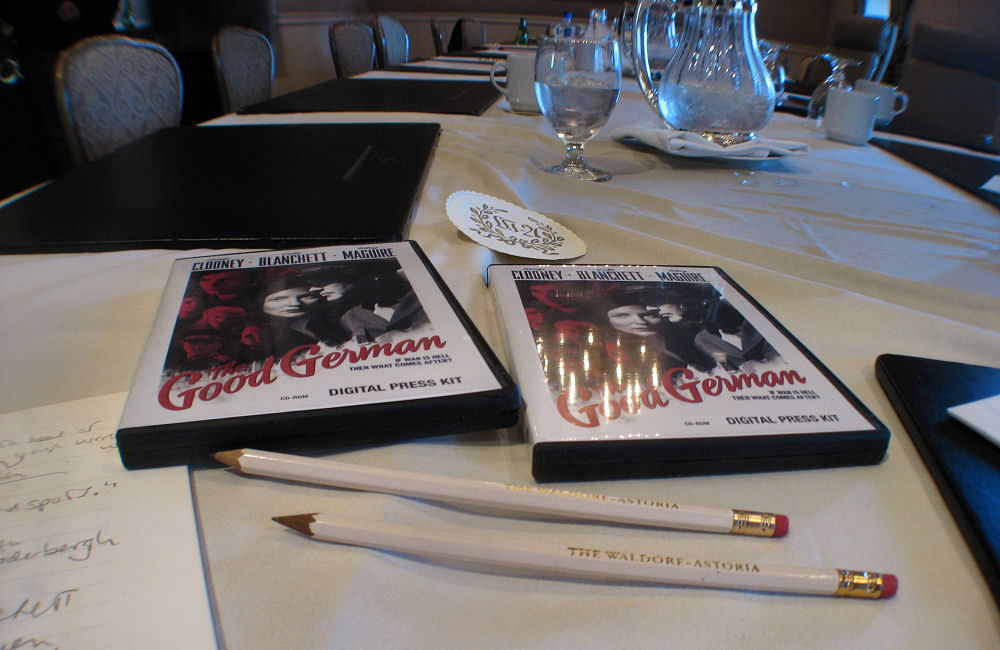
In the same silly-ass vein we have two “good” movies coming out in December — Steven Soderbergh‘s The Good German (Warner Bros., 12.8) and Robert De Niro‘s The Good Shepherd (Universal, 12.22) which I’ve begun to refer to as German Shepherd .
The lameness of this juxtaposition plus the two-Goods-in-December are bonds of total brainlessness, agreed, but there’s more. They’re both adult thrillers, and both period pieces about cold-war political intrigues (the Soderbergh is set in Berlin in ’47 or ’48, and the De Niro flick begins its story about a James Angleton-like CIA figure in, I believe, the late ’40s). And their respective stars, George Clooney and Matt Damon, are topliners in the Oceans trilogy (Eleven, Twelve and Thirteen).
Plus the early buzz on both films is sorta similar. If I were writing for the New York Times, my editors would suggest the following sentence: “Whether these two films will be bet with critical and commercial success remains to be seen.”
“Departed” judgments
Is it me, or do these Departed judgments sound vaguely similar?:
(a) “Mixing it up with modern mobsters for the first time since Casino 11 years ago, Martin Scorsese cooks up a juicy and bloody steak of a movie in The Departed…[which] pulses with energy, tangy dialogue and crackling performances from a fine cast…after the elaborate exertions of the period pieces Gangs of New York and The Aviator, it’s good to see Scorsese back on home turf” — Variety critic Todd McCarthy;
(b) “Thank God we have Martin Scorsese back…after a couple of films where one of the best directors ever seemed more intent on pleasing Academy voters than millions of admirers, Scorsese returns to contemporary crime fiction with a hugely satisfying bang” — Hollywood Reporter critic Kirk Honeycutt;
(c) “What a relief! The fabled director of Mean Streets, Taxi Driver and Goodfellas is back on the contempo urban turf where he once belonged…here, at long last, is a return to an old-school, brass-knuckles crime flick with piss and vinegar and style to burn. It may not be profound or symphonic, but it’s cause for real cheering ….after two middling efforts (Gangs of New York and The Aviator) Scorsese and Leonardo DiCaprio have finally generated real electricity.” — me.
Ejaculate of a Horse
What’s made clear in Jackass: Number Two when Johnny Knoxville and Chris Pontius take a couple of swallows of horse semen “is that in a society still driven by the Christian right and red-state morality, 30-year-old men with wives, girlfriends, and masculine reputations to uphold still cannot whip out the lubricant and give in to their primal urge to slip it into the backdoor.
“And unfortunately for these poor, subdued men — two of whom have children — the only real outlet for the repressed sexual frustration is to drink the ejaculate of a horse, or stand around in the nude and inflict pain on one another, while anointing the appropriately named Wee Man as their phallic mascot. It’s a cheerless state of affairs — nearly a year after Jake Gyllenhaal and Heath Ledger mainstreamed man-love into our cultural zeitgeist — that this group of men still must play with poisonous snakes in lieu of one another’s sexual members or, worse still, substitute the goring of a bull’s horn for the feel of a man.” — from Dustin Rowles‘ review on Pajiba!, a forum for “scathing reviews by bitchy people.”
DOAP trailer
Here’s the trailer for Gabriel Range‘s Death of a President, winner of the Fipresci International Critics Award at the 2006 Toronto Film Festival, and opening via Newmarket on 10.27.06.
Plebians and snobs
The New York Film Festival selections “aren’t so much programmed as curated,” observes N.Y. Times critic A.O. Scott. The curators are led by program director Richard Pena, the festival’s program director, and otherwise made up of film critics — Film Comment editor Kent Jones, Entertainment Weekly critic Lisa Schwarzbaum, Vogue magazine critic John Powers , and Phillip Lopate, “editor of a recently published Library of America anthology of American movie criticism.
“These critics, like others in their profession, incline toward material that is sometimes described as difficult or challenging, but that requires a disciplined, active attention,” Scott writes. That’s a polite way of saying they’re film snobs. I don’t think Schwarzbaum is an elitist (she writes like a person who lives in a real world), but the others, I believe, probably are. There’s no avoiding this syndrome among Manhattan film congnoscenti. If you’re a serious film lover you’re going to feel the same way as the snobs do about this or that film, and that’s not such a bad thing.
But there’s something vaguely arid and ingrown about this culture also — a certain tendency to sidestep films with what an elitist would probably describe as plebian emotionalism.
“Borat” cold turkey
What film caught the strongest hottest buzz out of the Toronto Film Festival? Easy — Sacha Baron Cohen ‘s Borat: Cultural Learnings of America for Make Benefit Glorious Nation of Kazakhstan (20th Century Fox, 11.3). I didn’t catch it in Toronto (I never do midnight screenings at film festivals plus I’m always super-busy so I missed the one non-midnight showing) but I knew there’d be opportunities to see it in L.A., either in late September or sometime in October.
Borat is the hottest envelope-pushing comedy going right now; some have even suggested that Cohen could be in line for a Best Actor nomination. And guess what? Borat opens five weeks from now and Fox has no L.A. press screenings scheduled between now and November 2nd. Strange as this sounds, that’s what I’ve been told. So if you’re based here and you haven’t seen it by now, you’re out of luck and will have to go cold turkey all next week and throughout the entire month of October.
Dargis on “The Queen”
The Queen is a witty, very dry Stephen Frears film about the almost-comical aloofness and generally queer behavior exhibited by Queen Elizabeth II and her family in the wake of the 1997 death of Diana, Princess of Wales. Helen Mirren, as noted in my initial review, is fairly wonderful in the title role, and the film does gain slightly after a second viewing. But if you pay to see The Queen this weekend you will notice, trust me, a difference between the projected experience that fills the screen and the one that Manohla Dargis describes and does cart- wheels over in this N.Y. Times review.
As Sigmund Freud once said, sometimes a cigar is just a cigar.
Last King shakedown
A naive but charming Scottish doctor (James McAvoy) arrives to begin his career in early ’70s Uganda. He is at first intrigued and excited at becoming a favorite and then, down the road, the”white monkey” of General Idi Amin (Forrest Whitaker), but the doctor gradually comes to regret being close to the psychotic dictator, and then finally he has to run for his life.
That’s an interesting but less-than-fascinating story, and the bottom line with Kevin McDonald‘s The Last King of Scotland, which has a solid 86% positive Rotten Tomatoes rating, is that it’s only a pretty good because of this. It’s above average, but doesn’t quite have that snap-crackle-pop. But it has, of course, an Oscar-level lead performance from Whitaker, and it’s well made — colorful, atmospheric, well-observed — and so it’s far from a burn.
Beauty is over-rated
At one point Patrick Wilson‘s Brad tells Kate Winslet‘s Sarah “that beauty is overrated, something that, as the narrator notes, only someone secure in his own beauty would say. He may nonetheless be right. But in too many recent movies intelligence is woefully undervalued, and it is this quality — even more than its considerable beauty — that distinguishes Little Children from its peers.” — N.Y. Times critic A.O. Scott in his review of Little Children.
Wood-chipper debate
A Manhattan-based journalist wrote me earlier today and suggested that Little Children‘s Jackie Earle Haley, who plays a profoundly creepy child molester/flasher, and Phyllis Somerville , who plays his caring, strong-willed mom, could both qualify as Best Supporting Actor nominees in their respective categories. “Both are terrific,” he enthused, “but I think Somerville’s portrait of a mother’s unconditional love is absolutely heart-breaking…just great work.”
Sommerville is wonderful, I agreed, but Haley’s sexual deviant is extremely icky. “Haley’s a fine actor and it’s good he’s back,” I responded, “but that character he plays…forget it.” The East Coast guy replied by saying “Icky is not bad, and in this case, icky is heartbreaking.”
And I said, “Because of this character, this movie is going to run into trouble with general audiences. Hearts are not going to be broken — some people are just going to be repulsed. There’s a scene in a car that happens between Haley and a nice lonely woman he’s met on a blind date, and after this scene any notion of compassion for Haley’s guy is out the window.”
My friend said, “The final beat in the arc of this character happens because of his shame at what he is. If that isn’t heartbreaking, I don’t know what is. Thanks for your compassion.” And I said, “Given what he is — a total sexual cockroach — and his behavior beforehand, what happens at the end, harsh as this may sound, isn’t that terrible a consequence. When it comes to child molesters, there’s a serious temptation to say ‘throw them into the wood chipper.'”
They don’t deserve sympathy? he asked. And I answered, “Do Catholic-priest molestors of choir boys deserve our sympathy? Do compulsive sexual abusers of any kind deserve it? I really don’t feel that way. There’s no real expectation in treatment circles that any of these guys have a chance of being cured. I’m with the right-wingers on this issue. They’re bad news. Shed no tears.”
Duelling Gurus
Obviously there are two competing Oscar handicapper gangs taking shape — one at Tom O’Neil‘s “The Envelope” (expect at least 12 journos when it’s all finalized) and the return of Gurus of Gold (roughly 80% in place) at David Poland‘s Movie City News.
The Times rule is that you can’t be an “Envelope” team member plus a Poland Guru. I know there’s been some soul-searching among journos about whether to side with the Hatfields or the McCoys, and I for one have heard the crack of rifle fire over issues of alleged guru-poaching.
I know this: it’s not “early” in the Oscar handicapping racket. It’s all happening right now, fast and furious.
Just yesterday I heard uh-ohs about three big December releases, and once these stories begin to travel the films in question — I’m not going to name them — will see their stock prices begin to drop. All of this could easily fall by the wayside once they start to screen, but right now it’s starting to look as if these three now have something to prove.
The game will basically be over as of early to mid November, and from then on everyone will be just dancing. The chances of a late November or early December surprise seem slim at this stage.
O’Neill is currently working on a comprehensive choices-at-a-glance chart, and it’ll be in place fairly soon. Poland posted a Gurus chart today but I’m told that at last one respondent’s choices are about three weeks old, so it’s not exactly expressing the immediate current.
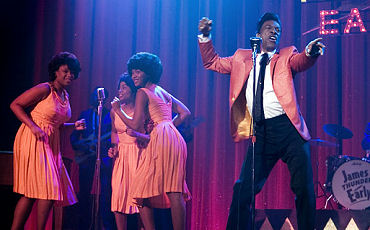
That said, the Best Picture tally has Dreamgirls slightly ahead of Flags of Our Fathers with Babel a somewhat distant (20 points behind) third.
The Best Actor race — this is a fairly early call — has The Last King of Scotland‘s Forrest Whitaker almost 20 points ahead of Venus star Peter O’Toole, and Leonardo DiCaprio (The Departed…nobody’s seen Blood Diamond yet) trailing in third place.
And the Best Actress race has The Queen‘s Helen Mirren well in front of three runner-ups — Volver‘s Penelope Cruz, Little Children‘s Kate Winslet and The Devil Wears Prada‘s Meryl Streep — with very nearly the same scores.