If a reporter or editor puts quote marks around a term, it means that he/she regards the term as exotic and to some degree suspect. Especially if they qualify it by adding “so-called”.
In Jessica Testa‘s 10.6 N.Y. Times story about Bari Weiss (“How Bari Weiss Won“), the following passage appears in paragraph #5:
“[Weiss] achieved [her CBS News hiring] without climbing the typical journalistic career ladder, and with no experience directing television coverage. She is richer in social clout than in Emmys or Pulitzers. And she is known more for wanting to rid the world of so-called wokeness than for promoting journalistic traditions.”
Testa and her editors are obviously casting doubt upon the validity of the “w” term. It follows that they wouldn’t dare use “so-called” as an adjective when mentioning certain sacred-cow terms.
If, say, a reporter or editor were to put quotes around “systemic racism” with a “so-called” qualifier, they would be instantly suspected of being Republicans if not white supremacists and probably fired and ex-communicated on the spot. Same result if they were to post an article that used the term “so-called ‘sexual harassment'”. Ditto if a reporter or editor were to publish an article that included “so-called ‘climate change'” — only a rightwing denialist would use such terminology.
From “Variety Shows Its Hand“, posted on 9.22.21:
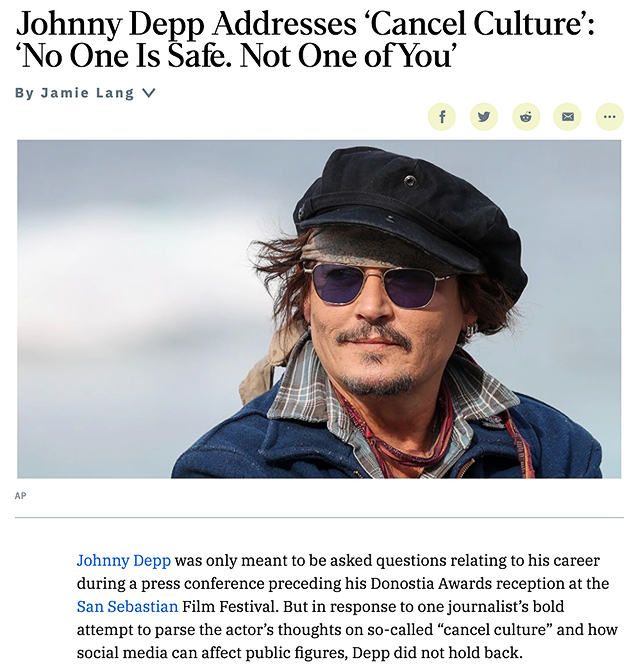
“So we know where Variety reporter Jamie Lang (and/or his editor) is coming from when an opening paragraph about a Johnny Depp press conference at the San Sebastian Film Festival reads as follows:
“‘Johnny Depp was only meant to be asked questions relating to his career during a press conference preceding his Donostia Awards reception at the San Sebastian Film Festival. But in response to one journalist’s bold attempt to parse the actor’s thoughts on so-called ‘cancel culture’ and how social media can affect public figures, Depp did not hold back.'”