I’m sick to death of movies that portray this or that white guy as the proverbial villain — deplorable or weak or impossibly selfish or, you know, some kind of primal seed of evil. I’m sick of this shit…sick of it, sick of it, sick of it.


 Jeffrey Wells
 I’m sick to death of movies that portray this or that white guy as the proverbial villain — deplorable or weak or impossibly selfish or, you know, some kind of primal seed of evil. I’m sick of this shit…sick of it, sick of it, sick of it.
Some kind of real-world hacked ticket from a seemingly deranged gremlin posing as a Trenitalia rep arrived last night in my inbox:


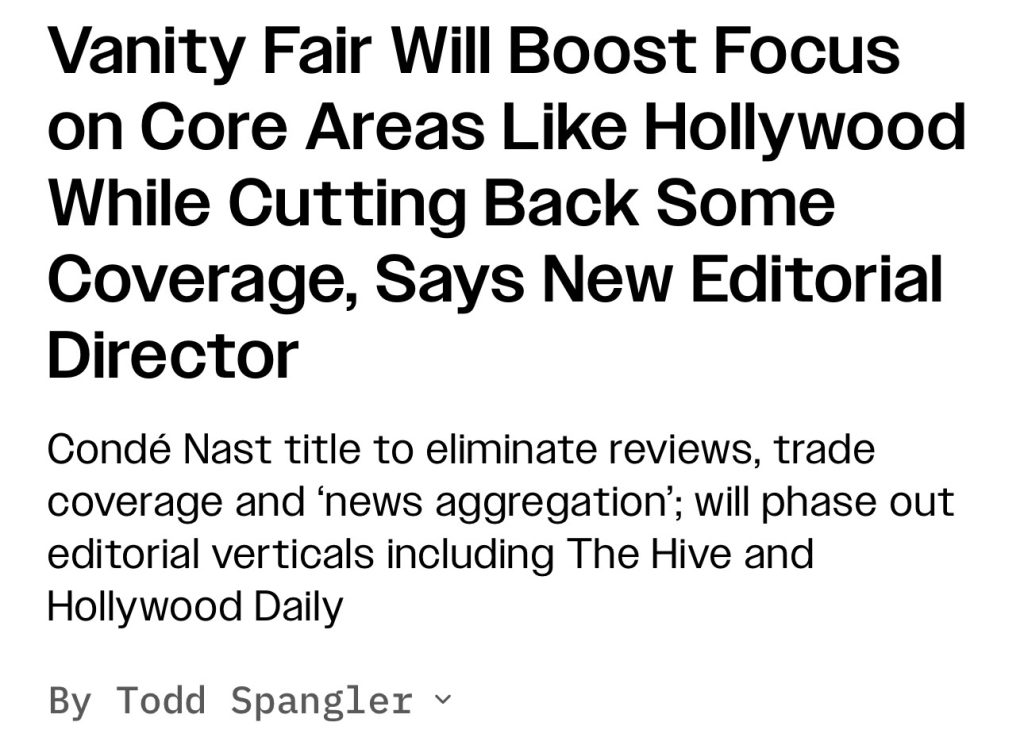
Vanity Fair critic Richard Lawson has suffered a bullet in the back of the head, Goodfellas or Sopranos-style. Ditto VF contributors David Canfield and Anthony Breznican…zotzed, cut loose…”oh, no!”…kerflop on the linoleum floor.
It’s all part of a strategic revamp by VF editorial director Mark Guiducci to TikTok-icize VF content by cutting film reviews, trade stories, and in-depth industry-centric whateverism.
Guiducci basically wants to lighten things up or, if you will, dumb things down by catering to the jizz-whizz ADD mentality of Zoomers and younger Millennials, or something like that.
HE is sorry about Lawson, Canfield and Breznican taking it in the neck like this. I’ve been there. I know what it feels like. It hurts.
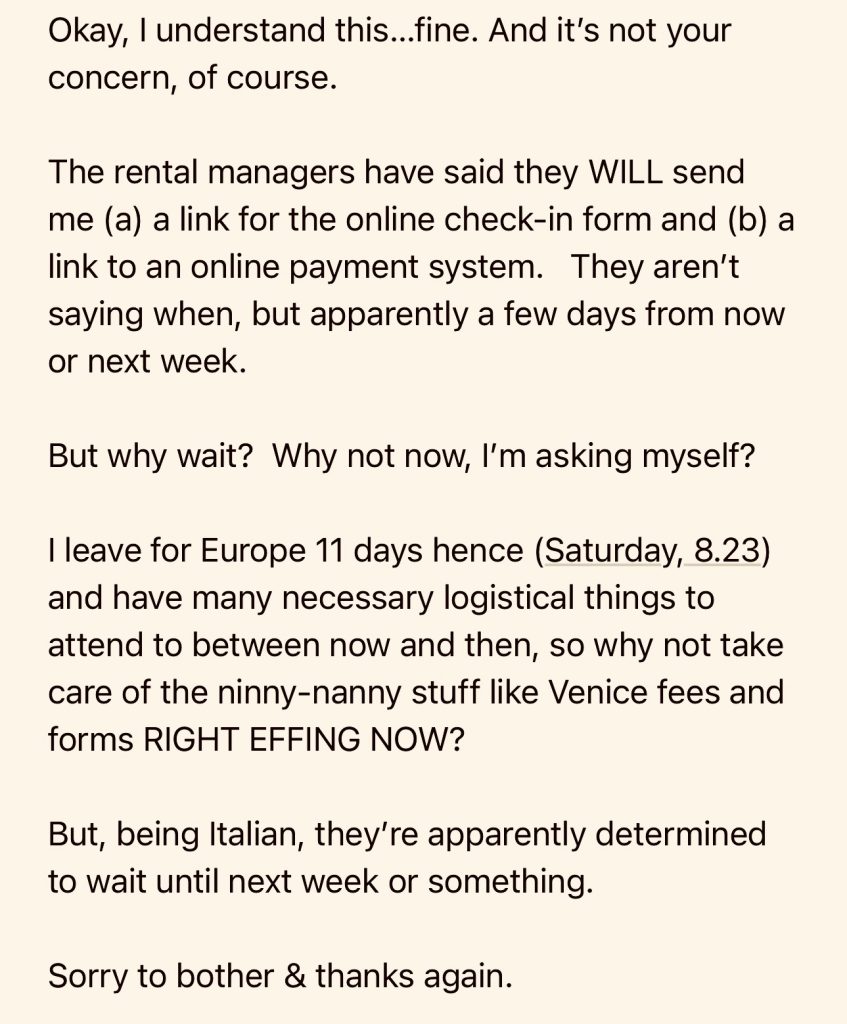
You’d think it would be no big deal to pay a tourist fee and fill out a tourist form, but HE’s Venice hosts are withholding the links until…who knows?…later this week or next week. Here’s the Castello place.
Everything is arranged and in-place. I leave 11 days hence — Saturday, 8.23

The only peripheral dingle-dangle are those HE comment-thread twats who’ve complained that since I crowd-funded the air fare, the rent and the festival fee that I shouldn’t fly to Milan and train to Venice….they judged this to be impure, louche, cavalier, not spartan enough. I have a paying job and chose to travel this route because it seemed like the right spiritual thing to do…period.



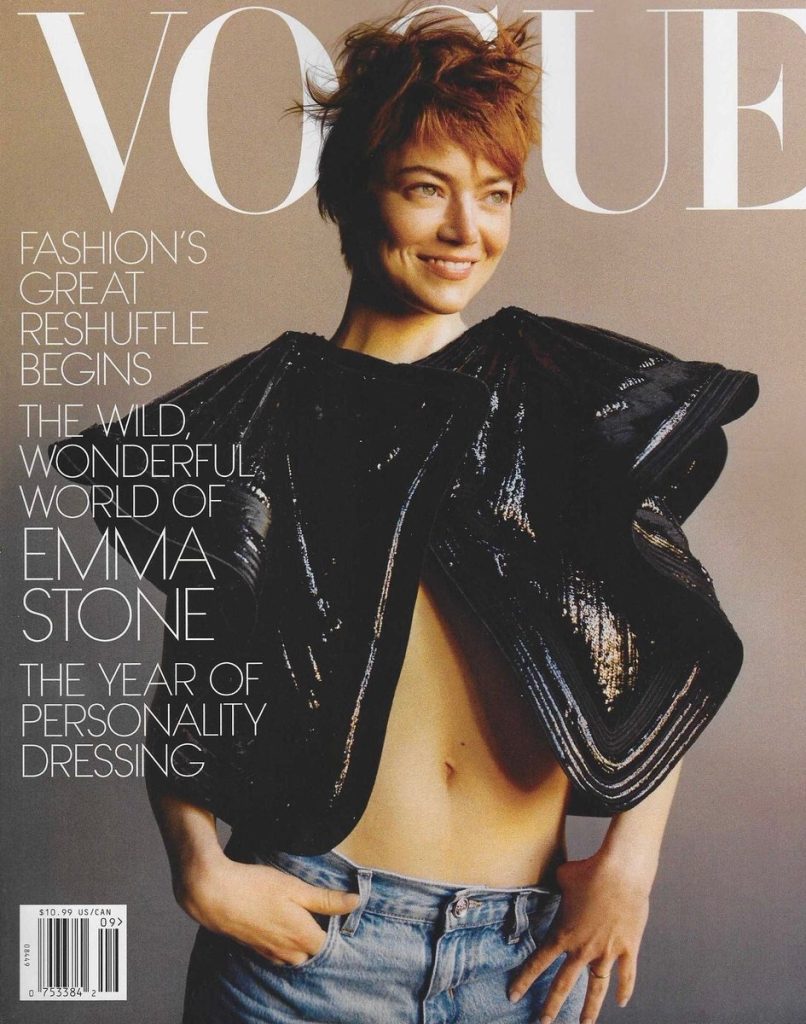
In the late summer of ‘24 Emma Stone totally shaved her head for the making of Yorgos Lanthimos’ Bugonia, which will world premiere at the Venice Film Festival about two weeks hence (Thursday, 8.28). So we’re looking at roughly a year’s growth here.
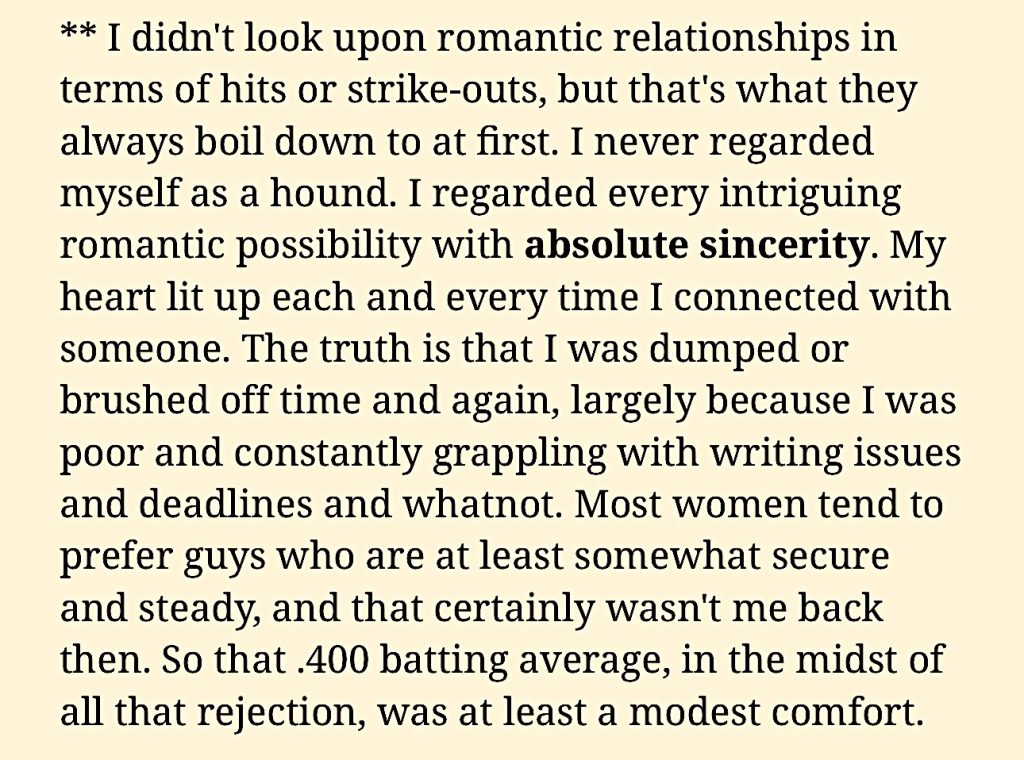
I was dropped or ghosted with such regularity by girlfriends of the ‘70s and ‘80s that I decided that “seeing” two or even three women simultaneously was the wisest…okay, the safest policy because the inevitable abandonments would be easier to cope with that way.
“Always nurture one or two back-ups” was the general motto.
And no pearl-clutching or moralistic finger-pointing either. Many women back then played their cards this way.
A couple of times in the ‘80s I was literally told “I like you and you’re promising, but no sex for the time being because I’m seeing two guys right now. But don’t lose hope! When one of them drops out you’ll be out of the bullpen and the recipient of all of my pleasurings, and I’m worth the wait…trust me.”
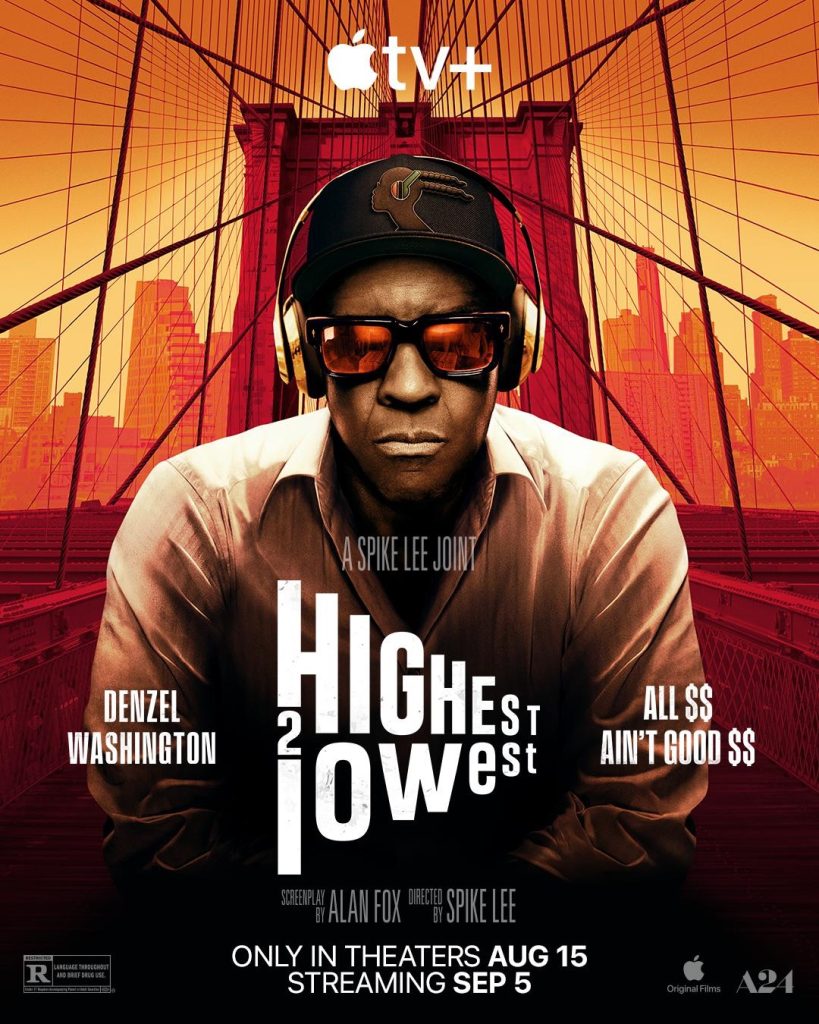
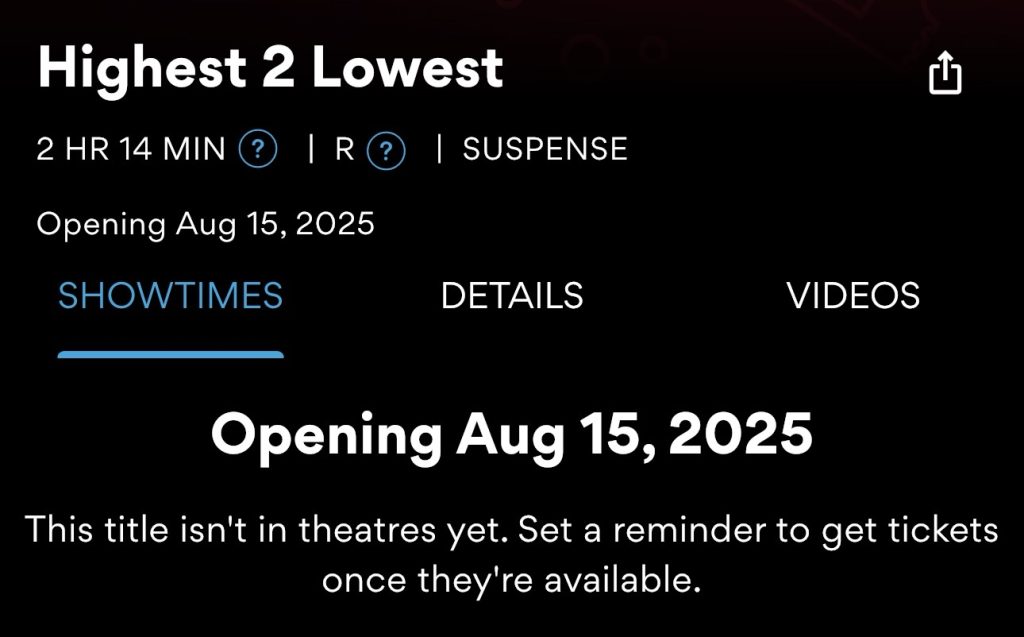
Three days from now Spike Lee’s Highest 2 Lowest, a remake of Akira Kurosawa 1963 kidnapping drama, opens theatrically in select venues. But you’d never know it from the weak, bordering-on-nonexistent advance hype.
It’s playing only at low–key smarthouse venues (the Jacob Burns is my best option) — i.e., avoiding the big chains entirely. Apple wants people to see it theatrically, but not too many.
The producers played the same low-profile bullshit game in Cannes three months ago, screening it for the black tie lah-lahs but making it difficult for the press to RSVP on the festival app (plus no Salle Debussy showing, and no morning-after screening at the Salle Agnes Varda).
You can’t trust the 91% Rotten Tomatoes score as most of the critics are invested whores who feel obliged to kowtow for safety’s sake. I heard a littie shit-talk about Highest 2 Lowest from a couple of guys in Cannes, and I’d like to hear more.
The Apple + streaming begins on Friday, 9.5.
…when confronted with the leading-role castings of Pedro Pascal, Adam Driver or Florence Pugh. Sorry but I’m not alone. Joe and Jane Popcorn are sulking, quietly grumbling about this trio.
I’m not instinctually repelled by Pascal like I am by, say, the dreaded Paul Mescal, but he’s definitely been in too many damn films over the last couple of years and I need a break from the guy…Jesus.
The Driver saturation effect peaked a couple of years ago. Portraying two wealthy Italian company hotshots in fairly rapid succession (Maurizio Gucci, Enzo Ferrari) darkened my brow, and then that Ceasar haircut in Megalopolis pushed me over the edge.
I don’t know when I began to flinch at the notion of Pugh, but if we had attended the same high school I don’t think we would’ve been friendly. I think my vague feelings of alienation began with Pugh’s Little Women performance, and then her feud with Olivia Wilde, and then I really, really didn’t care for her downish, pissy performance in Oppenheimer. I just don’t like her vibe.
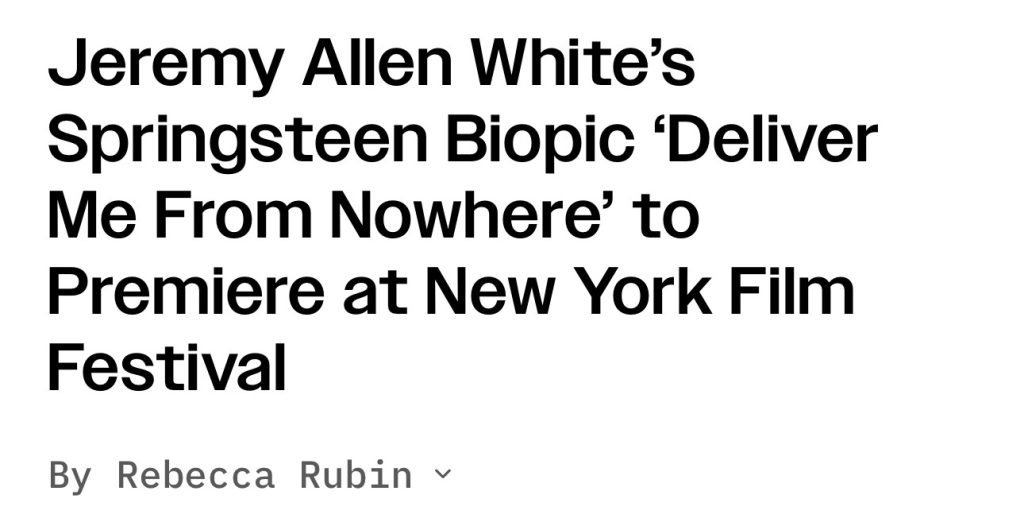
Variety’s Rebecca Rubin has pretty much confirmed that Scott Cooper’s Deliver Me From Nowhere, the forthcoming Bruce Springsteen feature** starring Jeremy Allen White, will have its world premiere at the 2025 Telluride Film Festival.
The specific focus of Rubin’s 8.11 report is the official announcement of a regional “premiere” screening of Nowhere at the New York Film Festival on Sunday, 9.28.
Rubin’s giveaway is in the final sentence of her story’s second paragraph, to wit: “Deliver Me From Nowhere will host its world premiere elsewhere at an earlier date.”
Cooper’s film isn’t slotted for the 2025 Venice Film Festival (Wednesday, 8.27 through Saturday, 9.6) so that kinda narrows it down. Telluride runs from Friday, 8.29 to Monday, 9.1.
** In an attempt to reach the none-too-brights, 20th Century has retitled Cooper’s film as Springsteen: Deliver Me From Nowhere.
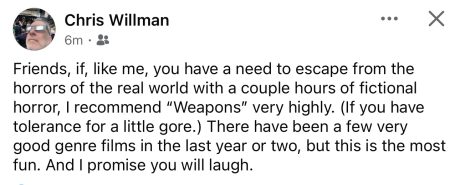
Sinners and Weapons are both supernatural horror films, snd are therefore occupying the same award-season popcorn genre slot. The problem for Sinners is that Weapons is a far superior film. This will soon be known everywhere, by everyone. At which point Sinners will begin to experience a precipitous drop in terms of Oscar nom cred…sorry.
Many will insist that Sinners is the “better” of the two, and that will be their right as citizens of a great democracy. But alongside Weapons, Sinners (which will still be nominated in this or that category because of the identity component) is now more or less finished…no longer the hot-to-trot, bold-as-brass, multi-category contender because Weapons is the sexy new gunslinger in town, and that’s life in the big city, unfair as this sounds.