
In June, Warner Home Video will finally cough up a DVD of one of the most intriguing late-’60s era films ever made: Richard Lester‘s brilliant, wonderfully textured, time-jumpy Petulia (1968). (WHV has it on the DVD market in England right now.) It’s about an impulsive, airy-fairy wife (Julie Christie) half- cheating on her stiff-necked husband (Richard Chamberlain) with a vulnerably grumpy divorced surgeon (George C. Scott) whom she’s deeply in love with…as far as it goes. Shot in San Francisco during the flower-power summer of ’67, Petulia mixes antsy energy with a bittersweet tone of regret about slipped-away love.
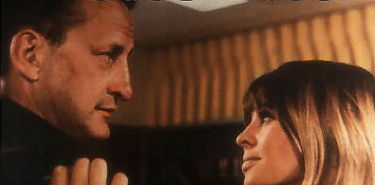
A Senses of Cinema essay by Peter Tonguette says that Petulia represented “the last gasp of Lester’s explicit engagement with present-day life. After it would come the masterful apocalyptic satire of The Bed Sitting Room (1969), which today looks symptomatic of a trend Pauline Kael identified in the mid-’70s: ‘At a certain point in their careers — generally right after an enormous popular success — most great movie directors go mad on the potentialities of movies,’ Kael observed. ‘They leap over their previous work into a dimension beyond the well-crafted dramatic narrative; they make a huge, visionary epic in which they attempt to alter the perceptions of people around the world.’ Kael wrote this in a review of Bernardo Bertolucci‘s 1900 (1976) — characteristic of this tendency if any film ever was — and goes on to site works such as D.W. Griffith‘s Intolerance (1916) and Abel Gance‘s Napoleon (1927). The Bed-Sitting Room was “a massive failure on every level and, not unlike the directors of other magnificent follies, he was punished for it; a full four years would go by before Lester directed a feature film [i.e., The Three Musketeers] again.”