Ridley on Modern Niggers

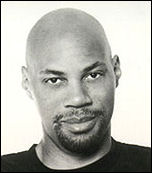
“Black America should have been singing hosannas about the ascendancy of Condoleezza Rice” because “it is time to celebrate the New Black Americans — those who have sealed the Deal, who aren’t beholden to liberal indulgence any more than they are to the disdain of the hard Right,” screenwriter John Ridley has written in the December Esquire. “It is time to praise blacks who are merely undeniable in their individuality and exemplary in their levels of achievement.

“But Condi was Republican. So never mind. Never mind she’d spent a lifetime facing down racism. Born in Birmingham at the peak of race hate, Condi was a schoolmate of Denise McNair, one of the ‘four little girls’ bombed to death in September of ’63 at the Sixteenth Street Baptist Church. [But] niggers and old-school shines couldn’t abide her.
“Same as with Clarence Thomas, they let her politics obfuscate her accomplishments. They stamped her: Not Officially Black. Loggers tagged her a ‘Sally Hemming for the 21st Century.’ Left-leaning pundits smeared her with the slurs ‘Aunt Jemima’ and ‘brown sugar.’ Julian Bond, reaching deep into the old-school bag of tricks, turned to rhyme to asperse Dr. Rice’s authenticity: ‘Just because they are your skin folks, doesn’t mean they’re your kinfolks.'”
The title of Ridley’s piece is “The Manifesto of Ascendancy for the Modern American Nigger.”

Back Home

As Paul Newman says to Robert Redford in The Sting, “Revenge is for suckers.” Meaning that it doesn’t really satisfy, not finally, and that to move on with your life you have to give up your hates and resentments because they’ll only pull you down in the end. But how do put aside your rage when the people you’re looking to settle a score with have not only murdered your mother (or so you’ve been led to thnik) but hundreds of thousands of innocent people?
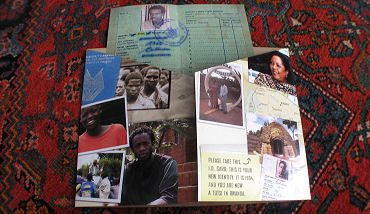
We’re talking about a young Rwandan guy named J.B. Rutagarama, the director of a jarring but gentle autobiographical documentary called Back Home, and, of course, the Rwandan massacre of 1994.
This is the fourth or fifth film I’ve seen about the Rwandan genocide, and the most humane and compassionate by far. Because it’s the most intimate and particular; the one most concerned with heart and family issues. And how one guy learned to grapple with the unimaginable and finally let it go. Terry George‘s Hotel Rwanda and Michael Caton Jones‘ Shooting Dogs were strong dramas that told Rwandan massacre stories, but Back Home is the real, particular, deep-down thing — a first-hand story of a nice guy with a very big heart.
The Rwandan massacre was about the brutal killings of roughly 800,000 (possibly closer to a million) ethnic Tutsis and moderate Hutus in Rwanda, which were largely carried out by two extremist Hutu militia groups for a period of about 100 days, from early April through mid-July of that year.
The hate that fed that massacre was created in a seminal way by Belgian colonists who decided decades back to give the better-paying, professional-level jobs to the Tutsi tribesmen and to basically give the economic shaft to the under-class, working-class Hutus. Mass slaughters always seem to be about economic and class resentment — a certain group believed to have enjoyed an unfair advantage over another, either through designation or exploitation. The mid ’70s genocide in Cambodia and the Nazi holocaust against European Jews were driven by such feelings.
Back Home, directed by Rutagarama and produced by former hard-news reporter and former Fox network talk-show host Linda Vester, is about the amazing and intense arc of Rutagrama’s life over the last twelve years — a story that began in horror and involved incredible luck and amazing changes.
The 17 year-old Rutagarama was nearly killed by machete-wielding Hutus in the midst of the genocide. He and his brother managed to escape…just. On the other side of the border, J.B. was lucky or determined enough to strike up a conversation with Vester and a British-based NBC producer (her name escapes me — the press notes didn’t provide it) who were covering the tragedy, which led to a job as their translator. Rutugarama later moved to England and was effectively adopted by these two and given college schooling. He was gradually networked into a job as a camera operator at a Manhattan-based TV show.
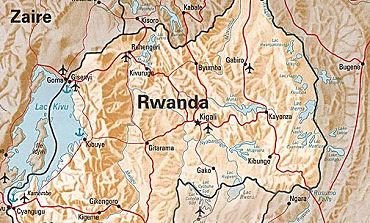
He finally decided in the wake of the 9/11 disaster to return to Rwanda and directly deal with his grief and his demons . He needed to learn the fate of his mother and brother, and to find some way to resolve or grow past the horror of what had happened. The particulars are quite moving, but I won’t relay them. Consider instead what J.B. has written:
“I should be dead by now, or at least very bitter. By luck I am not dead; by choice I am not bitter. Dozens and dozens of my relatives were slaughtered in Rwanda’s genocide. . At first, I tried to forget everything that happened. Then I was consumed by rage. Then sorrow. Now I simply want to be at peace.
“s much of the world today is gripped by war, I am standing up to say that despite all that was done to me, I refuse to be part of the cycle of violence. I do not want revenge. Reconciliation in a war zone is not easy. It is awkward, imperfect and slow. But it is possible. We need only to find the courage to try.”
In a sense, J.B.’s story is that of Charlton Heston‘s in Ben Hur (‘1959). William Wyler‘s Oscar-winning film is about an innocent man who is horribly wronged by a vicious enemy and nearly put to death, while his family — his mother and sister — are presumed to be dead, and all of this caused by a man he once considered to be a good friend, but who fell under the grip of evil.
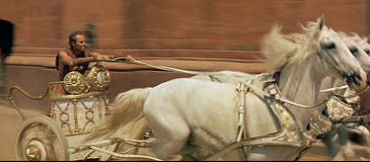
Lew Wallace’s original “Ben-Hur” novel was subtitled”A Tale of the Christ” because Ben-Hur finally finds a way to forgive and move on with his life due to the influence of Jesus of Nazareth. But of course, Ben-Hur is not a Tale of the Christ, not really …and we all know it would be deeply unsatisfying as a drama if it weren’t for the big chariot race, which shows us Ben-Hur defeating his enemy Messala (Stephen Boyd), who is trampled by horses and left a bloody pulp and soon after dies.
I was touched by Back Home and I admired its heart and wisdom — a person who can’t move beyond past evils and dreams of vengeance is truly living in a prison — but it has no chariot race and no bloody Messala figure writhing in agony before he dies. And that, in the end, for me, makes it unsatisfying. There’s something in our genes that demands justice, and yet the film doesn’t tell us about the punish- ment that was meted out to the leaders of the Hutu massacre and many of their lieutenants. (A lot of them are serving life terms.)
Instead, it just stays with J.B. and recalls his life in chapters and stays with him as he discovers that his mom is alive after all, and mainly listens to his heart. That’s fine — beautiful, really — but my inner Dirty Harry felt serious frustration all through it. We all need to get with the groove and find peace, but I’m also a believer in “as you shed blood, so shall your blood be shed.”
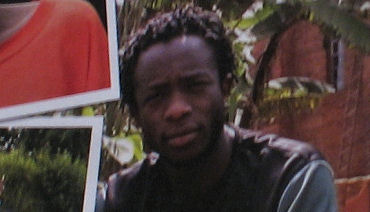

J.B. Rutagarama

“Spider-Man 3”

Peter Parker’s dark side takes over and Luke becomes Darth…revenge…just to underline things, Spider-Man hangs the red-and-blue suit on a hook in the closet and puts on a dark grey one instead…”this guy killed my uncle, and he’s still out there!!”…he means Thomas Haden Church‘s “Sandman”…a possible marriage to Kirsten Dunst‘s Mary Jane Watson is threatened by her shock and dismay at Peter Parker becoming an Angel of Vengeance …”what’s happened to you?”..could this be the end of Spider-Man?….a different kind of energy for Part 3, fine, but the same bullshit regardless…a far more interesting Tobey Maguire performance (how could it not be?) awaits in Steven Soderbergh ‘s The Good German.

Soderbergh at the Clarity


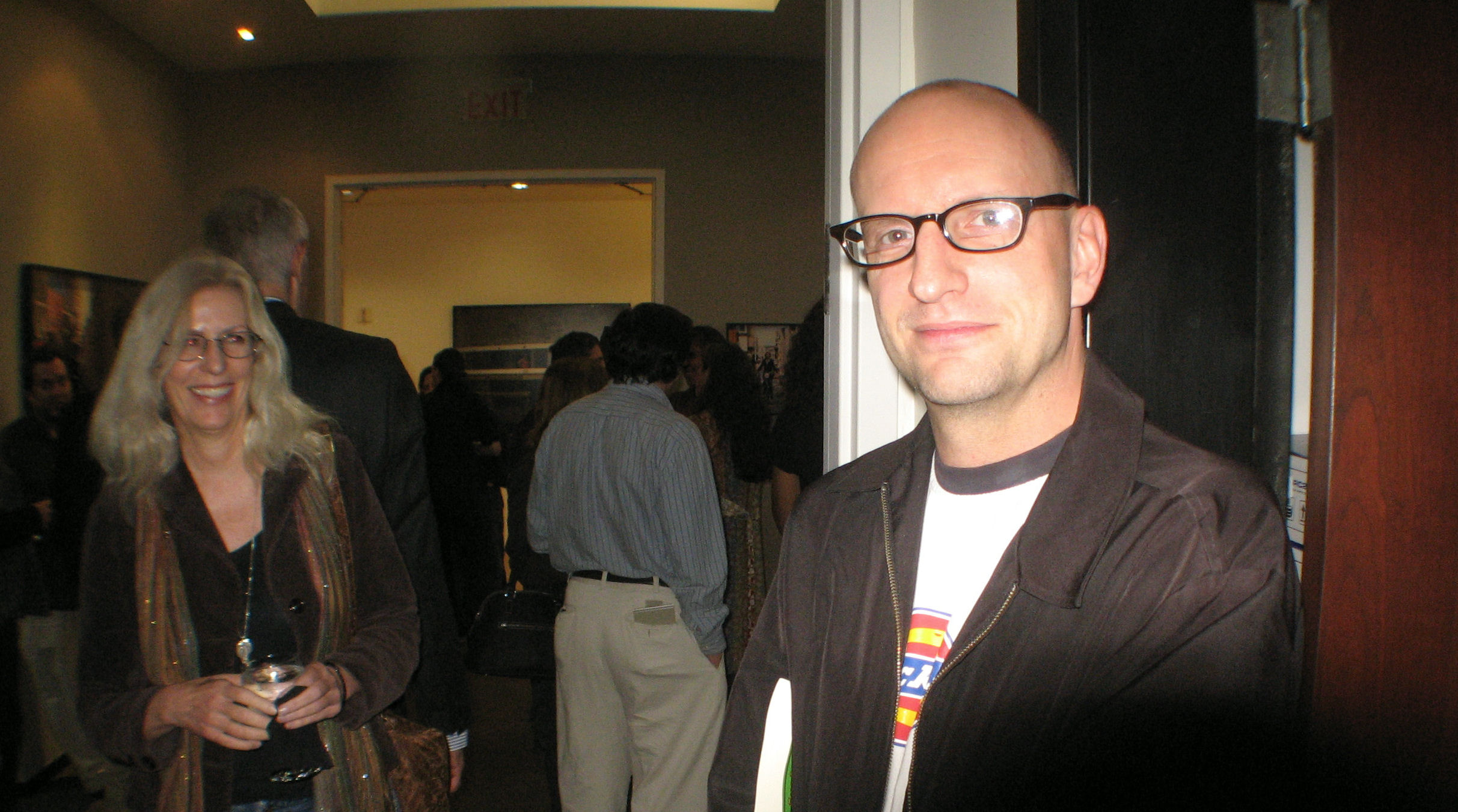
The Good German director Steven Soderbergh prior to a showing of the Berlin-set 1940s drama (Warner Bros., 12.15) at the Clarity Screening Room in downtown Beverly Hills — Thursday, 11.9.06, 7:40 pm. L.A. Times editor Betsy Sharkey (partly obscured) stands to the left.

Mindless violence

After trying for nearly a week to get hold of an mp3 file of Bobby Kennedy‘s “mindless menace of violence” speech that’s heard during the final moments of Bobby — it easily constitutes the most moving portion of Emilio Estevez‘s film– I discovered today that it’s the final track on the original motion picture soundtrack. Thanks to the Weinsten Co. publicist who sent it over today. It’s hard to hear the words with the music mixed in, but give it a listen — it really sinks in.

Punishing Jesse james

Once again, an upcoming longish movie with a moody, curiously textured canvas that’s trying to deliver something other than the usual boilerplate ingredients (in this case something Malicky or Peckinpah-ish or Leone-like, or perhaps all three) is being punished for this commercial transgression while studio execs are stalling the release while they work on pressuring the filmmaker(s) to trim scenes and/or otherwise give it a significant re-think.

The offender (and I realize I’m already sounding redundant, given the two recent items posted over the last few days) is Andrew Dominik‘s The Assassination of Jesse James by the Coward Robert Ford.
Of the two AICN reviews posted earlier today, both say the film is too long or it’s in trouble because of this. Okay, so length is an issue. But why is a film that was originally going to be released two months ago sitting in release-date limbo if the ony thing at stake is the running time? It takes months and months to work out the problems? Since when?
These AICN reactions don’t make it sound as if the film is in deep trouble — they make it sound like it probably won’t sell a lot of tickets and that Jeff Robinov and other Warner Bros. execs are fretting about a potential commercial bomb and that they’re doing what all studio executives do what they have an ambitious problem movie (like Columbia did last year with All The King’s Men) — delaying the release date and postponing the inevitable.
“This is not your average western,” one AICN guy said. “This film is very dark with Brad Pitt playing his darkest character since [the killer in] Kalifornia. Brad Pitt doesn”t use a lot of words in his performance, it’s all looks and internal turmoil, he is truly mesmerizing in this performance, showing a more mature actor then we have seen before.
“He is matched perfectly by Casey Affleck who is finally used to his full potential as Robert Ford. Affleck plays him as a very vulnerable, fragile young man with a thirst for recognition. Hopefully this performance might break Casey out of his brother”s shadow. The rest of the cast is superb with a funny and odd performance by Sam Rockwell.
“The cinematography is excellent. Roger Deakins turns in some of the best work of his career. He brings a dream-like quality to the images that gives the film a fable-like quality. It”s this quality that separates this film from [many] other westerns [and gives it similarities to] Sam Peckinpah”s under-rated “Pat Garrett and Billy the Kid.” It has to do with living up to ones own myth and also how far a person will go to be famous.
“But I see one serious problem with this film. A major studio made it. This isn”t a film for everyone. It isn’t “Tombstone or any kind of action-packed western. It”s a very emotional film. The action that does happen is quick and realistic much like a Sergio Leone film. This is a film for my father, a person who grew up on westerns and loves them. It has more in common with art-house [fare] and this might make it a tough sell for the studio.
“Another problem is that the version I saw the other night Is easily three hours in length. That can make any studio nervous and I”m afraid the studio will start cutting the film up in hopes of getting a bigger audience. This film needs the three hours, much like Sergio Leone”s westerns (which were notoriously edited by the studios) this film is about anticipation and scope. I wouldn”t be surprised if they cut this film up but I beg the studio not to.
“Basically I hope everyone gets to see this film in its current cut. This is the kind of film that will probably be passed over in theatres but will get a lot of reconsideration over time and will one day be seen as the truly great film [that] it is.”
The other guy says that “at two hours and 50 minutes, it’s just too damn long.
“The first act of the film does a wonderful job introducing us to Jesse James with voice over, abstract shots, and beautiful scenery, something out of a Terrence Malick film. We are introduced to Jesse and his gang as they complete one of their last train robberies, a sequence that works very well.
“Then the film crawls into the second act and keeps crawling for way too long. The dynamic between James and Ford, played wonderfully by Casey Affleck, is interesting and sets up some very nice sequences in the film. But the film strays too much from the identity crisis of Ford and the career crisis of James and meanders through beautiful scenery and locations, picking up bit characters and abstract storylines, as we wait for the main story to get back on track.
“The assassination is a fantastic sequence [but] the aftermath sort of drags, but it’s such a relief to actually have some story elements working [and thus] the minor flaws of the third act are ignored.
“The film is very character-driven by James and Ford with the last frame of the film a wonderful portrait of a man who has reached the end of his path [and is]still searching for identity and meaning behind it all.
“The film looks amazing and the performances are there, if they shave a good 50 minutes off the film the pacing would work better [and keep] the story moving. I can’t say I recommend the film as it is. I hope they cut it down before it’s released.”

“Fountain” remixed

Here’s a site that lets you futz around with music and images from Darren Aronofsky‘s The Fountain…okay. Obviously a kind of promotional “Hail Mary” pass but fine. Clearly, curiously, not enough people are getting into this film. It has only a 50% positive Rotten Tomatoes rating. I told Aronofsky when I saw it late last summer than anyone who’s taken LSD or mescaline should definitely be receptive to it. Not to be overly simplistic, but could some of the difficulty come down to the fact that not enough people out there are sufficiently “experienced”? (Well….I am.) Those on the fence may want to at least consider Devin Faraci‘s CHUD rave.

Sacha for real

Running a link to material as dusty and creaky as this is pretty close to unpardonable, but this YouTube video of Sacha Baron Cohen‘s visit to the Jon Stewart show is truly fascinating. Cohen’s natural British accent is mesmerizing…in a very relaxed and affable way. He’s witty as shit. On top of which (and for some reason I find this extra-surprising) his hair is thinning. For me, it revives the whole Borat thing because now there’s an engaging real-life guy behind the mask. (The James Lipton story is hilarious, by the way.) Cohen needs to try a different Borat p.r. mode and do some follow-up interviews as himself. It adds to the intrigue. Everyone’s sick of his in-character routine — time to shift gears.

Recent tracking

The coming weekend looks like another Borat crowning, although I don’t yet have an exact screen count tally. The other significant trackers are Casino Royale (85, 39. 10), Deja Vu (78, 31, 7), Stranger Than Fiction (68, 37. 7) and Bobby (60, 37, 3). For numerous reasons, the excellent Babel (52, 25, 5) is in the same awareness-and-definite interest ballpark as Ridley Scott’s A Good Year (51,18, 4).

Horowitz vs. MTV

All I was trying to do was get to Josh Horowitz‘s story about Judd Apatow declaring that Borat should be an Oscar Best Picture contender, but the MTV.com’s site is way too layered and complicated and show-offy. Way too much stuff that needs to load before getting to the story. Wells to MTV.com webmaster(s) — please let guys like me access Horowitz’s material without trying to saturate my head with all of your empty-ass, sub-literate “whoa, dude” audio-visual bullshit .

Russia bans “Borat”

The best Borat news of the week — banned in Russia. “The film contains material that some viewers may consider offensive to certain nationalities and religions,” Federal Agency for Culture and Cinematography minister Yury Vasyuchkov has explained to local press.
Variety‘s Moscow correspondent Tom Birchenough has reported that the ban “is likely the first time that a non-pornographic movie has been banned [in Russia]…plenty of hard-core porn movies succeed in being licensed by the agency.”
Local distributor Gemini had intended to give Borat “a medium-range release” starting on 11.30. Gemini spokesperson Alexander Kovalenko told Birchenough he was still considering whether to [try and] release the film. The story said that distributors “have the option to appeal the licensing decision √ɬ¢√¢‚Äö¬¨√¢‚Ǩ¬ù though it would likely prove a fruitless task [in this instance].”

Ed Bradley has passed

Condolences to the friends and family of Ed Bradley, the legendary, steady-eyed 60 Minutes correspondent who died, according to Variety, sometime earlier today at age 65. He was felled by lukemia, which he’d been reportedly coping with for some time. The Variety obit says Bradley won 19 Emmys during his career at CBS, which began in 1971 when he joined as a stringer in the Paris bureau…[he] was transferred to Saigon the year after and was wounded covering the war in Cambodia.” It also says that “after the semi-retirement of Mike Wallace in 2005, Bradley became the longest-serving full-time 60 Minutes correspondent (he started in 1980) and was the first to introduce himself after the ticking stopwatch, an honor known as the first ‘I’m.'” A long time ago a friend regaled me with details about a hot affair he’d had with the late Jessica Savitch sometime in the ’70s. For some reason I always saw Bradley as an exceptional news guy after hearing this — a man with a certain spiritual specialness who had the taste buds of a good hound.