
“Helen doesn’t say, `Please love me. Look, I’ll smile nicely, and you’ll love me,” Stephen Frears tells John Lahr for a cannily written profile of Queen star Helen Mirren in last week’s issue of The New Yorker. “She’s not inviting you in the way other actresses often are. She just says, `This is what it’s like,’ and that’s what you love about her. She confronts something, and she doesn’t sentimentalize it.” Elizabeth I costar Jeremy Irons adds, “She goes for life…that’s why she’s alluring to men. She is the complete antithesis of the vapid.”
Year: 2006
The Prestige
How can Chris Nolan‘s The Prestige (Touchstone, 10.20) be “falling off of the list” of MCN’s Gurus of Gold if it hasn’t been seen all that much? A friend saw it yesterday for what he believed was the first time (or one of the first times), and feels it’s one of the more satisfying commercial rides he’s taken in a long while because Nolan is such an expert filmmaker, etc. There may be another screening this week, a Variety series screening and an all-media screening next week.
Herzog’s Peruvian doc
Reader John Coogan has passed along this Google Video file containing Werner Herzog‘s TV documentary Wings of Hope (2000), which is about Juliane Koepcke, a German woman who was the only survivor of a plane crash that occured in the Pervian jungle in 1972. She and Herzog are shown revisiting the site of the accident as she tells how she managed to survive. The doc is freshly topical due to last weekend’s mid-air collision above Brazil which resulted in the deaths of 155 people aboard a commercial jetliner.
Ermey on Eyes Wide Shut
In a conversation with Radar Online‘s Jebediah Reed, the legendary R. Lee Ermey — star of Texas Chainsaw Massscare: The Begining — says something surprising about Stanley Kubrick and Eyes Wide Shut. “Stanley called me up all the time,” he says. “He’d call at three o’clock in the morning and say, “Oh, it’s 10 o’clock over here.” [Laughs] “Yeah, well, it’s three o-fucking-clock in the morning here, Stanley. Oh well.
“He called me about two weeks before he died, as a matter of fact. We had a long conversation about Eyes Wide Shut. He told me it was a piece of shit and that he was disgusted with it and that the critics were going to have him for lunch. He said Cruise and Kidman had their way with him — exactly the words he used.
What did he mean?, asks Reed. “[Kubrick] was kind of a shy little timid guy. He wasn’t real forceful. That’s why he didn’t appreciate working with big, high-powered actors. They would have their way with him, he would lose control, and his movie would turn to shit.”
Ermey is a colorful, impudent rightwing mouth-off type, but watch the Kubrick acolytes try and characterize him as a deranged nutter in response to this.
“Departed” table not on fire
If N.Y. Post writer Reed Tucker quotes Departed star Leonardo DiCaprio yelling, in a manner of speaking, “Table on fire!”, does that mean there was one, particularly if a quote in a Time magazine transcript disputes this?
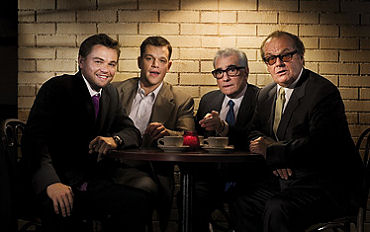
One one hand we have a bull session between Time‘s Josh Tyrangien and the Departed guys — Martin Scorsese, DiCaprio, Matt Damon and Jack Nicholson. But it contains a slight problem for Tucker, who included an apparent wrongo in an interview piece with Nicholson that ran on 10.1.
Tucker writes that “before one scene in which [Nicholson’s] Costello interrogates [DiCaprio’s] Costigan to figure out if he’s a rat, Nicholson reportedly told Scorsese, ‘I don’t think [DiCaprio] is scared enough of me. I have to be scarier.’ So scary he got. Jocelyn-Wildenstein-in-the-morning scary.
“‘I came in the next day,” DiCaprio recalls, ‘and Jack’s hair was all over the place. He was muttering to himself and the prop guy tipped me off that he had a fire extinguisher, a bottle of whiskey, some matches and a handgun somewhere. So I sat down at the table not knowing what to expect, and he set the table on fire after pouring whiskey all over the place and stuck a gun in my face.'”
That scene, Tucker writes, “turned out to be one of the most chilling in the movie.” Except there’s no whiskey table fire in the movie. At all. To anyone’s recollection.
Tyrangien’s q & a transcript tells a different story:
“Scorsese: So we shoot the scene, and all of a sudden you hear a thunk. And I’m thinking, I better say cut. And, thank God, I didn’t. Jack picks up a gun and points it at Leo, and he didn’t know at that point that there was a gun there. So what you see from Leo is real. I love that.
“Nicholson: But the prop man told him, goddammit!
“Dicaprio: He said, “All I know is Jack has a handgun, a bottle of whiskey and a fire extinguisher.’
“Time: Why a fire extinguisher?
“Nicholson: I was going to set the table on fire with bourbon out of my mouth, but I forgot they didn’t give me real bourbon.
“Dicaprio: [Laughing] It’s hard to light Diet Coke.”
Reeler on Beatty
The Reeler‘s Stu VanAirsdale on Warren Beatty‘s NY Film Festival press conference following Tuesday’s press screening of Reds. And N.Y. Times critic A.O. Scott speaks to Beatty about the film and its legend in a 10.4 piece.
Friedman on “Bobby”
“I braced myself as Emilio Estevez‘s Bobby began,” writes Fox 411 columnist Roger Friedman. “First of all, it’s filled with well-known faces like Demi Moore, Sharon Stone and Lindsay Lohan — actors who are often more frequently in supermarket tabloids than good movies.
“After these three, plus William H. Macy, Anthony Hopkins, Harry Belafonte, Helen Hunt, Martin Sheen, Christian Slater and Estevez himself all make the scene, Laurence Fishburne‘s entrance is nearly comical. You hear yourself saying, ‘Anyone else back there?’
“But I have to tell you, I loved Bobby. Once the shock of all these people settles in — quickly, too — the stories of various characters who were at the Ambassador Hotel in Los Angeles on the day Bobby Kennedy was killed in June 1968 become not only completely engrossing, but unexpectedly moving and poignant.”
Inarritu vs. Ariagga
Scriptland columnist Jay Fernandez has picked up on the rumble that was going around last May (in Cannes, for the most part) about Babel director Alejandro Gonzalez Inarritu and screenwriter Guillermo Ariagga being at odds. The L.A. Times reporter has written that people in their respective cirlcles “are privately aghast that Inarritu, apparently miffed that Arriaga claimed much of the credit for the critical success of 21 Grams, banned the writer from attending Cannes, where Babel had its world premiere. Inarritu, in full auteur glory, went on to claim the best director prize. Multiple calls to Arriaga’s UTA agent went unreturned, Inarritu’s manager would merely confirm the ban and acknowledge the feud, and a message left for Inarritu sits idle.”
Poor Steve Zallian
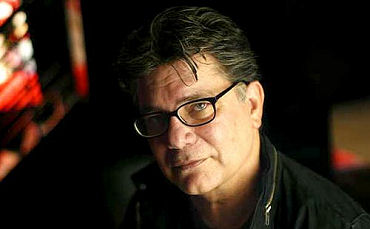
Mainstream reporters whose stories are printed in newspapers which are then hand-delivered to newsstands and newspaper vending machines by guys in trucks…these reporters and their editors really love pointing out that Steve Zallian‘s All The King’s Men was a huge debacle. The difference this time is that L.A. Times writer Scott Martelle got to talk to Zallian, the poor guy, and take his photo even. Look at the expression he’s wearing. It’s glum but in a kind of enigmatic, late-afternoon, verging-on-Mona Lisa way.
“WTC” and the right…again
And what’s with this morning’s posting of this Time “blog” piece by Washington Times reporter and Brainwash editor Eric Pfeiffer about the selling of Oliver Stone‘s World Trade Center to conservatives? Why now, I mean, two months after the movie came out? Because Stone has been promoting it in Europe?
Mirren, Frears, Morgan
The Queen star Helen Mirren, who’s looks at this stage like an even more likely shoo-in for Best Actress than Prada‘s Meryl Streep and Volver‘s Penelope Cruz, sat for a round-table chat this morning at the Four Seasons hotel; so did the film’s director Stephen Frears and screenwriter Peter Morgan. Frears and Morgan deliver a somewhat livelier session (Frears’ voice is the sharper and deeper of the two), but Mirren ran a close second.
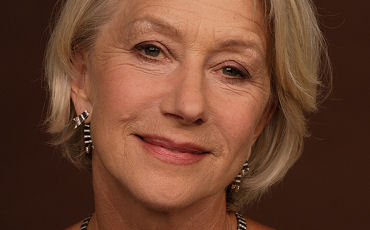
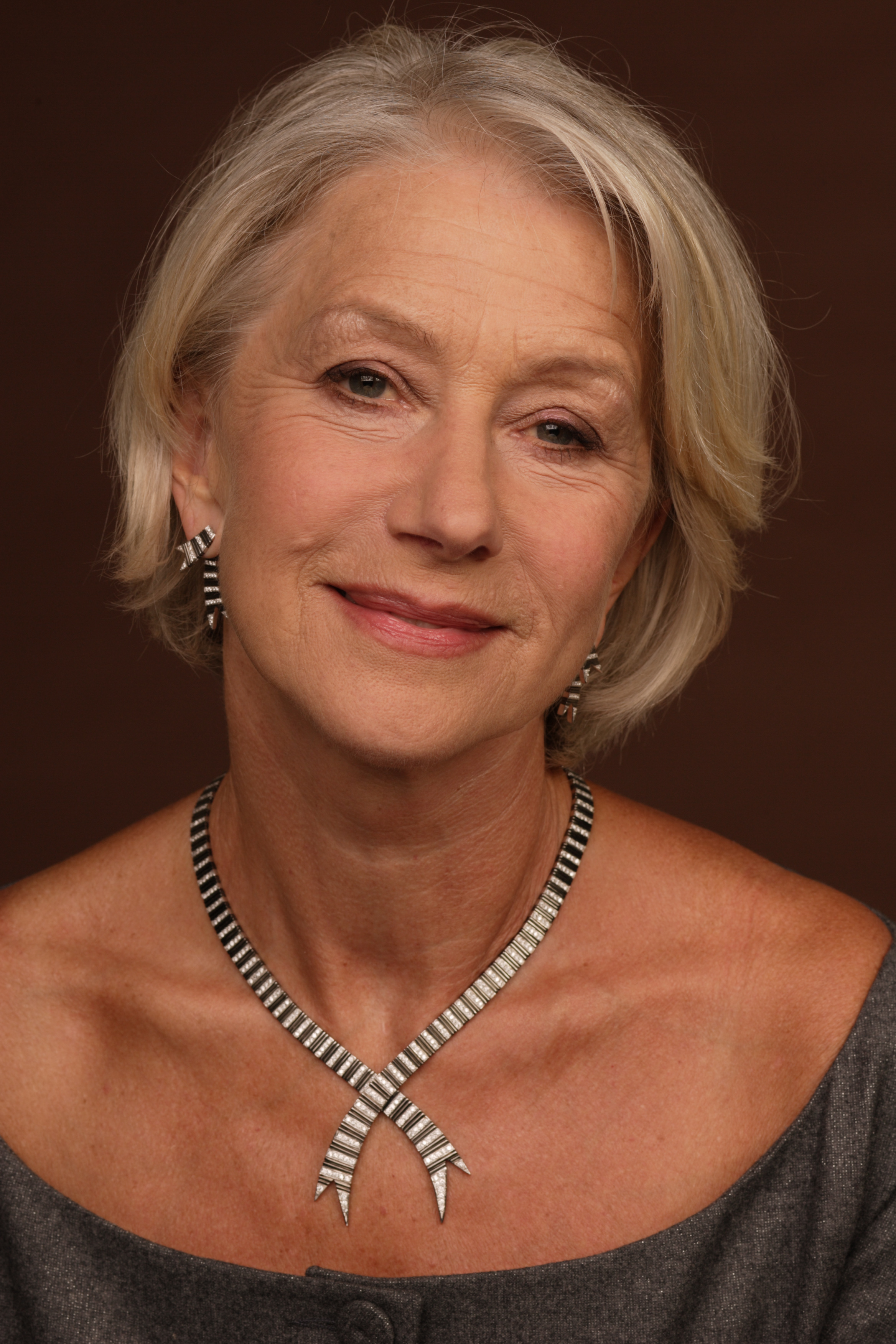
Queen star Helen Mirren, not as she appeared during roundtable interviews this morning (9.3) at the Four Seasons but at a Miramax-funded photo session a week or two back.
La Opinion quotation
La Opinion‘s Josep Parera called me a few days for a piece about the Oscar season, and what’s cool about this isn’t what I said (the usual praisings of Innaritu and Almodovar) as much as the mildly exotic thrill of being quoted in Spanish:
“Para el periodista Jeffrey Wells, responsable de la pagina en la red hollywood-elsewhere.com, y uno de los expertos en analizar la carrera de los Oscar, ‘Babel es la obra cumbre de Inarritu. El es el director mas brillante de la actualidad. Esta al mismo nivel que cineastas como Fellini y Antonioni. No es solo un director, es alguien que est√É∆í√Ǭ° por encima del resto, en el panteon de los grandes.”
“Y por lo que respecta a Volver, Wells afirma que se trata ‘de la mejor pelicula para mujeres y de mujeres de la historia.'”