
Worst Oscar call in history

British online voters at msn.com have allegedly decided that Shakespeare in Love is the most undeserving Oscar Best Picture winner of all time. (“Allegedly” because I can’t find the article that announces the tabulations — the news has been passed along by a BBC web page.)
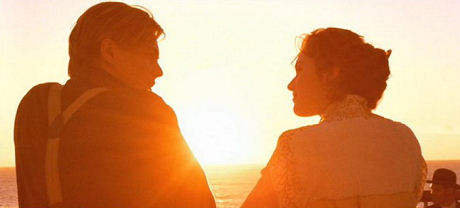
The people who voted obviously aren’t very hip or knowledgable. Shakespeare in Love was a mostly tolerable, agreeably spunky period romance with a short-but-terrific Judi Dench performance. It wasn’t “right” that it won over Saving Private Ryan, but it wasn’t a rank embarassment. Mike Todd‘s Around the World in 80 Days winning the Best Picture Oscar iwas, however.

The respondents are correct in saying that the 2002 Best Picture going to Chicago was a joke, which it was. And they’re wrong in saying that Titanic winning in ’98 was undeserved. Any movie that ends as well as Titanic deserves accolades. Most of Titanic was okay, some of it was bad, some of it was genuinely engrossing and thrilling…but the last 20 to 25 minutes were spellbinding in a profoundly sad, inwardly-melting way. And that last dream/death sequence was transcendent.
Zodiac documentary

John Mikulenka‘s “Hunting the Zodiac,” a 63-minute documentary “about the vast subculture of amateur detectives who are obsessed with solving the Zodiac Killer case from the late 1960s. Shot in 2001-02, the film chronicles a turning point in the hunt for the psychopath who killed at least 5 people in the San Francisco Bay Area and mailed more than a dozen bizarre letters and coded messages to local newspapers. Doc includes extensive interviews with the last two San Francisco homicide detectives to be assigned to the case, and it features more than 8 minutes of rare archival news footage from the earliest days of the Zodiac investigation.”

Rovzar on Oscar costs & strategies

N.Y. Daily News reporter Chris Rovzar on the costs (“up to $25 million a year per nominated film”) and strategies that often/usually/ sometimes result in an Oscar nomination. The process is basically about having “a conversation with viewers,” I told him at one point, “and keeping certain films in their mind as they mull over possible winners.” My mind is freezing up; these phrases aren’t registering; only five more days to go.

JFK home movie

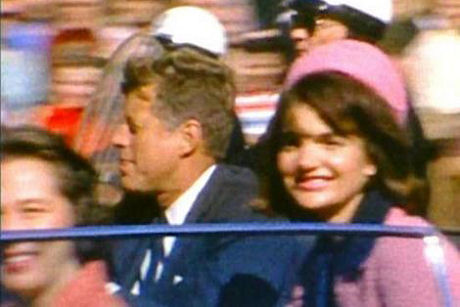
“Case Closed” author Gerald Posner, who believes Lee Harvey Oswald was the only shooter on 11.22.63, has pointed out in a N.Y. Times story that the just-revealed George Jefferies 8mm home movies of JFK and Jackie Kennedy riding in the Presidential limo on Dallas’ Main Street (i.e., a minute or less before the shots rang out) that JFK’s easily visibly bunched-up suit jacket explains why the back-wound bullet hole didn’t line up with the bullet hole in his shirt.

And the bullet that ripped into both Kennedy and Connolly without altering its shape will be forever magic. And it was entirely natural for JFK to slam back into the car seat to his left after being shot in the head from an area above and to his right-rear. And all those confused people who ran up the slope of the grassy knoll in the seconds after the shooting were reacting to an acoustical deception, plain and simple.

Click on the Jefferies video (i.e., right next to the Posner story on the Times web page) and look at the people waiting near a Main Street corner, and notice the 1963 haircuts on the guys. Really short and close-shaven on the sides, loaded down with Brylcream, some scalp showing through. And yet all the haircuts in Oliver Stone‘s JFK were a tiny bit too long and mostly Brylcream-free. Just about any film depicting Average Joe haircuts in the early ’60s almost always get it wrong also. Pre-Beatles (i.e., before January-February 1964) haircuts in this country were very straight-arrow rigid, almost military.