Splitsville

“As you drill backward into Oscar history you keep finding things — Hollywood classics, in some cases — that could only be made now as independent films. I’m pretty confident that nobody in Hollywood would see much sex or sizzle potential in Hope and Glory(a 1987 Best Picture nominee) or Gandhi (1982) or Deliverance(1972). And they’d be right — none of those movies made much money.

“For that matter, try to imagine pitching such vintage Oscar fodder as Annie Hall or The Graduate or To Kill a Mockingbird to a contemporary Hollywood executive. Well, okay, maybe The Graduate — if you made it wackier and made Mrs. Robinson, like, 29 and insanely hot.” — from Andrew O’Hehir‘s 2.18 Salon piece about how the Academy “has turned its back on the multiplex moneymakers and wrapped smaller indie films in its warm, glittery embrace,” etc.

Best Films of 1968

Mark HarrisPictures at a Revolution: Five Movies and the Birth of the New Hollywood (Penguin, on sale now) is about how a fresher, nervier, less formal kind of filmmaking found its stride in 1967 when The Graduate and Bonnie and Clyde — stories about misfits saying no to the man in their own peculiar madcap way, and unmistakable metaphors about the social rumblings of the time — were nominated for the Best Picture Oscar.
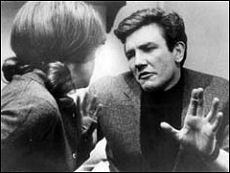
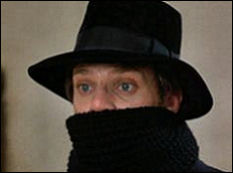
Charlie Bubbles, If…

The other three nominees were the more traditional-minded Guess Who’s Coming to Dinner, In The Heat of the Night and Dr. Doolittle, and it wasn’t too surprising when In The Heat of The Night finally won, given the industry’s tendency to ratify middlebrow. But the official respect paid to The Graduate and Bonne and Clyde was historic. It meant that the square, hold-your-horses mindsets of old-school Hollywood were being pushed aside by the industry’s younger players, many of whom were in their late 20s, 30s and early 40s. Hence Harris’s use of the word “revolution.”
But the following year everything kind of rolled back. The Best Picture nominees of 1968 all felt traditional, soft or somehow confined — the heavy-handed Oliver!, the passionate but stodgy Funny Girl, the sharply written and wonderfully acted but talky-theatrical The Lion In Winter, Paul Newman‘s indie-flavored character portrait Rachel, Rachel, and Franco Zeffirelli‘s Romeo and Juliet. These were not the best films of the year — they were films that seemed to most comfortably fit some kind of lazy Best Picture “definition” that probably calmed on some level. Traumatic political events had rocked the country that year, and a lot of people wanted to settle down and chill.
By today’s reckonings, a list of the best films of 1968 would have to include Stanley Kubrick‘s 2001: A Space Odyssey, Peter YatesBullitt, Sergio Leone‘s Once Upon a Time in the West, Roman Polanski‘s Rosemary’s Baby, Francois Truffaut‘s Stolen Kisses, Richard Lester’s Petulia, Lindsay Anderson‘s If…, Ingmar Bergman‘s Shame, Claude Chabrol‘s Les Biches, John CassavetesFaces, Claude Berri’s The Two of Us, Trufffaut’s The Bride Wore Black, Luis Bunuel‘s Belle du Jour, Milos Forman‘s The Fireman’s Ball, Don Siegel‘s Madigan and Coogan’s Bluff, George Romero‘s Night of the Living Dead, Jean Luc Godard‘s La Chinoise, George Dunning‘s Yellow Submarine and Albert Finney‘s Charlie Bubbles.
What am I missing? Don’t say The Thomas Crown Affair because it hasn’t aged well.
If I’d been the emperor of Hollywood the five Best Picture nominees of 1968 would have been 2001: A Space Odyssey, Rosemary’s Baby, If…, The Lion in Winter and Petulia. But the Kubrick would have won.

Sampling

How is everyone having sampled “fired up and ready to go” (Obama first, then Clinton and McCain) different than Obama sampling Massachusetts Gov. Deval Patrick‘s “just words” riff? There’s nothing to get into here. It’s small. The desperation of the Clinton team is sad. Obama and Clinton are now in a statistical dead heat in Texas and they’re scared.
What I’m about to say I say as an effete white guy who’s owned exactly two hip-hop albums in his life (Dr. Dre‘s The Chronic and Wu Tang Clan Forever), but there’s a reason that sampling — the act of taking a portion, or sample, of one sound recording and reusing it as an element of a new recording — became a common music industry practice in the ’90s without this or that performer freaking out and yelling “plagiarism!” like Hillary spokesperson Howard Wolfson did yesterday.
Obama wasn’t stealing from Gov. Patrick by taking his words — he was reusing them as an element in an Obama speech. (He said the words a bit differently than Patrick, employing that special Obama pizazz.) You can’t expect the Hillary whitebreads to understand this, but this is basically why Obama said earlier today it’s “no big deal.” I also think he could have observed the rules and attributed the quote to Patrick, but to have done so would have interfered with the rhythm, and for a gifted orator rhythm is more than half the game. So that was another factor.

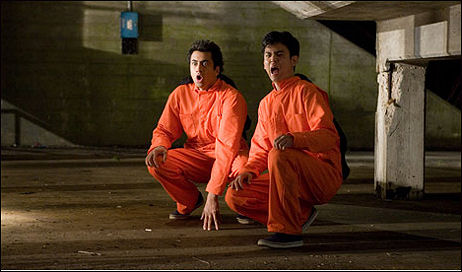
Harold, Kumar, Gitmo

Is there anyone who doesn’t suspect that Harold and Kumar Escape From Guantanamo Bay (New Line, 4.25) will somehow play fast and loose, water down or otherwise make light of that deplorable situation? I don’t know the plot or the shot, but if you saw the first film you know the director-writers (Jon Hurwitz, Hayden Schlossberg) and their basic attitudes and instincts. That said, it’s probably better to have made some kind of comedy with a Gitmo backdrop than not. Better to have it out there than pushed aside, I mean.


Kal Penn, John Cho

Lohan’s Monroe photos

Legendary photographer Bert Stern has re-shot his 1962 Marilyn Monroe nude photo session with Lindsay Lohan substituting. The shots appear in the current (2.18) issue of New York. Intriguing shots — okay, alluring — but why did the session happen? Obviously because Lohan is trying to get back into it somehow. She’s trying to launch a new impression of herself that might sink in and shift attitudes.

Her career was considered all but finished after the last drunk-driving incident. The box-office disappointment of Georgia Rules and the total wipeout of I Know Who Killed Me seemed to destroy the myth of her box-office heat, if she ever had any. The last thing she did of any note was get randy with three guys while she attended the Capri Film Festival. What else is there to do except resuscitate the ghost of Marilyn Monroe and similar ploys?

Three Ledger replacements

The idea of Johnny Depp, Colin Farrell and Jude Law co-performing or additionally playing Heath Ledger‘s character in Terry Gilliam‘s The Imaginarium of Doctor Parnassus is a noble gesture on the part of the actors. Admirable, compassionate. It’s going to result in a slightly confusing narrative, but Gilliam’s films unfold that way regardless so no harm done.

Ledger’s footage was shot in London (i.e., mainly exteriors) — the other three will perform green-screen scenes. The common character, “Tony,” is “transported into three separate dimensions [that] Ledger accesses via a paranormal mirror, and which will “now be inhabitated by Depp, Law, and Farrell,” an Variety/AICN story informed.

Importance of Being Earnest

The squishy, endlessly dithering John Edwards needs to go into full wuss mode and endorse Hillary Clinton to demonstrate to the world how meaningless his endorsement is and what a shapeless and gelatinous life form he truly is deep down.

WGA Coverage Blowback

“Fourteen weeks of covering bitter trench warfare between the Writers Guild of America and the studios, and the ink-stained wretches are feeling wretched. It’s not just that covering a complex, polarizing news story for more than three months left them fried. The worst part has been the blowback. And we don’t mean from the studios and networks, either. No, friends, it’s the ugliest kind of warfare: writer on writer.” — L.A. Times “Channel Island” guy Scott Collins, posted today.

Truthout Riff

For all the lazy kneejerk Obama-dissers who’ve been saying that he’s all hat and no cattle, a riff by Truthout’s Washington, D.C. bureau chief Scott Galindez.

“Journey” 3D

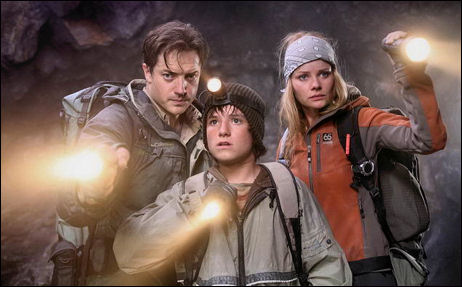
The trailer for Journey to the Center of the Earth 3D (New Line, 7.11) tells you it’s more of a kiddie movie — a logic-free comedy for anyone over the age of 8, or anyone who happens to be a cretin — than any kind of half-gripping adventure-thriller.

It seems to want to be a poor man’s Indiana Jones film (including a Temple of Doom thrill ride on a train track inside a mine) but the trailer is basically selling a goofy-ass special-effects ride about a visit to the Bullshit Adventure Theme Park where everything can and will happen on an expedition to the earth’s core.
Brendan Fraser, Josh Hutcherson and Anita Briem are the three travellers who run into hot lava, oceans, dinosaurs and whatnot. Pretty much the same stuff that James Mason and Pat Boone encountered in their 1960 adventure flick of the same name. The difference is that the ’60 version had a scowling second-banana villain who referred to the experience of nightly sleep as “little slices of death.” I’ve never forgotten that line. Going to sleep is, in a sense, like dying…or so Carl Sagan once remarked.
The Mummy films killed Brendan Fraser’s believability factor. He pocketed those fat paychecks, but his name became synonymous with second-tier, FX-driven adventure fantasy that didn’t add up for anyone except the moron crowd that will pay to see anything as long as they can guzzle their 32-ounce Cherry Cokes and gorge on gallon-sized containers of popcorn dripping with anhydrous butterfat.


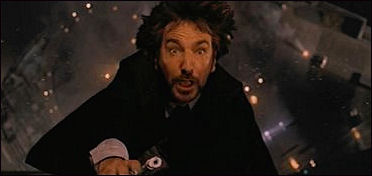
Rickman’s big fall in Die Hard

The most hateful thing about stupid adventure films — about all adventure films made by people given to mediocre thinking and imagining, especially since the success of Crouching Tiger, Hidden Dragon — is how falling from any height never results in any harm to anyone. You can fall from a 75-story building, from a mountaintop, from a cliff, from a stepladder — and you will never, ever be hurt. And I mean not even bruised. There’s a trailer clip of the Journey 3D trio free-falling for several seconds — long enough to fall from the height of two World Trade Center towers stacked on top of each other — and they’re saved by falling into a pool of water.
Falling is one of the most fearsome real-life horrors imaginable, but on-screen it’s become an exercise in casual gymnastics. Think — when was the last time anyone died or was even injured from falling in a major action-adventure film? Was it Alan Rickman‘s fall at the end of Die Hard, which was 20 years ago? HINTERLANDS WARNING! SPOILER AHEAD!: (Blankety-blank‘s death fall in In Bruges and Martin Sheen‘s in The Departed don’t count because these films were straight dramas.)
The Journey 3D director is Eric Brevig, who’s mainly worked in special-effects (his only previous directing gig was for Xena: Warrior Princess on the tube in ’95). The screenwriter is Michael Weiss, whose previous credits are War Stories with Oliver North” (1 episode, 2006) and The Remarkable Life and Mysterious Death of General Patton (2006, TV episode).