Beautiful Arguments, Annual Rite

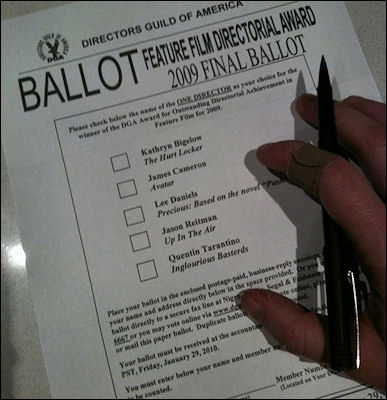
I wrote something important last May about the annual Oscar season wars that needs to re-posted every year. I was responding to a then-recent A.O. Scott N.Y. Times rant about the many offenses of the Oscar show. “Do something!,” he said. In an almost touching submisssion to the nihilistic impulse, Scott also suggested that the Oscars be killed.

To which I responded: “Rejigger and rejuvenate by all means, obviously, but never kill the Oscars. Never. Not because the show itself is anything close to magnificent (although we all derive fleeting emotional charges each and every year), but because every Oscar season is like a great spiritual Olympics. Because each and every film of any merit and our reactions to them are opportunities for assessing our values, lives, beliefs — the whole magillah.

“Because the Oscars, of course, are only nominally about the competing films. They’re really about how we feel and think about these films, and what we’re looking or hoping for each time we enter a theatre and submit to the dark. In short, they’re about us.

“Each year the Oscar race allows — demands — that we assess who we are, what we need and want, what defines artistic greatness or at least distinction, and the kinds of spells and meditations that films need to provide.

“Every day I’m looking to understand and sometimes redefine who I am and what I want, but we all do this en masse during Oscar season. It’s a stirring, at times joyously argumentative process. (I loved trashing Chicago and praising The Pianist in ’02 — it was all to the good.)

“For me, the October-to-February argument is all, or certainly 95% of the game. The show is maybe 5% of it — the end, the crescendo, the cherry on top, whatever. And through all of it the distributors of the films in the arena, the ones that each year compete and strive and receive the constant attention, clearly benefit.”
Fleming Flees Variety

Variety‘s legendary breaking-news reporter Mike Fleming has resigned to run the New York office of Deadline Hollywood Daily. He obviously won’t be the east-coast Nikki Finke — Fleming is Fleming — but he’ll certainly be seen as a compliment of her column from here on. (And vice versa.) They’re not exactly married now, but it’ll be fair to call them a brother-and-sister act.

Indiewire‘s Anne Thompson calls this “a smart hire” but adds the following: “Over two decades Fleming has built a network of sources who go to him with scoops because they trust him to take care of them. He is the exact opposite of DH’s Nikki Finke, who uses scare tactics and bullying as well as good old-fashioned power-mongering to get her stories.”

MCN’s David Poland said this: “Of course, the most significant thing about Mike Fleming going to NikkiVille is not that she has added value, but that Variety is all but done now. Another one of their stars out the door. Interesting times.”

Refresher Course

I just came across an oldie-but-goodie interview with Jason Reitman, posted by New York‘s Jada Yuan on 12.27.09.

Yuan mentions at the end that N.Y. Press critic Armond White is no fan of Reitman’s Thank You For Smoking, Juno or Up In The Air. An amused Reitman states that his films are polarizing, and then says the following: “I would be curious to hear what Armond thinks of The Insider, a film that goes [slams down fist]: ‘Smoking bad! Tobacco people bad!’ And for me that’s so boring. But, look, for some that’s the experience they want and those movies exist for them.”

Most of the moviegoers who’ve heard of The Insider probably still think it’s an anti-smoking drama (a misconception that Disney marketing let slide when the film opened), but you’d think that a smart guy like Reitman would know better. The Insider is about the killing of a major 60 Minutes news story, and about the wreckage (personal, professional, cultural) that this action causes. At most the film was peripherally or tangentially about smoking. And the fact that the 60 Minutes news story was about Big Tobacco was secondary.

The fact that Big Tobacco had enough money and legal power to make CBS corporate feel legally threatened (and thus leading to the story being de-balled on 60 Minutes) is what’s crucial to the story. It was a movie about big-time TV journalists being pushed around and then folding their tent. But the adversarial element could have just as easily been weapons manufacturers or any politically powerful concern.

Big Tobacco turned the pressure on, CBS corporate candy-assed out, and the top guys at 60 Minutes (except for Al Pacino‘s Lowell Bergman) did what their corporate bosses told them to do.

Since The Insider was released in ’99, it’s become common knowledge that due to their corporate-ownership and corporate priorities, major news media orgs can’t really be counted upon to report the tough stories (’03 Iraq invasion, WMDs). Robert Kane PappasOrwell Rolls In His Grave (’04) spelled this out pretty clearly. For my money the serious hardball information today comes sporadically from the N.Y. Times and from Bill Moyers’ Journal but mostly from online reporting and columnists and from the British newspapers. TV network news is pretty much out of the game.

Doris Day is Mostly Okay

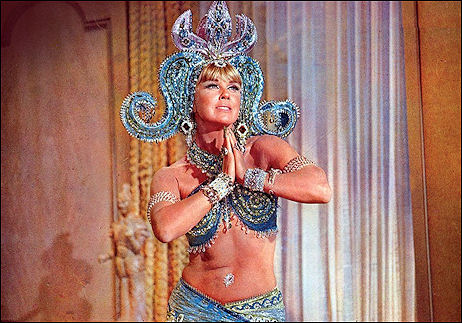
In today’s N.Y. Times, director Douglas McGrath ( Infamous, Emma) makes a case for Doris Day, now 87, receiving a special career-honoring Oscar. McGrath writes persuasively and with feeling about Day’s special qualities. She committed to her light-comedy roles, held her own with the likes of James Stewart, Kirk Douglas and James Cagney, etc. But there’s one negative he can’t wave away.

I’m speaking of Day’s ghastly performance in Alfred Hitchcock‘s The Man Who Knew Too Much. I love aspects of this 1956 thriller (the murder in the Marrakech marketplace, the assassination attempt in Albert Hall) but Day’s grating emotionalism makes it a very hard film to watch. She cries, shrieks, trembles, weeps. And when she isn’t losing it, she’s acting pretentiously coy and smug in that patented manner of a 1950s Stepford housewife. Or she’s singing “Que Sera Sera” over and over again.

I’ll give her credit for almost everything else that McGrath brings up, but she’s so awful in Hitchcock’s film that this single performance almost tips over the entire apple cart of her career. (The shrieking and moaning kicks in around the two-thirds mark in the clip above.) The same thing goes for Linda Hamilton‘s shrill acting in Terminator II: Judgment Day (1991). I tried watching it the other day for fun, but I couldn’t stand her spitting rage.

Aaah, whatever. If the Academy wants to give Day a Lifetime Achievement Oscar, fine. There’s no reason to strenuously argue against it. I can bury my issue. She was great in Lover Come Back, Young Man With A Horn and Love Me or Leave Me. I remember something true and tolerable about her performance in Young At Heart, in which she played the love interest of a dark-hearted Frank Sinatra.

And yet it’s hard to think of another living veteran of ’50s and ’60s cinema who is more of an icon for uptight middle-class values and zero sexuality. I know I suddenly liked Day a lot more when I heard that rumor about her having had a hot affair with Sly Stone — but that turned out to be bogus. Day did apparently have a fling with L.A. Dodgers base-stealer Maury Wills.


Doris Day in The Glass-Bottomed Boat

Day’s Wikipedia bio says that “both columnist Liz Smith and film critic Rex Reed have mounted vigorous campaigns to gather support for an honorary Academy Award for Day to herald her spectacular film career and her status as the top female box-office star of all time.”

It also says “while Day turned down a tribute offer from the American Film Institute, she received and accepted the Golden Globe’s Cecil B. DeMille Award for lifetime achievement in 1989. In 2004, Day was awarded the Presidential Medal of Freedom but declined to attend the ceremony because of a fear of flying. Day did not accept an invitation to be a recipient of the Kennedy Center Honors for undisclosed reasons. Day was honored in absentia with a Grammy for Lifetime Achievement in Music in February 2008.”

$2 Billion Worldwide?

Having just seen Variety‘s latest Avatar figures ($48.5 million domestically, $143 million overseas), a friend believes “this juggernaught has a real shot at taking $2 billion worldwide, which would be extraordinary.

Titanic‘s $1.8 billion worldwide total is starting to look like chicken feed. A domestic weekend tally of $48.5 million is impressive enough but its foreign weekend take of $143 million is jawdropping — an actual increase over last weekend. Also factor in the appalling weather over most of Europe and we really are talking about a once-in-a-generation phenomenon.”

Sass It Up

I’ve watched almost all of the N.Y. Times video pieces by Melena Ryzik, who took over David Carr‘s Oscar-beat “Carpetbagger” column late last year, and they’re quite good — personality, pizazz, smoothly produced. And her Oscar-race analyses are snappy and perceptive.

So why do I have this back-of-the-neck feeling that she’s not quite getting the attention that Carr got in years past? The buzz ain’t the same. Is it fair to say she doesn’t have that mix of wise-guy personality and flip humor that Carr had — that eye-rolling routine that suggested in a hundred different ways that the Oscar beat was beneath him, and that he felt deeply humiliated by doing red-carpet interviews and yet enjoyed the chance to peel back the layers and toss off the occasional bon mot? Of course it’s not. But it’s true.

Ryzik has no alternative but to be herself, obviously. She projects an agreeable mixture of brains, sophistication and straightforward perk. Ryzik’s stuff works for me. I loved the Nine video piece when she danced. But at the same time a little voice is wishing she could be…oh, Kathy Griffin maybe? Or Camille Paglia? Maybe call people on their bullshit a little more?

I started to think this through after a veteran reporter friend wrote the following this morning: “It’s nearly the middle of January, about a month away from the Oscars, and nobody is talking about Melena Ryzik‘s Carpetbagger stuff. Carr himself is still drawing attention with his artlcles about Mo’Nique and his other N.Y. Times pieces on Roger Ailes and the Apple tablet. But Ryzik not so much.”

Unfortunately Overheard

The generic definition of a “gaffe” is a remark or observation that most people would probably regard as true but will embarass nonetheless if you say it in mixed company. Sen. Harry Reid‘s racially-tinged comment about Barack Obama in Mark Halperin and John Heilemann‘s “Game Change” certainly qualifies.

Reid reportedly said that Obama was an attractive and electable candidate in part because he was notably “light-skinned” and had “no Negro dialect unless he wanted to have one.” A horrendous thing to say, but not wrong. This is exactly why many older white rural voters supported Obama in part — i.e., because he isn’t that “black.” Does anyone believe Obama would have beaten John McCain if he looked and spoke like Tracy Morgan? Remember that SNL bit in which Morgan said he’s “way blacker” than Obama?

In any event that quote attributed to Bill Clinton in the same book is much more inflammatory.

An L.A. Times story summarizes as follows: “In lobbying the late Sen. Edward Kennedy to endorse his wife, former President Clinton angered the liberal icon by belittling Obama. Telling a friend about the conversation, Kennedy recalled Clinton had said ‘a few years ago, this guy would have been getting us coffee,’ the authors paraphrase. A spokesman for the former president declined to comment on the claim.”

Affair To Remember

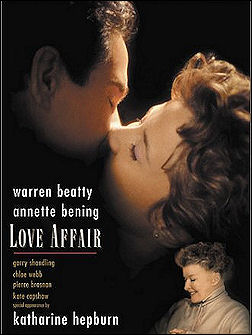
I’ve just finished reading 24 pages about the making of the embarassing Love Affair (1994) in Peter Biskind‘s “Star: How Warren Beatty Seduced America” (Simon & Schuster). Biskind offers quote after quote about how Beatty, the film’s star, producer and co-writer (with Robert Towne), marginalized and pretty much ignored and deballed Love Affair‘s director Glenn Gordon Caron.

Using quotes from several sources including Caron himself, Biskind also reports that director of photography Conrad Hall ignored Caron for the most part, treating him with little if any respect.

Towards the end of filming in late 1993 I was told similar stories by two excellent sources (the late production designer Richard Sylbert, a longtime Beatty collaborator and friend, and another insider I’d rather not name). And I included it in a file submitted to Entertainment Weekly‘s “News & Notes” section, edited at the time by Maggie Murphy, for a story about the making of Love Affair. The file made it clear that Beatty was really running the show and that Caron (hired off his rep as the creative light behind TV’s Moonlighting and Remington Steele) was the director in name only.

I talked to Beatty about these stories, not naming the sources but telling him I’d heard this and that, and he (a) denied that they were true and (b) calmly expressed outrage that EW was working on a story along these lines, which he naturally felt would tarnish the film as a troubled production and perhaps dent its box-office appeal. He mentioned at one point that he might sic his attorney, Bert Fields, on the magazine.

I don’t know who said what to whom, but I do know that EW decided to ignore the Caron-having-his-balls-cut-off angle when they ran their story a week or two later in mid-December 1993. Anne Thompson, who also did some Love Affair reporting, was assigned to write a cottonball piece called “Love and Warren” that said Beatty was a perfectionist and blah blah. It was basically a valentine.

The Caron angle was removed, I was told, because managing editor Jim Seymore didn’t like the fact that we couldn’t name the sources. I heard second hand that he told Murphy there was “no story here.” I always suspected this was code for “I’m feeling too much corporate heat on this thing so let’s kill it or water it down.”

I later told Beatty that by all appearances he’d played his cards well and had clearly won the round. If you have any sporting blood you have to respectfully acknowledge when you’ve been out-maneuvered.

I got pretty good at imitating Beatty’s voice. I remember calling Thompson during the end of the Love Affair episode. She picked up and said hello. “Anne Thompson?,” I said. Yes? “Warren Beatty.” She fell for it. “Hey-hey….howz it goin’?'” and so on. “Anne, Anne…I’m sorry. It’s Jeff. Foolin’ around…sorry. I wanted to see if I was good enough.”

Love Affair opened in October 1994 and was panned by just about everyone. I saw it once and found it flat and mundane. Roger Ebert was one of the few critics who gave it a break. It cost about $30 million and made $18 million, give or take. But Beatty would rebound four years later with Bulworth, one of the sharpest and most unflinching political comedies ever made in this country.

Festival Crowd

HE reader “btwnproductions” said “the fat people will be relieved” that I was going through a writing slump earlier this afternoon. Just for that I’m going to post a 100% true fat-people anecdote — actually a comment that I heard during the 1999 Sundance Film Festival.

I’d just finished interviewing the great Ken Kesey at Burgie’s on Main Street. (Remember Burgie’s?) He was talking to journalists about The Source, a Chuck Workman documentary about the hip movement of the ’50s and ’60s in which he appeared. I got a rise out of Kesey when I told him I’d played Dr. Spivey in a small theatrical production of One Flew Over The Cuckoo’s Nest . He grinned faintly. “So you played Spivey, eh?” Our chat lasted 20 minutes and then the next guy took over.

I walked outdoors to a second-floor balcony area that looked down upon Main Street. Kesey’s son Zane — heavyish, late 20s or early 30s — joined me. Down below were hordes of festivalgoers, all looking and behaving like typical industry types from NY or LA. Zane, who lived on or near his dad’s farm in Pleasant Hill, Oregon, looked down and said, “Where are all the fat people?” He was joking but critiquing. “This isn’t real America,” he was more or less saying. “These people are too hip looking, too well-dressed.”