Into The Night

There are basically two kinds of moviegoers. The first will go to Noah Baumbach‘s Greenberg, not like it, get up after 45 minutes in and say to the manager “I want my money back!” This same kind of person will go to Shawn Levy‘s Date Night, laugh and stomp and go “hee-hee-hee” and “yeahhh!”
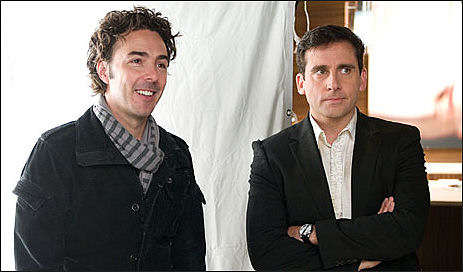

Date Night director Shawn Levy, star Steve Carell.

The second kind will go to Date Night and experience a slightly different reaction. He/she will quickly realize he/she is stuck watching another mildly tolerable high-concept comedy with soul-numbing car chases and gun-wielding baddie-waddies, and try to cheer him/herself by cherry-picking the few bits and lines that are semi-funny by saying “hey, that wasn’t bad…that was a decent improv…if only Tina Fey and Steve Carell could costar in a film with decent material.” And then walk out of the screening room relieved but vaguely depressed.

The first kind represents, I’d say, between 85% and 90% of moviegoers. The second kind obviously represents persons like myself.

I don’t know which group Variety‘s Lael Lowenstein belongs to, but her having recently called Date Night “an uncommonly engaging date movie with action, edge and genuine chemistry between its leads…a home run” calls her judgment and taste buds into question. In a perfect world there would be a special District Attorney with the power to indict certain critics for writing outrageously incorrect (i.e., overly fawning or overly dismissive) reviews. If I was Mr. D.A. you can bet Lowenstein would be hauled before a grand jury.

Date Night, yes, has its moments. Left to their own improvisational devices, Fey and Farrell are obviously bright and inventive and even “funny” here and there. It’s not a “terrible” film, but I just sat there like a lump of mashed potatoes this morning — patient, immobile, looking at my watch every so often, half-frowning, waiting for it to be over. It carries the Shawn Levy virus, you see, and if you’ve seen the Night at the Museum flicks, Just Married, Cheaper by the Dozen and The Pink Panther you know what that means, and more particularly how it feels to submit to it.

Don’t let Levy’s smiling face in the above photo fool you. He’s obviously doing very well in life, but serious movie hounds despise him. He must realize by now that he’s trapped in a wonderfully affluent studio-funded hell of his own making. He’ll never make anything as good as Little Miss Sunshine or Flirting With Disaster. If Levy was to get hold of the “cheaters” and put them on in front of his bathroom mirror, look out.

And yet Levy deserves credit for at least keeping Date Night down to 88 minutes.

The goal here could/should have been to make another After Hours, the dryly subversive Martin Scorsese comedy with a similar premise, but that wouldn’t have been as Eloi-friendly as Date Night, which will do pretty well commercially, I expect.

I loathe movies with pistol-packing, slickly-dressed, slightly fungusy-looking bad guys who do three things and three things only — threaten-and-glare, shoot at the good guys, and chase them in cars. The Date Night offenders in this regard are Jimmi Simpson (who played one of the vicitms in Zodiac) and Common, a rapper-shmapper.
Beast In Me

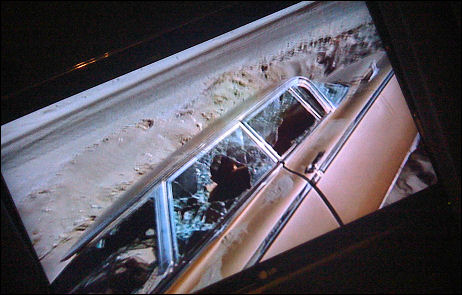
The Cheaters” was the title of a 1960 episode from Thriller, the hour-long, Boris Karloff-hosted series that tried to feed off the success of The Twilight Zone. It was about a pair of glasses that allows the wearer to see the ugly truth about others, and what he/she really looks like a la Dorian Gray. The story was by Robert Bloch, the original author of Psycho. The director was John Brahm. The actor in the clip is the late Harry Townes.

Right Now

I have to catch a 10 am Date Night screening. No more filings until early afternoon, and only briefly at that with another screening at 6 pm.

Everyone Else

I’ve finally seen Maren Ade‘s Everyone Else (Cinema Guild, 4.9), and can confirm reports about it being a very well acted, intelligently focused, moderately uncomfortable relationship film. It’s about a somewhat youngish couple (Birgit Minichmayr, Lars Eidinger) going through contractions during a vacation in Sardinia. The seriously talented Ade has said she “wanted to make a film about all the details of a relationship, all the things you can’t really explain to someone…a film about the secret world you have together with someone in a relationship [by] being as specific as possible.”

After seeing Everyone Else at the New York Film Festival, critic Philippe Garnier wrote that Ade’s effort does “for the 21st-century couple what Roman Polanski‘s Knife in the Water or Michelangelo Antonioni‘s L’Avventura were doing in the ’60s.” That’s arguably or at least half-true, which is why I’m favorably disposed for the most part. It’s a movie that dog-paddles, but in thoroughly adult and curiously subtle ways.

The wrinkle is that Knife in the Water‘s Jolanta Umecka and L’Avventura‘s Monica Vitti or Lea Massari were glamorously, broodingly attractive while Minichmayr (sorry but you have to be straight about such matters) is not.

You could call Minichmayr “striking” if you want to be gracious, but two minutes with her and you’re thinking “later on the rock ‘n’ roll.” On top of which her character is almost constantly anxious and/or agitated. So right away I was asking myself why Eidinger, a tall and handsome fellow with soft eyes and a smallish bald spot, would even be with someone like Minichmayr in the first place. It doesn’t feel right — we all decide within minutes whether or not a couple we’ve just met fits together or not — so the whole film feels off in this respect.

Tangled Web

Entertainment Weekly Nicole Sperling is reporting that Winona Ryder‘s having landed the part of Kevin James‘ cheating spouse in Ron Howard’s Cheaters (a.k.a., Your Cheating Heart/Untitled Cheating Project) indicates a career rebound.

My three reactions: (1) Ryder’s part is arguably the least fleshed-out of the four leads, or at least it was in the October ’09 draft of Alan Leob‘s script that I reviewed on 2.23; (2) the movie is essentially about the inability of James’ longtime friend and business partner (played by Vince Vaughn) to man up and tell James that his wife might be up to something on the side — he actually hems and haws about whether to share this vitally important suspicion with a guy he cares about; and (3) there are no cheaters plural in Cheaters but a single infidel (Ryder’s Geneva character), unless you want to say that Vaughn is figuratively “cheating” on James.

The implication of Cheaters, however, suggests a nifty premise — a movie about two guys and their significant others who are all cheating on each other at the same time. Now that’s a funny set-up. That I would pay to see.

Cheaters will begin shooting in Chicago in May, Sperling reports.

Stranger Still

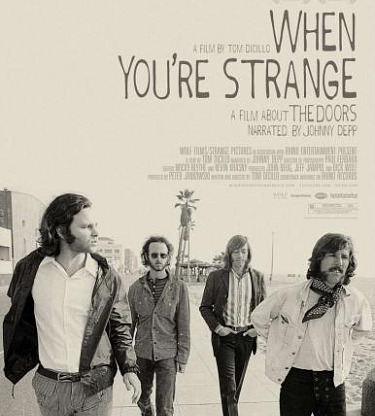
In recognition of Friday’s limited release of When You’re Strange (Abamorama), Tom DeCillo‘s 90-minute Doors documentary, I’m reposting my 1.15.09 review, written at the start of the Sundance Film Festival.

“The short reaction to When You’re Strange is (a) it’s a much more perceptive dive into the legend of the Doors than Oliver Stone‘s film was, (b) it’s in love with Doors music (which I feel is a very good thing); (c) it has a good amount of heretofore unseen footage of Morrison and the band; but (d) it’s stymied time and again by tritely-written narration. And I mean ‘give me a fucking break’ trite.

“There has to be some way to recount the turnovers and disturbances of the hallucinatory ’60s without sounding like Tom Brokaw. You have to write and talk about those times with a sense of psychedelic impressionism. Or you have to talk about them like Peter Fonda did in The Limey — i.e., with subdued feeling and authority.

“I can only report that I began to go crazy listening to DeCillo’s litany of pat cliches. It’s not that the narration gets it “wrong” per se, but it makes one of the most electric and tumultuous times in American history sound so damn tidy and sorted out…almost vanilla.

Update: I haven’t seen a new version of DeCillo’s film, and wasn’t aware that Johnny Depp has re-recorded the narration. A mistake. For all I know the narration has been re-written since the version I saw 15 months ago. I’ll try and catch it this weekend.

“Doors keyboardist Ray Manzarek has said he’s had no input into the film, but that he’s seen it and likes it, calling it ‘a tale of American shamanism‘ with a touch of the ‘supernatural.’ He says there’s also some rare footage in there that even stumped the Doors archivist. That’s all true as far as it goes. I don’t want to sound dismissive of this film, but it occasionally irritated the fuck out of me.

“Manzarek told Billboard earlier this year that When You’re Strange is ‘the anti-Oliver Stone… the true story of the Doors.’ Fine. Close enough.”

Roll With That

I want to put this carefully so as not to sound cruel or harsh. If Larry Cohen‘s The Winged Serpent (a.k.a., “Q” or Quetzacoatl) was to corner Russell Brand at the very top of the Chrysler building and peck him to death (and then tear strands of meat from his lifeless body and gulp them down voraciously), I would not cheer. Nor would I stand by idly if I saw this happening — I would do what I could to save Brand. But if I couldn’t save him I would not be incapacitated by grief. I’d move on with my life.

Warming Up


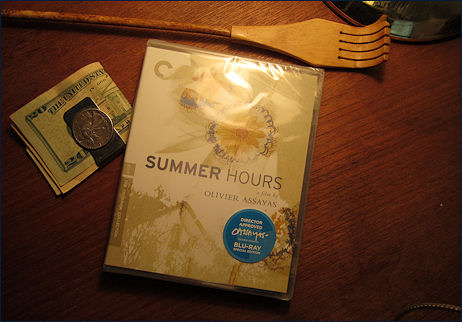
An IFC friend and supporter asked me the other night why I’d never written anything about Oliver Assayas’ Summer Hours, and my pitiful answer was that I never saw it. It was highly respected and I should have made the effort — no excuse.

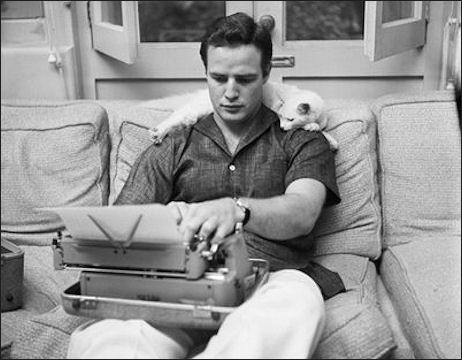
Judging by the slight plumpness, I’m guessing this was shot sometime around 1955 or ’56.

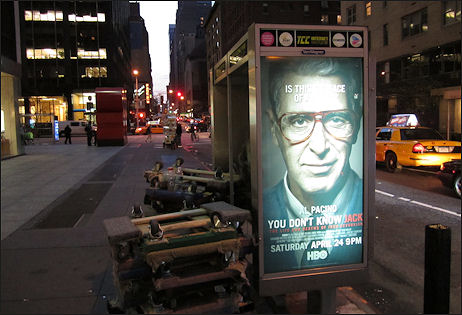
Monday, 4.5, 7:50 pm — 55th Street near 6th Avenue.

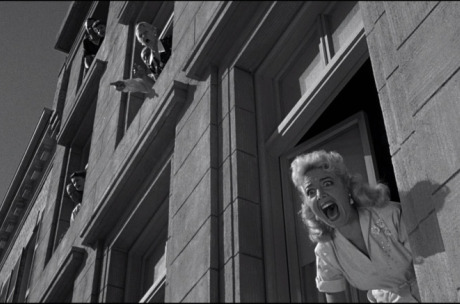
From a mid 1950s film that’s plagued by bad performances from everyone, from the stars to supporting players to screaming extras. There’s only one aspect that’s good, and revealing that would give the game away.

Permanent Dumpster

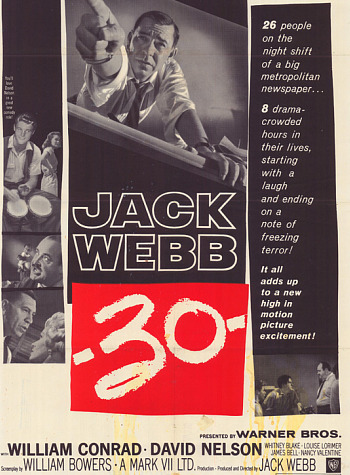
Stephen J. Whitty‘s 4.4. piece about the Film Forum’s four-week series on newspaper films (4.9 through 5.6) alerted me to the fact that Jack Webb‘s -30- (1959), a wise-cracking but grossly sentimental ensemble newspaper drama, hasn’t been included.

This is perhaps due to curator Bruce Goldstein‘s inability to find a decent print, or maybe because he thought -30- just isn’t good enough. I wouldn’t argue with him. I saw it 20 or 25 years ago on the tube, and it’s definitely a flatly-mannered, heart-tugging Webb confection through and through.

But it does serve up a heaping assortment of late 1950s-era newspaper characters (although they seem part of a much earlier era), and the whole thing does occur in a newsroom, start to finish. So if the idea of the FF series is to taste the atmosphere of a dying industry when it was thriving and vigorous, -30- certainly delivers that.

Talk about a film rank with the smell of newsprint, printing presses, underarm perspiration and bad coffee in styrofoam cups, and seething with newsroom cliches — crusty but benign editors, eager-beaver copy boys, hungry female reporters, old-time press agents, cynical reporters with mushy hearts, etc. I can’t breathe!

The other thing is that -30-, a Warner Bros. film, doesn’t exist anywhere — not on the Warner Bros. archives site, not on DVD, and only from second-hand sources on VHS.

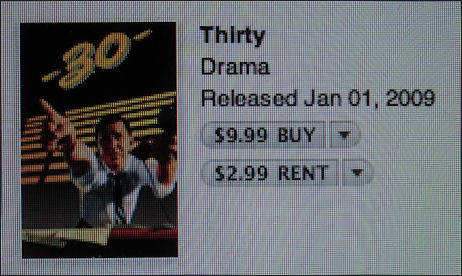
Update: It turns out that -30- is buyable/rentable on iTunes. I didn’t spot it because iTunes is calling it Thirty.

Preparing for Fair Battle

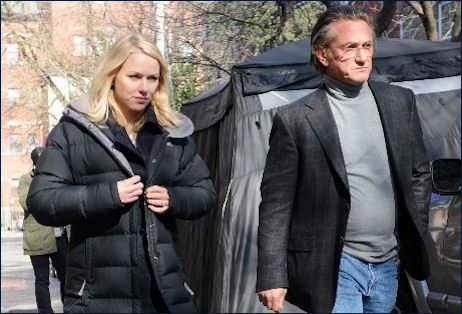
Former liberal-turned-arch-conservative screenwriter Mark Tapson (The Path to 9/11) has reviewed John and Jez Butterworth‘s screenplay of Fair Fame, the Doug Liman-drected political thriller costaring Sean Penn and Naomi Watts.


Naomi Watts as Valerie Plame and Sean Penn as Joseph Wilson in Doug Liman’s Fair Game.

He puts it down, of course, for being too anti-Bush administration. Tapson’s view isn’t surprising given the right-wing enzymes in his system, and I’m certainly not excerpting his critique as something to seriously wade into. But it does offer an idea about how the right-wing media and blogosphere may come after Fair Game when it opens next fall, or perhaps even as soon as next month, if and when it screens at the Cannes Film Festival.

You almost have to admire Tapson’s determination to find ways to diss a script that adopts and advances the Joseph Wilson-Valerie Plame perspective on the ignoble outing incident, and which presents Karl Rove and Scooter Libby (being played by David Andrews) as the bad guys.

Tapson’s key retort is that Bush-Cheney-Rove-Libby were not responsible for Plame’s outing, explaining that the culprit is/was State Department official Richard Armitage — “a Bush critic, not an evil neocon, who leaked Plame’s name, and who hid his involvement for many months while Rove and others unfairly bore the brunt of the investigation and of the public excoriation.”

The Fair Game screenplay “is a full-out assault on Bush’s ‘war of choice’ and on what Roger Ebert, whose career has degenerated into making petty insults toward decent Americans, calls ‘neocon evildoing,'” Tapson writes.

“Must I issue a spoiler alert for this one? Would it really come as a surprise to hear that the script paints the entire Bush administration as power-mad schemers, and the Wilsons as courageous patriots putting themselves on the line to save the lives of American soldiers and defend our Constitutional rights?

“That it asserts that Bush’s abuses, not Saddam Hussein’s central role in international terrorism, constituted the real threat to this country?

“That a whole slew of critical CIA operations was abandoned, thanks to the vengeful outing of Valerie Plame, leaving many agents exposed in the field?

“And that as a result, Iraqi nuclear scientists (‘the real WMDs,’ as Watts/Plame says) defected to a welcoming Iran instead? If so, then I have some property in Death Valley I’d like to sell you.

“President Bush and other top level White House figures appear in the movie only in actual news footage, selectively chosen to suggest that they are conspiring in a ‘coordinated’ coverup. But lesser players Rove and Lewis ‘Scooter’ Libby, Cheney’s chief of staff, are more central to the script, which shows Libby intimidating CIA analysts so intensely that they burst into sweat and waves of nausea.

“He and Rove are also shown engaging in backroom manipulations to ‘bury’ Plame and Wilson (the title itself comes from a quote which Hardball host Chris Matthews attributed to Rove, about Valerie being ‘fair game’ – a phrase Rove says came from Matthews).

“But the truth is, it was State Department official Richard Armitage who leaked Plame’s name. In other words, as David Horowitz writes in Party of Defeat, ‘The entire affair was concocted out of whole cloth by opponents of the war.’

“And yet Armitage’s name never appears in the script. And how could it? That would defuse the filmmakers’ intent to demonize Rove and Bush and to condemn the war as shameful, unjust American aggression.”