Bass and Buried

Lionsgate’s advertising team (led by co-marketing chiefs Tim Palen and Sarah Greenberg) have gone with a Saul Bass-ian, Vertigo-like one-sheet for Rodrigo CortesBuried (9.24). Which everyone likes or admires or both. Me included. Any sort of Bass tribute gets my vote.

I reviewed Buried at last January’s Sundance Film Festival. It’s a highly claustrophobic (to say the least) exercise about an American contractor in Iraq (Ryan Reynolds) who’s been kidnapped and buried alive in a wooden box. Cortes uses Hitchcock-like ingenuity in telling this story, but the bottom line is that Buried refuses to deliver the kind of ending that any popcorn-eating moviegoer would want to see.

“You may assume going in that Buried will be a harrowing mental ingenuity/physical feat/engineering movie about a guy managing to free himself from a large coffin-sized crate that’s been buried two or three feet underground,” I wrote. “But what it is, really, is a darkly humorous socio-cultural message flick about selfishness and distraction — i.e., how everyone is too caught up in their own agenda to give a shit about a person who really needs help.

Reynolds’ character “manages to speak to several people on a cell phone that he’s found inside the crate. The prolonged joke is that each and every person he turns to for help (with the exception of his wife) tells him that they first need him to address or answer their needs before they”ll give him any assistance.

“Boiled down, the movie is kind of a metaphor for dealing with tech support or any corporate or bureaucratic employee who specializes in driving complaining customers crazy. Everyone Reynolds speaks to patronizes him, tells him to calm down and speak slowly, asks stupid questions and in one way or another blows him off or fails to really engage and provide serious assistance.”
Human Blowfish

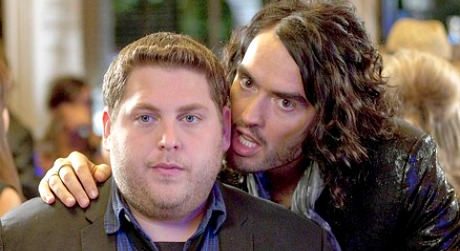
I’m getting sick of repeating this so this is the last time. Chubby or corpulent or run-of-the-mill fat is associated with “funny,” as The Wrap‘s Leah Rosen reiterated yesterday. But Jonah Hill‘s button-busting obesity in Get Him To The Greek pushes this equation to the breaking point, I feel. The fact that his performance is arguably his best yet — — he’s as funny as he was in Superbad but with more maturity and internal conflict — is a tribute to his talent, but he has to grapple with his girth at every turn.


Jonah Hill, Russell Brand in Get Him To The Greek

He’s so ballooned-up, in other words, that it’s almost an obstruction to the material. It doesn’t “stop” his hilarious performance as record-company flunkie Aaron Green, but it seems to mess with the vibe a bit. Hill is running down a Las Vegas hotel hallway with Russell Brand and it’s hard not to think “Jesus, he’s gonna need oxygen if he doesn’t slow down.” Hill is talking to g.f. Elizabeth Moss about possibly moving to Seattle and you’re thinking “I can’t buy this…he’s just too fat for her.”

Hill’s surplus tonnage is easily the most visually distinctive thing about him, and yet it’s never once commented upon in Greek, a no-holds-barred comedy in which everything and everyone is batted around for fun. Start to finish, nobody utters a single fat crack of any kind. There’s one visual gag about Hill’s exposed ass, okay, but it’s a mild gross-out. (Or it was in the screening I attended yesterday — some people went “eewww.”)

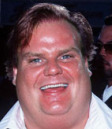
Hill is short, but he’s like a beach ball with legs and arms. As fat movie comedians go, the only ones I can think of who were more super-sized was Sam Kinison and Chris Farley at the end of their respective roads.


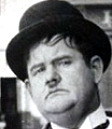
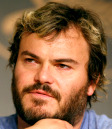
(l. to r.) Fatty Arbuckle, Oliver Hardy, Jack Black, Chris Farley.

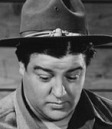
Look at all the other funny fat guys of yore — Oliver Hardy of Laurel & Hardy, Lou Costello, Fatty Arbuckle, John Candy, Curly Howard of The Three Stooges — and they were all somewhere between big-chubby and run-of-the-mill fat. During their prime none could be called obese (although Hardy grew into this during Laurel and Hardy’s career decline in the mid to late ’40s).

I’m not saying all this to be cruel, but to simply point out that there are gradations and degrees of heavyness, and that there’s a point at which bulk starts to get in the way of humor.

Rosen doesn’t seem to get this. Her piece about Hill says he’s part of a “long line of chubby men who have reigned as box-office stars in comedies almost since movies began.” Calling Hill “chubby” is analogous to describing the current BP oil leak as “problematic” instead of “catastrophic.” (Is it problematic? Yeah, but is it the right proportional term to use? No.) She also calls him “rotund” and “pudgy” — terms that are more polite than descriptive. She also calls him a “double-wide guy” — that I’ll buy.


(l. to r.) Lou Costello, John Candy, Anthony Anderson, Sam Kinison.

Pecked To Death

I saw this yesterday afternoon in the meat-packing district. What sold me is that Alfred Hitchcock‘s sunglasses could almost be empty eye-socket holes. Reminding us, of course, of that slumped-over dead farmer discovered by Jessica Tandy in The Birds. What killed that Michael Bay-produced Birds remake that Naomi Watts was going to star in?

Ringside

Last year someone finally YouTube-d John Magnuson’s Lenny Bruce performance film — a 45-minute capturing of one of Bruce’s final nightclub appearances, at San Francisco’s Basin Street West, sometime in late ’65. I chose this excerpt because the material between 3:15 and 9:00 is especially good.

I enjoy Bruce’s weary-bitter delivery in this thing. His energy is down — he’s half-performing and half-muttering to himself, depleted from his various court battles — but he’s still “Lenny Bruce.” Dustin Hoffman ‘s performance as Bruce in Bob Fosse‘s Lenny didn’t get that slightly irritated hipster vibe. DH smiled too much, for one thing. If Bruce smiled it was only for an instant, and always he half hid it when he did.

Who uses the word “schtark” these days? Who ever used it except Bruce?

There are probably some under-30s who haven’t heard that much about Bruce, so here’s a starter quote from music/cultural critic Ralph J. Gleason: “Lenny Bruce was really, along with Bob Dylan and Miles Davis and a handful of others (maybe Joseph Heller, Terry Southern and Allen Ginsberg in another way) the leader of the first wave of American social and cultural revolution which is gradually changing the structure of our society and may effectively revise it.”