Baguettes and Chardonnay

“The younger generation is just basically film-ignorant. Not just about Bergman, but Antonioni, Truffaut, Kurosawa, Bunuel. Film is not part of their general literacy. They don’t know The Bicycle Thief; they don’t know Grand Illusion. And many, many of them don’t know Citizen Kane. If they do know it, they know it as something they happened to see on television. They don’t have the same general reverence — which I’m not criticizing them for — there’s no reason why they would or should. It’s just a different time. Their icons and heroes lie in a different area.” — Woody Allen speaking to The Hollywood Reporter‘s Gregg Kilday in a 2.4.11 interview about a forthcoming Ingmar Bergman retrospective at the Berlin Film Festival.

“Readers…will notice the conspicuous absence from The Film Snob*s Dictionary, apart from passing references, of such titans of foreign cinema as Federico Fellini (8 1/2), Ingmar Bergman (The Seventh Seal), Akira Kurosawa (The Seven Samurai), and Satyajit Ray (the Apu trilogy). The Film Snob may indeed know a fair amount about these filmmakers, but he generally scoffs at them, deeming them to be mere name-drops for bourgeois losers wishing to seem cultured. Watching a Bergman film is so PBS tote-bag, so Mom-and-Dad-on-a-date-in-college, so baguettes-and-Chardonnay.” — from intro to David Kamp and Lawrence Levi‘s The Film Snob Dictionary (2006).

Plenty

I’ve never been able to work myself up over media-ownership-changing-hands stories. The sale of the Huffington Post to AOL for $315 million (about $300 million in cash) is great news for founder Arianna Huffington and partner Ken Lerner, who started the news reporting-and-analysis site in ’05. A huge profit for them and a major content acquisition for AOL CEO Tim Armstrong — terrific. I’m not sure what there is to say beyond what I already have.

MSN’s James Rocchi has tweeted that the purchase is ‘idiotic and shameful” and that Huffington is “a horrible, no-talent sharecropper who’s built a shabby empire out of ego.” MCN’ David Poland has tweeted that “news organizations of size cannot be supported wholly by web advertising. Why do so many want to believe the fantasy [that they can]?”

Transformer

“After being deemed unfit for military service, Steve Rogers — a skinny dweeb — volunteers for a top secret research project that turns him into Captain America, a superhero dedicated to defending America’s ideals.” Same old superhero crap trotted out for the 49th time.

Lessons and Insights

29 months ago I explained a common reason why certain films are nominated for the Best Picture Oscar. It’s “because of the resonance and universality of their themes. And the themes that always seem to register more than others are contained in personal journey movies about growth, redemption and transformation.” Or because they make the old 3D formula — desire, deception, discovery — seem true and real in a newish way.

What, then, are this year’s Best Picture Oscar contenders saying in a thematic, this-is-our-life-and-this-is-who-we-are sort of way? Here, right or wrong, are my summaries:

127 Hours is basically saying that no man is an island, that arrogance always leads to a fall, but if you meet a traumatic threat head-on and somehow survive you’ll be much stronger for it, and that you’ll feel a wonderful tidal surge of “isn’t life grand?” when you realize you’ve escaped death. Basic slogan: Anyone who thinks he/she is Superman will find out sooner or later that he/she is not.

Black Swan is saying that being wound too tight and overly competitive and agitated about your creative competitors…actually, it’s not saying that. It’s saying that if a director keeps things close and real and Roman Polanski-like and tones down the CG and cranks up the Tchaikovsky and lays on the lezzy sex, he’ll have a hell of a good film on his hands. Basic slogan: It’s hard to go wrong with Darren Aronfosky at the helm.

The Fighter is saying that family is not always the end-all and be-all. It says that almost every family has a damaging parent. It also has a brother or sister who are hugely delusional and/or damaged and draining the spirit of those family members who are trying to live focused, balanced and productive lives. And yet at the end of the day, family members do watch out for each other. Basic slogan: Life is rough and hard and messy, so you need people you can trust.

Inception is saying that Christopher Nolan has a wow-level imagination and the support of a corporate-connected studio to make those imaginings come true. Basic slogan: The real drama in anyone’s life is buried in their subconscious.

The Kids Are All Right is saying that lesbians are just like anyone else, and that marriage can be a bitch and a marathon and is no piece of cake. Basic slogan: We’re all regular folks under the skin.

The King’s Speech is saying that degrees and pedigrees don’t matter all that much, and that bright, resourceful Average Joes sometimes know a thing or two that can really help high-born fellows who have everything. Basic slogan: Smarts, perception and wisdom sometimes come in unlikely packages.

The Social Network is saying that nobody nices their way into the big-time, that gold does things to men’s souls, and that (a) genius and (b) loyalty, friendship and decency are two different games that don’t necessarily overlap. People with big brains live in their own realm and are sometimes less trustworthy than people with medium or smaller-sized brains. Such is the way of exceptionalism. Basic slogan: Watch your back, jack.

Toy Story 3 is saying that it’s hard when your usefulness has run its course, and thank God for about-to-be-college students who remember what it was like to be a kid. Basic slogan: Cherish and hold onto the heart and the imagination that you knew in your childhood.

True Grit is saying that being tough and smart and feisty doesn’t mean you wont lose your arm or wind up living a life without a lover or a husband, but if you get bitten by a snake it’s good to have a pot-bellied old dog like Ruben Cogburn looking out for you. Basic slogan: the Coen brothers are the best — they always know what they’re doing.

Expert Hand

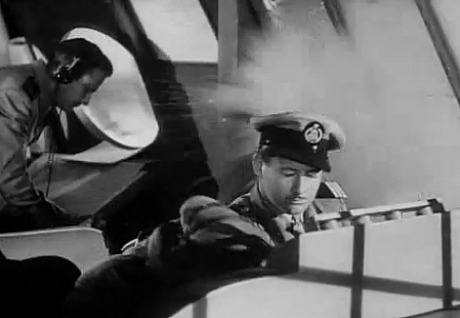
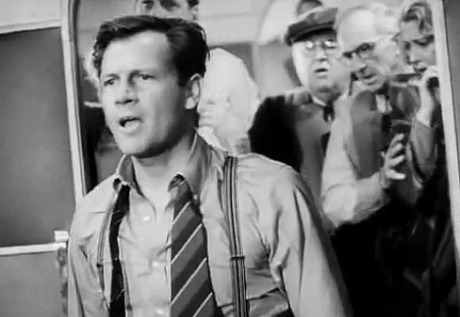
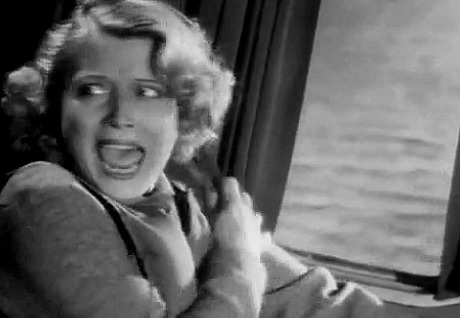
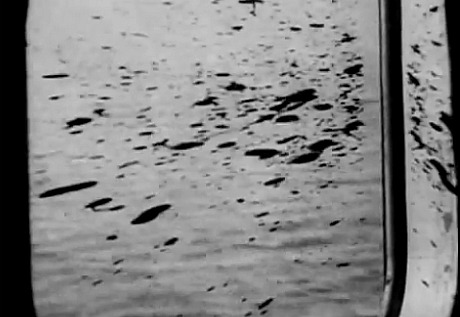
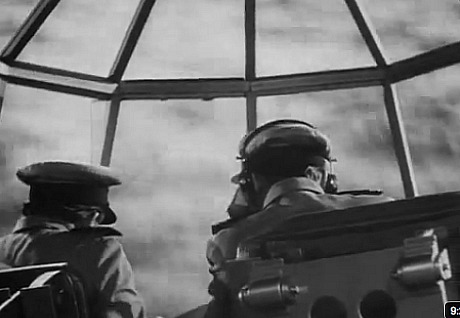
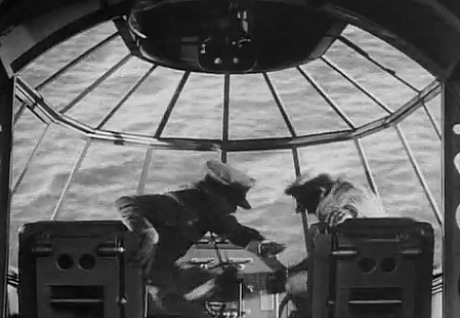
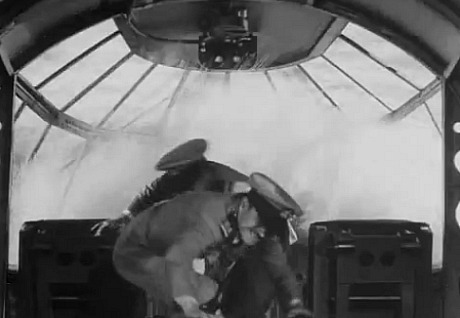
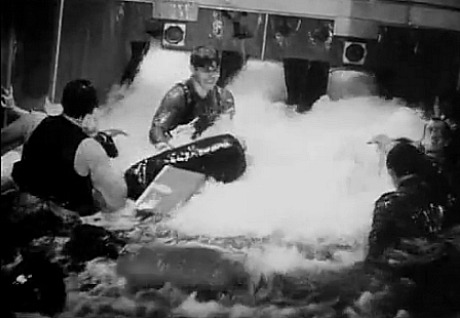
Alfred Hitchcock‘s Foreign Correspondent (1940) was one of 1940’s ten Best Picture nominees. Hitchcock’s Rebecca won the Oscar, John Ford‘s The Grapes of Wrath should have won, but in my book Correspondent is almost equal to Wrath. And it’s much better than All This, and Heaven Too, The Great Dictator, Kitty Foyle, The Letter, The Long Voyage Home, Our Town and The Philadelphia Story.

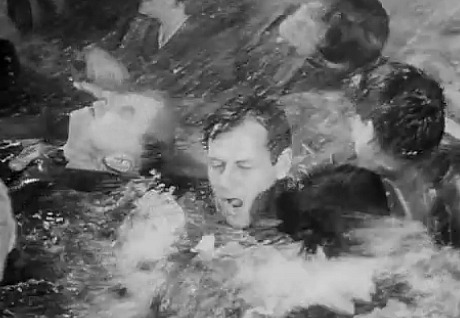
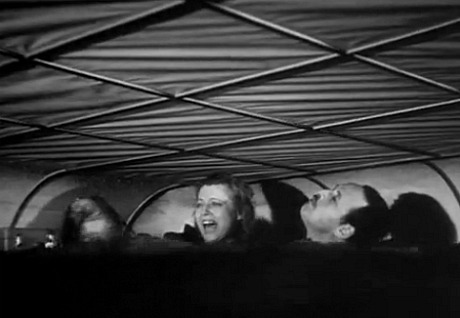
The plane-crash sequence shows that you don’t need state-of-the-art visual effects, much less 21st Century CGI, to make an action sequence work. It’s all about what to show, and when and how to show it

"The Dwarf Will Take His Pleasure"

I’m getting quite tired of reading dismissive remarks about The Social Network along the lines of a comment posted today by an HE reader called dayXexists. “I found very little emotional resonance in The Social Network,” he wrote, “[because] it’s just about some college kid who is an asshole and screws over his best friend.

“That’s why I’m so baffled about all the fanboys throwing such a big stink over TSN supposedly being so superior to TKS. I don’t think either come anywhere near Black Swan, The Fighter or even 127 Hours.”

I have no beef with anyone preferring these three films to TSN or TKS, but there’s a 10.9.10 Maureen Dowd column that requires a fresh review. It reminded me that The Social Network is afflicted with the same story virus that compromises Das Rheingold, that semi-boring hack opera by the overbearing Richard Wagner.

“They had me at the mesmerizing first scene, when the repulsive nerd is mocked by a comely, slender young lady he’s trying to woo,” Dowd began. “Bitter about women, he returns to his dark lair in a crimson fury of revenge.

Das Rheingold “unfolds with mythic sweep, telling the most compelling story of all, the one I cover every day in politics: What happens when the powerless become powerful and the powerful become powerless?

“This is a drama about quarrels over riches, social hierarchy, envy, theft and the consequence of deceit — a world upended where the vassals suddenly become lords and the lords suddenly lose their magic.

“The beauty who rejects the gnome at the start is furious when he turns around and betrays her, humiliating her before the world. And the giant brothers looming over the action justifiably feel they’ve provided the keys to the castle and want their reward. One is more trusting than the other, but both go berserk, feeling they’ve been swindled after entering into a legitimate business compact.

“The antisocial nerd, surrounded by his army of slaving minions, has been holed up making something so revolutionary and magical that it turns him into a force that could conquer the world.

“The towering brothers battle to get what they claim is their fair share of the glittering wealth that flows from the obsessive gnome’s genius designs.

“The gnome, remarkably, invents a way to hurl yourself through space and meet up with somebody at the other end.”

The themes in The Social Network, in short, are “strikingly similar” to those in Das Rheingold. The timeless echoes in Wagner’s opera, “based on the medieval German epic poem Das Nibelungenlied, which some experts say helped inspire J. R. R. Tolkien‘s The Lord of the Rings, underscore how little human drama changes through the ages.

“We are always fighting about social status, identity, money, power, turf, control, lust and love. We are always trying to get even, get more and climb higher. And we are always trying to cross the bridge to Valhalla.”

Philadelphia Freedom

This is not the cosmic-celestial time-trip sequence from Terrence Malick‘s The Tree of Life. (Malick would of course never dream of sampling Kubrick.) But play it directly after watching Fox Searchlight’s recent Tree of Life trailer, and you’d be forgiven for suspecting as much. It’s actually a school-assignment montage, called Origins, by Dylan Wells. The music is his own. Damn good if I do say so.