Distractions

Several kids were romping around in a back yard a couple of hours ago. School’s out (i.e., President’s Day ) and it was somebody’s birthday party. All to say it’s hard to concentrate when kids are having fun outside and you can hear every last yelp, chuckle and scream. I know what that sounds like, but…all right, maybe I should shut up. They eventually stopped.

And then the dog started snoring. You can barely hear it on the video soundtrack, but dog snoring is just as persistent and annoying as the human kind. When you’re trying to write, I mean.

"We Don't Tell Stories Any More"

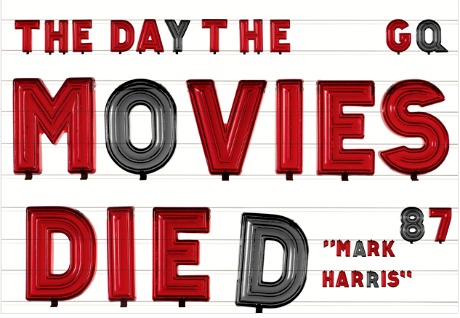
David know-it-all Poland‘s diss of Mark Harris‘s GQ article called “The Day The Movies Died” is BOOOR-ing! Harris is obviously coming from a non-Pollyanic, half-empty-rather-than-half-full perspective, but he’s not blowing confetti out of his ass when he talks about “how stifling and airless and cautious the [Hollywood] atmosphere is, how little nourishment or encouragement a good new idea receives, and how devoid of ambition the horizon currently appears.” Ask anyone.

Wells to Poland: Pauline Kael wrote a fairly similar piece in 1980 called “Why Are Movies So Bad? or, The Numbers.” The article was dead-on. Having spent some time working at Paramount for Warren Beatty and on Love and Money, she knew something about the way things were constituted back then. BOOOR-ing also?

Social Network and True Grit producer Scott Rudin tells Harris that “the scab you’re picking at is called execution. Studios are hardwired not to bet on execution, and the terrible thing is, they’re right. Because in terms of execution, most movies disappoint.”

And with little or no faith in execution, what choice do the suits have (leaving aside the occasional exceptions) but to be “more interested in launching the next rubberized action figure than in making the next interesting movie”?

And Harris doesn’t blame it on all on Don Simpson and Jerry Bruckheimer‘s high-powered formula hits of the ’80s, although they were, are and will always be emblematic of the big Hollywood dumb-down cycle that kicked in during the early ’80s. Harris says “there’s no overarching theory, no readily identifiable villain, no single moment to which the current combination of caution, despair, and underachievement that defines studio thinking can be traced.” And then he says, “But let’s pick one anyway: Top Gun.” As in “a dozen or fifty or a hundred different factors contributed to what I’m writing about, but let’s simplify by digging into a movie a lot of us hated back then and despise all the more now…and have a little fun in the bargain.”

Focus Features honcho James Schamus tells Harris that “fear has descended, and nobody in Hollywood wants to be the person who green-lit a movie that not only crashes but about which you can’t protect yourself by saying, ‘But at least it was based on a comic book!'”

I’ve always blamed the audience more than the studio guys, most of whom do very little to put the good stuff on the table, true, but are primarily reacting to ticket sales. On 7.17.06 I wrote that “some may see going to a just-opened movie as a kind of cathartic Southern Baptist service (talking back to the screen, letting it all out, etc.), but most people probably see movies as a kind of sporting event or mass video game or amusement ride.

“There’s an analogy between what I’m saying and Norman Mailer‘s feelings of reverence about the moon. During a 1971 promotion tour of his book ‘Of a Fire on the Moon,’ and particularly during a visit to The Dick Cavett Show, Mailer sharply criticized astronaut Alan B. Shepard for hitting three golf balls on the moon’s surface during Apollo 14’s expedition, calling it a desecration of holy ground and a demonstration of American arrogance.

“I think that today, 35 years hence, American moviegoers probably have more in common with Shepard’s attitude than Mailer’s. Very few regard movie theatres as churches. They see them as a kind of pit stop for temporary go-go diversion — places to meet friends in and eat popcorn and chug soft drinks and check their text messages as they wait for the latest audio-visual blast-ride to begin. Nourishment, contemplation, meditation…? Dude, what are you on about?”

Minor NXNW Wrongo

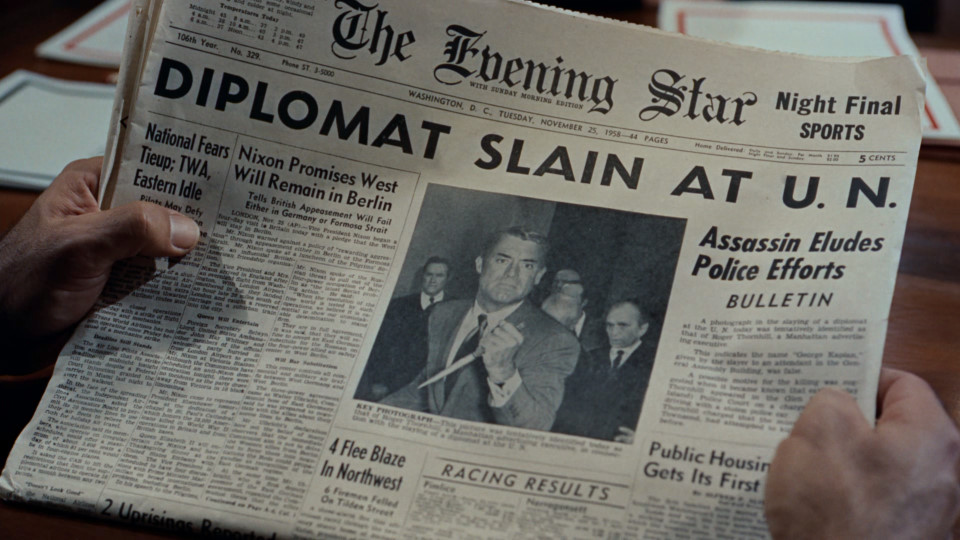
I noticed something last night when I glanced at a North by Northwest frame capture. It was the date on a newspaper — 11.25.58 — being read by one of Leo G. Carroll‘s alphabet soup cronies about Roger O. Thornhill being wanted after knifing a UN diplomat. Every last scene in Alfred Hitchcock‘s 1959 film, shot in Manhattan and Long Island’s North Shore and Chicago and Illinois and Rapid City, makes it clear that the weather is quite warm — shirtsleeves and light jackets, no coats or scarves in sight. So there you are.

To my knowledge this is the second significant wrongo spotted in Hitchcock’s film, the first being the kid plugging his ears in advance of Eva Marie Saint “shooting” Grant in a Mount Rushmore cafeteria.

My Head Is Splitting

About a week ago Film Detail‘s Ambrose Heron began posting a series of 25 mp3 recordings containing about twelve hours‘ worth of the original interview tapes between Alfred Hitchcock and Francois Truffaut that were recorded in 1962, and later used as the basis for Hitchcock/Truffaut, the definitive “Hitchcock speaks” book that every film buff in the world has read.

Truffaut’s English was fairly nonexistent so he hired Helen Scott (of Manhattan’s French Film Office) to act as translator. It’s quite irritating to listen to, frankly, with Scott, looking to keep pace with both, constantly talking over (i.e., concurrent with) Hitchcock and Truffaut as they listen to and answer each other. Listen to the embedded recording above and you’ll realize it’s a wonder that Hitchcock was able to stand it for so many hours. He had to listen to sentence fragments and then reply in sentence fragments while Scott spoke French at the same time. I understand why, of course — it would have taken much longer if she hadn’t. But what a process.

I was just thinking how cool it would be if Ambrose Heron’s last name was Chapel.

It Came To Pass

With the help of Awards Daily‘s Sasha Stone, Radheyan Simonpillai of Ask Men has written a concise, well sculpted history of the last five or six years of Oscar history, and explained how the surprise Best Picture victory of Crash six years ago was a seminal event. Nothing new overall but a good satisfying read.

Ninth-Inning Diss

The King’s Speech “is basically a film about what positively smashing folks the royals are,” Joe Queenan wrote two days ago in The Wall Street Journal. “It’s a film that’s infatuated by those awfully swell people up at Balmoral who wear kilts and shoot foxes. Americans used to turn up their noses at this sort of stuff. But that was before Upstairs, Downstairs and Merchant & Ivory intoxicated the entire republic with the rustle of crinoline and the shimmer of lace.

The King’s Speech is not, after all, a film about a Welsh coal miner who overcomes a speech impediment. It is not a film about an Aussie doughboy trapped on the beach at Gallipoli who overcomes a speech impediment. It is a film about spiffing chaps and the spiffing folks who help them to be even more spiffing.”

Worst Title Sequences

Only one of the opening-credit sequences mentioned in Alice Rawsthorn‘s 2.21 N.Y. Times piece (“If There Were An Oscar For Film Titles”) stirred my interest: Neil Kellerhouse‘s for The Social Network. “[The] idea was for the titles to be totally unobtrusive…it was literally a case of how small can we make the type,” Kellerhouse explains. Which I liked enormously. It established the brisk, dry tone of the film in just the right way.

Sooner or later all discussions of main-title sequences end up mentioning (i.e., defaulting to) Saul Bass. There’s no getting around the guy. Lord knows I’ve written plenty about his ’50s and ’60s work. I can write about the main-title sequence of The Man With The Golden Arm all day along. So let’s give it a rest this time and consider…I don’t know, how about the absolute worst title sequences of all time?

The worst are always primarily interested in calling attention to their cleverness or cuteness or flashiness rather than conveying some mixture of mood and metaphor about the film itself.

One of the most irritating, I feel, is the pompous and obnoxious blue-laser-flash sequence that opens Richard Donner‘s Superman: The Movie (’78). The guy who designed it obviously fell in love with the idea of turning each and every major name connected to the film into a hissing fantabulous cosmic light show. It quickly becomes tiresome, and then irksome, and then rancid. Mainly because the sequence goes on forever. By the time the film is about to start, you’re almost ready to leave.

The absolute worst, however, didn’t use any titles it all. The film was Robert Moore‘s The Cheap Detective, a 1978 spoof of Humphrey Bogart-in-a-trench-coat films, and it opened with either star Peter Falk (or so I recall) speaking the titles directly into the camera lens with a sassy Sam Spade tone of voice. I was sitting there aghast, wondering if he was going to mention the gaffer and the best boy.

Another groaner is the cartoony credit sequence for Steven Spielberg‘s Catch Me If You Can. It was all about underlining how clever and entertaining the person who thought it up was. It was actually a kind of omen. It said “beware…a spirited movie that Spielberg had a grand time making but which you’ll never be able to quite believe is about to begin.”

Warm-up Phase

Years later, I’ve often found that my favorite parts of the best films are the earlyish portions. Late in the first act, say, before anyone has acted decisively (or tragically) and cast their lot. The good-to-go, pure-enjoyment cruising section.

[Filed from Delta flight #165, somewhere above New Mexico.]

Alamo Defenders Better Than Mexican Attackers

As I understand it (and please correct if I’m wrong), Guardian film editor Andrew Pulver isn’t predicting a Social Network Best Picture win — he’s simply saying it should win. “A superb piece of filmmaking in every respect,” they declare in one passage, “[and] probably the first important movie that could only have been made in this century. It brings a sharp eye and a critical intelligence to bear upon a remarkable phenomenon without appearing either dazzled by youth or querulously fogeyish.”

[Filed from Delta flight #165, somewhere above Arkansas.]

Great Refusal

Sasha Stone‘s Awards Daily Oscar prediction chart is up, and I must say again that it’s incredibly heartwarming to know that six pundits have joined me (or I them) in predicting a Social Network Best Picture win. It’s one thing to deny reality on your own, but there’s a special feeling of fraternity from being one of seven mule-ish diehards.

Favorite stubbornism: It is a far, far better thing to stand with these few than to join The King’s Speech crowd. 2nd favorite: “No…I cannot!,” said John Foster Dulles when he refused to shake the hand of Zhou Enlai.

[Filed from Delta flight #165, somewhere above Tennessee…I think.]

Give Hesher A Chance

15 months after debuting at the 2010 Sundance Fim Festival, Spencer Susser‘s Hesher will arrive on 4.15.11 via Newmarket Films. And the most arresting thing about the trailer is the revelation that Natalie Portman looks hotter in horn-rimmed glasses than without. The last time this happened was when Marilyn Monroe put on glasses in How To Marry A Millionaire…bingo.

I’m not saying Hesher is another low-budget drama with a slightly brownish-and-bleachy color scheme in the vein of Monogamy, but it does seen to lean in that direction.

Synopsis: “After the tragic loss of his mother, T.J. (Devin Brochu) and his pill popping father (Rainn Wilson) are forced to live with T.J.’s elderly grandmother (Piper Laurie). A young man with a troubled past named Hesher (Joseph Gordon-Levitt) assumes the role as both mentor and tormentor, leading T.J into troubles he could never have imagined. A young grocery clerk named Nicole (Natalie Portman) steps in to protect T.J., and becomes the object of T.J.’s fantasies, while Hesher moves into Grandma’s home. Although uninvited, he is somehow accepted.”

Susser and Hesher are obviously sound-alike names. You don’t suppose…?

[Filed from Delta flight #165, somewhere above Kentucky.]

Gatsby 3D

It’s not clear or proven to me whether Baz Luhrman‘s 3D version of The Great Gatsby, to begin shooting next August in the Sydney area, will ignore the Long Island setting of F. Scott Fitzgerald‘s classic novel, or attempt to simulate it. Either way, I find it oddly appealing that 3D will be used in service of a dialogue-driven, tragic-fancy-pants drama rather than the usual usual.