Good Fellow

America is “turning into Tsarist Russia,” Avengers director Joss Whedon said today during a Comic-Con panel. “We are watching capitalism destroy itself right now, [and] we’re creating a country of serfs.”

“We have people trying to create structures and preserve the structures that will help the middle and working class, and people [are] calling them socialists,” Whedon went on. “It’s not Republican or Democrat, conservative or liberal…it’s some people with some sense of dignity and people who have gone off the reservation.”

Telluride, Venice, NYFF Spitball

The 2012 Toronto Film Festival (9.6 thru 9.16) has a lot of slots to fill, and will screen anything it can grab as long as the film has any kind of jaunty pedigree and is opening between late September and the mid fall. It’s also likely that almost everything shown at the Venice Film Festival (8.29 thru 9.8) and the Telluride Film Festival (8.31 thru 9.3) will play Toronto. It’s also likely that the New York Film Festival (9.28 thru 10.14), which begins 12 days after Toronto, will try to exclusively screen two or three biggies.

I don’t think anyone on my level is going to have anything figured out until early August, but let’s do some guessing. Not about Toronto, which is Walmart, but Telluride and New York. I can never figure out Venice.

Argo, The Master, To The Wonder, No, Cloud Atlas, On The Road, The Silver Linings Playbook, Amour, Killing Them Softly, The Place Beyond The Pines, Only God Forgives, All You Need Is Love…probably all of these. 12 in all. Venice, NY, Telluride…all over.

I could see Joe Wright‘s Anna Karenina (Focus, 9.7) playing Venice but not Telluride, which ends only four days before Karenina opens. Doesn’t Telluride usually want more breathing room?

I know nothing about Trouble With The Curve (Warner Bros., 9.28), a Clint Eastwood baseball-scout drama in the vein of Million Dollar Baby and Gran Torino, but I wouldn’t mind if it played Telluride. A touch too sentimental? Outside of Telluride’s aesthetic turf? Maybe. But if Telluride can show Butter, they can show Trouble With The Curve.

If I was New York Film Festival honcho Scott Foundas I would try to show Roger Michell‘s Hyde Park on Hudson (Focus, 12.7), a natural for the NYFF with its upper New York State setting and historical ties to Franklin D. Roosevelt (Bill Murray), who served as Governor of New York State from ’29 to ’32. I would also try to land Robert Zemeckis‘s Flight (Paramount, 11.2), a “commercial” drama with a great trailer (which is all anyone knows at this point) with Denzel Washington on top.

I’m betting that Martin McDonagh‘s Seven Pyschopaths will turn up at Toronto, but…who knows?

End of the year, out of the picture: Lincoln, Les Miserables, The Hobbit: An Unexpected Journey, Zero Dark Thirty, This Is Forty, Django Unchained, The Great Gatsby, Life of Pi.

What am I missing?

Better Trailer Than Film

Congratulations to the people who delivered this Cosmopolis trailer. It makes we want to see David Cronenberg’s film and I didn’t like it when I saw it in Cannes. Except for the very effective ending, which concludes a long dialogue scene between Robert Pattinson‘s Wall Street shark and Paul Giamatti‘s beaten-down everyman, I mostly hated it. But this is a good trailer.

Entertainment One is opening Cosmopolis on 8.17.

“We all know that Wall Street sharks are the compulsive demons of our time and are probably living with suppressed torment of one kind or another,” I wrote on 5.2, “so going into this I knew it wouldn’t do for Cronenberg to just say that Pattinson’s Eric Packer is a beast and show how devoid he is of humanity. The film would have to say ‘yeah, he’s a beast but he used to be human…see?’ Or ‘he’s more than a beast — he’s an alien.’ Or ‘he’s a beast but there might be a way out.’ Something more than just ‘this guy is all but dead, and you’re going to spend 108 minutes watching him be a zombie as he talks trade and devaluations and currencies and fucks hot women.’

“Lamentably, Cosmopolis does almost exactly that. And with non-stop chatter so compact and persistent and airless your ears will eventually fall off. With the same determination that Packer takes himself down, Cosmopolis talks itself to death.

“I was dying for a little silence, a little quiet outside the limo…a sunset, an empty, wind-swept boulevard at pre-dawn, an encounter with a friend or two. Oh, that’s right — Packer hasn’t any.

Cosmopolis is ‘too familiar, too regimented, too claustropobic, too obvious. Yes, you’re constantly aware of Cronenberg’s fierce behind-the-camera talent, his determination to stay with his apparently quite faithful screenplay of Don DeLillo‘s book and to not cop out by making a film about how Packer used to be human but is now an alien although there might be a way out. That’s not the Cronenberg way. He gives it to you his way, and you just have to sit there and take it.”

Two Winslow Beefs (Including Spoiler)

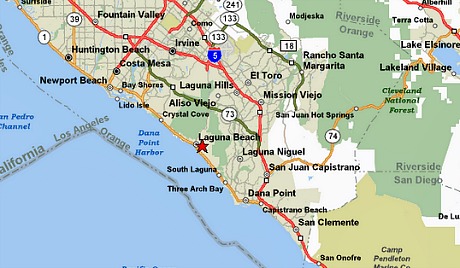
I’ve been meaning to complain about two elements in Don Winslow and Oliver Stone‘s Savages, although the fault is more Winslow’s than Stone’s. I’m a fan of Winslow’s novel of “Savages” (particularly his “tight sentences and smack-dab phrasings,” as I said in my 7.6 review of the film) but — here’s the first beef — I found his descriptions of Laguna Beach and other Orange County havens bothersome. Negligent, I mean.

Winslow omits a fundamental aspect of the character of Laguna Beach and that general south-coast sprawl, which is that it’s an over-developed, traffic-suffocated hell-hole. I’ve felt this way about Laguna since I first visited in the late ’80s, which is one reason why I’ve only gone back once. Portions of the beach area are nice and you can take an attractive photo if you’re careful, but it’s way overstuffed — too many cars, too much clutter and crap, not enough parking, too many tourists, surrounded by Republicans. It was probably sublime in the 1920s and ’30s.

But to go by Winslow’s descriptions — “rich and beautiful,” “oceans and cliffs,” flower-covered hills, fragrant aromas — Laguna and that neck are just like Tuscany or inner Belize or the Cote d’Azur, albeit spotted with gas stations and freeways and 7-11’s and super-malls. That’s just not honest reporting. Drive down sometime and tell me Laguna satisfies anyone’s definition of “paradise,” which is how Blake Lively‘s “O” character describes it at the start of Stone’s film, the screenplay for which was co-written by Winslow, Stone and Shane Salerno.

My other complaint contains that SPOILER I mentioned in the headline. It’s about the ending. The first ending, I mean. The real one taken from Winslow’s book. Here it is:

How realistic or believable is it that O and Taylor Kitsch‘s Chon, in the prime of their lives, would purposely submit to death with a shot of morphine in order to stay with Aaron Johnson‘s Ben as he expires from a couple of gunshot wounds? The idea is that these three are so emotionally entwined that if one goes, the other two are compelled to follow because there’s no reason to continue without their profoundly close bond.

Except there’s this little instinct we’re all born with called “survive at all costs.” Ask any male combat veteran if he was ever seized by an impulse to lie down next to his dying best buddy and shoot himself in the temple. Doesn’t work that way. My late father, who was with the Marines in the Pacific during World War II, told me some stories that gave me a little insight into this. The instant somebody really close to you catches a bullet in the eye or falls off a cliff or gets eaten by a lion, the universal reaction is always “whoa, shit!… dude, that’s awful and sorry to lose you…I’m freaking and weeping but, well, at least I’m still here! Whew!”

Winston Churchill spoke of the exhilaration that comes when a bullet aimed at you misses its mark. I suspect that being close to death is more on that level.

That’s how it is, how we’re built. Life is awfully precious and you don’t throw it away out of sympathy for a fallen comrade. Until experience teaches me otherwise I say Winslow’s finale is bunk.

Richard Zanuck Is Gone

Just like that, highly respected veteran producer Richard Zanuck died this morning at age 77. What a trooper, what a life. The son of legendary 20th Century Fox founder Daryl F. Zanuck, he learned the ropes in the early ’60s and cut his teeth and became a smart, tough operator with a knack for churning out solid, middle-of-the-road, well-made films, most notably Jaws, The Sugarland Express, Compulsion, The Sound of Music, The Verdict, Cocoon, Driving Miss Daisy (ouch) and Sweeney Todd.

Zanuck was never radical or renegade. He played the game safely, but always with taste and diligence and political skill. This is very sad news. Condolences to friends, family and colleagues, and especially Zanuck’s wife Lili Fini Zanuck and his longtime collaborator Tim Burton, with whom he made six films.

Zanuck is, I believe, the only studio chief to have been whacked by his own father. He became president of 20th Century Fox in the mid ’60s and oversaw its post-Cleopatra rebound with the success of The Sound of Music, but the ignominious failure of Doctor Dolittle, the 1967 Rex Harrison talk-to-the-animals fantasy, prompted his chairman-of-the-board dad to cut him loose.

Zanuck took a gig as a Warner Bros. exec vp, and in ’72 he partnered with the wise and elegant David Brown, one of the best guys I’ve ever known in this industry, to form Zanuck/Brown, which was based at Universal Pictures. It was this partnership that led to Zanuck’s greatest run.

I wish I could find a clip from Laurent Bouzereau‘s fascinating documentary about the making of Jaws. (It’s available on the 2005 Jaws DVD, and should be on the forthcoming Bluray.) It was this doc that told me what a steady and fair-minded guy Zanuck was — a guy who could roll with the punches and hang tough when push came to shove.

Zabuck’s other credits include The Black Windmill, The Eiger Sanction, Clean Slate, Mulholland Falls, Deep Impact, Rules of Engagement, Big Fish, Charlie and the Chocolate Factory, Alice in Wonderland, Clash of the Titans and Dark Shadows.

Spokesperson Jeff Sanderson told Reuters this morning that Zanuck died of a heart attack.

No Coverage?

This morning I asked the editors/reporters at Deadline, Variety, Hollywood Reporter and TheWrap why there hasn’t been any coverage of yesterday’s bombshell about WB and Peter Jackson deciding not to show their Hobbit footage in the much-ballyhooed (or should I say formerly ballyhooed?) 48 frame-per-second format during Warner Bros.’s product presentation at Comic-Con tomorrow afternoon.

“That was pretty big news yesterday and unless I’ve missed something, I don’t see anything on Deadline or Variety or The Hollywood Reporter or TheWrap about it,” I wrote. “What’s up with that?

“A major Oscar-winning director and Warner Bros. make a huge and historic investment in a new photographic and projection technology on a major end-of-the-year film — a format that has the potential to be a huge game-changer in terms of action-driven, effects-driven, CG fantasy films — and then they show it last April at Cinemacon, and then they back off from showing it at Comic-Con out of fear of negative blogger reactions, and you guys aren’t going to say boo?

“Is this because Geoff Boucher broke the story and you don’t want to give props to him and the LA Times?

“You’re all going to touch upon it, I’m presuming, in your coverage of the Warner Bros. presentation tomorrow (i.e, Saturday afternoon) but what is Jackson going to say when questioned during tomorrow’s panel? The same thing he said yesterday to Boucher.

“Sorry, but this lack of coverage so far strikes me as derelict. This is a huge tactical turn-tail that obviously indicates uncertainty and anxiety on WB’s part, and may even hint at a modified rollback as far as the extent of their commitment to 48 fps venues when The Hobbit opens in December. It looks like you’re all trying to go easy on Warner Bros. to save them embarassment.”

I wrote this an hour or two ago so maybe one of these publications will post something today but it sure seems strange that they ignored this story altogether.

Just so we’re clear, I’ve stated from the get-go last April that the mind-blowing 48 fps Hobbit footage indicates only that this new format can be (and will be, I feel) a huge shot in the arm for fantasy-action high-visual-impact popcorn films. There’s no need for it to be used on regular plot-driven, character-driven films that convey (or try to convey) anything in the way of intimate, emotional, cerebral, delicate, human-scale content. Serious cineastes were appalled at the high-def video look of 48 fps when it played at Cinemacon, and I got that. They weren’t wrong as far as it being wildly inappropriate for serious cinema.

That said, the 48 fps presentation at Cinemacon told me that digital technology can at least allow for a full industry-wide conversion for each and every film (including those by Todd Solondz) to 30 frames per second, which doesn’t, judging from the look of Fred Zinneman‘s Oklahoma! (’55), deliver a high-def video texture but does allow for much greater fluidity and smoothness of image with a noticable lessening of pan and motion blur. It’s cleaner, more engaging. There’s really no reason other than sentimentality to stay with 24 fps any longer, given this option.

Stop hiding. Man up, embrace the future, get on the horse and ride it.

Lot’s Wife

In this Vulture clip from Thursday night’s Late Night with David Letterman in which an alleged Dark Knight Rises “spoiler” is revealed by Letterman, Anne Hathaway‘s response, curiously, could be construed as more telling than what Letterman blurts out. And I’m saying this knowing (i.e., having been told) how the movie ends. It’s best not to go there, of course, but it happened in tens of millions of homes and it’s all over the place and there’s no covering it over with sand.

Letting Go

Outside of the relatively small circle of “creative” Twilight participants plus the Twihard community, I can’t imagine any emotionally stable person out there being the least bit sorry or sniffly about the Twilight series finally coming to a close. I mean, c’mon…